Question 12 Marks
How can phenol be converted to aspirin?
Answer
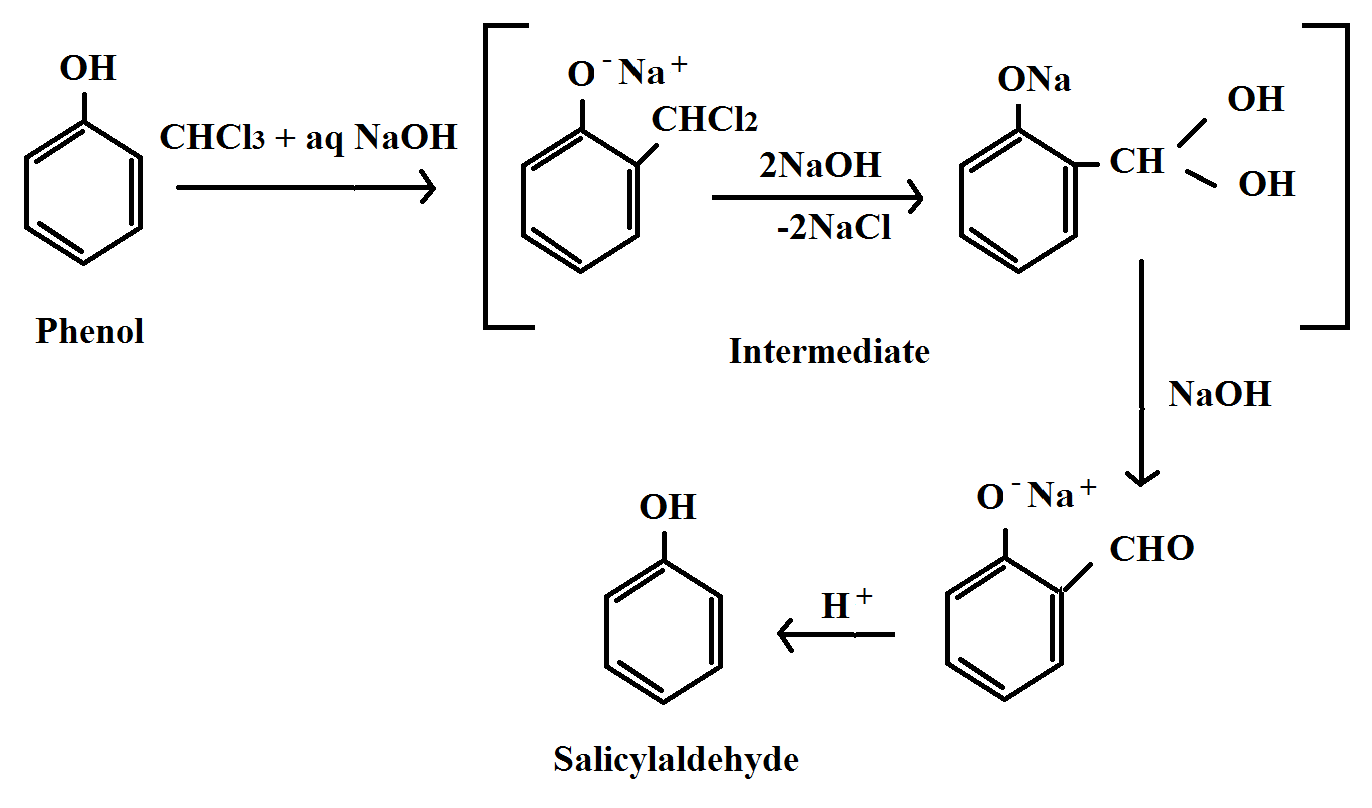
View full question & answer→Phenol is converted into salicylic acid.
The reaction is usually carried out by allowing sodium phenoxide to absorb carbon dioxide and then heating the product to $400K$ and $4-7$ atm pressure. First unstable intermediate is formed which undergoes a proton shift to form sodium salicylate. The subsequent acidification of sodium salicylate gives,
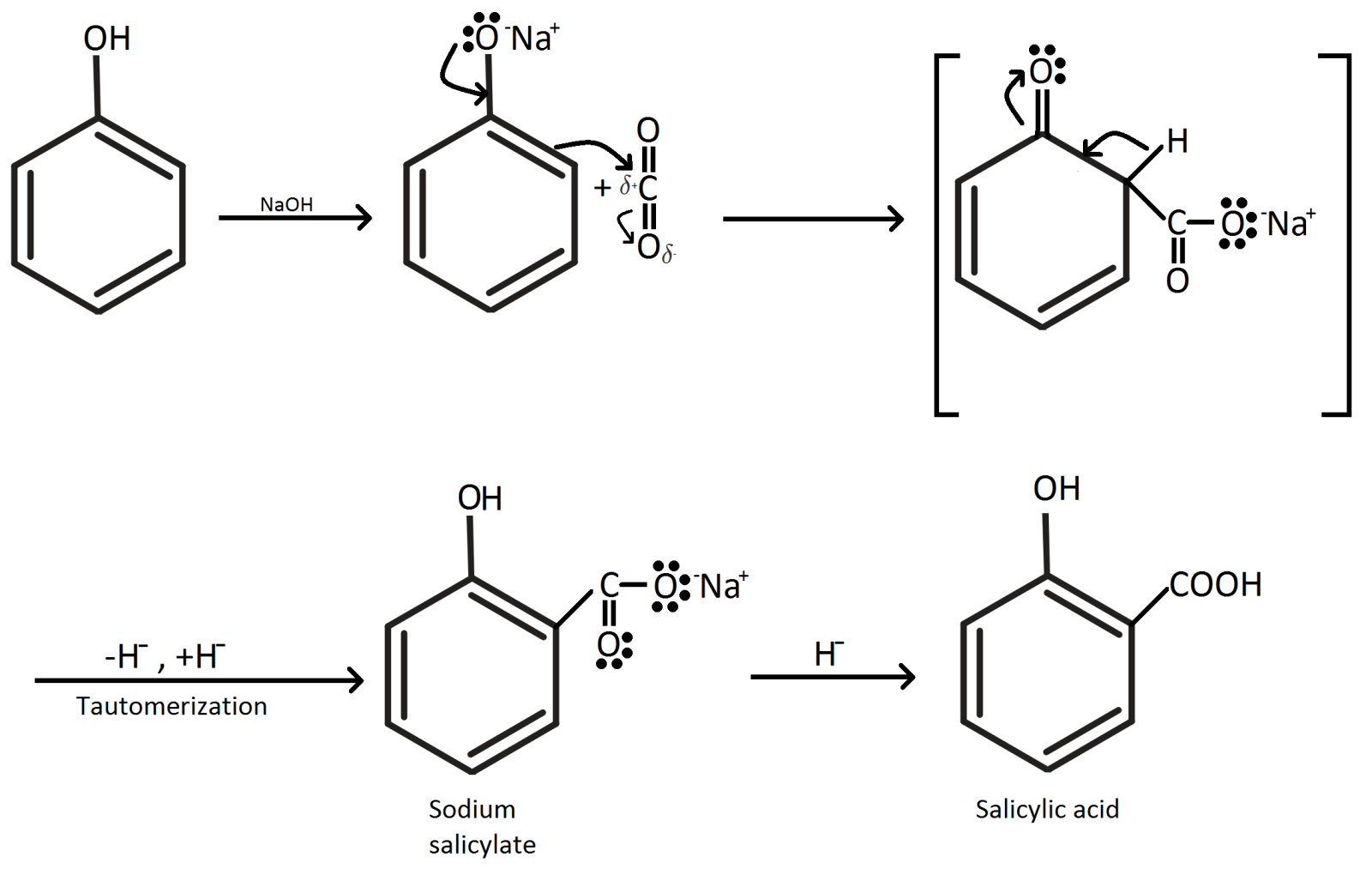
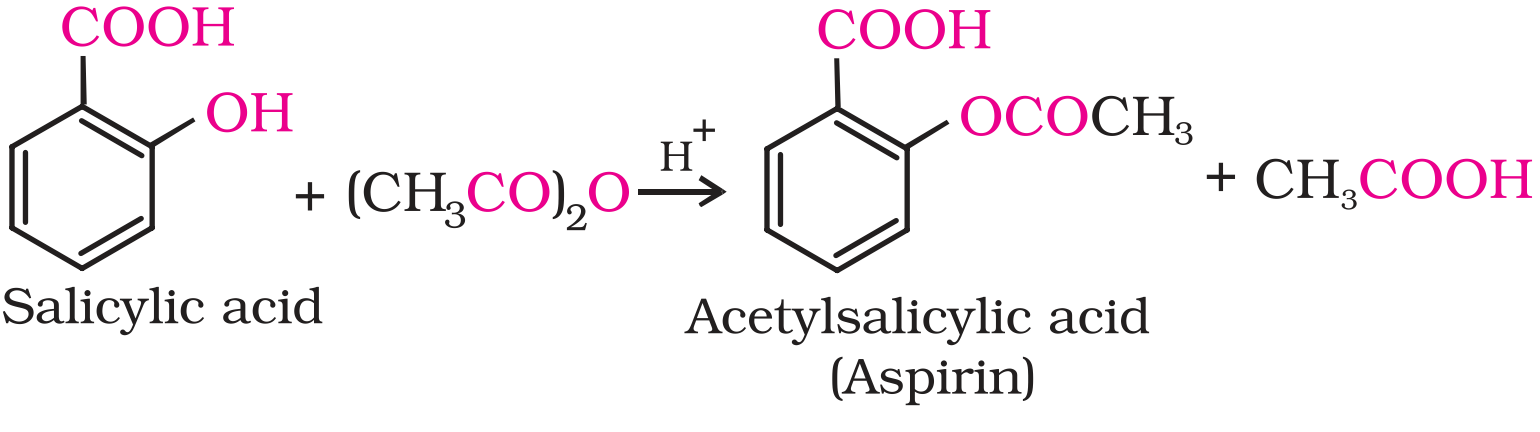
Then aspirin is obtained by acetylating salicylic acid with acetic anhydride and cons. $H_2SO_4.$
The reaction is usually carried out by allowing sodium phenoxide to absorb carbon dioxide and then heating the product to $400K$ and $4-7$ atm pressure. First unstable intermediate is formed which undergoes a proton shift to form sodium salicylate. The subsequent acidification of sodium salicylate gives,
Then aspirin is obtained by acetylating salicylic acid with acetic anhydride and cons. $H_2SO_4.$






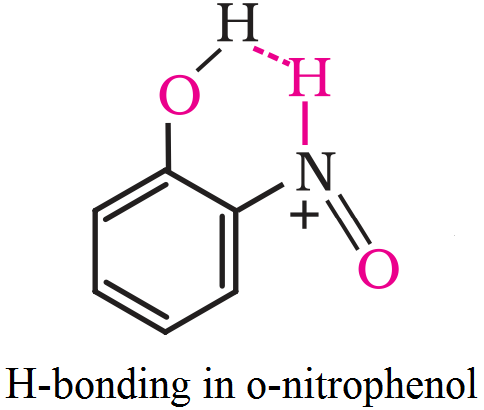

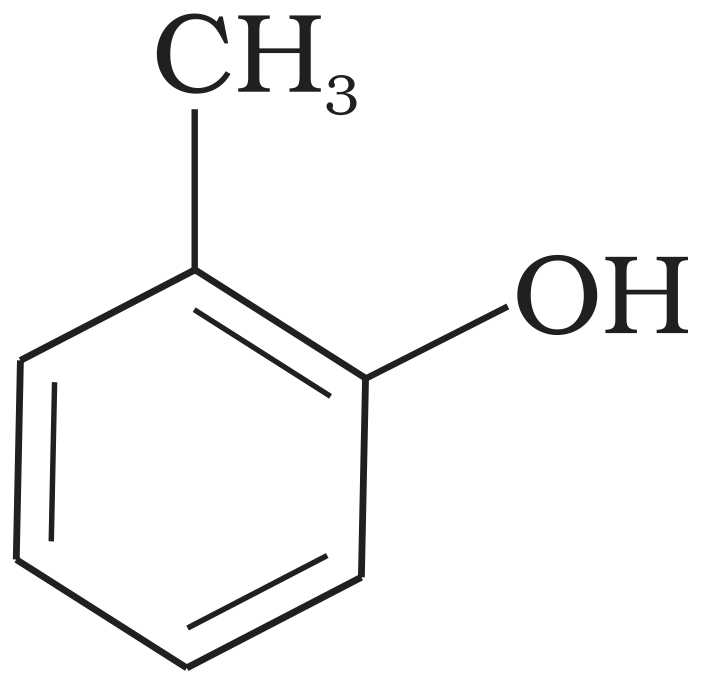
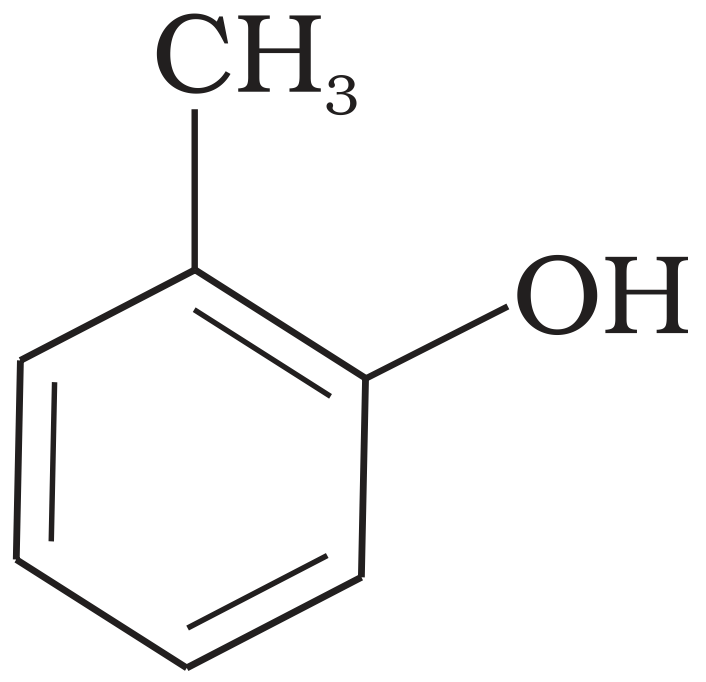
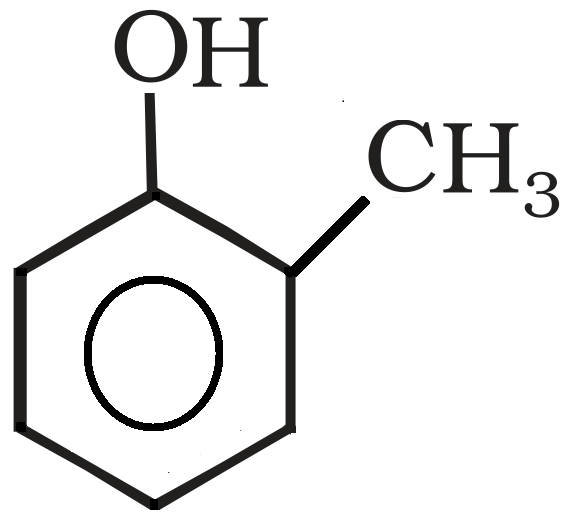 , the electron donating group $(-CH3)$ gives electrons and intensify the charge on phenoxide ion and therefore makes it unstable. Therefore, o-cresol is less acidic than phenol. In o-nitrophenol, the electron withdrawing $(-NO_2)$ group withdraws electrons and disperses the -ve charge and stabilizes the phenoxide ion. Therefore, o-nitrophenol is more acidic than phenol.