Question 15 Marks
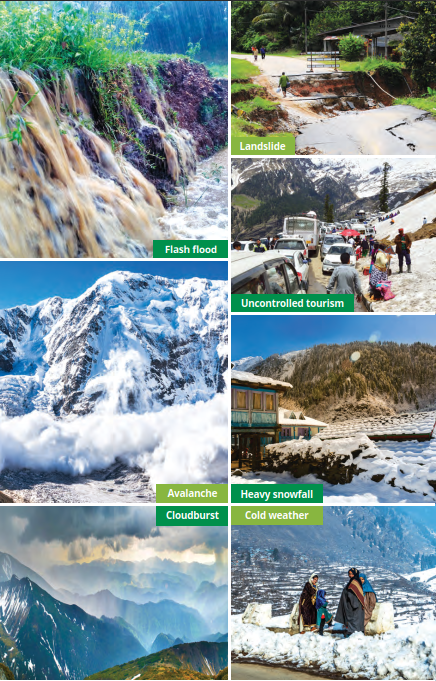
The images given below depict a few challenges that people living in the mountains may face. Discuss them in groups in the class and write one paragraph on each. Also discuss why, despite many such challenges, people still choose to live in the mountains.
Answer
View full question & answer→The above given pictures depict the problems for people living in mountains. These are discussed below
(i) Flash Flood Flash flood is the sudden flood in a local region due to cloud burst. Sudden heavy rain can quickly turn mountain streams into dangerous floods. It can damage homes and roads.
(ii) Uncontrolled Tourism Too many visitors can put pressure on local resources and disturb mountain ecosystems, harming both the environment and local communities.
(iii) Landslide Soil and rocks sliding down slopes can destroy homes and block roads in mountain areas.
(iv) Avalanches It is a landslide due to heavy snowfall. Large snow slides can damage villages and disrupt travel in snowy mountain regions.
(v) Heavy Snowfall Excessive snow can block roads, limit access, and cause damage to houses in mountain areas.
(vi) Cloudburst Intense, short bursts of rain can lead to sudden floods and erosion in mountainous regions.
(vii) Cold Weather Extremely cold temperatures can make daily life and travel very difficult in the mountains.
People still prefer to live in mountainous regions because they are sacred to them. Mountains are a great source of tourism activity and many more natural resources.
(i) Flash Flood Flash flood is the sudden flood in a local region due to cloud burst. Sudden heavy rain can quickly turn mountain streams into dangerous floods. It can damage homes and roads.
(ii) Uncontrolled Tourism Too many visitors can put pressure on local resources and disturb mountain ecosystems, harming both the environment and local communities.
(iii) Landslide Soil and rocks sliding down slopes can destroy homes and block roads in mountain areas.
(iv) Avalanches It is a landslide due to heavy snowfall. Large snow slides can damage villages and disrupt travel in snowy mountain regions.
(v) Heavy Snowfall Excessive snow can block roads, limit access, and cause damage to houses in mountain areas.
(vi) Cloudburst Intense, short bursts of rain can lead to sudden floods and erosion in mountainous regions.
(vii) Cold Weather Extremely cold temperatures can make daily life and travel very difficult in the mountains.
People still prefer to live in mountainous regions because they are sacred to them. Mountains are a great source of tourism activity and many more natural resources.