Questions · Page 1 of 2

Answer the questions.[Bio-3M]

🎯

Test yourself on this topic

50 questions · timed · auto-graded

Question 13 Marks
Write the functions of parenchyma, collenchymas and sclerenchyma.
Answer
  1. Parenchyma Functions:

  1. The main function of parenchyma is to store and assimilate food.
  2. Transport of materials occurs through cells or cell walls of parenchyma cells.
  1. Collenchyma Functions:

  1. It provides mechanical support and elasticity.
  2. It provides tensile strength to the plants.
  1. Sclerenchyma Functions:

  1. It is mainly mechanical and protective in function.
  2. It gives strength, rigidity, flexibility and elasticity to the plant body.
View full question & answer
Question 23 Marks
Write one function of squamous epithelium.
Answer
Squamous epithelial cells are flat cells that are found in many parts, including the middle skin layers, cervix, mouth and lips.
  • They forms a barrier between the body and the exterior environment.
  • These cells provide protection for underlying tissues.
  • Simple squamous epithelial cells (glomerulus) in nephrons of kidneys enable rapid filtration of blood and diffusion of small molecules.
  • Squamous epithelial cells of lungs (alveoli of lungs) helps to reduce friction and controls vessel permeability.
  • It also helps in absorption and filtration.
View full question & answer
Question 33 Marks
Write down names of different types of plant tissues.
Answer
The different types of plant tissues are:

  1. Meristematic tissues: It is of three types: Apical, Lateral and Intercalary.

  2. Permanent Tissue: It of two types: Simple and Complex tissues.

Simple tissues are of three types: Parenchyma, Collenchyma and Sclerenchyma.

Complex tissues are of two types: Xylem and Phloem.

View full question & answer
Question 43 Marks
Write down about location, structure and functions of parenchyma.
Answer
Structure: Parenchyma is a simple, permanent living tissue which is made up of thin-walled cells. The cells of this tissue are oval, elongated, and loosely packed with large intracellular space. Their cell wall is made up of cellulose. Each cell encloses a large central vacuole, cytoplasm and a prominent nucleus.
Location: The parenchyma tissue is present in soft parts of the plant such as cortex, pith, palisade and some parts of the flower.
Functions: Parenchyma tissue provides support to plants and also stores food. In some situations, it contains chlorophyll and performs photosynthesis.
View full question & answer
Question 53 Marks
Write a note on collenchymas.
Answer
Collenchymas is a type of permanent tissue which is found few layer below the epidermis of leaves and stem. The cells of this tissue are living, elongated and tightly packed with no inter-cellular space. The cells have small nucleus, large vacuoles and thin cell wall but irregularly thickened at the corners.
Collenchyma tissue provides flexibility to plants so that they can easily bend without breaking. It also provides mechanical support to plants.
View full question & answer
Question 63 Marks
Write a note on areolar tissue.
Answer
It is the most fundamental type of connective tissue which is found all over the body. This tissue is present in spaces in between the skin and muscles, around blood vessels and nerves and in the bone marrow.
Areolar connective tissue has homogenous, semi-solid gel like ground substance called matrix in which various types of cells and collagen fibres and elastic fibres are embedded. It contains fibroblast cells, mast cells and macrophages. It fills the space inside the organs, supports internal organs and helps in repair of tissues.
View full question & answer
Question 73 Marks
Write about structure and function of smooth muscle fibres.
Answer
Smooth muscles also called as unstriated muscles as they lack transverse striations. They are not under the control of one’s will, hence they are also called involuntary muscles. These muscle cells are long with pointed ends (spindle shaped) and arranged in bundles. Each cell is uninucleated (having a single nucleus).
Smooth muscles are found in alimentary canal and blood vessels. The movement of food in the alimentary canal or the contraction and relaxation of blood vessels are involuntary movement. These are also found in the iris of the eye, in uterus and in the bronchi of the lungs.
View full question & answer
Question 83 Marks
Why is blood called a connective tissue?
Answer
Blood and lymph both are fluid connective tissues. The main function of fluid connective tissue are binding, protecting and connecting together different organs of the body. Blood and lymph both has these qualities that's why we called them connective tissue.
View full question & answer
Question 93 Marks
Why do plants and animals possess different types of tissues?
Answer
Plants are autotrophic organisms, so prepare their own food by photosynthesis. Moreover plants are stationary or fixed organisms; they do not have to move from place to place in the search of their food. Since they do not consume or need much energy, so most of the plant tissues are supportive, which provide them with structural strength. Animals are heterotrophic organisms. They have to move in search of food, mate and find shelter, so they need more energy as compared to plants. Most of the tissues they contain are living.
View full question & answer
Question 103 Marks
What will happen if:
  1. Ligament gets over stretched?
  2. Heparin is absent in blood.
  3. Striated muscles contract rapidly for longer duration.
Answer
  1. Ligament is a form of connective tissue which holds two bones together at joints. When ligament get overstreached, it causes sprain.
  2. Heparin is an anticoagulant present in blood that prevent it from clotting. If heparin is absent in blood, blood will be coagulated inside the blood vessels.
  3. Striated muscle contraction causes fatigue due to accumulation of lactic acid.
View full question & answer
Question 113 Marks
What will happen if: (a) Bone is dpiied in hydrochloric acid (HCI); (b) Bone is dried?
Answer
  1. Bone is a solid, rigid and stong connective tissue. Its matrix is hard. The matrix is made up of organic as well as inorganic (e.g.calcium and phosphorus) components. Calcium and phosphorus make the bone matrix hard. When a bone is dipped in HCI, bone become soft and pliable as its inorganic components get dissolved in the acid. Only organic matter is left.
  2. When a bone is dried, its organic matter get destroyed. Only mineral matter is left.
View full question & answer
Question 123 Marks
What is the role of epidermis in plants?
Answer
Epidermisis present on the outer surface of the entire plant body. The cells of the epidermal tissue form a continuous layer without any intercellular space. It performs the following important functions:
  1. It is a protective tissue of the plant body.
  2. It protects the plant against mechanical injury.
  3. It allows exchange of gases through the stomata.
View full question & answer
Question 133 Marks
What is the function of bone, cartilage and ligament?
Answer
  • Bone: It provides skeletal support to the body.

  • Cartilage: It provides support and flexibility to the body parts.

  • Ligament: It connects bones to bones.

View full question & answer
Question 143 Marks
What is the difference between parenchyma and collenchyma?
Answer
Parenchyma
Collenchyma
1.
The tissue consists of thin-walled living cells.
1.
The tissue consists of cells having localised thickening in their cell walls.
2.
It is distributed in almost all the parts of the plant body.
2.
It occurs mostly in the aerial parts of the plants and is restricted to the other layers.
3.
The living cells of parenchyma assimilate and store food. They also store waste products.
3.
Collenchyma is the chief mechanical tissue in parts of a young plant particularly in the young dicotyledonous stems.
View full question & answer
Question 153 Marks
What is the difference between collenchyma and sclerenchyma?
Answer
Collenchyma
Sclerenchyma
1.
It consists of living cells.
1.
It consists of dead cells.
2.
Its cells contain cytoplasm.
2.
Its cells are empty.
3.
Its cell walls are cellulosic.
3.
Its cell walls are lignified.
View full question & answer
Question 163 Marks
What is sclerenchyma? Describe location, structure and economic importance of this tissue.
Answer
Sclerenchyma is a supporting tissue. It is the tissue which make plant hard and stiff.
Location: This tissue is present in stems, around vascular bundles, in the veins of leaves and in the hard covering of seeds and nuts.
Structure: The cells of this tissue are dead. They are long, elongated, narrow, thick walled and lignified. These consists of fibres and sclereids.
View full question & answer
Question 173 Marks
What is neuron? Define it?
Answer
A neuron or nerve cell is the structural and functional unit of nervous system. A typical neuron consists of cell body or soma, dendrites and axon.
View full question & answer
Question 183 Marks
What is muscular tissue? Describe structure and function of striated muscle fibres.
Answer
Muscular tissue is a contractile tissue made up of muscles. Muscles consists highly specialised cells called muscle fibres. This tissue is responsible for movement in our body.
Striated muscles are also called voluntary muscles as their movement is under our will. The cells of striated muscles are long, narrow, cylindrical, unbranched with blunt ends. They have multi nucleus.
These muscles are also called skeletal muscles because they are mostly attached to bone and help in body movement. These muscles show alternate light and dark band or striations when stained appropriately. As a result, they are also called striated muscles.
View full question & answer
Question 193 Marks
What forms the basis of classification of tissues present in plants and animals?
Answer
There are certain levels which form the basis of classification of tissues present in plants and animals:

  • On the basis of movement: Plants are stationary and they do not move while animals move from one place to another for various reasons. Therefore, the tissues required by plants are those which provide mechanical strength and mostly they are dead in nature whereas in animals the tissues are living as they need to move.
  • On the basis of the pattern of growth: The growth pattern of plants and animals also differs. Plants have certain regions which continue to divide throughout the life while the same thing does not happen in case of some other regions. There is more uniform cell growth in animals as compared to plants.

So, tissues are classified considering the pattern of growth.

  • On the basis of the structural organization: The structural organization of animals is far more complex as compared to plants. Therefore, there are differences in tissues which are responsible for the structural organization and form a basis of classification.
View full question & answer
Question 203 Marks
What are the various types of muscular tissues?
Answer
The three types of muscle tissue are:

  1. Smooth Muscle: These muscle cells do not have striations or stripes. Hence they are called smooth muscle cells. They are also called involuntary muscles. The cells have a single nucleus and the cells are spindle-shaped.

  2. Skeletal Muscle: The skeletal muscles have stripes or striations. Hence they are also called the striated muscles. These skeletal muscles are the most common and widely distributed muscle tissue in the body.

  3. Cardiac Muscle: This is a muscle that is found only in the heart. The rhythmic contractions of this muscle help in the pumping of blood through the blood vessels to various parts of the body. The brain controls this muscle and is an involuntary muscle. The cells of this muscle tissue are branched and cylindrical with a single nucleus and striations present.

View full question & answer
Question 213 Marks
What are the various types of cells of connective tissue?
Answer
Connective tissue proper has two subclasses: loose and dense. Loose connective tissue is divided into 1. Areolar, 2. Adipose, 3. Reticular.
Dense connective tissue is divided into 1. Dense regular, 2. Dense irregular, 3. Elastic.
  • Areolar Connective Tissue.
  • Adipose Tissue or Body Fat.
  • Reticular Connective Tissue.
  • Dense Regular Connective Tissue.
  • Dense Irregular Tissue.
  • Elastic Connective Tissue.
  • Cartilage.
  • Elastic Cartilage.
  • Hyaline Cartilage.
  • Fibrocartilage.
  • Blood.
View full question & answer
Question 223 Marks
What are the three main parts of a neuron?
Answer
The nerve cell, also referred to as a neuron, has several parts that are important for its function in the nervous system. These parts are:
Soma: or a nerve cell body, contains nucleus and other organelles. It is also responsible for synthesis of neurotransmitter. 
Dendrites: are branching extensions from nerve cell soma. They get stimulated by other neurons and transmit the impulses towards soma.
Axon: a single extension that extends from soma to the target cell. Myelinated axon is surrounded by Schwann cells (myelin sheath) with gaps of nodes of Ranvier in between them. There are terminal boutons at the end of the axon where the synapse is located.
View full question & answer
Question 233 Marks
What are the main constituents of blood?
Answer
Main constituents of blood:
  • Plasma is the main component of blood and consists mostly of water, with proteins, ions, nutrients, and wastes mixed in.
  • Red blood cells are responsible for carrying oxygen and carbon dioxide.
  • Platelets are responsible for blood clotting.
  • White blood cells are part of the immune system and function in immune response.
View full question & answer
Question 243 Marks
What are the functions of bones, cartilages, ligaments and tendons?
Answer
  1. Bone: It forms athr framework that supports the body. It also anchors the muscles and supports the main organs of the body.

  2. Cartilage: Cartilage smoothens bone surfaces at joints.

  3. Tendon: Tendons connect bone to muscles with great strength but limited flexibility.

  4. Ligaments: Ligaments connect bone to bone and are very elastic.

View full question & answer
Question 253 Marks
What are permanent tissues of the plants? Give their characteristics.
Answer
A permanent tissue is a group of cells which temporarily or permanently cease to divide.
The cells of this tissue have smaller nuclei and well developed vacuoles. They may be dead or alive, thin walled or thick walled.
View full question & answer
Question 263 Marks
The functional combination of nerve and muscle tissue is fundamental to most animals. Comment.
Answer
The brain, spinal cord and nervous are all composed of the nervous tissue. The cell of this tissue are called nerve cells or neurons. Nerve impulses allow us to move our muscles when we want to. The functional combination of nerve and muscle tissue is fundamental to most animal.
View full question & answer
Question 273 Marks
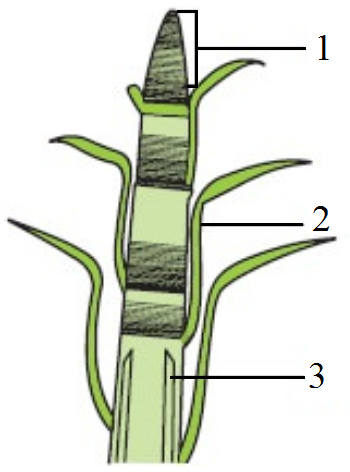
  1. Identify the figure.
  2. Labels the parts marked 1 to 3.
  3. Write the functions of parts marked 1 and 3.

Answer
  1. The figure represents the location of meristematic tissue in plant body.
  2.  
  1. Apical meristem.
  2. Intercalary meristem.
  3. Lateral meristem.
  1. Apical meristem increases the length of the stem and root.

Lateral meristem is responsible for growth in grith of stem and root.

View full question & answer
Question 283 Marks
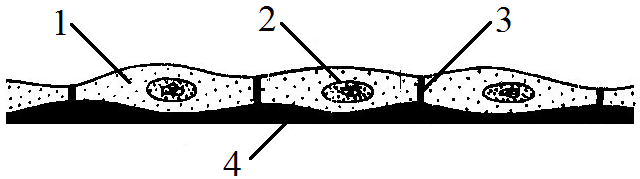
  1. Identify the animal tissue represented alongside.
  2. Label the parts of 1 to 4.
  3. Mention the function of this tissue.

Answer
  1. Squamous epithelium.
  2.  
  1. Cytoplasm.
  2. Nucleus.
  3. Cement substance.
  4. Basement membrane.
  1. Squamous epithelium protects the underlying body parts such as skin, nose, etc. from germs, harmful chemicals and injury.
View full question & answer
Question 293 Marks
Name the type of tissue present, where transportation of substances occurs through the selectively permeable membrane.
Answer
The diffusion of water through a selectively permeable membrane is called osmosis. This allows only certain particles to go through including water and leaving behind the solutes including salt and other contaminants. In the process of reverse osmosis, thin film composite membranes (TFC or TFM) are used.
View full question & answer
Question 303 Marks
Name the tissue, which helps in transportation of oxygen that we inhale to various parts of the body. Write the composition of this tissue.
Answer
Blood is the connective tissue that transports oxygen from lungs to all parts of body.
The composition of blood is:- 
  • Blood plasma-54.3%. It contains proteins, amino acids, nitrogenous wastes, nutrients, gases, electrolytes.
  • Red Blood Cells-45%
  • White Blood Cells-0.7 %
  • Platelets
View full question & answer
Question 313 Marks
Name the tissue found between the organs. What is its function?
Answer
Adipose Connective tissue' is present between internal organs.
Functions of Adipose Tissues:
  1. Adipose tissue acts as an insulating layer, helping to reduce heat loss through the skin.
  2. It also has a protective function, providing mechanical protection ("padding") and support around some of the major organs, e.g. kidneys.
  3. Adipose tissue is also a means of energy storage.
  4. Food that is excess to requirements is converted into fat and stored within adipose tissue in the body.
View full question & answer
Question 323 Marks
Name the plant tissue which show the following features?
  1. Made up of living cells showing thickening; provide mechanical support to the plant.
  2. Made up of dead cells showing thickening; provide mechanical support to the plant; are made of one type of cells.
  3. Made up of living cells containing green coloured chloroplasts, possesses intercellular space.
Answer
  1. Collenchyma.
  2. Sclerenchyma.
  3. Parenchyma.
View full question & answer
Question 333 Marks
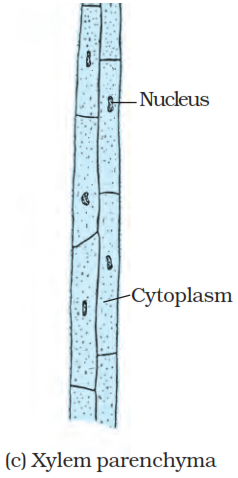
Name the different components of xylem and draw a living component?
Answer
Xylem consist of tracheids, vessels, xylem parenchyma and xylem fibres.

View full question & answer
Question 343 Marks
Name seven types of cells found in stem of sun flower.
Answer
Parenchyma, collenchyma sclerenchyma, Tracheids, vessels, companion cells, sieve tubes.
View full question & answer
Question 353 Marks
“Multicellular organisms show division of labour.” Explain the statement with the help of example.
Answer
Multicellular organisms are made up of millions and trillions of cells. All these cells perform specific functions. All the cells specialised for performing similar functions are grouped together as tissues in the body. Hence, a particular function is carried out by a group of cells at a definite place in the body. Similarly, different functions are carried out by different groups of cells in an organism and this is known as the division of labour in multicellular organisms.
View full question & answer
Question 363 Marks
Mention various functions of epithelial tissues.
Answer
Functions of epithelial cells include: secretion, selective absorption, protection, trans-cellular transport, and sensing; epithelial layers contain no blood vessels, so they must receive nourishment via diffusion of substances from the underlying connective tissue, through the basement membrane.
View full question & answer
Question 373 Marks
Mention two differences between blood and lymph?
Answer
Differences between blood and lymph:
Blood Lymph
1.Blood contains blood cells and plasma.1.Lymph contains plasma and white blood cells called leucocytes.
2.Blood has more proteins, calcium and phosphorus.2.Lymph has fewer proteins with lesser calcium and phosphorus.
View full question & answer
Question 383 Marks
Mention the location of the following tissues.
  1. Tendon.
  2. Aoreolar tissues.
  3. Cuboidal epithelium.
Answer
  1. Tendons: Tendons, located at each end of a muscle, attach muscle to bone. Tendons are found throughout the body, from the head and neck all the way down to the feet. The Achilles tendon is the largest tendon in the body.

  2. Areolar tissue: Areolar tissue is found b/w the skin and muscles around blood vessels and nerves and in the bone narrow.

  3. Cuboidal epithelia: Cuboidal epithelia are found on the surface of ovaries, the lining of nephrons, the walls of the renal tubules, and parts of the eye and thyroid. On these surfaces, the cells perform secretion and absorption.

View full question & answer
Question 393 Marks
List the characteristics of cork. How are they formed? Mention their role.
Answer
As the plants grow older, the outer protective tissue (i.e. epidermis) undergoes certain changes. A strip of secondary meristem, called phellogen or cork cambium replaces the epidermis of the stem.
Cork cambium is a simple tissue, the cells are rectangular and their protoplast are vacuolated and contain tannins and chloroplasts. Cork cambium gives off new cells on its both sides, thus, forming cork (phellem) on the outer side and the secondary cortex or phelloderm on the inner side.
The layer of cells which is cut by cork cambium on the outer side ultimately becomes several layered thick cork (bark) of trees. Cells of cork are dead and compactly arranged without intercellular spaces. The walls of cork cells are heavily thickened with an organic substance (a fatty substance), called suberin, which makes these cells impermeable to water and gases.
Cork is protective in function. It’s cells prevent desiccation (loss of water from plant body), infection and mechanical injury. It is light and does not catch fire easily. Due to these properties, cork is used as insulators, shock absorbers, linoleum (used as flooring) and sports goods (in making of shuttle cocks, cricket balls, wooden paddles of table tennis, etc.). Commercial cork is obtained from the stem surface of cork oak tree (Quercus suber) found in Southern Europe and North Africa.
View full question & answer
Question 403 Marks
List one function for each of following: osteoblast, chondroblast, goblet cell, neuron, muscle cell.
Answer
  • Osteoblast: It provides shape to the body.

  • Chondroblast: It provided support and flexibility to the body parts.

  • Goblet cells: It is a mucus secreting epithelial cell which secrets mucus.

  • Neuron: The dendrites receive impulses and the axon takes impulses away from the cell body.

  • Muscle cell: They undergo rapid contraction for locomotion.

View full question & answer
Question 413 Marks
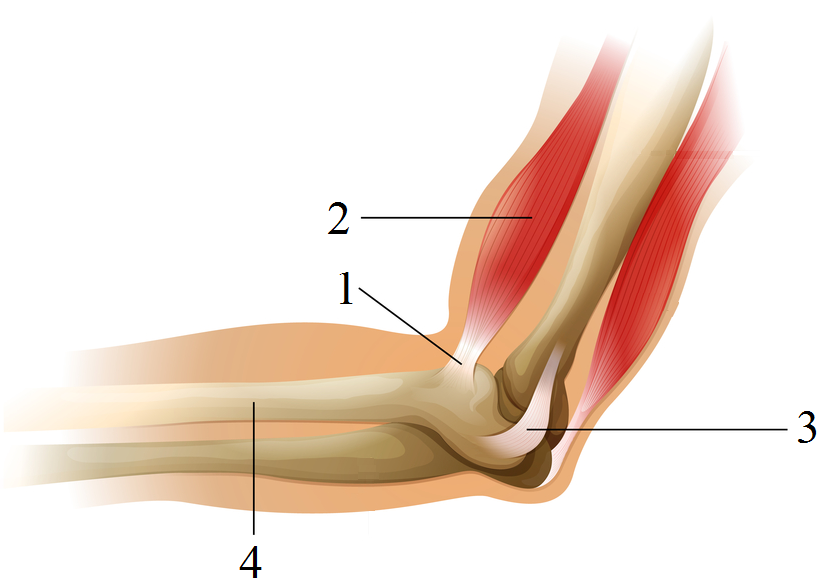
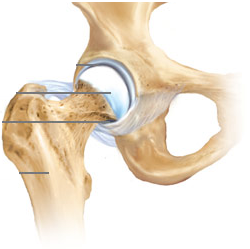
  • Label the parts marked 1 to 4 in figure.
  • Mention difference between 1 and 3.
  • Answer
    1. Tendon.
    2. Muscle.
    3. Ligament.
    4. Bone.
    Tendons
    Ligament
    It connects muscles to bones.
    It connects two bones at joints.
    It made up of white fibres.
    It is made up of white as well as yellow fibres.
    It is strong and non-flexible.
    It is elastic and flexible.
    View full question & answer
    Question 423 Marks
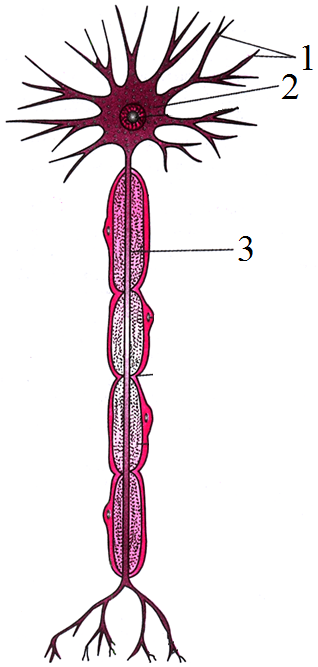
  • Identify the tissue.
  • Label the parts marked 1, 2 and 3.
  • What is the location of this tissue?

  • Answer
    1. It is neuron, structural and functional unit of nervous system.
    2.  
    1. Dendrite.
    2. Cyton or cell body.
    3. Axon.
    1. It is located in brain and spinal cord.
    View full question & answer
    Question 433 Marks
    In which tissue is found anyone of the following Structures: neuron, dendrite, cilia, collagen fibres, elastin fibre.
    Answer
    • Neuron: Nervous Tissue..

    • Dendrite: Nervous Tissue.

    • Cilia: Ciliated Epithelium.

    • Collagen fibres: Connective Tissue.

    • Elastin fibre: Connective Tissue.

    View full question & answer
    Question 443 Marks
    Identify the phloem component which provides mechanical strength to this tissue.
    Answer
    The various components of phloem are:

    1. Sieve tubes.
    2. Companion cells.
    3. Phloem parenchyma.
    4. Phloem fibres.

    Functions are:

    1. Sieve tubes: It conduct food materials prepared in the leaves and greener young stems to all parts of plants.

    2. Companion cells: It helps sieve tubes in conduction of food materials.

    3. Pholem parenchyma: It helps to store food.

    4. Pholem fibres: It provide mechanical strength to plants.

    View full question & answer
    Question 453 Marks
    Identify the animal tissues from the given descriptions and also mention their location in the human body.
    Tissue B has cylindrical branched cells and the tissue shows rhythmic contraction and relaxation throughout the life.
    Answer
    Cardiac muscles have cylindrical branched cells and shows rhythmic contraction and relaxation throughout the life.
    Location- Cardiac muscle cells are present in heart.
    View full question & answer
    Question 463 Marks
    How are two bones attached to each other?
    Answer
    All of the bones in our body are joined together with different types of joints.

    There are three main types of joints.

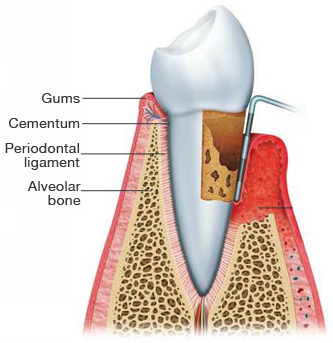
    1. Fibrous joints: Fibrous (synarthrodial) joints have only a ligament holding the joint together. For example our teeth attachment to their bony socket and the radioulnar and the tibiofibular joints.

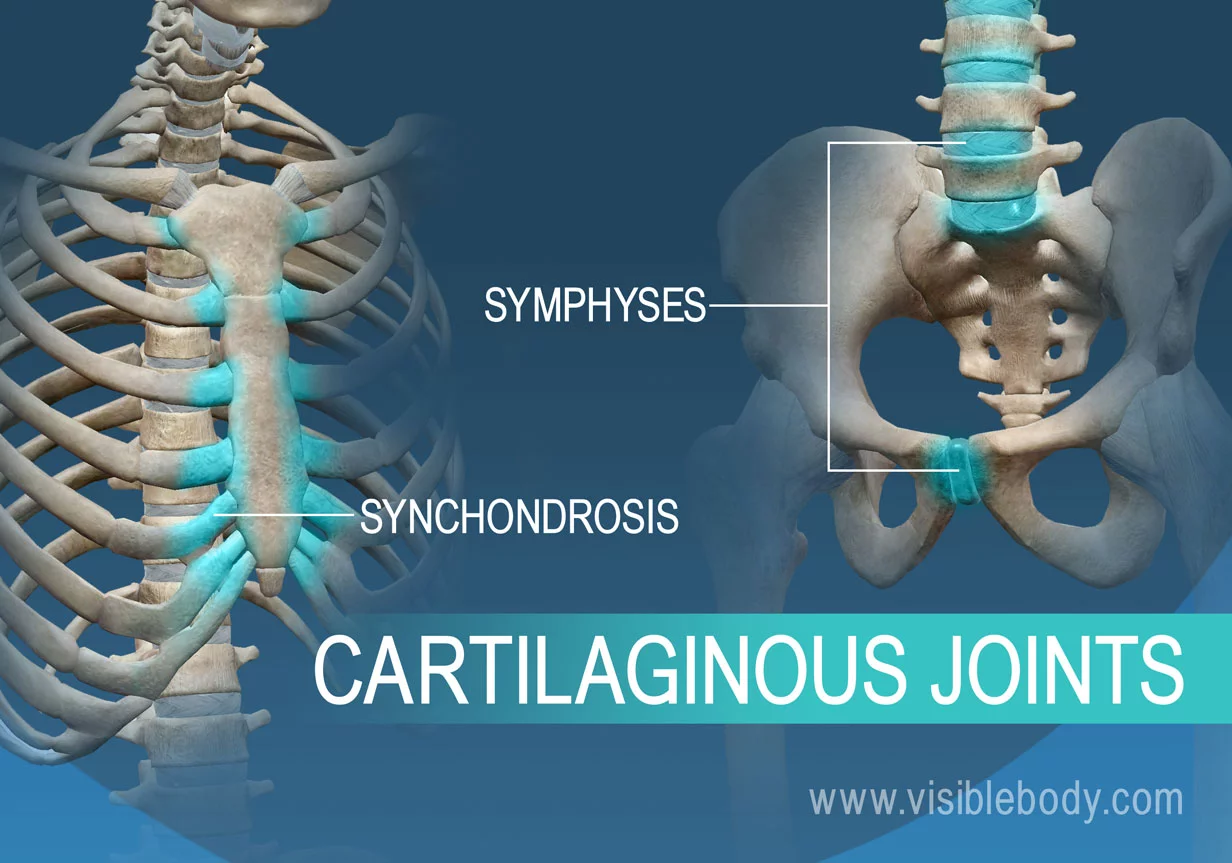
    1. Cartilaginous Joints (synchondroses and sympheses): As the name suggests in these joints the connection between bones is made of cartilage. An example would be between the vertebrae of the spine.

    1. Synovial Joints (diarthrosis):

    These are the most common joint in the human body, there are six different types classified by their shape and movement. Below are some traits common to all synovial joints.

    • Synovial joints are very movable.
    • The ends of the bones meeting in the joint are covered in a layer of articular cartilage.
    • The joint has a thin layer of synovial fluid which separates and lubricates the cartilage covered bones.
    • The joint surfaces are encapsulated by a synovial membrane which produces synovial fluid. This is backed by a thicker subsynovial membrane.

    View full question & answer
    Question 473 Marks
    How are epithelial tissue classified on the basis of cell shape and arrangement?
    Answer
    Epithelial cells of following types:
    • Squamous Epithelium: These are thin, flat cells that are closely packed. The squamous epithelial cells line the cavities of the mouth, oesophagus, alveoli, and blood vessels. This tissue gives protection against mechanical injury and also blocks the entry of germs. If the squamous epithelium is arranged in many layers, it is a compound squamous tissue called the stratified squamous epithelium. We find these kinds of tissues in the skin and also the lining of the oesophagus.
    https://api.studentbro.in/web/vGHBfcs2.png" style="height;width:300px">
    • Cuboidal Epithelium: These cells are cuboidal in shape. They are found in the salivary glands, kidney tubules, sweat glands etc. Their main function includes absorption, secretion, and excretion. If the cuboidal epithelium is arranged in many layers it forms the stratified cuboidal epithelium. It is found on the inner side of the pancreatic ducts and salivary glands. They mainly help in protection.
    https://api.studentbro.in/web/rKh7Out8.png" style="height:; width:300px">
    • Columnar Epithelium: The columnar epithelium has cells that are pillar-like and column-like. We can find them in the lining of the stomach and intestine. Its functions include absorption and secretion.
    https://api.studentbro.in/web/EdbhwXAl.png" style="height:; width:300px">
    • Ciliated Epithelium: When the columnar epithelial tissues have cilia, then they are ciliated epithelium. They are present in the lining of the trachea, kidney tubules etc. The rhythmic movement of the cilia helps in the movement of material in one direction.
    https://api.studentbro.in/web/kR4TdlZ8.png" style="height:; width:300px">
    • Glandular Epithelium: These are modified columnar epithelial tissues. They are large cells that present in the tear glands, sweat glands etc. Their main function is secretion.
    https://api.studentbro.in/web/BCsRYDPv.png" style="height:; width:300px">
    View full question & answer
    Question 483 Marks
    How are complex permanent tissue different from simple permanent tissue?
    Answer
    Simple permanent tissue Complex permanent tissue
    (i)Tissues are honmogeneous in nature(i)Tissues are heterogeneous in nature.
    (ii)It has the cells which are structurally and functionally similiar.(ii)The cells are structurally and functionally dissmiliar.
    (iii)There are three main type of simple permanent tissue.(iii)There are two types of complex permenent tissues.
    (iv)The three complex tissues are parenchyma, collenchyma, Sclerenchyma.(iv)The two complex tissues are xylem and phloem.
    View full question & answer
    Question 493 Marks
    Give three functions of blood.
    Answer
    Functions:
    1. It transports nutrients, hormones and vitamins to the tissues and transports excretory products from the tissues to the liver and kidney.
    2. The RBCs carry oxygen to the tissues for the oxidation of food stuff.
    3. WBCs fight disease by engulfing and destroying foreign bodies.
    View full question & answer
    Question 503 Marks
    Give the functions of plasma of blood.
    Answer
    Plasma is the largest part of your blood. It, makes up more than half (about 55%) of its overall content. When separated from the rest of the blood, plasma is a light yellow liquid. Plasma carries water, salts and enzymes.
    The main role of plasma is to take nutrients, hormones, and proteins to the parts of the body that need it. Cells also put their waste products into the plasma. The plasma then helps remove this waste from the body. Blood plasma also carries all parts of the blood through your circulatory system.
    View full question & answer
    Answer the questions.[Bio-3M] - Science STD 9 Questions - Vidyadip