Questions · Page 1 of 4

M.C.Q. [1 M]

Take a timed test

50 questions · auto-graded multiple-choice test.

MCQ 11 Mark
Collenchyma mainly forms:
  • Hypodermis.
  • B
    Epidermis.
  • C
    Phloem.
  • D
    Inner cortex.
Answer
Correct option: A.
Hypodermis.
(A)
View full question & answer
MCQ 21 Mark
Rhythmic contraction and relaxation throughout life, are shown by:
  • A
    Striated muscles of limbs.
  • B
    Striated muscles of tongue.
  • Cardiac muscles of heart.
  • D
    Epithelium of lungs.
Answer
Correct option: C.
Cardiac muscles of heart.
Cardiac muscles show rhythmic contraction and relaxation.
View full question & answer
MCQ 31 Mark
Simple epithelium is:
  • One cell thick
  • B
    Two cells thick
  • C
    Two or three cells thick
  • D
    All are correct
Answer
Correct option: A.
One cell thick
Epithelial tissue that is only one cell thick is called the simple epithelium.
Simple squamous, simple cuboidal, simple columnar and simple pseudostratified are four types of simple epithelium.
Epithelium that is two or more cells thick is called the stratified epithelium.
View full question & answer
MCQ 41 Mark
Father of histology is:
  • A
    Malpighi
  • Bichat
  • C
    Mayer
  • D
    None of them
Answer
Correct option: B.
Bichat
Bichat is also known as $“$Father of histology$”$.
View full question & answer
MCQ 51 Mark
Brush$-$bordered epithelium is found in:
  • A
    Stomach.
  • Small intestine.
  • C
    Fallopian tube.
  • D
    Trachea.
Answer
Correct option: B.
Small intestine.
It is composed of a single layer of tall and slender cells. Their nuclei are located at the base. Free surface may have microvilli. It is generaly found in the lining of stomach and intestine and help in secretion and absorption.
View full question & answer
MCQ 61 Mark
Which of the following tissues are composed of mainly dead cells?
  • A
    Phloem
  • B
    Epidermis
  • Xylem
  • D
    Endodermis
Answer
Correct option: C.
Xylem
Xylem consists of tracheids, vessels, xylem parenchyma and xylem fibres. The cells have thick walls, and many of them are dead cells.
View full question & answer
MCQ 71 Mark
Ligament connects a bone with:
  • A
    Skin
  • B
    Muscle
  • Bone
  • D
    Both $(b)$ and $(c)$
Answer
Correct option: C.
Bone

Ligament is a dense connective tissue which connects a bone with bone.
View full question & answer
MCQ 81 Mark
A group of cells alike in form, function and origin are called $........$
  • Tissue
  • B
    Organ
  • C
    Organelle
  • D
    None of these
Answer
Correct option: A.
Tissue
A group of cells that are similar in structure and / or work together to achieve a particular function forms a tissue.
View full question & answer
MCQ 91 Mark
Survival of plants in terrestrial environment has been made possible by the presence of:
  • A
    Intercalary meristem.
  • Conducting tissue.
  • C
    Apical meristem.
  • D
    Parenchymatous tissue.
Answer
Correct option: B.
Conducting tissue.
It is because of conducing tissues that plants are able to take up water from soil. Thus, plants could be able to survive in terrestrial environment where availability of water can be a major issue.
View full question & answer
MCQ 101 Mark
Cylindrical muscle fibres which show alternate light and dark bands are:
  • A
    Smooth muscle.
  • B
    Cardiac muscle fibres.
  • C
    Tendons.
  • Striated muscle fibres.
Answer
Correct option: D.
Striated muscle fibres.
Under the microscope, striated muscles show alternate light and dark bands or striations when stained appropriately. As a result, they are also called striated muscles.
View full question & answer
MCQ 111 Mark
Cartilage is produced by:
  • A
    Osteoblasts
  • B
    Epithelium
  • C
    Fibroblasts
  • Chondroblasts
Answer
Correct option: D.
Chondroblasts
View full question & answer
MCQ 121 Mark
The cell which originates in bone marrow, circulates in blood for $1 - 2$ days, migrates to connective tissue and forms macrophages is:
  • A
    Eosinophils
  • B
    Basophils
  • Monocytes
  • D
    Lymphocytes
Answer
Correct option: C.
Monocytes
View full question & answer
MCQ 131 Mark
Voluntary muscles are found in:
  • A
    Alimentary canal.
  • Limbs.
  • C
    Iris of the eye.
  • D
    Bronchi of lungs
Answer
Correct option: B.
Limbs.
Voluntary muscles are those muscles that our under our will i.e. those muscles that can be controlled. Limbs are made of voluntary muscles; their actions are under our control. Alimentary canal, iris of eye and bronchi of lungs are involuntary and they are regulated on their own in a specific pattern.
View full question & answer
MCQ 141 Mark
Which one of the following tissue gives mechanical support to young dicotyledonous stem?
  • A
    Parenchyma.
  • Collenchyma.
  • C
    Sclerenchyma.
  • D
    Chlorenchyma.
Answer
Correct option: B.
Collenchyma.
Collenchyma: It is a simple permanent living mechanical tissue.
  • It is found in the hypodermal regions of dicot stem, leaf and fruit walls.
  • Cell wall is unevenly thickened with cellulose and pectin.
  • Provides mechanical support to growing parts of plants such as young stem, petiole of leaf.
View full question & answer
MCQ 151 Mark
Intestine absorbs the digested food materials. What type of epithelial cells are responsible for that?
  • A
    Stratified squamous epithelium
  • Columnar epithelium
  • C
    Spindle fibres
  • D
    Cuboidal epithelium
Answer
Correct option: B.
Columnar epithelium
View full question & answer
MCQ 161 Mark
The water conducting tissue generally present in gymnosperm is:
  • A
    Vessels.
  • B
    Sieve tube.
  • Tracheids.
  • D
    Xylem fibres.
Answer
Correct option: C.
Tracheids.
The gymnosperms are characterised by the presence of tracheids as their major conducting tissue. These are elongated dead cells with hard lignified walls. They conduct water and do not have open ends like the vessels.
View full question & answer
MCQ 171 Mark
Of the following components of phloem is non$-$living:
  • A
    Sieve tubes.
  • B
    Companion cells.
  • Bast fibers.
  • D
    Phloem parenchyma.
Answer
Correct option: C.
Bast fibers.
Phleom is composed of four types of elements i.e., sieve tubes, campanion cells, phloem parenchyma and phloem fibers or best fibers. All type of cells are living except best fibers.
View full question & answer
MCQ 181 Mark
Lignified elongated dead cells are:
  • A
    Parenchyma.
  • B
    Collenchymas.
  • Sclerenchyma.
  • D
    None of the above.
Answer
Correct option: C.
Sclerenchyma.
The cells of the sclerencyma are dead. They are long, elongated, narrow, thick walled and lignified.
View full question & answer
MCQ 191 Mark
Tissue means $.......?$
  • A
    Similar cells having common origin
  • Similar cells having common origin and functions
  • C
    Cells having same metabolic activities
  • D
    Similar cells with same metabolic activity
Answer
Correct option: B.
Similar cells having common origin and functions
Generally, some group of cells have same function and structure and also are derived from same origin.These group of cells are called tissue.
View full question & answer
MCQ 201 Mark
Cartilage is not found in:
  • A
    Nose
  • B
    Ear
  • kidney
  • D
    Larynx
Answer
Correct option: C.
kidney
Kidney is composed of different kinds of epithelial tissues.
View full question & answer
MCQ 211 Mark
Voluntary muscles are found in:
  • A
    Alimentary canal.
  • Limbs.
  • C
    Lris of the eye.
  • D
    Bronchi of lungs.
Answer
Correct option: B.
Limbs.
Movement of organs in other options is not controlled by individual volition. Hence, voluntary muscles are not found in them.
View full question & answer
MCQ 231 Mark
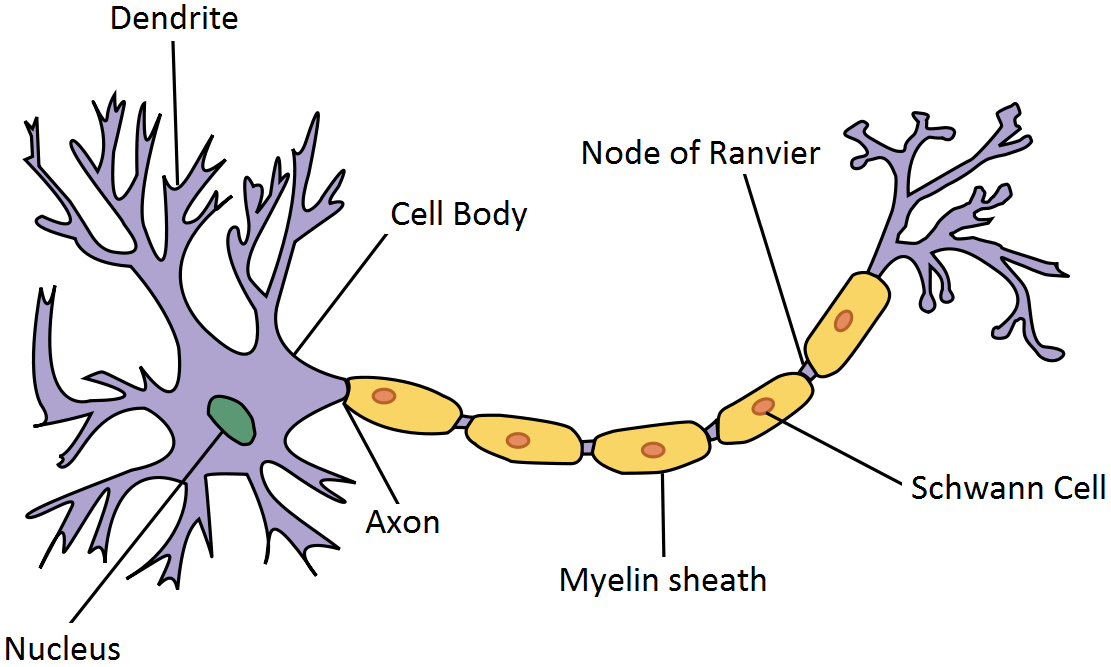
Short branched process coming out of a soma of neuron are:
  • Dendrites
  • B
    Axons
  • C
    Neutrophils
  • D
    Boutons
Answer
Correct option: A.
Dendrites
Each neuron has a single long part, called th axon and many short, branched parts called dendrites.
View full question & answer
MCQ 241 Mark
Presence of which tissue made it possible for survival of plants in terrestrial environment?
  • A
    Protective tissue.
  • B
    Parenchymatous tissue.
  • C
    Permanent tissue.
  • Conducting tissue.
Answer
Correct option: D.
Conducting tissue.
The conducting tissues in plants conduct different saps and have different structures.The primary conducting tissues of plants are xylem and phloem. Xylem conducts water from roots to the other parts of the plant, whereas phloem transports food and other material from the leaves to other parts of plants.
View full question & answer
MCQ 251 Mark
Simple epithelium is a tissue in which cells are:
  • A
    Hardened and provide support to organs.
  • B
    Continuously dividing to provide to form an organ.
  • Cemented directly to one another to form a single layer.
  • D
    Loosely connected to one another to form an irregular layer.
Answer
Correct option: C.
Cemented directly to one another to form a single layer.
Epithelial tissue cells are tightly packed and form a continuous sheet. They have only a small amount of cementing material between them and almost no intercellular spaces.
View full question & answer
MCQ 261 Mark
Girth of stem increases due to:
  • A
    Apical meristem.
  • Lateral meristem.
  • C
    Vertical meristem.
  • D
    Intercalary meristem.
Answer
Correct option: B.
Lateral meristem.
Other meristems in options facilities growth in length, while lateral meristem cause the organ to increase in diameter and growth which happens in the case of girth.
View full question & answer
MCQ 271 Mark
Mast cells occur in $........?$
  • Areolar tissue
  • B
    Adipose tissue
  • C
    White fibrous tissue
  • D
    Yellow fibrous tissue
Answer
Correct option: A.
Areolar tissue
Mast cells are cells that secrete histamine and heparin during allergic response and are specialized components of the areolar tissue.
View full question & answer
MCQ 281 Mark
Permanent tissues differ from meristematic tissue in:
  • A
    Inability to divide.
  • B
    Attainment of definite shape and size.
  • C
    Performing a distinct function.
  • All the above.
Answer
Correct option: D.
All the above.
The tissues formed by meristematic tissues take up a specific role and lose the ability to divide further. As a result, they form a permanent tissue. This process of taking up a permanent shape, size, and a function is called differentiation. Cells of meristematic tissue differentiate to form different types of permanent tissue.
View full question & answer
MCQ 291 Mark
The covering tissue of external and internal surfaces of animals is:
  • A
    Connective
  • B
    Muscular
  • C
    Nervous
  • Epithelial
Answer
Correct option: D.
Epithelial
An epithelium is a tissue composed of one or more layer of cells covering the external surface and internal body organs.
View full question & answer
MCQ 301 Mark
The mineral elements found in our bone making it hard, are:
  • A
    Sodium and calcium.
  • Calcium and phosphorus.
  • C
    Phosphorus and sodium.
  • D
    Sodium and potassium.
Answer
Correct option: B.
Calcium and phosphorus.
View full question & answer
MCQ 311 Mark
Walls of collenchymas are irregularly thickened due to the deposition of:
  • Pectin.
  • B
    Lignin.
  • C
    Suberin.
  • D
    All of the above.
Answer
Correct option: A.
Pectin.
Walls of collenchymas are irregularly thickened due to the deposition of pectin.
View full question & answer
MCQ 321 Mark
Most abundant animal tissue is:
  • A
    Epithelium
  • B
    Muscular
  • Connective
  • D
    Blood
Answer
Correct option: C.
Connective
Connective tissues are most abundant and widely distributed in the body of complex animals.
View full question & answer
MCQ 331 Mark
Cork cells are made impervious to water and gases by the presence of:
  • A
    Cellulose
  • B
    Lipids
  • Suberin
  • D
    Lignin
Answer
Correct option: C.
Suberin
The cork cells are dead and lack inter cellular spaces. Its cells, whose walls are impregnated with suberin, are arranged in radial rows and fit closely together except where the cork is interrupted by lenticles.
View full question & answer
MCQ 341 Mark
Complete the analogy given below and choose the correct option Cutin: Epidermis; Suberin:
  • A
    Cambium.
  • B
    Apical meristem.
  • C
    Sieve tube.
  • Cork cells.
Answer
Correct option: D.
Cork cells.
As epidermis is formed of cutin, suberin gives rise to cork cells which makes them impervious to gas and water. No other given option is formed from suberin.
View full question & answer
MCQ 351 Mark
Cardiac muscles are:
  • Smooth, multinucleate, involuntary.
  • B
    Striated, multinucleate, involuntary.
  • C
    Smooth, uninucleate, involuntary.
  • D
    Striated, uninucleate, involuntary.
Answer
Correct option: A.
Smooth, multinucleate, involuntary.
Cardiac muscle $($also called heart muscle or myocardium$)$ is one of three types of vertebrate muscles, with the other two being skeletal and smooth muscles. It is an involuntary, striated muscle that constitutes the main tissue of the walls of the heart.
View full question & answer
MCQ 361 Mark
The end of a long bone is connected to another bone by:
  • Ligament.
  • B
    Tendon.
  • C
    Cartilage.
  • D
    Connective tissue.
Answer
Correct option: A.
Ligament.
Ligament is a dense connective tissue which connects a bone with bone.
View full question & answer
MCQ 371 Mark
Blubber of whale and hump of camel are:
  • A
    Areolar tissue.
  • B
    Muscular tissue.
  • C
    Tendon.
  • Adipose tissue.
Answer
Correct option: D.
Adipose tissue.
A dipose tissue is fat storing connective tissue which is found mainly beneath the skin. Blubber of whale and hump of camel are adipose tissue which store fat.
View full question & answer
MCQ 381 Mark
Fat storing $.........$ tissue is found below the skin and between internal organs.
  • Adipose Tissue
  • B
    Body Tissue
  • C
    Blood
  • D
    None of these
Answer
Correct option: A.
Adipose Tissue
View full question & answer
MCQ 391 Mark
Contractile proteins are found in:
  • A
    Bones
  • B
    Blood
  • Muscles
  • D
    Cartilage
Answer
Correct option: C.
Muscles
Contractile proteins are found in muscles, as they are associated with the movement of body or limbs. The contraction and relaxation of contractile proteins, present in muscles bring about movements of limbs, internal organs, etc. The bones are the major supporting tissue which form the endoskeleton of a vertebrate body. Blood is a fluid connective tissue responsible for transport of oxygen, nutrients, hormones etc,, and for producing antitoxins and antibodies, etc.
Cartilage provides support and flexibility to the body parts and smoothens surface at joints.
View full question & answer
MCQ 401 Mark
Tendon is a structure which connects:
  • A
    A bone with another bone.
  • A muscle with a bone.
  • C
    A nerve with a muscle.
  • D
    A muscle with a muscle.
Answer
Correct option: B.
A muscle with a bone.
Tendon is a form of dense connective tissue which connects a muscle with a bone.
View full question & answer
MCQ 411 Mark
The dead element present in the phloem is:
  • A
    Companion cells.
  • Phloem fibres.
  • C
    Phloem parenchyma.
  • D
    Sieve tubes.
Answer
Correct option: B.
Phloem fibres.
Phloem fibres are the dead element of phloem. Phloem tissue consists of conducting cells, generally called sieve elements, parenchyma cells, including both specialized companion cells or albuminous cells and unspecialized cells and supportive cells, such as fibres and sclereids.
View full question & answer
MCQ 431 Mark
Husk of coconut is made of:
  • Sclerenchymatous tissue.
  • B
    Parenchyma.
  • C
    Collenchymas.
  • D
    Chlorenchyma.
Answer
Correct option: A.
Sclerenchymatous tissue.
Husk of a coconut is made up of sclerenchymatous fibres.
View full question & answer
MCQ 441 Mark
A fat person is less affected by the cold wheather because of the presence of more.
  • A
    Areolar tissue.
  • B
    Striated muscles.
  • Adipose tissue.
  • D
    Platelets.
Answer
Correct option: C.
Adipose tissue.
Adipose tissue stores fat and since fat is a bad conductor it acts as an insulator and prevents loss of heat from the body. Therefore, a fatty person is less affected by cold.
View full question & answer
MCQ 451 Mark
A tissue is a:
  • A
    Group of separate organs that are coordinated in their activities.
  • Group of similar cells that function together in a specialised activity.
  • C
    Layer of cells surrounding an organ.
  • D
    Sheet of cells, one layer thick.
Answer
Correct option: B.
Group of similar cells that function together in a specialised activity.
View full question & answer
MCQ 461 Mark
The muscular tissue which function throughout the life continuously without fatigue is:
  • A
    Skeletal muscle.
  • Cardiac muscle.
  • C
    Smooth muscle.
  • D
    Voluntary muscle.
Answer
Correct option: B.
Cardiac muscle.
This is the reason our heart keeps on pumping the blood throughout the life. Other types of muscles work as and when required because they do not need to work continuously.
View full question & answer
MCQ 471 Mark
Which of the following tissues has dead cells?
  • A
    Parenchyma.
  • Sclerenchyma.
  • C
    Collenchyma.
  • D
    Epithelial tissue.
Answer
Correct option: B.
Sclerenchyma.
Sclerenchyma is entirely composed of dead cells. Tissues mentioned in others options are composed of living cells only.
View full question & answer
MCQ 481 Mark
Nerve cell does not contain:
  • A
    Axon.
  • B
    Nerve endings.
  • Tendons.
  • D
    Dendrites.
Answer
Correct option: C.
Tendons.
Axons, nerve endings and dendrites are a part of neurons $($nerve cells$).$

Neurons do not contain tendons as they are connective tissues that join skeletal muscles to bones.
View full question & answer
MCQ 491 Mark
$pH$ of blood in artery and vein is:
  • A
    Same
  • B
    More in artery and less in vein
  • More in vein and less in artery
  • D
    Not definite
Answer
Correct option: C.
More in vein and less in artery
$pH$ of blood is more in the vein as compared to that in the artery as the plasma of the vein contains deoxygenated blood and dissolved $\mathrm{CO}_2$ in the form of bicarbonate ions.
These ions increase the alkalinity of the plasma, therefore the $pH$ value of blood is greater in the vein as to that of the artery
So, the correct answer is 'More in vein and less in artery'
View full question & answer
MCQ 501 Mark
Cuboidal tissue takes part in:
  • A
    Absorption.
  • B
    Secretion.
  • C
    Excretion.
  • All the above.
Answer
Correct option: D.
All the above.
It is composed of a single layer of cube$-$like cells. It is found in kidney tubules and salivary glands. It provides mechanical support to organs and helps in absorption and excretion.
View full question & answer