Question 14 Marks
Answer
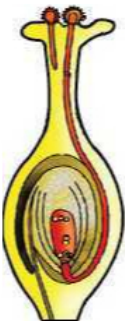
View full question & answer→i. Ovary develops into a fruit and ovules into seeds.
ii. Mustard, datura, and chili are the actinomorphic flowers as they are divided into two half from any plane.
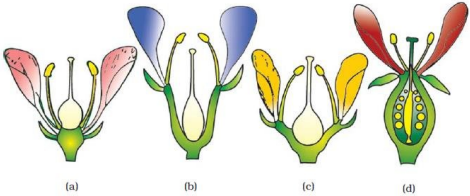
iii. When the gynoecium is present in the topmost position of the thalamus, the ovary is known as: superior.
OR

Epigynous flower: The margin of the thalamus grows over and encloses the ovary completely. The margins of the flower get fused with the other parts of the flower which rise above the ovary.
ii. Mustard, datura, and chili are the actinomorphic flowers as they are divided into two half from any plane.
iii. When the gynoecium is present in the topmost position of the thalamus, the ovary is known as: superior.
OR
Epigynous flower: The margin of the thalamus grows over and encloses the ovary completely. The margins of the flower get fused with the other parts of the flower which rise above the ovary.