Question 14 Marks
Akash and Prakash appeared for first round of an interview for two vacancies. The probability of Nisha's selection is $\frac{1}{3}$ and that of Ayushi's selection is $\frac{1}{2}$.

(i) Find the probability that both of them are selected.
(ii) The probability that none of them is selected.
Answer
View full question & answer→(i) $\begin{aligned} & \mathrm{P}(\mathrm{A})=\frac{1}{3}, \mathrm{P}\left(\mathrm{A}^{\prime}\right)=1-\frac{1}{3}=\frac{2}{3} \\ & \mathrm{P}(\mathrm{B})=\frac{1}{2}, \mathrm{P}\left(\mathrm{b}^{\prime}\right)=1-\frac{1}{3}=\frac{1}{2} \\ & \mathrm{P}(\text { Both are selected })=P(A \cap B)=P(A) \cdot P(B)=\frac{1}{3} \cdot \frac{1}{2} \\ & \mathrm{P}(\text { Both are selected })=\frac{1}{6}\end{aligned}$
(ii) $\begin{aligned} & \mathrm{P}(\mathrm{A})=\frac{1}{3}, \mathrm{P}\left(\mathrm{A}^{\prime}\right)=1-\frac{1}{3}=\frac{2}{3} \\ & \mathrm{P}(\mathrm{B})=\frac{1}{2}, \mathrm{P}\left(\mathrm{b}^{\prime}\right)=1-\frac{1}{3}=\frac{1}{2} \\ & \mathrm{P}(\text { none of them selected })=P\left(A^{\prime} \cap B^{\prime}\right)=P\left(A^{\prime}\right) \cdot P\left(B^{\prime}\right)=\frac{2}{3} \cdot \frac{1}{2} \\ & \mathrm{P}(\text { Both are selected })=\frac{1}{3}\end{aligned}$




 Based on the above information, answer the following questions.
 Based on the above information, answer the following questions.
  Based on the above information, answer the following questions.
  Based on the above information, answer the following questions.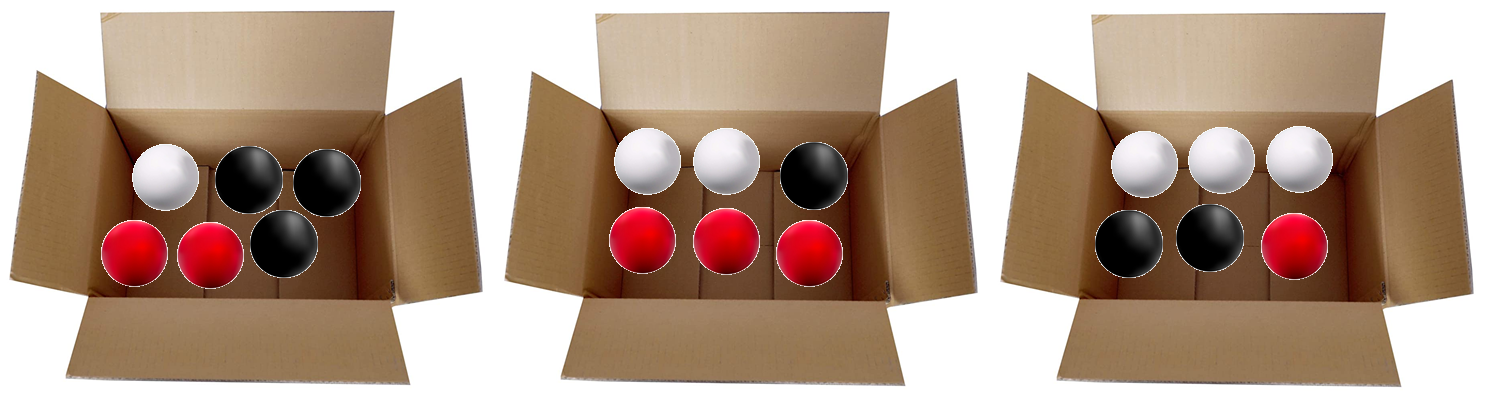
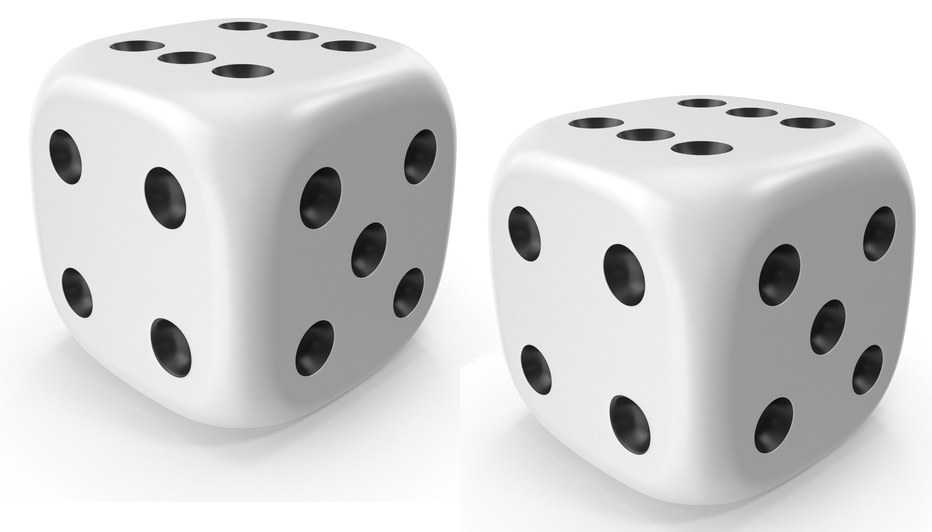 Based on the above information, answer the following questions.
  Based on the above information, answer the following questions.
 Based on the above information, answer the following questions.
  Based on the above information, answer the following questions.
  Based on the above information, answer the following questions.
  Based on the above information, answer the following questions.