Questions · Page 1 of 2

[1 Marks Each] QUE - ANS

🎯

Test yourself on this topic

50 questions · timed · auto-graded

Question 11 Mark
How can a measured length be expressed?
Answer
Each measurement has:
$(i)$ A number describing the numerical value.
$(ii)$ The unit in which that quantity is measured.
View full question & answer
Question 21 Mark
Define the term standard unit.
Answer
The unit that could be used everywhere as a basic unit of measurement is called a standard unit.
View full question & answer
Question 31 Mark
Define rest and motion.
Answer
The objects which do not change their positions with time are said to be at rest. The objects which change their positions with time are said to be in motion.
View full question & answer
Question 41 Mark
State two precautions to be observed while measuring length with the help of a metre scale.
Answer
Two precautions are:
$(i)$ The initial point of distance must coincide with the zero reading of metre scale.
$(ii)$ The eye should be kept in line with the point of measurement.
View full question & answer
Question 51 Mark
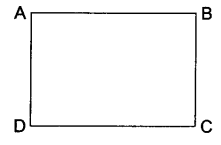
Find the length and breadth of given rectangle in mm and cm.
Image
Answer
Using measuring scale $(15 \ cm$ scale$)$, Length $AB = 3 \ cm$ and breadth $BC = 2 \ cm.$
$AB = 3 \times 10 = 30 mm$
$BC = 2 \times 10 = 20 mm.$
View full question & answer
Question 111 Mark
Why can hand span and arm length not be used as standard units of length?
Answer
because these vary from person to person.
View full question & answer
Question 121 Mark
Are senses reliable for accurate measurement?
Answer
Our senses are not reliable for accurate measurement.
View full question & answer
Question 131 Mark
Give two examples of periodic motion.
Answer
$(i)$ Oscillations of a pendulum.
$(ii)$ Motion of swing/motion of earth round the sun.
View full question & answer
Question 141 Mark
While measuring the length of a knitting needle, the reading of the scale at one end is $3.0 \ cm$ and at the other end is $33.1 \ cm.$ What is the length of the needle?
Answer
Length of the needle $= 33.1 \ cm – 3.0 \ cm = 30.1 \ cm.$
View full question & answer
Question 151 Mark
The height of a person is $1.65 m$. Express it in cm and mm.
Answer
$(a) 1.65\ m,$ as one metre $= 100 \ cm$
$= 1.65 \times 100 \ cm = 165 \ cm$
$(b) 65 \times 100 \times 10 mm = 1650\ mm.$
View full question & answer
Question 161 Mark
Arrange the following lengths in their increasing magnitude :
$1$ metre, $1$ centimetre, $1$ kilometre, $1$ millimetre.
Answer
Ascending order of length:
$1$ millimetre $< 1$ centimetre $< 1$ metre $< 1$ kilometre
View full question & answer
Question 171 Mark
Why can a pace or a footstep not be used as a standard unit of length?
Answer
 Because a pace or a footstep of each and every person is not equal.
View full question & answer
Question 181 Mark
Give two examples each of modes of transport used on land, water and air.
Answer
$(i)$ Land—Bus, truck, train.
$(ii)$ Water—Ship, boat.
$(iii)$ Air—Aeroplane, Helicopter.
View full question & answer
Question 191 Mark
You have learnt that a tail is present in a tadpole but it disappears as it grows into a frog. What is the advantage of having a tail in the tadpole stage?
Answer
$\rightarrow $ The tail in the tadpole stage of a frog provides
$\rightarrow $ Swimming Ability: It helps the tadpole swim efficiently in water to find food and escape predators.
$\rightarrow $ Balance and Stability: Assist in maintaining balance while moving in water.
View full question & answer
Question 201 Mark
You have learnt that different conditions are required for seed germination. How can we use this knowledge for proper storage of grains and pulses?
Answer
To ensure proper storage of grains and pulses and prevent germination:
$\rightarrow $ Keep Dry
$\rightarrow $ Cool Storage
$\rightarrow $ Airtight Containers
View full question & answer
Question 211 Mark
How would you now categorise a seed, as living or non¬living?
Answer
Seed is a living thing. Seed can grow into a plant under right conditions.
View full question & answer
Question 281 Mark
What type of motion do the following objects have?
wheels of moving car.
Answer
Wheels of moving car: Linear motion and Rotational motion.
View full question & answer
Question 291 Mark
What type of motion do the following objects have?
 the smoke from a lighted dhoopbatti
Answer
The smoke from a lighted dhoopbatti: Random motion.
View full question & answer
Question 301 Mark
What type of motion do the following objects have?
the blades of an electric fan
Answer
Blade of an electric fan: Circular motion.
View full question & answer
Question 311 Mark
What type of motion do the following objects have?
the movements of a mosquito
Answer
Movement of a mosquito: Random motion.
View full question & answer
Question 321 Mark
What type of motion do the following objects have?
the needle of a sewing machine
Answer
The needle of a sewing machine: Periodic motion.
View full question & answer
Question 331 Mark
What type of motion do the following objects have?
the galloping of a horse
Answer
The galloping of a horse: Linear motion.
View full question & answer
Question 341 Mark
Give two examples for each:
Random motion
Answer
Random motion: $(a)$ Motion of football players, $(b)$ Movement of mosquito.
View full question & answer
Question 351 Mark
Give two examples for each:
Circular motion
Answer
Circular motion: $(a)$ Rotation of fan, $(b)$ Bicycle wheel.
View full question & answer
Question 361 Mark
Give two examples for each:
Vibrational motion
Answer
Vibrational motion: $(a)$ String of a guitar, $(b)$ Surface of drums.
View full question & answer
Question 371 Mark
Give two examples for each:
Periodic motion
Answer
Periodic motion: $(a)$ Pendulum of clock, $(b)$ Motion of a swing, heartbeat.
View full question & answer
Question 381 Mark
Give two examples for each:
Oscillatory motion
Answer
Oscillatory motion: $(a)$ Pendulum of clock, $(b)$ Motion of a child on a swing,
View full question & answer
Question 391 Mark
Give two examples for each:
Spinning motion
Answer
Spinning motion: $(a)$ Rotating fan, $(b)$ Wheel of sewing machine.
View full question & answer
Question 401 Mark
Give two examples for each:
Linear motion
Answer
Linear motion: $(a)$ Rolling of ball on ground, $(b)$ Moving of bicycle on road,
View full question & answer
Question 481 Mark
Give one example each of the types of motion:
Linear
Answer
Linear 
Example :- motion of stone falling                                
View full question & answer
Question 491 Mark
Do frogs live in the water or on land?
Answer
Frogs can live both on land and in water. Amphibians replaced gills with another respiratory organ, the lungs, in order to live on land.
View full question & answer
Question 501 Mark
What is metamorphosis?
Answer
The development of larvae (an immature form that hatches from an egg) to the adult form is metamorphosis.
View full question & answer
[1 Marks Each] QUE - ANS - Science STD 6 Questions - Vidyadip