MCQ 11 Mark
The image formed by a plane mirror is always:
- AReal
- BRrect
- CVirtual
- ✓Both $(b)$ and $(c)$
Answer
View full question & answer→Correct option: D.
Both $(b)$ and $(c)$
50 questions · timed · auto-graded
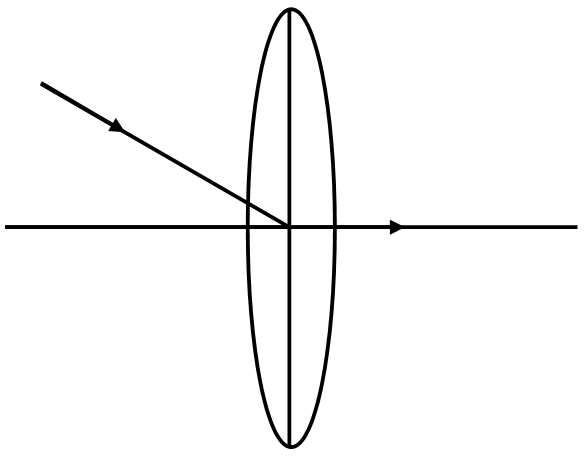
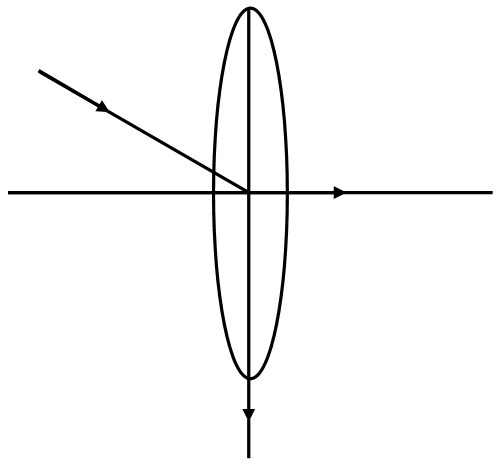
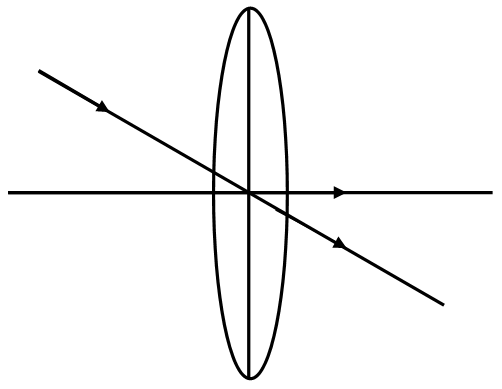
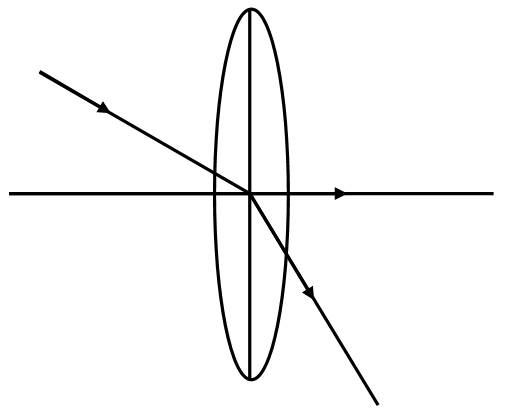
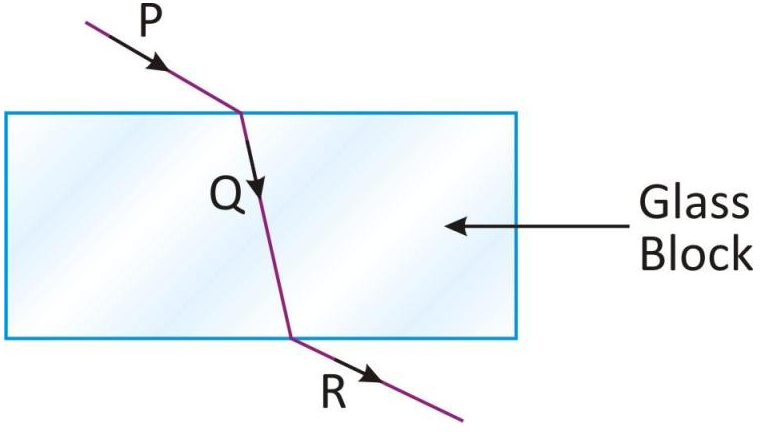
| $P$ | $Q$ | $R$ |
| Incident ray | Emergent ray | Refracted ray |
| $P$ | $Q$ | $R$ |
| Incident ray | Refracted ray | Emergent ray |
| $P$ | $Q$ | $R$ |
| Emergent ray | Incident ray | Refracted ray |
| $P$ | $Q$ | $R$ |
| Emergent ray | Refracted ray | Incident ray |
| $P$ | $Q$ | $R$ |
| Incident ray | Refracted ray | Emergent ray |
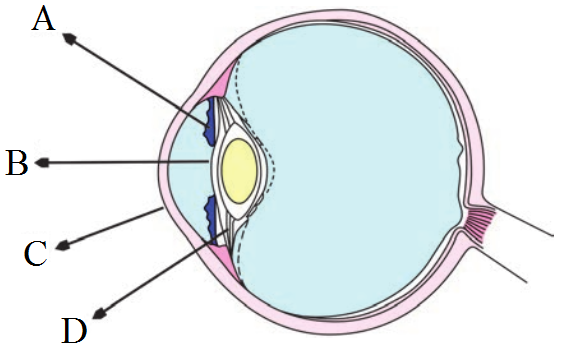
The deficiency of one of the following in the diet of a person for a considerable time can lead to a disease called night blindness. This one is “vitamin a”. The impaired dark adaptation of eyes is called as night blindness. People with this impairment can hardly see in dim environment or during night time. This due to vitamin deficiency is mostly treatable with vitamin supplement. Vitamin a helps in transfer of nerve impulses into image to retina. Some of the food with vitamin a are eggs, cod liver oil, yellow and orange fruits and vegetables and so on.
Vitamin $A$ deficiencies occur from fat malabsorption, liver disorders and inadequate food intake.
The relationship between no. of images and angle of mirror is
$\text{Images}=\Big(\frac{360^\circ}{\text{angle between the mirrors}}\Big)-1$
$\text{Images}=\Big(\frac{360^\circ}{90^\circ}\Big)-1$
Images $= 4 – 1$
Images $= 3$
Blindness is caused primarily because of the defect in the cornea. Hence, statement $IV$ is incorrect.
When the object is placed within the focal length of the lens, the image is formed on the same side as the object. It is virtual, erect and magnified.