Question 14 Marks
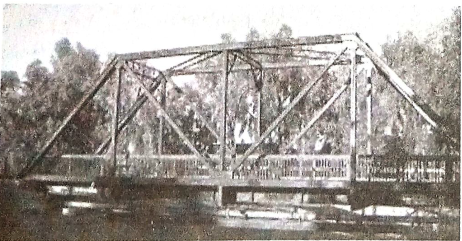
Engineers often use the familiar triangular shape for strength in bridge design. Triangles are effective tools for architecture and are used in the design of bridges, buildings and other structures as they provide strength and stability. The triangle is common in all sorts of building supports and trusses. Following are some questions on triangles:
(i) In triangles ABC and DEF, if AB = DE, AC = EF and $\angle A=\angle E$. Then,
(a) $\triangle A B C \cong \triangle D E F$ by SAS criterion $\quad$(b) $\triangle A B C \cong \triangle E F D$ by SSS criterion
(c) $\triangle A B C \cong \triangle E D F$ by SAS criterion $\quad$(d) $\triangle A B C \cong \triangle E D F$ by ASA criterion
(ii) If $\triangle P R Q \cong \triangle D E F$, then $D E=$
(a) PR $\quad$(b) RQ $\quad$(c) PQ $\quad$(d) DF
(iii) Is it possible to construct a triangle with lengths of sides as 5 cm, 4 cm and 10 cm ?
(iv) In triangles ABC and DEF, AB = FD and $\angle A=\angle D$. Then the two triangles will be congruent by SAS axiom, if
(a) BC = EF $\quad$(b) AC = DE $\quad$(c) AC = EF $\quad$(d) BC = DE
(i) In triangles ABC and DEF, if AB = DE, AC = EF and $\angle A=\angle E$. Then,
(a) $\triangle A B C \cong \triangle D E F$ by SAS criterion $\quad$(b) $\triangle A B C \cong \triangle E F D$ by SSS criterion
(c) $\triangle A B C \cong \triangle E D F$ by SAS criterion $\quad$(d) $\triangle A B C \cong \triangle E D F$ by ASA criterion
(ii) If $\triangle P R Q \cong \triangle D E F$, then $D E=$
(a) PR $\quad$(b) RQ $\quad$(c) PQ $\quad$(d) DF
(iii) Is it possible to construct a triangle with lengths of sides as 5 cm, 4 cm and 10 cm ?
(iv) In triangles ABC and DEF, AB = FD and $\angle A=\angle D$. Then the two triangles will be congruent by SAS axiom, if
(a) BC = EF $\quad$(b) AC = DE $\quad$(c) AC = EF $\quad$(d) BC = DE
Answer
View full question & answer→(i) (c): In $\triangle^{\prime} s A B C$ and DEF, we have
$A B=D E, \angle A=\angle F \text { and } A C=E F$
So, by $S A S$ congruence criterion $\triangle A B C \cong \triangle E D F$.
(ii) (a): $\triangle P R Q \cong \triangle D E F \Rightarrow P R=D E$
(iii) No, sum of any two sides must be greater than the third side.
(iv) (b): $\triangle A B C \cong \triangle F D E$ by SAS criterion
$\therefore \quad A C=D E$
$A B=D E, \angle A=\angle F \text { and } A C=E F$
So, by $S A S$ congruence criterion $\triangle A B C \cong \triangle E D F$.
(ii) (a): $\triangle P R Q \cong \triangle D E F \Rightarrow P R=D E$
(iii) No, sum of any two sides must be greater than the third side.
(iv) (b): $\triangle A B C \cong \triangle F D E$ by SAS criterion
$\therefore \quad A C=D E$