Question types

Chemical coordination in plants question types

133 questions across 9 question groups — pick any mix to generate a Biology paper with step-by-step answer keys.

133
Questions
9
Question groups
5
Question types
Sample Questions

Chemical coordination in plants questions

One sample from each question group in this chapter. Select any group above to see the full set with answer keys.

Q 1MCQ1 Mark
In tropic movements, plant parts move $.......$
  • A
    away from the stimulus
  • B
    towards the stimulus
  • either towards or away from the stimulus
  • D
    only towards water

Answer: C.

View full solution
Q 2MCQ1 Mark
Stems are $.......$
  • A
    positively geotropic and negatively phototropic
  • B
    positively geotropic and positively phototropic
  • negatively geotropic and positively phototropic
  • D
    negatively phototropic and negatively geotropic

Answer: C.

View full solution
Q 4MCQ1 Mark
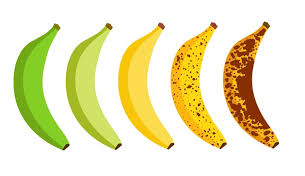
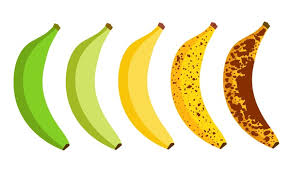
A higher concentration of ethylene is found in $.......$
  • A
    green banana
  • ripe banana
  • C
    fresh potato tuber
  • D
    green apple

Answer: B.

View full solution
Q 5MCQ1 Mark
Auxins are abundantly produced in $.......$
  • A
    base of the root
  • B
    base of the shoot
  • C
    shoot
  • meristematic region of the shoot

Answer: D.

View full solution
(i) _____________ are positively thigmotropic because they grow towards the support in response to contact. (ii) _____________ inhibits the effect of other hormones. (iii)_____________ Response to stimuli is a characteristic feature of all living organisms. (iv) _____________ synthesize auxins from the amino acid Tryptophan. (v) _____________ is the directional growth movement of the plant part in response to a chemical stimulus.
View full solution
The tea plants are never allowed to grow lengthwise. This is done by cutting their apical buds, a process known as pruning. In this way, tea plants get a dense growth and easy yield. Answer the following question :
Name one plant hormone which inhibits the said phenomenon.
View full solution
The tea plants are never allowed to grow lengthwise. This is done by cutting their apical buds, a process known as pruning. In this way, tea plants get a dense growth and easy yield. Answer the following question :
What plant hormone is responsible for the scientific phenomenon mentioned in 1.1.
View full solution
The tea plants are never allowed to grow lengthwise. This is done by cutting their apical buds, a process known as pruning. In this way, tea plants get a dense growth and easy yield. Answer the following question :
Name the scientific phenomenon that is being overcome by pruning.
View full solution
Column I Column II
(i) Geotropism(a) Response to touch or physical contact
(ii) Phototropism(b) Growth towards or away from water
(iii) Hydrotropism stimulus(c) Growth towards or away from a chemical
(iv) Thigmotropism(d) Growth in response to gravity
 (e) Growth towards the light
View full solution
Column I Column II
(i) Auxin(a) Promotes fruit ripening
(ii) Gibberellin(b) Involvement in seed germination
(iii) Cytokinin phototropism(c) Regulates apical dominance and
(iv) Abscisic acid(d) Induces stomatal closure during drought
 (e) Stimulates cell division and shoot development
View full solution
Column IColumn II
(i) Cytokinins(a) Acts as an anti-transpirant
(ii) 2, 4-D and 2,4,5-T(b) Gibbane ring structure
(iii) Ethylene(c) Used in tissue culture
(iv) Abscisic acid(d) Eradication of weeds
 (e) Promotes transverse growth
View full solution
Match the items in column A with those of column B.

Column A

Column B

(a) Auxin

(i) apical dominance

(b) Gibberellin

(ii) cell division

(c) Cytokinin

(iii) fruit ripening

(d) Ethylene

(iv) internodal elongation
View full solution
Q 36Do as Directed.1 Mark
Choose the Odd One Out :
(i) Ethylene, Cytokinins, Phototropism, Gibberellins, Auxins
(ii) Geotropism, Abscisic Acid, Hydrotropism, Thigmotropism, Chemotropism
(iii) Seed Dormancy Breaking (Gibberellins), Leaf Abscission (Ethylene), Root Elongation (Cytokinins), Phototropism, Apical Dominance (Auxins)
(iv) Fruit Ripening (Ethylene), Flower Induction (Gibberellins), Cell Division (Cytokinins), Hydrotropism, Stomatal Closure (Abscisic Acid)
(v) Drought Resistance (Abscisic Acid), Cell Elongation (Auxins), Seed Dormancy (Abscisic Acid), Chemotropism, Stem Elongation (Gibberellins)
View full solution

Generate a Chemical coordination in plants paper free

Pick question groups from the list above, set marks and difficulty, and export a branded PDF with step-by-step answer keys. First 3 chapters free — no signup.

Download App