Question
Generate a complete, print-ready paper with questions like this in minutes — across 16+ boards, with answer keys.
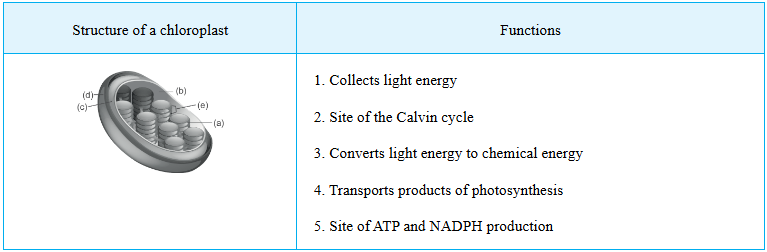
| Column I | Column II |
| (i) Grana | (a) Producers |
| (ii) Autotrophs | (b) Decomposers |
| (iii) By-products of photosynthesis | (c) Work rooms |
| (iv) Bacteria and fungi | (d) Glucose + oxygen |
| (e) Light reaction |
| Column I | Column II |
| (i) Anaphase | (a) Chromosomes become arranged in a horizontal plane at the equator. |
| (ii) Prophase | (b) Daughter chromosomes move to opposite poles of the spindle. |
| (iii) Telophase | (c) Chromosomes become visible as fine, long threads. |
| (iv) Metaphase | (d) Chromosomes lose their distinctiveness and gradually become transformed into chromatin network. |
| COLUMN A | COLUMN B |
| (i) The excretory organs | (a)Lungs |
| (ii) Excrete CO2 | (b)Bowman's capsule |
| (iii) Outer dark part of kidney | (c)End part of nephron |
| (iv) A thin walled cup | (d)Kidneys |
| (e)Cortex |
| Column I | Column II |
| A. Turgid | (i) intake of mineral salts |
| B. Diffusion | (ii) a cell charged with water |
| C. Active transport | (iii) limiting membrane of a vacuole |
| D. Osmosis | (iv) movement of particles from higher to lower concentration |
| (v) movement of solvent across semi-permeable membrane |
| Column I | Column II |
| (i) Addison's disease | (a) Emergency hormone. |
| (ii) Dwarfism | (b) Regulates the amount of water excreted in urine. |
| (iii) Adrenaline | (c) Under-secretion of adrenal cortex |
| (iv) Vasopressin | (d) Under-secretion of growth hormone. |
| (e) Master of master gland. |
| Column I | Column II |
| (i) Parathyroid | (a) Dwarfism and mental retardation |
| (ii) Cretinism | (b) Shortage of glucose in blood. |
| (iii) Diabetes mellitus | (c) Master of master gland. |
| (iv) Insulin shock | (d) Regulates the level of calcium and phosphorus. |
| (e) Excess of glucose in blood. |
| Column I | Column II |
| (i) Transpiration | (a) Cacti plants |
| (ii) Movement of water | (b) Stomata |
| (iii) Guttation | (c) Maize plant |
| (iv) Low rate of transpiration | (d) Xylem |
| (e) Hydathodes |