Questions

[5 Mark Question Answer]

🎯

Test yourself on this topic

2 questions · timed · auto-graded

Question 15 Marks
Name the three types of transpiration.
Answer
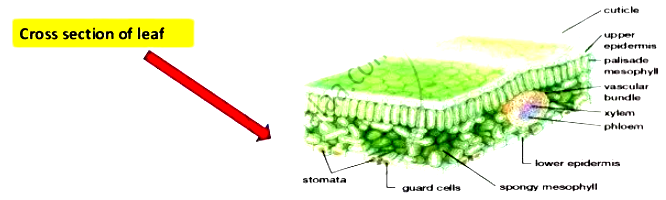
(i) Stomatal transpiration: Stomata are minute pores confined to the epidermis of green shoot and leaves. The opening and closing of stomata are controlled by guard cells. Maximum loss (80-90 percent of the total water loss) of water from the plant tissues takes place through the stomatal opening.
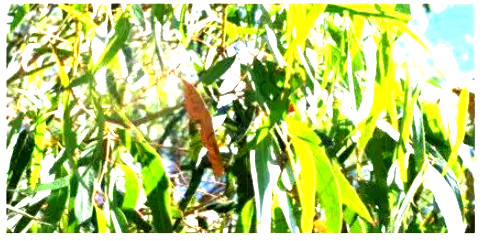
(ii) Lenticular transpiration: Loss of water in the form of water vapour taking place through the lenticels present in woody stem and fruits is called lenticular transpiration. it amounts 1-5 percent of the total water loss by the plant.
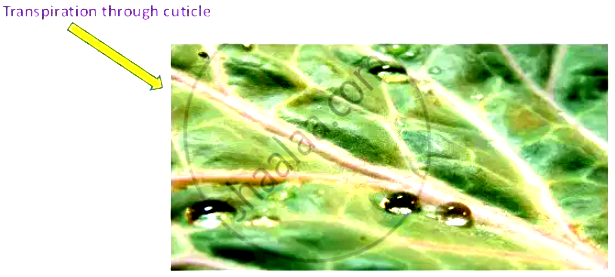
(iii) Cuticular transpiration: the loss of water in the form of water vapour through the cuticle is known as cuticular Transpiration.
View full question & answer
Question 25 Marks
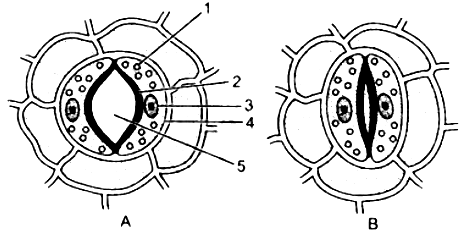
Given below are the diagrams of a certain structure in plants in two conditions.

(i) Name the structure shown.
(ii) Name the parts numbered 1-5.
(iii) What is the most apparent difference between A and B in the structure shown?
(iv) Describe the mechanism which brings about the change in the structure depicted in A and B.
Answer
(i) Stomata surrounded by epidermal cells.

(ii)

  1. Chloroplast,
  2. The inner wall of guard cells,
  3. Nucleus,
  4. Guard cells,
  5. Stoma.

(iii) The stoma is open in A and is almost closed in B.

(iv) The opening and dosing mechanism of stomata is regulated by the amount of water and solutes present in the guard cells. The guard cells have a thick inner wall facing the opening and a thin outer wall on the opposite side; their cytoplasm contains chloroplasts. During the day guard cells begin photosynthesis and the sugar produced during the process increases the osmotic pressure which draws in water from the adjoining cells. Hence, the guard cells become turgid and bulge outward due to their thin outer wall, thus widening the stomatal opening lying in between (A). As the stomata open, the diffusion of gases in and out begins to fulfilling the need for photosynthesis and for allowing transpiration. If for any reason the water content of the leaf is falling short, the guard cells fail to remain turgid, they turn flaccid or lose turgidity, thereby closing the stomatal opening (B) and the transpiration stops.

View full question & answer
[5 Mark Question Answer] - Biology STD 10 Questions - Vidyadip