Questions

[5 Mark Question Answer]

🎯

Test yourself on this topic

7 questions · timed · auto-graded

Question 15 Marks
What is the importance of rain water harvesting?
Answer
The importance of rainwater harvesting is as follows:
  1. overcome the rapid depletion of groundwater levels.
  2. To meet the increased demand for water.
  3. Reduces flood and soil erosion.
  4. Water stored in-ground is not contaminated by human and animal wastes and hence can be used for drinking purpose.
View full question & answer
Question 25 Marks
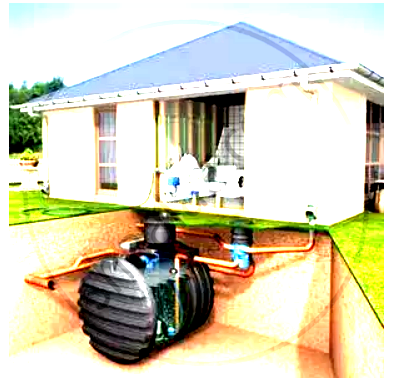
What is a rain water harvester? How does it work?
Answer
It is a storage tank usually fitted underground to your down pipes coming from the roof. Rainwater enters the tank through a filter which removes the leaves and other debris. The system contains a pump which pushes or sucks the rain water back into the house where it is delivered to the toilets or clothes washing machine. The tank is placed in the dark and kept oxygenated to prevent the growth of algae. This filtered untreated water should not be used for drinking.
Rain water harvesters can be installed in houses, bungalows, large sheds or any building with a roof on it to capture the rain water. Commercial premises are very suitable as they often have a larger roof space and higher percentage of water use that can be replaced by rain water.

View full question & answer
Question 35 Marks
Why should we save rain water?
Answer
(i) Approximately, 40% of water used in summer is used outdoors, for the garden and trees. This is the period when water shortages occur and cities have to resort to restricting water supply.
(ii) The more rain water is used, the less will go into the sewers it gets mixed with oil and other toxic residues from the cities.
(iii) Saving water saves money and helps the environment. The more rain water is used, the less the need to use chlorinated water or chemically treated tap water.
(iv) There is saving on water bill to the extent of 30% to 50% for domestic users and 80% for commercial users of the treated drinking water from the mains. Having metered water is the best way of appreciating this difference.
View full question & answer
Question 45 Marks
What are the demerits of canals? How to overcome these defects?
Answer
(i) Salt effervescence: The cultivators misuse canal water by overflooding the fields. It leads to salt-effervescence which makes the soil infertile. The farmers have to be educated in the careful utilization of canal water.
(ii) Water-logging: It is a serious problem which has rendered extensive area unfit for farming. The canals are generally unlined. Hence water seepage towards the adjoining areas goes on, turning them into swamps. For solving this problem:
(a) Canals should be lined with brick and mortar along the embankments.
(b) Wells may be dug in water-logged areas so that the water may soak down into these wells.
(c) Swamps may be dried up, by draining out the water with the aid of power-driven pumps.
(d) Gypsum can be used which makes the soil fertile again.
View full question & answer
Question 55 Marks
What are the reasons that necessitate artificial irrigation?
Or
What is the importance of irrigation?
Answer
Artificial irrigation has to be resorted to for the following reasons:
(i) Indian rainfall is periodic. Most of the rainfalls is in four months from June to September. The remaining eight months are dry.
(ii) Rainfall is not well distributed during the rainy season. During the four months of the
monsoon, there are spells of dry weather. There are regions where the rainfall is scanty, e.g., Rajasthan, Punjab, Haryana, the interior parts of Peninsular Plateau get much less rain than is required.
(iii) Agricultural crops are varied. The requirements of water varies for different crops. Rice requires heavy rain. Sugarcane, tobacco, vegetables also require regular and abundant supply of water.
(iv) Ample supply of water is required during the period of growth.
(v) India is a hot country. Evaporation is rapid.
(vi) Drought conditions. In India droughts commonly occur. This becomes a problem not only for agriculture but also the economy of the entire country.
View full question & answer
Question 65 Marks
Mention any three water harvesting systems practised in India.
Answer
(i) The simplestrainwater harvesting technique is the check dam. It is a small barrier built across streams. They store water during the monsoons which can then be used for irrigation etc.
(ii) Another rainwater harvesting technique is the storage tank kept underground and connected to the pipe coming down from the roof. The rain water enters the tank through a filter which removes leaves and other debris. The system contains a pump which pushes or sucks the rain water back into the house which is then delivered to the garden, washing clothes etc.
(iii) Another rainwater collection system is the Garden Watersaver diverter (GWS). It is a downspout rainwater diverter which simplifies the collection of rain water. It has advantages over other rainwater collection systems in that it instals in minutes and deactivates in seconds during winter when stored water isn’t much needed.
View full question & answer
Question 75 Marks
What are the favourable conditions in India for the development of irrigation?
Answer
(i) Perennial Rivers: There are a number of rivers which flow throughout the year because they are fed by the melting of snows.
(ii) Suitable spots for the construction of dams: Along the Indian streams there are many places suitable for construction of dams or embankments across the streams for impounding the water.
(iii) Inexhaustible store of underground water: A large proportion of the rain water finds its way underneath the surface by percolation and remains stored in the aquifer rock-layer. This underground water can be tapped for irrigation when required.
(iv) Arable land is level: Arable lands in India are confined to the northern plains and also parts of deltaic India which are level and suitable for the construction of canals.
(v) Abundance of natural depressions in Southern India: Peninsular India is mostly a plateau region with rolling uplands. There are a number of natural depressions. Only an earthern embankment is required to check the outflow.
View full question & answer
[5 Mark Question Answer] - Geography STD 10 Questions - Vidyadip