MCQ 11 Mark
Identify the examples of convergent evolution from the following:
- A
Flippers of penguins and dolphins.
- ✓
Eyes of octopus and mammals.
- C
- D
AnswerCorrect option: B. Eyes of octopus and mammals.
View full question & answer→MCQ 21 Mark
Which one of the following character differentiate man from other mammals?
MCQ 31 Mark
In Homo habilis, 'habilis' refers to:
AnswerThe first hominid Homo habilis lived in Africa about $2$ million years ago. Homo habilis made primitive stone tools. Thus, they are called tool maker or handy man.
View full question & answer→MCQ 41 Mark
Evolution of unicellular organism was in the $..........$ era.
AnswerArchaeozoic era occured before $2.5$ billion years ago, when the only life forms were blue$-$green algae and bacteria.
Evolution of unicellular organisms occurred during this era.
View full question & answer→MCQ 51 Mark
Industrial melanism is an example of:
- A
- B
Darkening of skin due to smoke from industries.
- ✓
Protective resemblance with the surroundings.
- D
Defensive adaptation of skin against ultraviolet radiations.
AnswerCorrect option: C. Protective resemblance with the surroundings.
View full question & answer→MCQ 61 Mark
Basic principles of embryonic development were pronounced by:
MCQ 71 Mark
Under which condition, Hardy Weinberg's law is violated?
- A
- B
- C
Immigration and genetic drift
- ✓
View full question & answer→MCQ 81 Mark
Which one of the following statements is correct?
AnswerCorrect option: B. Homo erectus is the ancestor of man.
View full question & answer→MCQ 91 Mark
In case of a man, when the entire sole rests on the ground during walking, it is known as:
MCQ 101 Mark
‘Golden age of dinosaurs’$/$ Age of reptiles was:
View full question & answer→MCQ 111 Mark
Example of a homologous organ:
- ✓
The arm of a human, wing of a bird.
- B
Wing of an insect, wing of a bird.
- C
Leg of a dog, leg of a spider.
- D
AnswerCorrect option: A. The arm of a human, wing of a bird.
View full question & answer→MCQ 121 Mark
Tasmanian Wolf is a marsupial while Wolf is a placental mammal. This shows.
- ✓
- B
- C
Inheritance of acquired characters.
- D
View full question & answer→MCQ 131 Mark
Our solar system was formed about $.............$ years ago.
- A
$15$ million
- B
$15$ billion
- ✓
$4.5$ to $5$ billion
- D
$10$ to $15$ billion
AnswerCorrect option: C. $4.5$ to $5$ billion
View full question & answer→MCQ 141 Mark
Which type of selection is industrial melanism observed in moth, Biston bitularia:
MCQ 151 Mark
In which epoch the fossils of Sinanthropus pekinensis have been discovered?
MCQ 161 Mark
Which one of the following pair has homologous organs?
- ✓
Pectoral fins of a fish and forelimbs of a horse.
- B
Wings of a bat and wings of cockroach.
- C
Air sac of fish and lungs of frog.
- D
Wings of a bird and wings of a butterfly.
AnswerCorrect option: A. Pectoral fins of a fish and forelimbs of a horse.
View full question & answer→MCQ 171 Mark
What kind of evidence suggested that man is more closely related with chimpanzee than with other hominoid apes?
- A
Evidence from $\text{DNA}$ from sex chromosomes only.
- B
Comparison of chromosomes morphology only.
- C
Evidence from fossil remains and the fossil mitochondrial $\text{DNA}$ alone.
- ✓
Evidence from $\text{DNA}$ extracted from sex chromosomes, autosomes and mitochondria.
AnswerCorrect option: D. Evidence from $\text{DNA}$ extracted from sex chromosomes, autosomes and mitochondria.
View full question & answer→MCQ 181 Mark
According to abiogenic origin of life, proposed by Oparin $.............$ was the simplest organic compound to arise.
View full question & answer→MCQ 191 Mark
Random genetic drift in a population probably results from:
- ✓
Highly genetically variable individuals.
- B
Interbreeding within the population.
- C
Constant low mutation rate.
- D
AnswerCorrect option: A. Highly genetically variable individuals.
View full question & answer→MCQ 201 Mark
Homologous organs like the limbs of a horse and flipper of whale indicate:
MCQ 211 Mark
Which of the following is the earliest era?
AnswerCorrect option: D. Pre$-$cambrian
View full question & answer→MCQ 221 Mark
Evolution in which the animals of two different gene ecology show too much similarity with one another, as a result of adaptation is termed as:
MCQ 231 Mark
Early African man was discovered in $1948$ by Leakey. It was:
AnswerIn $1948,$ Leakey reported skull of Proconsul africanus.
View full question & answer→MCQ 241 Mark
Which of the following is used as an atmospheric pollution indicator?
Answersess roots and hence air is their primary source for most elements. They will not grow in the areas that are polluted. So, lichen is used as a reliable indicator of atmospheric pollution.
View full question & answer→MCQ 251 Mark
The most accepted line of descent in human evolution is:
- ✓
Ramapithecus $\rightarrow$ Homo habilis $\rightarrow$ Homo erectus $\rightarrow$ Homo sapiens.
- B
Australopithecus $\rightarrow$ Ramapithecus $\rightarrow$ Homo erectus $\rightarrow$ Homo habilis $\rightarrow$ Homo sapiens.
- C
Homo erectus $\rightarrow$ Homo habilis $\rightarrow$ Homo sapiens.
- D
Australopithecus $\rightarrow$ Ramapithecus $\rightarrow$ Homo sapiens $\rightarrow$ homo habilis.
AnswerCorrect option: A. Ramapithecus $\rightarrow$ Homo habilis $\rightarrow$ Homo erectus $\rightarrow$ Homo sapiens.
View full question & answer→MCQ 261 Mark
$...........$ is a vestigial organ.
View full question & answer→MCQ 271 Mark
Which one of the following sets includes only the vestigial structures in man?
- A
Body hair, olecranon process, coccyx, patella.
- B
Wisdom teeth, mammary glands, coccyx, patella.
- ✓
Coccyx, nictitating membrane, vermiform appendix, ear muscles.
- D
Coccyx, body hair, ear ossicles, vermiform appendix.
AnswerCorrect option: C. Coccyx, nictitating membrane, vermiform appendix, ear muscles.
View full question & answer→MCQ 281 Mark
The habitable part of earth's crust is about:
- ✓
$22.5\ km$
- B
$222.5\ km$
- C
$22.5$ meters
- D
$2.25\ km$
AnswerCorrect option: A. $22.5\ km$
View full question & answer→MCQ 291 Mark
During evolution of man, many changes have taken place in his ancestral character. Which one of the following is an unsignificant change?
- A
Change of diet from hard tough fruits and roots into soft food.
- B
Qualitative improvement in the structure of hands skills for making tools.
- ✓
- D
Improvement in speech for communication and social behaviour.
View full question & answer→MCQ 301 Mark
Which of the following is correct order of evolutionary history of man?
- A
Peking man, Homo sapiens, Neanderthal, Cro$-$magnon.
- B
Peking man, Neanderthal, Homo sapiens, Cro$-$magnon.
- ✓
Peking man, Heidelberg man, Neanderthal, Cro$-$magnon.
- D
Peking man, Neanderthal, Homo sapiens, Heidelberg man.
AnswerCorrect option: C. Peking man, Heidelberg man, Neanderthal, Cro$-$magnon.
View full question & answer→MCQ 311 Mark
The most apparent change during the evolutionary history of Homo sapiens is traced in:
- A
- B
- ✓
Remarkable increase in the brain size.
- D
AnswerCorrect option: C. Remarkable increase in the brain size.
View full question & answer→MCQ 321 Mark
Same group of ancestors have formed the mammals adapted to running, flying and swimming. This proves:
MCQ 331 Mark
Hardy and Weinberg proposed a principle for $........$ population.
AnswerCorrect option: D. Non$-$evolving
View full question & answer→MCQ 341 Mark
Which one does not favour Lamarckian concept of inheritance of acquired characters?
- A
Lack of pigment in cave dwellers.
- B
Absence of limbs in snakes.
- C
Presence of webbed toes in aquatic birds.
- ✓
Melanization of peppered moth in industrial areas.
AnswerCorrect option: D. Melanization of peppered moth in industrial areas.
View full question & answer→MCQ 351 Mark
Neanderthal man was followed by:
AnswerCorrect option: A. Cro$-$Magnon man
View full question & answer→MCQ 361 Mark
The earliest fossil form in the phylogeny of horse is:
MCQ 371 Mark
What is common amongst whale, seal and shark?
MCQ 381 Mark
Atmosphere around earth is $1600 \ km,$ made up of gaseous mantle with highest $78.03\%$ of:
View full question & answer→MCQ 391 Mark
Which one of the following statements about fossil human species is correct?
AnswerCorrect option: D. Homo erectus was preceded by Homo habilis.
View full question & answer→MCQ 401 Mark
Random genetic drift in a population probably results from:
- A
- ✓
Highly genetically variable individuals.
- C
Interbreeding within this population.
- D
Constant low mutation rate.
AnswerCorrect option: B. Highly genetically variable individuals.
View full question & answer→MCQ 411 Mark
In primordial atmosphere when the living organism evolved the respiration process was:
- A
Anaerobic as it released more energy.
- B
Aerobic as it was more complex.
- C
Aerobic as it released more energy.
- ✓
Anaerobic because early atmosphere contained.
AnswerCorrect option: D. Anaerobic because early atmosphere contained.
View full question & answer→MCQ 421 Mark
Viviparity is considered to be more evolved because:
- A
The young ones are left on their own.
- B
The young ones are protected by a thick shell.
- ✓
The young ones are protected inside the mother's body and are looked after they are born leading to more chances of survival.
- D
The embryo takes a long time to develop.
AnswerCorrect option: C. The young ones are protected inside the mother's body and are looked after they are born leading to more chances of survival.
Viviparity is considered to be more evolved because the young ones are protected inside the mother's body and are looked after they are born leading to more chances of survival.
View full question & answer→MCQ 431 Mark
The jurassic period belongs to the era:
MCQ 441 Mark
Dinosaurs dominated the earth about:
- A
$10$ million years ago.
- B
$50$ million years ago.
- ✓
$180$ million years ago.
- D
$500$ million years ago.
AnswerCorrect option: C. $180$ million years ago.
View full question & answer→MCQ 451 Mark
One of the important consequences of geographical isolation is:
- A
No change in the isolated fauna.
- B
- ✓
Speciation through reproductive isolation.
- D
Random creation of new species.
AnswerCorrect option: C. Speciation through reproductive isolation.
View full question & answer→MCQ 461 Mark
Presence of gills in the tadpole of frog indicates diat.
AnswerCorrect option: D. Frogs evolved from gilled ancestors.
View full question & answer→MCQ 471 Mark
Which one of the following option gives one correct example each of convergent evolution and divergent evolution?
- ✓
Convergent evolution $:$ Eyes of octopus and mammals$;$ Divergent evolution $:$ Bones of forelimbs of vertebrates.
- B
Convergent evolution $:$ Thorns of Bougainvillia andtendrils$;$ Divergent evolution $:$ Wings of butterflies and of birds.
- C
Convergent evolution $:$ Bones of forelimbs of vertebrates$;$ Divergent evolution $:$ Wings of butterfly and birds.
- D
Convergent evolution $:$ Thorns of Bougainvillia andtendrils$;$ Divergent evolution $:$ Eyes of Octopus and of mammals.
AnswerCorrect option: A. Convergent evolution $:$ Eyes of octopus and mammals$;$ Divergent evolution $:$ Bones of forelimbs of vertebrates.
View full question & answer→MCQ 481 Mark
Occurrence of endemic species in South$-$America and Australia is due to:
- A
These species have been extinct from other regions.
- ✓
- C
There is no terrestrial route to these places.
- D
View full question & answer→MCQ 491 Mark
In a random mating population, frequency of disease causing recessive allele is $80\%.$ What would be the frequency of carrier individual in population?
- A
$64\%$
- ✓
$32\%$
- C
$16\%$
- D
$100\%$
AnswerCorrect option: B. $32\%$
View full question & answer→MCQ 501 Mark
In Hardy$-$Weinberg equation, the frequency of heterozygous individual is represented by:
- ✓
$2\ pq.$
- B
$pq.$
- C
Both $(a)$ and $(b).$
- D
AnswerCorrect option: A. $2\ pq.$
View full question & answer→MCQ 511 Mark
In which condition the gene ratio remains constant for any species?
MCQ 521 Mark
Darwin’s finches provide an excellent evidence in favour of evolution. This evidence comes from the field of:
MCQ 531 Mark
In $1953 \ \text{S.L.}$ Miller created primitive earth conditions in the laboratory and gave experimental evidence for origin of first form of life from preexisting non$-$living organic molecules. The primitive earth conditions created include:
- A
Low temperature, volcanic storms, atmosphere rich in oxygen.
- B
Low temperature, volcanic storms, reducing atmosphere.
- C
High temperature, volcanic storms, non$-$reducing atmosphere.
- ✓
High temperature, volcanic storms, reducing atmosphere containing $\mathrm{CH}_4, \mathrm{NH}_3$ etc.
AnswerCorrect option: D. High temperature, volcanic storms, reducing atmosphere containing $\mathrm{CH}_4, \mathrm{NH}_3$ etc.
View full question & answer→MCQ 541 Mark
The presence of gill slits, in the embryos of all vertebrates, supports the theory of:
MCQ 551 Mark
The extinct human who lived $1,00,000$ to $40,000$ years ago, in Europe, Asia and parts of Africa, with short stature, heavy eye brows, retreating for heads, large jaws with heavy teeth, stocky bodies a lumbering gait and stooped posture was:
View full question & answer→MCQ 561 Mark
Jurassic period of the Mesozoic era is characterized by:
AnswerCorrect option: D. Gymnosperms are dominant plants and first birds appear.
View full question & answer→MCQ 571 Mark
"Continuity of germplasm" theory was given by:
MCQ 581 Mark
Which type of homology exists between arm and leg of man and horse?
MCQ 591 Mark
Coenozoic era is known as:
- A
Age of Amphibia and Lycopods.
- B
Age of Marine Invertebrate.
- C
Age of Reptiles and gymnosperms.
- ✓
Age of Mammals and Modern flora.
AnswerCorrect option: D. Age of Mammals and Modern flora.
View full question & answer→MCQ 601 Mark
First mammals appeared in the period:
AnswerTriassic period, in geologic time, the first period of the Mesozoic era. It began $252$ million years ago.
Reptiles increased in diversity and number, and the first dinosaurs appeared during this period along with the appearance of first mammals.
View full question & answer→MCQ 611 Mark
Animal husbandry and plant breeding programmes are the examples of:
AnswerAnimal husbandry and plant breeding programmes need human intervention and desirable characters are introduced in plants and animals through manipulation. Hence, these are examples of artificial selection.
View full question & answer→MCQ 621 Mark
Which one of the following is the direct ancestor of modern man?
MCQ 631 Mark
The chance of elimination of genes from a small population is an example of:
AnswerA small population is not in Hardy Weinberg Equilibrium and may lose alleles due to Genetic Drift.
View full question & answer→MCQ 641 Mark
Eobionts are also called:
MCQ 651 Mark
Common origin of man and chimpanzee is best shown by:
AnswerCorrect option: A. Banding pattern in chromosomes number $3$ and $6.$
View full question & answer→MCQ 661 Mark
Which primitive man lived on earth at the end of pleistocene era?
MCQ 671 Mark
The theory of spontaneous generation stated that:
- ✓
Life can arise from non$-$living things only.
- B
Life arises spontaneously, neither from living nor from the non$-$living.
- C
Life can arise from both living and non$-$living.
- D
Life arose from living forms only.
AnswerCorrect option: A. Life can arise from non$-$living things only.
View full question & answer→MCQ 681 Mark
Hardy$-$Weinberg equilibrium is known to be affected by gene flow, genetic drift, mutation, genetic recombination and:
View full question & answer→MCQ 691 Mark
'Homo erectus' is the zoological name of:
- A
Cro$-$Magnon man
- ✓
- C
Nut$-$cracker man
- D
View full question & answer→MCQ 701 Mark
Palaentological evidences for evolution refer to the:
MCQ 711 Mark
According to fossils discovered up to present time origin and evolution of man was started from:
MCQ 721 Mark
Appearance of antibiotic$-$resistant bacteria is an example of:
AnswerCorrect option: A. Pre$-$existing variation in the population.
View full question & answer→MCQ 731 Mark
Single step large mutation leading to speciation is also called.
MCQ 741 Mark
Artificial selection to obtain cows yielding higher milk output represents.
AnswerCorrect option: B. Directional as it pushes the mean of the character in one direction.
View full question & answer→MCQ 751 Mark
The English scientist who worked on origin of life and then settled in India was:
MCQ 761 Mark
Which one is irrelevant to evolution of man?
MCQ 771 Mark
View full question & answer→MCQ 781 Mark
A population is in Hardy$-$ weinberg equilibrium for a gene with only two alleles. If the gene frequency of an allele $A$ is $0.7,$ the genotype frequency of $Aa$ is:
- A
$0.21$
- ✓
$0.42$
- C
$0.36$
- D
$0.7$
AnswerCorrect option: B. $0.42$
View full question & answer→MCQ 791 Mark
The brain capacity of Homo erectus was:
- ✓
$800$ to $1300\ cc$
- B
$1650\ cc$
- C
$650\ cc$
- D
$1400\ cc$
AnswerCorrect option: A. $800$ to $1300\ cc$
View full question & answer→MCQ 801 Mark
Radiations with successful adaptations in case of insects is a result of:
- A
- B
Micro$-$evolution
- ✓
Macro$-$evolution
- D
Mega$-$evolution
AnswerCorrect option: C. Macro$-$evolution
View full question & answer→MCQ 811 Mark
Change of frequency of alleles in a population results in evolution. This statement is proposed in:
AnswerCorrect option: C. Hardy$-$Weinberg principle.
View full question & answer→MCQ 821 Mark
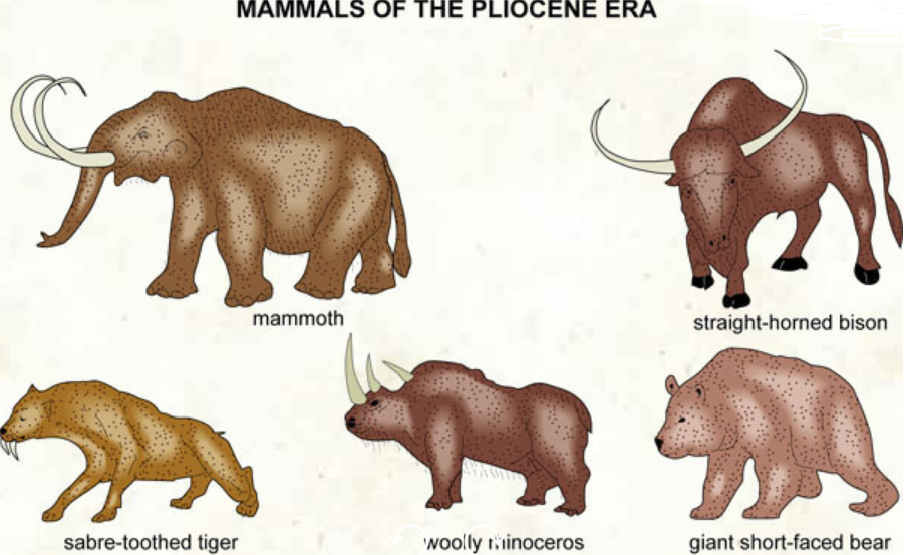
AnswerThe Pliocene epoch extends from $5.332$ million to $2.588$ million years before present. Man evolved in this era.
View full question & answer→MCQ 831 Mark
In recent years, $\text{DNA}$ sequences $($nucleotide sequence$)$ of maternal $\text{DNA}$ and $\text{Y}-$chromosomes were considered for the study of human evolution, because.
- A
They can be studied from the samples of fossil remains.
- B
They are small and, therefore, easy to study.
- ✓
They are uniparental in origin and do not take part in recombination.
- D
Their structure is known in greater detail.
AnswerCorrect option: C. They are uniparental in origin and do not take part in recombination.
View full question & answer→MCQ 841 Mark
Hardy Weinberg law is applicable to:
MCQ 851 Mark
Theory of inheritance of acquired characters was given by:
MCQ 861 Mark
Which one among the following is an example for homology?
- A
Eye of octopus and mammals.
- B
Tuber of sweet potato and potato.
- C
Flippers of penguins and dolphins.
- ✓
Thorns and tendrils of Bougainvillea and Cucurbita.
AnswerCorrect option: D. Thorns and tendrils of Bougainvillea and Cucurbita.
View full question & answer→MCQ 871 Mark
During origin of life, nucleoprotein gave most probably the first sign of:
MCQ 881 Mark
An old view about evolution states that the organisms were created by a super organism in the same condition as they exist now. This theory is called as:
- ✓
Theory of special creation.
- B
Theory of natural selection.
- C
Lamarck's theory of evolution.
- D
Theory of spontaneous generation.
AnswerCorrect option: A. Theory of special creation.
View full question & answer→MCQ 891 Mark
The bones of forelimbs of whale, bat, cheetah and man are similar in structure, because:
- A
One organism has given rise to another.
- ✓
They share a common ancestor.
- C
They perform the same function.
- D
The have biochemical similarities.
AnswerCorrect option: B. They share a common ancestor.
Similarity in structural design indicates towards a common ancestry.
View full question & answer→MCQ 901 Mark
- A
- B
Adaptive divergence of widely separated species.
- C
Adaptive convergence of widely different species.
- ✓
Adaptive convergence of closely related groups.
AnswerCorrect option: D. Adaptive convergence of closely related groups.
View full question & answer→MCQ 911 Mark
Select the correct statement from the following options:
- A
Mutations are random and directional.
- B
Darwinian variations are small and direction less.
- ✓
Fitness is the end result of the ability to adapt and get selected by nature.
- D
All mammals have evolved vivipary as an adaptation.
AnswerCorrect option: C. Fitness is the end result of the ability to adapt and get selected by nature.
View full question & answer→MCQ 921 Mark
Similarity developed in distantly related groups as an adaptation to the same function is called as:
AnswerConvergent evolution means distantly related groups have different forms of structures or adaptation for performing similar functions.
View full question & answer→MCQ 931 Mark
Wings of mosquito, bats, birds is $...........$ evolution.
View full question & answer→MCQ 941 Mark
Palaentological evidences for evolution refer to the:
MCQ 951 Mark
Archeopteryx, a transitional fossil between birds and reptiles was discovered from the rocks of following period:
AnswerArchaeopteryx, intermediate between reptiles and birds, originated towards the close of Jurassic period.
View full question & answer→MCQ 961 Mark
Darwin in his ‘Natural Selection Theory’ did not believe in any role of which one of the following in organic evolution?
- ✓
Discontinuous variations.
- B
Parasites and predators as natural enemies.
- C
- D
AnswerCorrect option: A. Discontinuous variations.
View full question & answer→MCQ 971 Mark
First cell produced on earth is:
AnswerFirst cells produced were simple aggregates of organic compounds, called protobionts, which are thought to be precursors of prokaryotes.
View full question & answer→MCQ 981 Mark
The bones of forelimbs of whale, bat, cheetah and man are similar in structure, because:
- ✓
They share a common ancestor.
- B
One organism has given rise to another.
- C
They perform the same function.
- D
The have biochemical similarities.
AnswerCorrect option: A. They share a common ancestor.
View full question & answer→MCQ 991 Mark
Coacervates were experimentally produced by:
MCQ 1001 Mark
One of the following is a link between plants and animals.
MCQ 1011 Mark
Which primitive man resembles with modern man?
AnswerCorrect option: D. Cro$-$Magnon man
View full question & answer→MCQ 1021 Mark
"In different races, there may be difference in culture and ways of living but capacity in all is the same". It was the opinion of $...........$
View full question & answer→MCQ 1031 Mark
In a random mating population in equilibrium, which of the following brings about a change in gene frequency in a non$-$directional manner?
View full question & answer→MCQ 1041 Mark
Development of unrelated groups of animals along parallel lines in adaptation to a similar environment is called:
AnswerWhen different groups of animals show similar adaptations due to similar environmental conditions, it is called convergent evolution, which is caused by adaptive convergence.
View full question & answer→MCQ 1051 Mark
Evolutionary history of an organism is known as:
MCQ 1061 Mark
The animal group which doesn't exist in Galapagos island is:
AnswerAmphibians are absent in Galapagos islands as they could not leave the mainland and travel to the island by crossing saline water.
View full question & answer→MCQ 1071 Mark
There is no life on moon because there is no:
MCQ 1081 Mark
The term ‘Survival of Fittest’ was used by:
MCQ 1091 Mark
Which of the following is known as living fossil?
MCQ 1101 Mark
The gaseous atmosphere is upto $.............. km,$ forming envelop of earth.
- A
$100$
- ✓
$1600$
- C
$500$
- D
$2000$
AnswerCorrect option: B. $1600$
View full question & answer→MCQ 1111 Mark
If the Neanderthals are not the direct ancestors of humans, is it still possible for humans and Neanderthals to be related?
- ✓
Yes, because we share a common ancestor.
- B
Yes, but only if humans and Neanderthals could have interbred.
- C
No, because the human evolutionary tree is strictly linear and without branches.
- D
No, because this means that Neanderthals evolved from an entirely different branch of organisms than humans did.
AnswerCorrect option: A. Yes, because we share a common ancestor.
Neanderthal mans are not the direct ancestors of humans. But obviously we share a common ancestry. Human evolutionary tree consist of branches.
View full question & answer→MCQ 1121 Mark
Who proposed that the first form of life come from preexisting non$-$living molecules?
- ✓
- B
- C
- D
Louis Pasteur and Miller.
View full question & answer→MCQ 1131 Mark
Which one of the following is regarded as the direct ancestor of modern man?
AnswerCorrect option: D. Cro$-$magnon man.
View full question & answer→MCQ 1141 Mark
Weismann cut off tails of mice generation after generation but tails neither disappeared nor shortened showing that:
- A
- B
Tail is an essential organ.
- C
Mutation theory is wrong.
- ✓
Lamarckism was wrong in inheritance of acquired characters.
AnswerCorrect option: D. Lamarckism was wrong in inheritance of acquired characters.
View full question & answer→MCQ 1151 Mark
- ✓
- B
- C
- D
Both $(b)$ and $(c).$
View full question & answer→MCQ 1161 Mark
Which is not a vestigial part in humans?
- A
Segmental muscles of abdomen.
- ✓
- C
- D
View full question & answer→MCQ 1171 Mark
Mass extinction at the end of Mesozoic era was probably due to:
- A
- ✓
The collision of earth with large meteorites.
- C
- D
AnswerCorrect option: B. The collision of earth with large meteorites.
View full question & answer→MCQ 1181 Mark
Analogous organs arise due to:
MCQ 1191 Mark
Homo sapiens have evolved in:
MCQ 1201 Mark
In cambrian time, the dominant arthropods were:
MCQ 1211 Mark
Genetic drift operates in:
- ✓
Small isolated population.
- B
Large isolated population.
- C
Fast reproductive population.
- D
Slow reproductive population.
AnswerCorrect option: A. Small isolated population.
View full question & answer→MCQ 1221 Mark
In general, in the developmental history of a mammalian heart, it is observed that it passes through a two$-$chambered fish$-$like heart, three$-$chambered frog$-$like heart and finally to four$-$chambered stage. To which hypothesis can this above cited statement be hypothesis can this above cited statement be approximated?
- A
Hardy$-$Weinberg law.
- B
- ✓
- D
View full question & answer→MCQ 1231 Mark
Darwin’s finches are a good example of:
MCQ 1241 Mark
There is an irregular mating population. If the frequency of an autosomal recessive lethal gene is $0.4,$ then the frequency of the carriers in a population of $200$ individuals is:
View full question & answer→MCQ 1251 Mark
Which of the following evidences are related to Darwin finches?
- A
- B
- C
- ✓
Optimum utilization of resources.
AnswerCorrect option: D. Optimum utilization of resources.
Darwin finches occupy different niche with in the same geographical area and the distribution is primarily decided by the differences in diet of birds.
View full question & answer→MCQ 1261 Mark
The dinosaurs were maximum during the period of:
AnswerThe dominant animals during the Jurassic period were dinosaurs.
View full question & answer→MCQ 1271 Mark
The closest relative of modern man is considered to be:
AnswerVarious lines of evidence indicate that our closest relatives are chimpanzees, followed by gorillas and then orangutans, and then gibbons. The closest relative of modern man is considered to be chimpanze on the basis of:
- Similar cultivate friendship.
- Similar numerical memory span.
- Similar blood proteins.
View full question & answer→MCQ 1281 Mark
The age of the fossil of Dryopithecus on the geological time scale is:
- A
$5 \times 106$ year back.
- ✓
$25 \times 106$ year back.
- C
$50 \times 106$ year back.
- D
$75 \times 106$ year back.
AnswerCorrect option: B. $25 \times 106$ year back.
View full question & answer→MCQ 1291 Mark
Appearance of antibiotic$-$resistant bacteria is an example of:
AnswerCorrect option: C. Pre$-$existing variation in the population.
Adaptive radiation is related to evolution of different designs for a single organ according to varied needs of different groups. Transduction is related to transfer of viral or bacterial genetic material. Divergent evolution is related to homologous organs.
Hence, option $'c\ ’$ is correct.
View full question & answer→MCQ 1301 Mark
Which one of the following features is closely related with the evolution of humans?
MCQ 1311 Mark
Identify the correct sequence in which the following substances have appeared during the course of evolution of life on earth:
- A
Glucose, amino acids, nucleic acids, proteins.
- ✓
Ammonia, amino adds, proteins, nucleic acids.
- C
Water, amino acids, nucleic acids, enzymes.
- D
Amino acids, ammonia, phosphates, nucleic acids.
AnswerCorrect option: B. Ammonia, amino adds, proteins, nucleic acids.
View full question & answer→MCQ 1321 Mark
There are two alleles $\mathrm{A}_1$ and $\mathrm{A}_2$, out of which, one $\mathrm{A}_1$ has nil abundance in a population, then the abundance of second allele $\mathrm{A}_2$ is:
- A
$0.25$
- ✓
$1.00$
- C
$0.40$
- D
$0.50$
AnswerCorrect option: B. $1.00$
View full question & answer→MCQ 1331 Mark
Sequence of which of the following is used to know the phylogeny?
- A
$\text{mRNA}$
- ✓
$\text{rRNA}$
- C
$\text{tRNA}$
- D
$\text{DNA}$
AnswerCorrect option: B. $\text{rRNA}$
View full question & answer→MCQ 1341 Mark
Darwin was most influenced by:
- A
Lamarck’s theory of acquired characters.
- B
Weismann’s theory of germplasm.
- C
Wallace’s theory of origin of species.
- ✓
Essay on Population by Malthus.
AnswerCorrect option: D. Essay on Population by Malthus.
View full question & answer→MCQ 1351 Mark
Analogous organs arise due to:
MCQ 1361 Mark
AnswerCorrect option: A. Protobionts having polysaccharide $+$ protein $+ \mathrm{H}_2 \mathrm{O}$
View full question & answer→MCQ 1371 Mark
The theory of evolution indicates that:
- A
Man evolved from monkeys.
- B
- C
Man evolved from dinosaur.
- ✓
Man and apes had common ancestors.
AnswerCorrect option: D. Man and apes had common ancestors.
View full question & answer→MCQ 1381 Mark
The life originated on earth through a process of:
MCQ 1391 Mark
Which of the following is the relatively most accurate method for dating of fossils?
AnswerCorrect option: C. Electron$-$spin resonance method.
View full question & answer→MCQ 1401 Mark
'Origin of species' was written by:
MCQ 1411 Mark
The earliest and most primitive anthropoid ape during Oligocene is called:
AnswerOrigin and evolution were about $30-35$ million years ago.
Originated from Egypt
The oldest and the most primitive is Parapithecus.
View full question & answer→MCQ 1421 Mark
The surface temperature of the sun is $............$ degree $C.$
- ✓
$6000$
- B
$9000$
- C
$1000$
- D
$10,000$
AnswerCorrect option: A. $6000$
View full question & answer→MCQ 1431 Mark
The idea that life originates from preexisting life is referred as:
AnswerBiogenesis means life comes from pre existing life, as in modern earth. Now life comes from pre$-$existing life only but life actually evolved from non living components abiogenetically.
View full question & answer→MCQ 1441 Mark
Self $–$ ordered proto$-$protein contacted with water and by self$-$assembly gave rise to:
View full question & answer→MCQ 1451 Mark
Convergent evolution is illustrated by:
- ✓
- B
- C
- D
Starfish and cuttle fish.
View full question & answer→MCQ 1461 Mark
Evolutionary convergence is characterised by:
- A
Development of characteristics by random mutations.
- ✓
Development of similar characteristics in different groups of organisms of different ancestry.
- C
Development of dissimilar characteristics in closely related groups of organisms.
- D
Development of similar characteristics in related groups of organisms.
AnswerCorrect option: B. Development of similar characteristics in different groups of organisms of different ancestry.
View full question & answer→MCQ 1471 Mark
Which of the following is closest relative of man?
MCQ 1481 Mark
The process of evolution in which species inhabiting the same area with different evolutionary lineage resemble each other is known as:
MCQ 1491 Mark
A population will not exist in Hardy Weinberg equilibrium if:
- ✓
Individuals mate selectively.
- B
- C
- D
AnswerCorrect option: A. Individuals mate selectively.
View full question & answer→MCQ 1501 Mark
Genetic drift operates only in:
MCQ 1511 Mark
'Descent with modification' explains:
MCQ 1521 Mark
Adaptive radiation occurs in:
- A
- B
Small and isolated populations.
- C
Flightless and asexually reproducing populations.
- ✓
Sexually reproducing population.
AnswerCorrect option: D. Sexually reproducing population.
View full question & answer→MCQ 1531 Mark
Which of the following characteristics is mainly responsible for diversification of insects on land?
MCQ 1541 Mark
Indicate the completely correct statement about human races:
- A
All human races can interbreed but most will produce infertile young ones.
- B
Different human races cannot interbreed.
- C
Some human races can interbreed.
- ✓
All human races can interbreed and produce fertile offspring.
AnswerCorrect option: D. All human races can interbreed and produce fertile offspring.
Human races are subdivisions of a single species, therefore they are capable of interbreeding.
View full question & answer→MCQ 1551 Mark
Which of the following was present in primitive earth?
AnswerThe primitive earth is thought to be highly reducing in nature due to the absence of oxygen. Hydrogen and methane predominated the atmosphere and caused the condensation of various biomolecules. This theory was forwarded by Oparin and Haldane which accounts for the chemical evolution of life.
It was proved by Urey and Miller through an experimental set$-$up that mimicked the primitive earth conditions and resulted in the formation of amino acids.
Hence, the correct answer is 'Hydrogen and methane'.
View full question & answer→MCQ 1561 Mark
Galapagos finches are associated with:
MCQ 1571 Mark
The first life on earth evolved in water and evidences indicate that life originated in one of the following eras:
AnswerProterozoic era is the time when life came on earth and there were evidences of life on earth, this includes the formation of cellular structures and less complex organisms.
View full question & answer→MCQ 1581 Mark
If the frequency of dominant allele is $60\%,$ find out the percentage of heterozygous individuals in the population.
- ✓
$48\%$
- B
$50\%$
- C
$47\%$
- D
$45\%$
AnswerCorrect option: A. $48\%$
View full question & answer→MCQ 1591 Mark
Role of isolation in evolution is:
- A
Differentiation of species.
- B
- ✓
- D
Extermination of species.
View full question & answer→MCQ 1601 Mark
Thorn of Bougainvillea and tendril of Cucurbita are examples of:
MCQ 1611 Mark
AnswerCorrect option: A. Origin of life from non$-$living substances.
View full question & answer→MCQ 1621 Mark
Which one of the following options gives one correct example each of convergent evolution and divergent evolution?
- ✓
Eyes of octopus and mammals $-$ Bones of forelimbs of vertebrates.
- B
Thorns of Bougainvillea and tendrils of Cucurbita $-$ Wings of butterflies and birds.
- C
Bones of forelimbs of vertebrates $-$ Wings of butterfly and birds.
- D
Thorns of Bougainvillea and tendrils of Cucurbita $-$ Eyes of octopus and mammals.
AnswerCorrect option: A. Eyes of octopus and mammals $-$ Bones of forelimbs of vertebrates.
View full question & answer→MCQ 1631 Mark
Angiosperm arose in the $...........$ period.
View full question & answer→MCQ 1641 Mark
The earth like other planets formed from:
MCQ 1651 Mark
Cro$-$Magnon man was:
View full question & answer→MCQ 1661 Mark
If the frequency of an autosomal dominant allele is $0.6.$ Calculate the frequency of recessive phenotype in a population of $6000:$
- A
$1200$
- B
$4000$
- ✓
$960$
- D
$1000$
View full question & answer→MCQ 1671 Mark
Half$-$life period of $C14$ is about.
- A
$500$ year.
- ✓
$5730$ year.
- C
$50$ year.
- D
$5 \times 104$ year.
AnswerCorrect option: B. $5730$ year.
View full question & answer→MCQ 1681 Mark
- ✓
Different in origin but perform similar functions.
- B
Common in origin and perform common functions.
- C
Common in origin but perform different functions.
- D
Different in origin and perform different functions.
AnswerCorrect option: A. Different in origin but perform similar functions.
View full question & answer→MCQ 1691 Mark
The first animals to fly were:
AnswerThe first animals to evolve flight were insects. The earliest fossil insects with wings are dragonfly$-$like animals from the Carboniferous, but there are some very fragmentary insect remains from Devonian rocks in Scotland.
The fossils tell that the flight first evolved in insects approximately $410$ million years ago.
View full question & answer→MCQ 1701 Mark
Which was absent in the atmosphere at the time of origin of life?
- A
$\mathrm{NH}_3$
- B
$\mathrm{H}_2$
- ✓
$\mathrm{O}_2$
- D
$\mathrm{CH}_4$
AnswerCorrect option: C. $\mathrm{O}_2$
View full question & answer→MCQ 1711 Mark
The principle of competitive exclusion was stated by:
- ✓
$G.F.$ Gause
- B
$C.$ Darwin
- C
- D
AnswerCorrect option: A. $G.F.$ Gause
View full question & answer→MCQ 1721 Mark
Hardy$-$Weinberg equilibrium operates in absence of:
AnswerThe Hardy$-$Weinberg principle states that allele and genotype frequencies in a population will remain constant from generation to generation in the absence of other evolutionary influences.
It operates in the absence of mutation, natural selection, and recombination.
View full question & answer→MCQ 1731 Mark
Which of the following has initiated the formation of population genetics and associated evolutionary studies?
- A
Mechanistic theory of Darwin
- ✓
Hardy$-$Weinberg law
- C
- D
AnswerCorrect option: B. Hardy$-$Weinberg law
View full question & answer→MCQ 1741 Mark
Viviparity is considered to be more evolved because:
- ✓
The young ones are protected inside the mother's body and are looked after they are born leading to more chances of survival.
- B
The embryo takes a long time to develop.
- C
The young ones are protected by a thick shell.
- D
The young ones are left on their own.
AnswerCorrect option: A. The young ones are protected inside the mother's body and are looked after they are born leading to more chances of survival.
View full question & answer→MCQ 1751 Mark
Two geographical regions separated by high mountains are:
- A
- ✓
Palaearctic and Oriental.
- C
Nearctic and Palaearctic.
- D
Neotropical and Ethiopian.
AnswerCorrect option: B. Palaearctic and Oriental.
View full question & answer→MCQ 1761 Mark
In human evolution, which one of the following is the most recent?
AnswerThe cultural evolution of man is described in following stages $-$ Palaeolithic, Mesolithic, Neolithic. Neolithic age is the most recent in which man developed agriculture, manufactured pottery and clothes.
View full question & answer→MCQ 1771 Mark
The first organisms were:
MCQ 1781 Mark
Which of the following was the transitional stage $($connective link$)$ between apes and humans?
- A
- B
- ✓
- D
Australopithecus africanus
AnswerAustralopithecus ramidus is the most ape like hominid ancestor, who walked upright and is considered to be missing link between hominids and apes. It is the oldest and most primitive of hominin fossil dating back to $4.4$ million years.
View full question & answer→MCQ 1791 Mark
- A
Progressive development of a race.
- ✓
History and development of race alongwith ariations.
- C
- D
AnswerCorrect option: B. History and development of race alongwith ariations.
View full question & answer→MCQ 1801 Mark
Universe originated about $..............$ years ago.
- A
$15$ million
- ✓
$20$ billion
- C
$4.5$ billion
- D
$3.4$ billion
AnswerCorrect option: B. $20$ billion
The universe is very old and originated about $20$ billion years ago according to Big Bang theory. The universe is the cluster of galaxies which contain stars and clouds of gas and dust.
View full question & answer→MCQ 1811 Mark
Fossils are generally found in:
AnswerIgneous rocks are formed from lava and hence no fossil can be found in them. Metamorphic rocks can be made from igneous or sedimentary rocks. Hence, $'a\ ’$ is the correct answer.
View full question & answer→MCQ 1821 Mark
Ancestral amphibians were tetrapods that evolved during:
AnswerUpper $(i.e.$ more recent$)$ Devonian sediments contain fossil remains of salamander$-$like amphibians $($or labyrinthodonts$)$ that were often quite large, with short necks and heavy, muscular tails.
View full question & answer→MCQ 1831 Mark
Being all mammals, whale, dolphin, bat, monkey and horse have some common trait, but they also show conspicuous differences. This is due to the phenomenon of:
MCQ 1841 Mark
In $1953 \ S. L.$ Miller created primitive earth conditions in the laboratory and gave experimental evidence for origin of first form of life from preexisting non$-$living organic molecules. The primitive earth conditions created include:
- ✓
High temperature, volcanic storms, reducing atmosphere containing $\mathrm{CH}_4, \mathrm{NH}_3$ etc.
- B
High temperature, volcanic storms, non$-$reducing atmosphere.
- C
Low temperature, volcanic storms, reducing atmosphere.
- D
Low temperature, volcanic storms, atmosphere rich in oxygen.
AnswerCorrect option: A. High temperature, volcanic storms, reducing atmosphere containing $\mathrm{CH}_4, \mathrm{NH}_3$ etc.
View full question & answer→MCQ 1851 Mark
Who proposed 'Big Bang hypothesis'?
- A
$C.$ Darwin
- ✓
$G.$ Lemaitre
- C
$S.$ Miller
- D
$S.$ Prusiner
AnswerCorrect option: B. $G.$ Lemaitre
View full question & answer→MCQ 1861 Mark
Evolution of life shows that life forms had a trend of moving from:
- ✓
- B
Fresh water to sea water.
- C
- D
View full question & answer→MCQ 1871 Mark
Wings of pigeon, mosquito and bat show:
MCQ 1881 Mark
The process by which organisms with different evolutionary history evolve similar phenotypic adaptations in response to a common environmental challenge is called:
- ✓
- B
Non$-$random evolution
- C
- D
View full question & answer→MCQ 1891 Mark
In the ancient atmosphere free nitrogen, oxygen and carbon dioxide were not present because:
- A
Of the large amount of hydrogen and high temperatures.
- B
Carbon would have combined with hydrogen to form methane.
- C
Any free oxygen would have combined with iron, silicon, aluminium, etc, to form minerals of the earth's crust.
- ✓
View full question & answer→MCQ 1901 Mark
- A
Wings of insects and bat.
- B
Gills of fish and lungs of rabbit.
- ✓
Pectoral fins of fish and fore limbs of horse.
- D
Wings of grasshopper and crow.
AnswerCorrect option: C. Pectoral fins of fish and fore limbs of horse.
View full question & answer→MCQ 1911 Mark
Under certain conditions scientists have obtained cell$-$like structures. These are known as:
AnswerOparin predicted that cells originated from cell like aggregates of biomolecules formed in hot dilute soup in primitive earth. These early aggregates were called Coacervates.
View full question & answer→MCQ 1921 Mark
View full question & answer→MCQ 1931 Mark
Evolutionary convergence is development of:
- ✓
Common set of characters in group of different ancestry.
- B
Dissimilar characters in closely related groups.
- C
Common set of characters in closely related groups.
- D
AnswerCorrect option: A. Common set of characters in group of different ancestry.
View full question & answer→MCQ 1941 Mark
- A
$10,000$ years ago
- B
$25,000$ years ago
- C
$2,50,000$ years ago
- ✓
$5,00,000$ years ago
AnswerCorrect option: D. $5,00,000$ years ago
View full question & answer→MCQ 1951 Mark
Frequency of a character increases when it is:
MCQ 1961 Mark
Some pairs of characters are listed below. The homologous pair is:
- ✓
Forelimbs of dog and gulls.
- B
Insect wing and bat wing.
- C
Feathers of birds and fins of fish.
- D
Lens of vertebrate and arthropod.
AnswerCorrect option: A. Forelimbs of dog and gulls.
View full question & answer→MCQ 1971 Mark
In which era reptiles were dominant?
MCQ 1981 Mark
An important evidence in favour of organic evolution is the occurrence of:
- A
Analogous and vestigial organs.
- B
- C
Homologous and analogous organs.
- ✓
Homologous and vestigial organs.
AnswerCorrect option: D. Homologous and vestigial organs.
View full question & answer→MCQ 1991 Mark
Being all mammals, whale, dolphins, bat, monkey and horse have some common characters but they also show conspicuous differences. This is due to phenomenon of:
MCQ 2001 Mark
Darwin’s theory of pangenesis shows similarity with theory of inheritance of acquired characters then what will be correct according to it?
- A
Useful organs become strong and developed while useless organs become extinct. These organs help in struggle for survival.
- B
Size of organs increase with ageing.
- C
Development of organs is due to will power.
- ✓
There should become physical basis of inheritance.
AnswerCorrect option: D. There should become physical basis of inheritance.
View full question & answer→MCQ 2011 Mark
The gene frequency of a population changes $.........$
- A
In one particular environment.
- B
When the population decreases.
- ✓
When the population live in different conditions.
- D
When population reproduces asexually.
AnswerCorrect option: C. When the population live in different conditions.
View full question & answer→MCQ 2021 Mark
Homologous organs indicate:
MCQ 2031 Mark
- A
Palaeozoic $\rightarrow$ Archaeozoic $\rightarrow$ Coenozoic.
- B
Archaeozoic $\rightarrow$ Palaeozoic $\rightarrow$ Proterozoic.
- ✓
Palaeozoic $\rightarrow$ Mesozoic $\rightarrow$ Coenozoic.
- D
Mesozoic $\rightarrow$ Archaeozoic $\rightarrow$ Proterozoic.
AnswerCorrect option: C. Palaeozoic $\rightarrow$ Mesozoic $\rightarrow$ Coenozoic.
View full question & answer→MCQ 2041 Mark
Evolution of life shows that life forms had a trend of moving from:
- A
- B
- C
Fresh water to sea water.
- ✓
AnswerMost of the primitive organisms live in water, while most of the complex organisms live on land. This shows that evolution of life progressed from water to land.
View full question & answer→MCQ 2051 Mark
Hawaiian honeycreeper $($birds$)$ are an example of:
View full question & answer→MCQ 2061 Mark
Which one of the following statements is correct?
- A
Stem cells are specialized cells.
- B
There is no evidence of the existence of gills during embryogenesis of mammals.
- C
All plant and animal cells are totipotent.
- ✓
Ontogeny repeats phylogeny.
AnswerCorrect option: D. Ontogeny repeats phylogeny.
View full question & answer→MCQ 2071 Mark
Theory of natural selection dwells on:
- A
Role of environment in evolution.
- ✓
Natural selection acting on favourable variations.
- C
Changes in gene complex resulting in heritable variations.
- D
AnswerCorrect option: B. Natural selection acting on favourable variations.
View full question & answer→MCQ 2081 Mark
Age of fossils in the past was generally determined by radio$-$carbon method and other method involving radioactive elements found in the rocks. More precise methods, which were used recently and led to the revision of the evolutionary periods for different groups of organisms, include.
- A
Study of carbohydrates$/$ proteins in fossils
- B
Study of the condition of fossilization.
- ✓
Electron Spin Resonance $\text{(ESR)}$ and fossil $\text{DNA}.$
- D
Study of carbohydrates$/$ proteins in rocks.
AnswerCorrect option: C. Electron Spin Resonance $\text{(ESR)}$ and fossil $\text{DNA}.$
View full question & answer→MCQ 2091 Mark
$(p+q)^2=p^2+2 pq +q^2=1$ represents an equation used in:
View full question & answer→MCQ 2101 Mark
The first mammals were like:
MCQ 2111 Mark
Connecting link between man and ape was:
MCQ 2121 Mark
At a particular locus, frequency of $'A\ '$ allele is $0.6$ and that of $'a\ '$ is $0.4.$ What would be the frequency of heterozygotes in a random mating population at equilibrium?
- A
$0.16$
- ✓
$0.48$
- C
$0.36$
- D
$0.24$
AnswerCorrect option: B. $0.48$
View full question & answer→MCQ 2131 Mark
The experiment that simulated conditions thought to be present on the early earth:
- ✓
Miller$–$Urey experiment.
- B
- C
Geiger$–$Marsden experiment.
- D
Hershey$–$Chase experiment.
AnswerCorrect option: A. Miller$–$Urey experiment.
View full question & answer→MCQ 2141 Mark
Which of the following is$/$are primate$(s)?$
AnswerA primate is a mammal of the order Primates, which includes lemurs, lorises, tarsiers, monkeys, apes and humans. They exhibit menstrual cycle.
Primates arose from ancestors that lived in the trees of tropical forests. Most primate species remain at least partly arboreal.
View full question & answer→MCQ 2151 Mark
The existence of marsupials in Australia and New Zealand prove:
AnswerCorrect option: D. Both $B$ and $C$
View full question & answer→MCQ 2161 Mark
Hardy and weinberg principle explains $..........$
View full question & answer→MCQ 2171 Mark
The recent ancestors of modern man were:
AnswerCorrect option: D. Cro$-$Magnon man and Neanderthal man.
Cro$-$Magnon is a name that has been used to describe the first early modern humans $($early Homo sapiens$).$ The Neanderthals are an extinct species of human in the genus Homo, possibly a subspecies of Homo sapiens. They are closely related to modern humans, differing in $\ce{DNA}$ by only $0.3\%.$
View full question & answer→MCQ 2181 Mark
The homologous organs are those that show similarity in:
MCQ 2191 Mark
Temperature in the interior of the sun is above $20000000;$ the reason for this high temperature is:
- A
Various exothermic reactions are taking place.
- ✓
Fusion converting hydrogen of sun to helium.
- C
Collision of particles releasing energy.
- D
AnswerCorrect option: B. Fusion converting hydrogen of sun to helium.
View full question & answer→MCQ 2201 Mark
Which of the following primate is the closest relative of humans?
MCQ 2211 Mark
The theory of spontaneous generation stated that:
- A
Life arose from living forms only.
- B
Life can arise from both living and non$-$living.
- ✓
Life can arise from non$-$living things only.
- D
Life arises spontaneously, neither from living nor from the non$-$living.
AnswerCorrect option: C. Life can arise from non$-$living things only.
For a long time it was also believed that life came out of decaying and rotting matter like straw, mud, etc.
According to theory of abiogenesis, life originates from non$-$living.
View full question & answer→MCQ 2221 Mark
Analogous structures are a result of:
MCQ 2231 Mark
There are two opposing views about origin of modern man. According to one view Homo erectus in Asia were the ancestors of modern man. A study of variation of $\text{DNA}$ however, suggested African origin of modern man. What kind of observation on $\text{DNA}$ variation could suggest this?
- ✓
Greater variation in Asia than in Africa.
- B
Greater variation in Africa than in Asia.
- C
Similar variation in Africa and Asia.
- D
Variation only in Asia and no variation in Africa.
AnswerCorrect option: A. Greater variation in Asia than in Africa.
View full question & answer→MCQ 2241 Mark
Pithecanthropus erectus fossil was found in:
AnswerJava man $($Homo erectus erectus or Pithecanthropus erectus$),$ was a sub species of Homo erectus, that lived around $0.6$ million years ago. His fossils have been discovered in Java. He lived in caves and used fire.
View full question & answer→MCQ 2251 Mark
Genetic drift is change of:
- ✓
Gene frequency in same generation.
- B
Appearance of recessive genes.
- C
Gene frequency from one generation to next.
- D
AnswerCorrect option: A. Gene frequency in same generation.
View full question & answer→MCQ 2261 Mark
The Finches of Galapogas islands provide an evidence in favour of:
AnswerCorrect option: A. Biogeographical evolution.
View full question & answer→MCQ 2271 Mark
The first human fossil probably belonged to:
MCQ 2281 Mark
Mesozoic era is associated with mass extinction of:
MCQ 2291 Mark
The atmosphere became oxidizing with the appearence of:
MCQ 2301 Mark
Which of the following is an example for link species?
MCQ 2311 Mark
Evolution of different species in a given area starting from a point and spreading to other geographical area is known as:
AnswerProcess of evolution of different species in a given area starting from a point and radiating to other area of geography $($habitats$)$ is called adaptive radiations. Example : Darwinian finches and Australian marsupials.
View full question & answer→MCQ 2321 Mark
For the $MN-$blood group system, the frequencies of $M$ and $N$ alleles are $0.7$ and $0.3,$ respectively. The expected frequency of $MN-$blood group bearing organisms is likely to be:
- ✓
$42\%.$
- B
$49\%.$
- C
$9\%.$
- D
$58\%.$
AnswerCorrect option: A. $42\%.$
View full question & answer→MCQ 2331 Mark
Natural selection can lead to:
MCQ 2341 Mark
Which type of selection is industrial melanism observed in moth, Biston bitularia:
AnswerIndustrial melanism is not a mean character but is acquired by most of the individuals. Hence, it is an example of directional change.
View full question & answer→MCQ 2351 Mark
The earliest geological time period among the following is:
MCQ 2361 Mark
Hardy$-$Weinberg equilibrium can be disturbed by:
View full question & answer→MCQ 2371 Mark
Reptiles were dominant during $.........$ period.
AnswerCretaceous period was the last and the longest segment of the mesozoic era. It lasted approx. $79$ million years ago. During this time, reptiles were large in number and were dominant.
View full question & answer→MCQ 2381 Mark
Which of the following is used as an atmospheric pollution indicator?
MCQ 2391 Mark
The chronological order of human evolution from early to the recent is:
- ✓
Ramapithecus $\rightarrow$ Australopithecus $\rightarrow$ Homo habilis $\rightarrow$ Homo erectus.
- B
Australopithecus $\rightarrow$ Homo habilis $\rightarrow$ Ramapithecus $\rightarrow$ Homo erectus.
- C
Australopithecus $\rightarrow$ Ramapithecus $\rightarrow$ Homo habilis $\rightarrow$ Homo erectus.
- D
AnswerCorrect option: A. Ramapithecus $\rightarrow$ Australopithecus $\rightarrow$ Homo habilis $\rightarrow$ Homo erectus.
View full question & answer→MCQ 2401 Mark
Darwin judged the fitness of individuals by:
- A
Ability to defend itself.
- B
- ✓
Number of offspring produced.
- D
Dominance over other individuals.
AnswerCorrect option: C. Number of offspring produced.
View full question & answer→MCQ 2411 Mark
Mammals arose from reptiles in:
- A
Jurassic period of mesozoic era.
- B
Triassic period of mesozoic era.
- ✓
Cretaceous period of mesozoic era.
- D
AnswerCorrect option: C. Cretaceous period of mesozoic era.
View full question & answer→MCQ 2421 Mark
Which of the following concept explains about the constant occurrence of allele frequencies generation after generation in a small population not influenced by evolution?
- A
Mendel's principle of segregation.
- B
Darwin's theory of natural selection.
- C
Darwin's theory of survival of the fittest.
- ✓
The principle of Hardy-Weinberg equilibrium.
AnswerCorrect option: D. The principle of Hardy-Weinberg equilibrium.
d. The principle of Hardy-Weinberg equilibrium.
View full question & answer→MCQ 2431 Mark
The humming bird, hawk and the humming moth illustrate:
MCQ 2441 Mark
A biogeographical evidence in favour of organic evolution is provided by:
MCQ 2451 Mark
In which era mammals and birds evolved?
MCQ 2461 Mark
Humans belong to the family?
MCQ 2471 Mark
Earliest reptiles evolved in the $...............$ period.
View full question & answer→MCQ 2481 Mark
The most accepted line of descent in human evolution is:
- A
Australopithecus $\rightarrow$ Ramapithecus $\rightarrow$ Homo sapiens $\rightarrow$ homo habilis.
- B
Homo erectus $\rightarrow$ Homo habilis $\rightarrow$ Homo sapiens.
- ✓
Ramapithecus $\rightarrow$ Homo habilis $\rightarrow$ Homo erectus $\rightarrow$ Homo sapiens.
- D
Australopithecus $\rightarrow$ Ramapithecus $\rightarrow$ Homo erectus $\rightarrow$ Homo habilis $\rightarrow$ Homo sapiens.
AnswerCorrect option: C. Ramapithecus $\rightarrow$ Homo habilis $\rightarrow$ Homo erectus $\rightarrow$ Homo sapiens.
View full question & answer→MCQ 2491 Mark
According to plate tectonics, how many plates the earth is made up of?
MCQ 2501 Mark
$..........$ is an example for adaptive radiation.
AnswerCorrect option: C. Both $(a)$ and $(b)$
View full question & answer→MCQ 2511 Mark
Mutations which normally happen randomly are considered one of the raw materials for evolution because they:
- A
- ✓
Contribute to new variation in organism.
- C
- D
AnswerCorrect option: B. Contribute to new variation in organism.
View full question & answer→MCQ 2521 Mark
Variations during mutations of meiotic recombinations are:
- ✓
Random and directionless.
- B
- C
- D
Random, small and directional.
AnswerCorrect option: A. Random and directionless.
Variations during mutations of meiotic recombinations are random and directionless.
View full question & answer→MCQ 2531 Mark
Stanley $L.$ Miller conducted experiments before $1953$ on prebiotic earth environment using special apparatus. The primary surprising products wereStanley $L.$ Miller conducted experiments before $1953$ on prebiotic earth environment using special apparatus. The primary surprising products were:
View full question & answer→MCQ 2541 Mark
Animal husbandry and plant breeding programmes are the examples of:
MCQ 2551 Mark
Homo sapiens evolved during:
MCQ 2561 Mark
Which is the latest era of geological time scale?
MCQ 2571 Mark
- A
Relationship between primitive plants and people.
- ✓
Study of traditional plantlore, plant use, etc.
- C
Cultivation of flower yielding plants.
- D
AnswerCorrect option: B. Study of traditional plantlore, plant use, etc.
View full question & answer→MCQ 2581 Mark
Similarities in organisms with different genotype indicates.
- A
Micro$-$evolution.
- B
Macro$-$evolution.
- ✓
- D
View full question & answer→MCQ 2591 Mark
Among the human ancestors the brain size was more than $1000 \ cc$ in:
View full question & answer→MCQ 2601 Mark
How many living species have been described so far?
- A
$12$ million
- B
$8$ million
- C
$8.7$ million
- ✓
$2$ million
AnswerCorrect option: D. $2$ million
View full question & answer→MCQ 2611 Mark
Which one of the following period is largely associated with extinction of dinosaurs and the increase in flowering plants and reptiles?
MCQ 2621 Mark
In which of the following era man was originated?
AnswerPliocene is the epoch of tertiary period of coenozoic era. Man was originated in this era.
View full question & answer→MCQ 2631 Mark
Which of the following is homologous organ?
AnswerCorrect option: B. Wings of birds $($sparrow$)$ and pectoral fins of fish.
View full question & answer→MCQ 2641 Mark
What was the most significant trend in the evolution of modern man $($Homo sapiens$)$ from his ancestors?
- A
- B
- C
- ✓
Increasing brain capacity.
AnswerCorrect option: D. Increasing brain capacity.
View full question & answer→MCQ 2651 Mark
How is extinction represented in a family tree diagram?
MCQ 2661 Mark
The first probable fossil of man was:
MCQ 2671 Mark
Most primitive living mammals which provide an evidence of organic evolution from geographical distribution are found in:
AnswerPrototherians the most primitive mammals which provide an evidence of organic evolution from geographical distribution are found is Australia.
View full question & answer→MCQ 2681 Mark
Which era is dubbed as the age of prokaryotic microbes?
MCQ 2691 Mark
In which period, birds in geological development of earth arose?
MCQ 2701 Mark
Which primitive man used stones to produce fire?
AnswerHomo erectus made tools made of stones and bones and made fire using primitive stone tools. Java ape man or Homo erectus erectus lived in caves and knew use of fire for hunting, defence and cooking.
View full question & answer→MCQ 2711 Mark
Equilibrium of gene frequencies is:
AnswerCorrect option: C. Hardy$-$Weinberg law
View full question & answer→MCQ 2721 Mark
The force that initiates evolution is:
MCQ 2731 Mark
Which of the following had the smallest brain capacity?
MCQ 2741 Mark
Evolutionary convergence is characterized by:
- A
Development of characteristics by random mating.
- B
Replacement of common characteristics in different group.
- C
Development of dissimilar characteristics in closely related groups.
- ✓
Development of a common set of characteristics in group of different ancestry.
AnswerCorrect option: D. Development of a common set of characteristics in group of different ancestry.
Convergent evolution describes the independent evolution of similar features in species of different lineages.
View full question & answer→MCQ 2751 Mark
The era called as 'age of prokaryotic microbes' is:
MCQ 2761 Mark
View full question & answer→MCQ 2771 Mark
Extremities, tail and ear are relatively shorter in animals living in cooler regions as compared to those inhabiting warmer zones. This is:
MCQ 2781 Mark
Who called birds as glorified reptiles?
MCQ 2791 Mark
Adaptive radiation refers to:
- A
Power of adaptation in an individual to a variety of environments.
- B
Adaptations due to Geographical isolation.
- ✓
Evolution of different species from a common ancestor.
- D
Migration of members of a species to different geographical areas.
AnswerCorrect option: C. Evolution of different species from a common ancestor.
View full question & answer→MCQ 2801 Mark
"Foolish Seedling" disease of rice led to the discovery of:
- A
$\text{IAA}$
- ✓
$\text{GA}$
- C
$\text{ABA}$
- D
$2, 4 – \text{D}$
AnswerCorrect option: B. $\text{GA}$
View full question & answer→MCQ 2811 Mark
Which one of the following describes correctly the homologous structures?
- A
Organs appearing only in embryonic stage and disappearing later in the adult.
- ✓
Organs with anatomical similarities, but performing different functions.
- C
Organs with anatomical dissimilarities, but performing same functions.
- D
Organs that have no function now, but had an important function in ancestors.
AnswerCorrect option: B. Organs with anatomical similarities, but performing different functions.
View full question & answer→MCQ 2821 Mark
What was the most significant trend in the evolution of modern man $($Homo sapiens$)$ from his ancestors?
- ✓
Increasing cranial capacity.
- B
- C
- D
AnswerCorrect option: A. Increasing cranial capacity.
View full question & answer→