Questions

Do as directed; [1 M ]

Take a timed test

110 questions · 4 auto-graded MCQ + 106 self-marked written.

Question 11 Mark
What is goblet cell?
Answer
Goblet cell is a simple columnar epithelial cell which is modified to secrete mucus. It is seen in the intestine and other parts of the alimentary canal.
View full question & answer
Question 21 Mark
Name the tissue responsible for movement in our body.
Answer
Themuscular tissue is responsible for movement in our body.
View full question & answer
Question 31 Mark
Why are striated muscles called skeletal muscles?
Answer
Skeletal muscles are called striated muscles because when we observed this skeletal muscles under the microscope they have a striped like appearance & they also show alternate dark and light striations or bands. They are long or elongated, non tapering and cylindrical, unbranched. They are multinucleated.
View full question & answer
Question 51 Mark
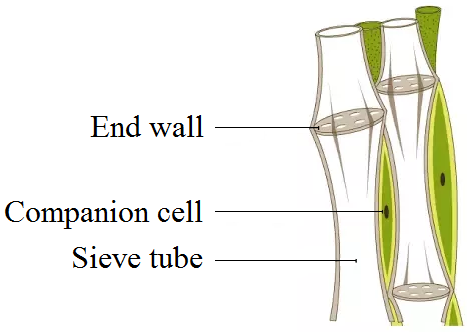
What is the function of companion cells?
Answer
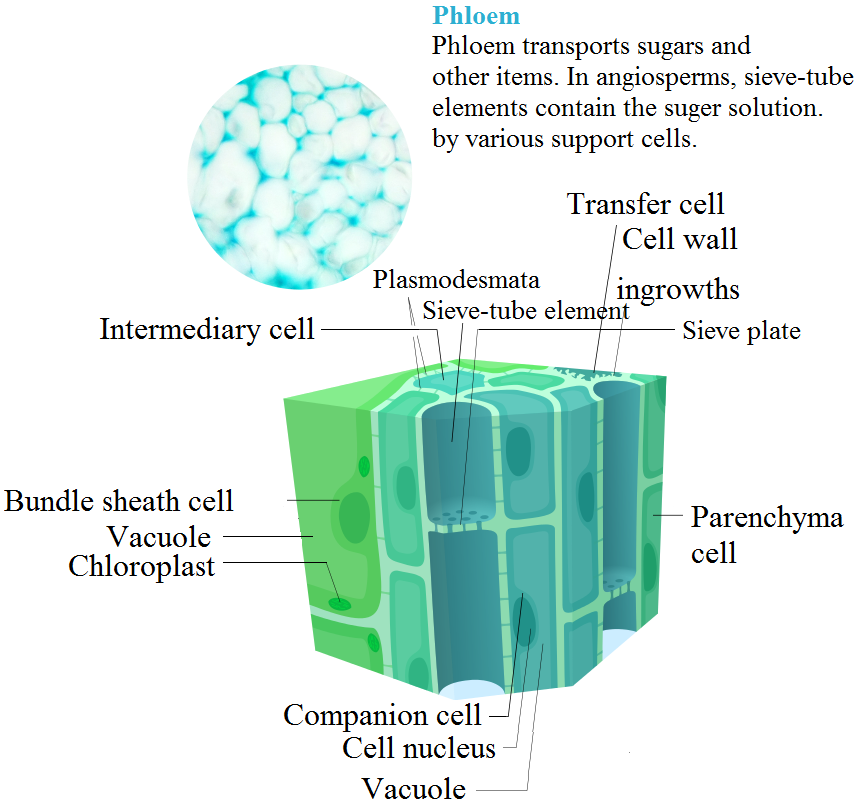
  • Each of these functions (i.e., collection, transport, and release of photosynthate) is intimately related to the structure and activity of companion cells associated with the sieve elements.
  • companion cells in the veins of leaves function in the transfer of assimilates from photosynthetic tissues and bundle sheaths into the sieve tubes.
  • companion cells also play an important role in maintaining the viability and long-distance translocation system of the enucleate sieve tube members by providing them with proteins, including informational (signaling) molecules, and ribonuclear protein complexes as well as $ATP.$
  • Apoplastic loading, a process utilizing energy, is facilitated by carrier proteins called sucrose transporters which are located in the plasma membranes of companion cells and/or sieve tube members.
  • Companion cells that function as transfer cells are characterized by extensive wall in growths that vastly increase the surface area of the plasma membrane.
View full question & answer
Question 61 Mark
Where are the cardiac muscles present?
Answer
Cardiac muscle cells are located in the walls of the heart, appear striated, and are under involuntary control. Smooth muscle fibers are located in walls of hollow visceral organs, except the heart, appear spindle-shaped, and are also under involuntary control.
View full question & answer
Question 81 Mark
Which type of $WBC$ is most abundant in lymph$?$
Answer
Lymphocytes are $WBCs$ which are most abundant in lymph.
View full question & answer
Question 91 Mark
What is common name of: $(a)$ Xylem $(b)$ Phloem$?$
Answer
  1. The common name of xylem is wood.
  2. The common name of phloem is bast.
View full question & answer
Question 101 Mark
Define Glandular epithelium.
Answer
Glandular epithelium is a type of epithelial tissue which covers the glands (both exocrine and endocrine) of our body. Coming to their function, Both endocrine and exocrine glands produce their secretions through the glandular epithelium via special cells called goblet cells.
View full question & answer
Question 111 Mark
Which component of xylem is responsible for the transport of minerals?
Answer
The main components of xylem are:
  1. Xylem tracheids,
  2. Xylem vessels,
  3. Xylem parenchyma,
  4. Xylem fibres.
  1. Xylem tracheids and xylem vessels are responsible for the conduction of water and minerals because they are elongated tubular channels with wide lumen.
  2. Xylem tracheids possesses pits with pores and vessels possess perforated plates through which they are able to conduct water and minerals from one cell to the another.
View full question & answer
Question 121 Mark
Classify epithelial tissues on the basis of arrangements of layers.
Answer
On the basis of arrangement of layers, epithelial tissue is classified into two types:
  • Simple epithelium
  • Stratified epithelium.
View full question & answer
Question 131 Mark
Name the muscle which gets farigued soon.
Answer
Skeletal or striated muscle gets fatigued very soon. These are voluntary muscels.
View full question & answer
Question 141 Mark
Define complex tissue.
Answer
Tissue which is composed of two or more types of cells but contribute to a common function is called complex tissue.
View full question & answer
Question 151 Mark
Name the plant cell which is attached to the lateral side is dieve tube.
Answer
Companion cell is living cell which is attached to the lateral side of sieve tube.
View full question & answer
Question 161 Mark
What is function of stomata?
Answer
Stomata are tiny pores present on the leave’s surface which help in the exchange of gases and in transpiration.
View full question & answer
Question 171 Mark
What is the name of bone cell?
Answer
The cells of bones are called osteocytes. Bone cells are embedded in a hard matrix that is composed of calcium and phosphorus compounds.
View full question & answer
Question 181 Mark
What are Nissl’s granules?
Answer
It is also called tigroid body, found in neurons. it was named after Franz Nissl, German neurologist.
Function:
  1. These granules are rough endoplasmic reticulum (with ribosomes) and are the site of protein synthesis.
  2. Nissl bodies show changes under various physiological conditions and in pathological conditions they may dissolve and disappear (karyolysis).
View full question & answer
Question 191 Mark
Give one example of protective tissue in plants.
Answer
Cork is the example of protective tissue in the plants.
View full question & answer
Question 201 Mark
What is the function of blood platelets?
Answer
Blood platelets help in clooting of blood at the site of injury.
View full question & answer
Question 211 Mark
Name the following:
  1. Multinucleate muscle fiber.
  2. Spindle-shaped muscle fiber.
Answer
  1. Multinucleate muscle fibre: Striated muscle fibres which are present in limbs, tongue, hands.
  2. Spindle shaped Fibre: Unstriated muscle fibres which are present in iris of the eye, bronchi.
View full question & answer
MCQ 221 Mark
Multinucleate conditions is seen in:
  • A
    Only smooth nuscles cells.
  • Only skeletal muscle cells.
  • C
    Both smooth and skeletal muscle cells.
  • D
    Neither smooth nor skeletal muscle cells.
Answer
Correct option: B.
Only skeletal muscle cells.
The striated muscle cells are long, cylindrical, unbranched and multinucleate.
View full question & answer
Question 231 Mark
What is division of labour?
Answer
Division of labour is adaptation of different parts of an organism to carry out different functions.
View full question & answer
Question 241 Mark
Which one is called pavement epithelium?
Answer
Squamous epithelium is also called pavement epithelium as it is made up of single thin layer of flattened cells.
View full question & answer
Question 251 Mark
Name types of simple tissues.
Answer
The types of simple tissues are parenchyma, collenchyma, sclerenchyma and aerenchyma.
View full question & answer
Question 261 Mark
Which tissue protects the entire body of human?
Answer
Connective tissues perform a variety of functions including support and protection. The following tissues are found in the human body, ordinary loose connective tissue, fat tissue, dense fibrous tissue, cartilage, bone, blood and lymph, which are all considered connective tissue.
View full question & answer
Question 271 Mark
Which connective tissue connects bone to another bone?
Answer
Ligament connects two bones together at joints.
View full question & answer
Question 281 Mark
Which structure protects the plant body against the invasion of parasites?
Answer
Epidermis having thick cuticle and dermal tissue to prevent the invasion of parasites and other harmful agents.
View full question & answer
Question 291 Mark
Define the tissues.
Answer
A tissue is a group of cells of the same type or mixed type having a common origin and performing a common function.
View full question & answer
Question 301 Mark
Name the following. Connective tissue with a fluid matrix.
Answer
Connective tissue with a fluid matrix → Blood.
View full question & answer
Question 311 Mark
Which chemical is deposited in the cell wall of sclerenchyma?
Answer
Lignin is deposited in the cell wall of sclerenchyma.
View full question & answer
Question 321 Mark
What is the main function of vascular tissues in plants?
Answer
The main function of vascular tissues is to transport water and food in the plant. The Xylem is known to conduct water and Phloem conducts food in the form of sugars.
View full question & answer
Question 331 Mark
What are guard cells?
Answer
Each stomata is surrounded by a pair of guard cells. Guard cells regulate the opening and closing of stomata.
View full question & answer
Question 341 Mark
Which type of tissue is most abundant in animals?
Answer
Connective tissues are most abundant and widely distributed in the body of complex animals.
View full question & answer
Question 351 Mark
Give one main function of collenchyma?
Answer
Collenchyma is a simple permanent tissue which provides mechanical strength as well as flexibility to the plant organs.
View full question & answer
MCQ 361 Mark
The correct order of the parts of nerve cells through which the nerve impulse is transmitted is:
  • A
    Nerve endings, dendrites, nerve endings.
  • B
    Cell body, acon, dendrites, nerve endings.
  • C
    Dendrites, nerve endings, cell body, acon.
  • Dendrites, cell body, axon, nerve endings.
Answer
Correct option: D.
Dendrites, cell body, axon, nerve endings.

Nerve impulse travel along the axons and dentrites. Nerve impulses enter a neuron along the dentrites and leave the neuron along the axon. Thus, the correct sequence through which nerve impulse is transmitted is: dendrites, cell body, axon, nerve endings.

View full question & answer
Question 371 Mark
Name the conducting elements of phloem.
Answer
The cells of phloem are called sieve tubes. Sieve tubes are conducting element of phloem which is responsible for transportation of food.
View full question & answer
Question 381 Mark
Name a basic tissue which is present in plants but absent in animals.
Answer
Meristematic tissue is present in plants but absent in animals.
View full question & answer
Question 391 Mark
Give one function of each of the following: Root nodules.
Answer
Root nodules: It contain nitrogen fixing bacteria and fixes atmospheric nitrogen in soil.
View full question & answer
MCQ 401 Mark
A coverslip must always be places very gently while mounting in order to:
  • Avoid the entry of air bubbles.
  • B
    Stop the stain from oozing out.
  • C
    Avoid crushing of the material.
  • D
    Stop the material from drying.
Answer
Correct option: A.
Avoid the entry of air bubbles.

A coverslip must always be places very gently while mounting in order to avoid the entry of air bubbles.

View full question & answer
Question 411 Mark
Which type of simple tissue is used for making ropes?
Answer
Sclerenchyma is the simple tissue used for making ropes. It is the tissue that makes the plant hard and stiff as seen in the husk of the coconut. On the walls of sclerenchyma is lignin that provides tensile strength which is good for making ropes.
View full question & answer
Question 421 Mark
What is permanent tissue?
Answer
A permanent tissue is a group of cells which temporarily or permanently cease to divide have assumed a definite form and size.
View full question & answer
Question 431 Mark
Give one example of $(i)$ apical meristem and $(ii)$ lateral meristem.
Answer
  1. Apical meristem: Shoot apes.
  2. Lateral meristem: Cambium.
View full question & answer
Question 441 Mark
Name the regions in which parenchyma tissue is present.
Answer
Leaves, fruits, and flowers are the regions where the parenchyma tissue is present.
View full question & answer
Question 451 Mark
Name the type of cells, which form nervous tissue?
Answer
Although the nervous system is very complex, there are only two main types of cells in nerve tissue. The actual nerve cell is the neuron. It is the "conducting"cell that transmits impulses and the structural unit of the nervous system. The other type of cell is neuroglia, or glial, cell.
View full question & answer
Question 461 Mark
Give one function of each of the following: Stomata.
Answer
Stomata: It helps in gaseous exchange between the plant and atmosphere. Transpiration also takes place through stomata.
View full question & answer
Question 471 Mark
Define the term “tissue”.
Answer
Tissue is a group of cells that are similar in structure and are organized together to perform a specific task.
View full question & answer
Question 481 Mark
What is s synapse? Explain.
Answer
Synapse is the junction between the terminal part of one axon and the dendrite of the adjacent neuron. Synapses helps in the transmission of impulses from one neuron to another.
View full question & answer
Question 491 Mark
Which chemical is deposited at the corner of cells in collenchymas?
Answer
Collenchyma tissue is irregularly thickened at the corners due to the depositon of pectin and cellulose.
View full question & answer
Question 501 Mark
Name three types of simple tissues of plants.
Answer
Three types of simple tissues of plants are:
  • Parenchyma.
  • Collenchymas.
  • Selerenchyma.
View full question & answer
Question 511 Mark
Name any one structure in our body which bears ciliated epithelium.
Answer
Respiratory tract and Fallopian duct of women. Explanation: Ciliated means hair and the structure which bear hair are made up of ciliated epithelium.
View full question & answer
Question 521 Mark
Why are connective tissue named so?
Answer
Connective tissue is called as it connects different tissues through the protein substance present in it.
View full question & answer
Question 531 Mark
Why do animals consume moew energy as compared to plants?
Answer
Animals consume more energy as compared to plants as they move around in search of food, mates and shelter.
View full question & answer
Question 541 Mark
Which mineral is present in bone?
Answer
Bone cells are embedded in a hard matrix that is composed of calcium and phosphorus compounds.
View full question & answer
Question 551 Mark
Give one example of connective tissue in which matrix is solid?
Answer
Bone is a dense connective tissue in which matrix is solid.
View full question & answer
Question 561 Mark
What is the function of $RBC?$
Answer
$RBC$ acts as a transportor of oxygen and carbon dioxide as it contains respiratory pigment called haemoglobin.
View full question & answer
Question 571 Mark
Name the cells that are dead and have no intercellular spaces.
Answer
Sclarenchyma.Explanation:
Sclarenchyma is a long, dead cell with a deposite of lignin on their cell wall. They have no intercellular space. Sclarenchyma occur around the vascular tissue in stems, in the veins of leaves and in the covering of seeds and nuts. they provide strengths to plant.
View full question & answer
Question 581 Mark
What is stomata?
Answer
Stomata are tiny pores present on the leave’s surface which help in the exchange of gases and in transpiration.
View full question & answer
Question 591 Mark
Name the plant from which commercial cork is obtained.
Answer
Commercial cork is obtained from the cork oak tree.
View full question & answer
Question 601 Mark
What contribute more to difference in organ system design of plants and animals?
Answer
Active movement of animals and sedentary habit of plants contribute more to difference in organ system of plants and animals.
View full question & answer
Question 611 Mark
Give one function of each of the following: Cardiac muscle fibres.
Answer
Cardiac muscle fibres: It helps in rhythmic contraction and relaxation of heart throughout life.
View full question & answer
Question 631 Mark
What is name of simple tissue that provides flexibility to soft aerial plant parts?
Answer
Collenchyma is the simple tissue that provides flexibility to soft aerial plant parts to withstand against winds.
View full question & answer
Question 641 Mark
Give one similarity between permanent and meristematic tissue.
Answer
They both are tissues of plants. Both of them are composed of cells and have their own functions.
Some meristamatic and permanent tissues are homogeneous and consists of one cell only.
View full question & answer
Question 651 Mark
Which is the only constituent of xylem that is living?
Answer
In general, xylem tissue is composed of vessel elements and/or tracheids, fibers and parenchyma. In mature, functioning xylem only the parenchyma cells are living.
View full question & answer
Question 671 Mark
Name the following. Tissue that forms the inner lining of our mouth.
Answer
That forms the inner lining of our mouth → Epithelial tissue.
View full question & answer
Question 681 Mark
Which plant tissue provides both mechanical strength as well as flexibility?
Answer
Collenchyma tissue provides flexibility to plants so that they can easily bend without breaking. It also provides mechanical support to plants.
View full question & answer
Question 711 Mark
Which type of connective tissue has fibreless matrix?
Answer
Blood is fluid connective tissue which has fibreless matrix.
View full question & answer
Question 721 Mark
Define simple tissue.
Answer
Simple tissue is made up of only one type of cells that carry out the same function.
View full question & answer
Question 741 Mark
Name the following. Tissue that connects muscle to bone in humans.
Answer
Tissue that connects muscle to bone in humans → Dense regular connective tissue (tendons).
View full question & answer
Question 751 Mark
What is blood platelet?
Answer
Blood platelets occur in human blood. They are minute, colourless, biconvex and non-nucleated blood corpuscles. They help in clotting of blood at the site of injury.
View full question & answer
Question 761 Mark
Which type of tissues are more common in plants.
Answer
Tissues with dead cells are more common in plants.
View full question & answer
Question 771 Mark
Name the two basic types of tissues found in plants.
Answer
There are two types of plant tissues- Meristematic and permanent.
View full question & answer
Question 791 Mark
What is location and function of companion cells?
Answer
Companion cells are found associated with sieve tubes and helps in conduction of food.
View full question & answer
MCQ 801 Mark
The features that best describe the cells of parenchyma cells are$:$
  • A
    Dead cells, thick$-$walled, no inter cellular.
  • B
    Living cells, thin$-$walled, no intercellular spaces.
  • C
    Dead cells, thin$-$walled, large intercellular spaces.
  • Living cells, thin$-$walled, large intercellular spaces.
Answer
Correct option: D.
Living cells, thin$-$walled, large intercellular spaces.
View full question & answer
Question 811 Mark
What is mesophyll?
Answer
The tissue of a leaf that is found in between upper and lower epidermis is the mesophyll.
View full question & answer
Question 821 Mark
Name the muscle which is commonly found in visceral organs.
Answer
Smooth muscle or unstriated muscle is commonly found in visceral organs.
View full question & answer
Question 831 Mark
Give two functions of collenchymas.
Answer
Functions of Collenchyma:
  1. It provides mechanical support and elasticity.
  2. It provides tensile strength to the plants.
View full question & answer
Question 841 Mark
In which type of plants arenchyma is found? Give example.
Answer
In aquatic plants, large air cavities are present in parenchyma to give buoyancy to the plants to help them float. Such a parenchyma type is called aerenchyma.
View full question & answer
Question 851 Mark
Which tissue is commonly known as “packaging tissue”?
Answer
Areolar tissue is commonly known as packaging tissue. It is basic type of connective tissue present all over in the body.
View full question & answer
Question 861 Mark
Which type of simple tissue of plants os used for making ropes?
Answer
Sclerenchyma is a type of simple permanent tissue which is used for making ropes.
View full question & answer
Question 881 Mark
Which tissue protects entire animal body?
Answer
Epithelial tissue is the simplest animal tissue which composed of one or more layer of cells. This tissue protects the entire animal body.
View full question & answer
Question 891 Mark
Which type of muscles are found in the iris of the eye, smooth or striated?
Answer
The root of the iris is the thinnest and most peripheral. The muscle cells of the iris are smooth muscle in mammals and amphibians, but are striated muscle in reptiles (including birds).
View full question & answer
Question 911 Mark
What is a tissue?
Answer
Tissue is a group of cells that are similar in structure and are organised together to perform a specific task.
View full question & answer
Question 921 Mark
Give one way in which it differs from parenchymatous cells.
Answer
Sclerenchyrna fibres are thick walled dead cells while parenchyma cells are thin walled living cells.
View full question & answer
Question 931 Mark
What chemical substance is deposited in the secondary wall of sclerenchyma?
Answer
Lignin, a chemical substance is deposited in the secondary wall of sclerenchyma.
View full question & answer
Question 941 Mark
Where are smooth muscle tissues located in the body?
Answer
Smooth muscle is found in the walls of hollow organs throughout the body. Smooth muscle contractions are involuntary movements triggered by impulses that travel through the autonomic nervous system to the smooth muscle tissue. The arrangement of cells within smooth muscle tissue allows for contraction and relaxation with great elasticity. The smooth muscle in the walls of organs like the urinary bladder and the uterus allow those organs to expand and relax as needed. The smooth muscle of the alimentary canal (the digestive tract) facilitates the peristaltic waves that move swallowed food and nutrients. In the eye smooth muscle changes the shape of the lens to bring objects into focus. Artery walls include smooth muscle that relaxes and contracts to move blood through the body.
View full question & answer
Question 951 Mark
How many types of conducting tissues are found in plants?
Answer
Two types of conducting tissues are found in plants- Xylem and Phloem.
View full question & answer
Question 961 Mark
What are the functions of areolar tissue?
Answer
Functions of areolar tissue:
  1. It helps in supporting internal organs.
  2. It helps in repairing the tissues of the skin and muscles.
View full question & answer
Question 981 Mark
Where can one find meristematic tissues in plants?
Answer
Meristematic tissues are found in apical, intercalary and lateral positions in plants.
View full question & answer
Question 991 Mark
Name the muscle fibre which contains intercalated discs.
Answer
Cardiac muscle fibre contains intercalated discs.
View full question & answer
Question 1001 Mark
Which type of connective tissue is present in hump of camel and blubber of whale?
Answer
Adipose tissue is also known as fat storing tissue. It is present in hump of camel and blubber of ehale.
View full question & answer
Question 1011 Mark
What is the main function of parenchyma?
Answer
The main function of parenchyma is to provide support to the plant and also store food.
View full question & answer
Question 1021 Mark
When does the tissue formation take place?
Answer
When many cells togetherly comes there the tissue forms.
View full question & answer
Question 1031 Mark
What are the functions of the stomata?
Answer
The outermost layer of the cell is called epidermis and is very porous. These pores are called stomata. These stomata help in transpiration and exchange of gases.
View full question & answer
Question 1041 Mark
What type of tissues are more abundant in plants?
Answer
Parenchyma tissues are the most abundant tissues found in plants.
View full question & answer
Question 1071 Mark
Name the following. Tissue that transports food in plants.
Answer
Tissue that transports food in plants → Phloem.
View full question & answer
Question 1081 Mark
Which one is main mechanical tissue of the plants?
Answer
Sclerenchyma is the main mechanical tissue of the plants. It provides strength to the plants and enables them to withstand various strains.
View full question & answer
Question 1091 Mark
A person is carrying a heavy weight. He got tired and removed the weight to relax his muscles. Which tissues are involved in this case?
Answer
Muscular tissues are involved in this case.
View full question & answer