Question types

Chapter 4.5 The Old Man and The Sea Book Review question types

8 questions across 5 question groups — pick any mix to generate a English kumarbharati paper with step-by-step answer keys.

8
Questions
5
Question groups
5
Question types
Sample Questions

Chapter 4.5 The Old Man and The Sea Book Review questions

One sample from each question group in this chapter. Select any group above to see the full set with answer keys.

(1) Spot the error/errors and rewrite the correct sentence :
The novel was publishing in 1952
(2) Identify the type of sentence :
I first read this novel years ago, when I did not understand it at all.
(3) Hemingway always talks about the need to struggle.
(Replace the infinitive with a gerund.)
(4) From the following verbs, pick out the verb which forms its present and past participle by doubling the last letter :
run, write, swim, fan.
(5) Complete the word chain of adjectives :
small, ........., ........., ........., ......... .
View full solution
(1) Write down two compound words from the passage.
(2) Pick out an infinitive from the lesson and use It in your own sentence.
(3) Find out five hidden words from the given word :
endurance
(4) Use the following phrase in your own sentence :
even after his death
(5) Spot the error/errors and rewrite the correct sentence :
The novel was publishing in 1952
View full solution
A1.Simple Factual Activities:
Name the following :
(i) Language of the novel
(ii) In his first reading, the reviewer was left :
(iii) After recent reading the reviewer was left:
(iv) It fights for its life desperately :

    Hemingway’s language is simple and pithy. He mostly writes in short and straight-forward sentences and practises an extreme economy in his use of words. This simplicity is deceptive and a reader can read his work again and again and find new layers of meaning every time.
   I first read this novel years ago, when I did not understand it at all and was left unimpressed. In spite of this a vivid image remained with me – an old man holding on to his fishing line with the last of his strength. Recently I read this book again and was extremely moved. The formidable strength of the old man’s character, the quiet devotion of the empathetic Manolin and the relationship between the two are heartwarming. Hemingway’s descriptions of the sea and the creatures of the water are beautiful. The marlin fights for its life desperately and it’s hard to know whether
our sympathies should lie with the old man or with the marlin. But as the novel progresses the old man and the marlin are inseparably linked because both stand
for the same ideal, that is, a noble struggle against destruction.

A2. Complex Factual Activity:
Explain in one or two sentences :
(i) 'Hemingway practises an extreme economy in his use of words". What does this mean?
(ii) What are the ideals that the old man and the marlin both stand for ?
A3. Activity based on Vocabulary:
Write the 'root word' after dropping the prefix or suffix or both :
(i) unimpressed
(ii) relationship
(iii) inseparably
(iv) empathetic
A4. Activities based on Contextual Grammar:
Rewrite as directed, without changing the meaning :
(i) The reader can read his work again and again and find new layers of meaning.
(Begin the sentence with 'On reading....')
(ii) As the novel progresses, the old man and the marlin are inseparably linked.
(Rewrite using 'progress' as a noun.)
A5. Personal Response:
(i) Write four to five sentences about your favourite writer.
View full solution
A1.Simple Factual Activities:
Complete the following sentences using word/words from the passage : (Nov. '2O)
(i) Hemingway's novel is based on ________ .
(ii) The novel was published in ________ .
(iii) During the First World War, Hemingway worked for __________ .
(iv) Hemingway had experience of fishing in __________ .

    An old and experienced Cuban fisherman has a run of terrible bad luck and is unable to catch any fish for eighty-four days. His young and devoted apprentice, Manolin, has been forced by his parents to start working with another fisherman. The old man resolves to sail out farther than all the other fishermen and attempt to catch the really big fish. On the eightyfifth day he succeeds in hooking a marlin with his bait but the marlin is too strong for him and starts pulling the boat. ‘The Old Man and the Sea’ is the story of the old man’s struggle with the marlin and his later battle against sharks.
   Social/Historical context:
   Hemingway’s novel is based on real events and it also draws heavily on his own life. He had experience of fishing in the Cuban waters and like the old man he was also a fan of baseball. He worked for the Red Cross during the First World War and was injured by shrapnel when he was in Italy. Hemingway always talks about the need to struggle against defeat or death and how determination and endurance can help one to win in this struggle. The old man is at the end of the novel very near death, but we know that the story of his suffering and loss will live on in the memories of the people of his village. Ultimately, his story becomes one of triumph because the tales of his life will live on even after his death. The novel was published in 1952, when people were trying to recover from the mass destruction wrought by the two world wars, and this tale of endurance and ultimate triumph immediately struck a chord with the readers.

A2. Complex Factual Activity:
Complete : (Nov. '20)
(i) Two things which Hemingway always talks about :
A3. Activity based on Vocabulary:
(i) Add suffix to make adjectives: (Nov. "20)
(a) injury (b) memory
(ii) Write the synonyms from the passage for the following words : (Nov. 20)
(a) victory (b) tolerance
A4. Activities based on Contextual Grammar:
Do as directed : (Nov, '20)
(i) Ultimately his story becomes one of triumph.
(Rewrite the present perfect tense.)
(ii) He was injured during the First World War.
(Frame a Wh-question to get the underlined part as the answer.)
A5. Personal Response:
(i) Would you prefer reading a book or watching an animated film? Justify you answer. (Nov, 20)
View full solution
A1.Simple Factual Activities:
Correct the following sentences using facts from the review:
(i) Manolin's parents insisted on his working with the same old fisherman.
(ii)This novel is pure fiction.

    An old and experienced Cuban fisherman has a run of terrible bad luck and is unable to catch any fish for eighty-four days. His young and devoted apprentice, Manolin, has been forced by his parents to start working with another fisherman. The old man resolves to sail out farther than all the other fishermen and attempt to catch the really big fish. On the eightyfifth day he succeeds in hooking a marlin with his bait but the marlin is too strong for him and starts pulling the boat. ‘The Old Man and the Sea’ is the story of the old man’s struggle with the marlin and his later battle against sharks.
   Social/Historical context:
   Hemingway’s novel is based on real events and it also draws heavily on his own life. He had experience of fishing in the Cuban waters and like the old man he was also a fan of baseball. He worked for the Red Cross during the First World War and was injured by shrapnel when he was in Italy. Hemingway always talks about the need to struggle against defeat or death and how determination and endurance can help one to win in this struggle. The old man is at the end of the novel very near death, but we know that the story of his suffering and loss will live on in the memories of the people of his village. Ultimately, his story becomes one of triumph because the tales of his life will live on even after his death. The novel was published in 1952, when people were trying to recover from the mass destruction wrought by the two world wars, and this tale of endurance and ultimate triumph immediately struck a chord with the readers.

A2. Complex Factual Activity:
Complete : (Nov. '20)
(i) Two things which Hemingway always talks about :
A3. Activity based on Vocabulary:
Write the 'root word' after dropping the prefix or suffix or both :
(i) unable
(ii) heavily
(iii) determination
(iv) endurance
A4. Activities based on Contextual Grammar:
Rewrite as directed, without changing the meaning:
(i) Hemingway's novel is based on real events.
(Convert the underlined adjective into an adjectival clause.)
(ii) He hooks a marlin but the marlin is too strong for him.
(Rewrite beginning with 'Although...")
A5. Personal Response:
(i) Would you prefer reading a book or watching an animated film? Justify you answer. (Nov, 20)
View full solution
A1. Write the statements and encircle the wrong alternatives:
(i) The novel is based on pure fiction/real facts.
(ii) The novel draws heavily on his own life/a biography.
(ii) The writer worked for Red Cross Society during the World Second War/First World War. 
(iv) Hemingway's story ultimately became a story of triumph/ disaster.

  Hemingway’s novel is based on real events and it also draws heavily on his own life. He had experience of fishing in the Cuban waters and like the old man
he was also a fan of baseball. He worked for the Red Cross during the First World War and was injured by shrapnel when he was in Italy. Hemingway always talks about the need to struggle against defeat or death and how determination and endurance can help one to win in this struggle. The old man is at the end of the novel very near death, but we know that the story of
his suffering and loss will live on in the memories of the people of his village. Ultimately, his story becomes one of triumph because the tales of his life will live on even after his death. The novel was published in 1952, when people were trying to recover from the mass destruction wrought by the two world wars, and this tale of endurance and ultimate triumph immediately struck a chord with the readers.  

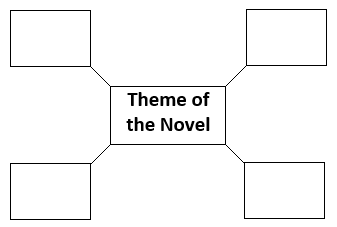
A2. Complete the web by filling the boxes:
Image
A3. Find and write the collocations from the passage:
(i) ...................... man
(ii) ...................... war
(iii) ...................... destruction
(iv) ...................... triumph
A4. Do as directed:.
(i) Hemingway's novel is based on real events. (Convert the underlined adjective into an adjective clause.)
(ii) Hemingway's language is simple and pithy. (Frame a Wh-question to get the underlined part as an answer.)
A5. Do you think one should have a role model to look up to? Justify your response.

View full solution

Generate a Chapter 4.5 The Old Man and The Sea Book Review paper free

Pick question groups from the list above, set marks and difficulty, and export a branded PDF with step-by-step answer keys. First 3 chapters free — no signup.

Download App