1. Natality:
- Natality is the birth rate of a population. Due to increased natality the population density rises.
- Natality is a crude birth rate or specific birth rate.
- Crude birth rate : Number of births per 1000 population/year gives crude birth rate. Crude birth rate is helpful in calculating population size.
- Specific birth rate : Crude birth rate is relative to a specific criterion such as age. E.g. If in a pond, there were 200 carp fish and their population rises to 800. Then, taking the current population to 1000, the birth rate becomes 800/200 = 4 offspring per carp per year. This is specific birth rate.
- Absolute Natality : The number of births under ideal conditions when there is no competition and the resources such as food and water are abundant, then it give absolute natality.
- Realized Natality : The number of births under different environmental pressures give realized natality. Absolute natality will be always more than realized natality.
2. Mortality:
- Mortality is the death rate of a population. It gives a measure of the number of deaths in a particular population, in proportion to the size of that population, per unit of time.
- Mortality rate is typically expressed in deaths per 1,000 individuals per year.
A mortality rate of 9.5 (out of 1,000) in a population of 1,000 would mean 9.5 deaths per year in that entire population or 0.95% out of the total. - Absolute Mortality : The number of deaths under ideal conditions when there is no competition, and all the resources such as food and water are abundant, then it gives absolute mortality.
- Realized Mortality : The number of deaths under environmental pressures come into play gives realized mortality.
- It must be remembered that absolute mortality will always be less than realized mortality.
3. Density:
The density of a population in a given habitat during a given period fluctuates due to changes in four basic processes, viz.
- Natality i.e. birth rate (The number of births during a given period in the population that are added to the initial density).
- Mortality i.e. death rate (The number of deaths in the population during a given period).
- Immigration i.e. number of individuals of the same species that have come into the habitat from elsewhere during the time period under consideration.
- Emigration i.e. the number of individuals of the population who left the habitat and gone elsewhere during the time period under consideration.
- Natality and immigration increase in population density whereas mortality and emigration decrease it.
4. Sex ratio : Ratio of the number of individuals of one sex (male) to that of the other sex (female) is called sex ratio. In nature male, female ratio is always 1 : 1. This 1 : 1 ratio is called evolutionary stable strategy of ESS for each population.
5. Age distribution and age pyramid : This parameter is important for human population. Each population is composed of individuals of different ages. The age distribution is plotted for the population, the resulting structure is called an age pyramid. For making the age pyramid, the entire population is divided into three age groups as Pre-Reproductive (age 0-14 years), Reproductive (age 15-44 years) and Post-reproductive (age 45 -85+ years).
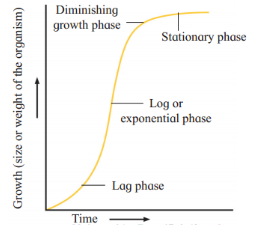
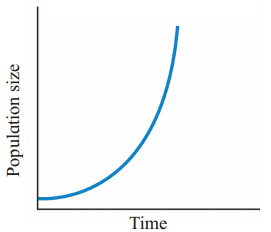
6. Growth : Growth of a population causes rise in its density. The size and density are dynamic parameters as they keep on changing with time, and various factors including food, predation pressure and adverse weather. From the density, one comes to know if the population is flourishing or declining.