Oxygen is released into the atmosphere by the process of
- Arespiration
- ✓Photosynthesis
- CCombustion
- DAll of these
Answer: B.
View full solution →144 questions across 15 question groups — pick any mix to generate a Science paper with step-by-step answer keys.
Write the Correct Alternative.
44 Q→02Find the odd one out.
7 Q→03Write the following Statement Is True Or False. & Write True Statement.
17 Q→04Answer the following in one sentece.
14 Q→05Name The Following.
10 Q→06Distinguish Between.
8 Q→07complete the Graph/Table.
4 Q→08Answer the following question.
4 Q→09Give Scientific Reason.
3 Q→10Read The Folowing Paragraph and answer the questions.
3 Q→11Answer the following question.
9 Q→12Draw Diagram.
5 Q→13Explain Statement.
1 Q→14Complete The Correlation.
10 Q→15Observe The Picture And Explain.
5 Q→One sample from each question group in this chapter. Select any group above to see the full set with answer keys.
Answer: B.
View full solution →Answer: A.
View full solution →Answer: B.
View full solution →Answer: C.
View full solution →Answer: B.
View full solution →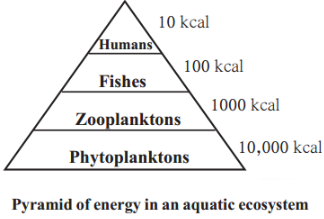
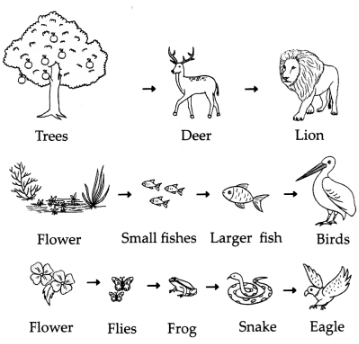
Food web
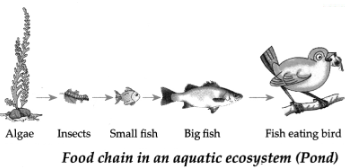
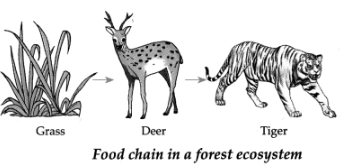
A food chain is a linear network of links in a food i web starting from producer organisms (such asgrass or trees which use radiation from the Sun to make their food) and ending at apex predator species (like grizzly bears or killer whales), detritivores (like earthworms or woodlice), ordecomposer species (such as fungi or bacteria), A food chain also shows how the organisms are related with each other by the food they eat. Each level of a food chain represents a different trophiclevel. A food chain differs from a food web, because the complex network of different animal’s feeding relations are aggregated and the chain only follows a direct, linear pathway of one animal at a time.
Natural interconnections between food chains make it a food web. A common metric usedto the quantify food web trophic structure is foodi chain length. In its simplest form, the length of a chain is the number of links between a trophici consumer and the base of the web and the meanchain length of an entire web is the arithmetic average of the lengths of all chains in a food web. The food chain is an energy source diagram. Many food webs have a keystone species. A keystonespecies is a species that has a large impact on thei surrounding environment and can directly affectthe food chain.
If this keystone species dies off it can set the entire food chain off balance. Keystonespecies keep herbivores from depleting all of thei foliage in their environment and preventing ai mass extinction. Food chains were first introduced by the Arab scientist and philosopher Al-Jahiz inthe 10th century and later popularized in a book I published in 1927 by Charles Elton, which also i introduced the food web concept.
1. What is a food web?
2. In a food web which organism are called producers?
3. What is the role of keystone species?
4.What is a keystone species?
5. What does each level of food chain represent?
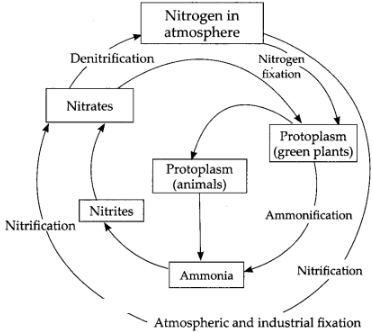
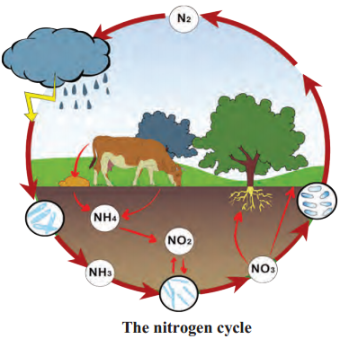
Nitrogen cycle
The nitrogen cycle is the biogeochemical cycle by which nitrogen is converted into multiple chemical forms as it circulates among the atmosphere, terrestrial, and marine ecosystems. The conversion of nitrogen can be carried out through both biological and physical processes. Important processes in the nitrogen cycle include fixation, ammonification, nitrification, and denitrification, The majority of Earth’s atmosphere (78%) is atmosphere nitrogen, making it the largest source of nitrogen.
However, atmospheric nitrogen has limited availability for biological use, leading to a scarcity of usable nitrogen in many types of ecosystems. The nitrogen cycle is of particular interest to ecologists because nitrogen availability can affect the rate of key ecosystem processes, including primary production and decomposition, Human activities such as fossil fuel combustion, use of artificial nitrogen fertilizers, and release of nitrogen in wastewater have dramatically altered the global nitrogen cycle. Human modification of the global nitrogen cycle can negatively affect the natural environment system and also human health.
1. Why nitrogen cycle is called bio-geochemical cycle?
2.Why is nitrogen cycle important to us?
3. Name important process of nitrogen cycle.
4.What can affect the nitrogen cycle negatively?
5.Which human activities change the nitrogen cycle?
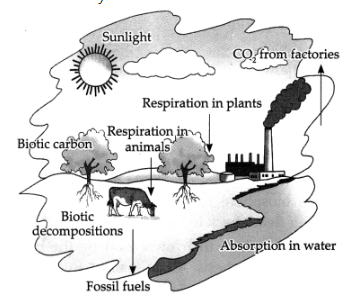
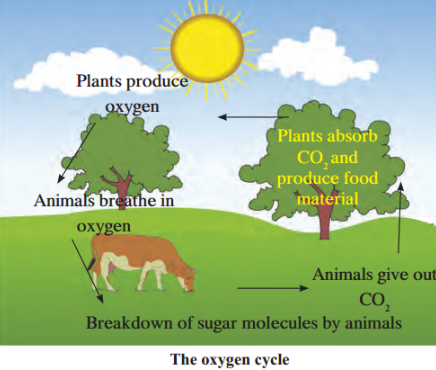
Oxygen cycle.
Nitrogen cycle.
Pick question groups from the list above, set marks and difficulty, and export a branded PDF with step-by-step answer keys. First 3 chapters free — no signup.