Question types

Classification of Plants question types

94 questions across 13 question groups — pick any mix to generate a Science paper with step-by-step answer keys.

94
Questions
13
Question groups
5
Question types
Sample Questions

Classification of Plants questions

One sample from each question group in this chapter. Select any group above to see the full set with answer keys.

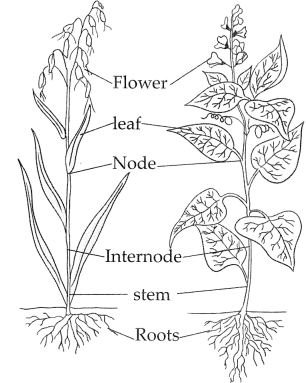
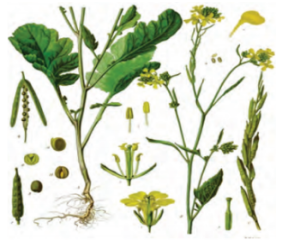
The flowers of Angiosperms plants bear are their …………….. organs Flowers develop into …………….. and seeds are formed within …………….. . Thus, these seeds are ……………..; hence, they are called angiosperms (angios: cover, sperms: seeds). The plants whose seeds can be divided into two equal halves or dicotyledons are called …………….. plants and those whose seeds cannot be divided into equal parts are called …………….. plants.
View full solution
Gymnosperms are mostly …………….., perennial and woody. Their stems are without …………….. The leaves form a …………….. These plants bear male and female flowers on different …………….. of the same plant …………….. of these plants do not have natural coverings, i.e. these plants do not form …………….. and are therefore called gymnosperms. (gymnos: naked, sperms: seeds). Examples Cycas, Picea (Christmas tree), Thuja (Morpankhi), Pinus (Deodar), etc.
View full solution
Phanerogams plants which have special structures for …………….. and produce …………….. In these plants, after the process of reproduction, seeds are formed which contain the …………….. and stored food. During germination of the seed, the stored food is used for the initial growth of the embryo. Depending upon whether seeds are enclosed in …………….. a or not, phanerogams are classified into …………….. and ……………. .
View full solution
Plants from Pteridophyta group have well developed roots, stem and leaves and separate …………….. for conduction of food and water. But,
they do not bear …………….. and ……………… They reproduce with the help of …………….. formed along the back or posterior surface of their leaves. Examples are ferns like Nephrolepis, Marsilea, Pteris, Adiantum, Equisetum, Selaginella, Lycopodium, etc. These plants reproduce …………….. by spore-formation and sexually by …………….. formation. They have a well-developed conducting system.
View full solution
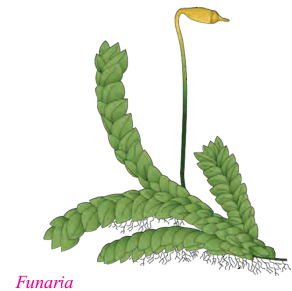
…………….. group of plants is called the amphibians’ of the plant kingdom because they grow in moist soil but need …………….. for reproduction. These plants are thalloid, multicellular and autotrophic. They reproduce by …………….. formation. The structure of the plant body of bryophytes is flat, ribbon?like long, without true …………….., stem and leaves. Instead, they have stem-like or leaf?like parts and root-like ……………. . They do not have specific …………….. for conduction of food and water. Examples are Moss (Funaria), Marchantia, Anthoceros, Riccia, etc.
View full solution
Monocot and Dicot plants

Image1.Which division of plants does this plant come under?
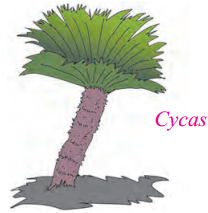
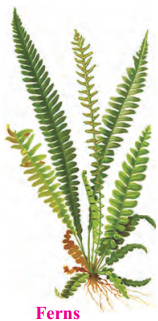
2.How are the seeds of these types of planis?
3.How can we classify the plants according to their seeds in this division?
4.How the venations are present on the leaves of these types of plants?
5.How is the root system of these types of plants?
View full solution

Generate a Classification of Plants paper free

Pick question groups from the list above, set marks and difficulty, and export a branded PDF with step-by-step answer keys. First 3 chapters free — no signup.

Download App