Questions

5 Marks Questions

🎯

Test yourself on this topic

5 questions · timed · auto-graded

Question 15 Marks

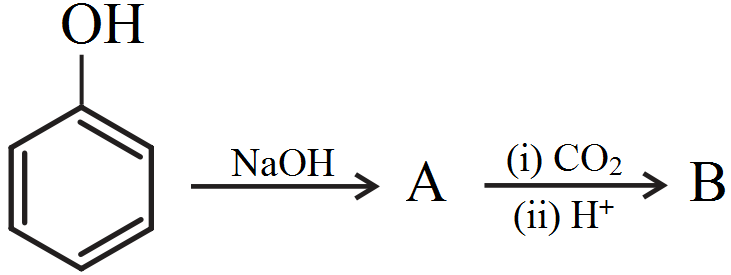
Identify A and B in the following reactions:
  1.  
  1. $\text{C}_2\text{H}_5\text{OH}\xrightarrow{\text{Cu},573\text{k}}\text{A}\xrightarrow{\text{CH}_3\text{MgBr}}\text{B}\\ \ \ \ \ \ \ \ \ \ \ \ \ \ \ \ \ \ \ \ \ \ \ \ \ \ \ \ \ \ \ \ \ \ \ \text{H}_2\text{O}/\text{H}^{+}$
Answer
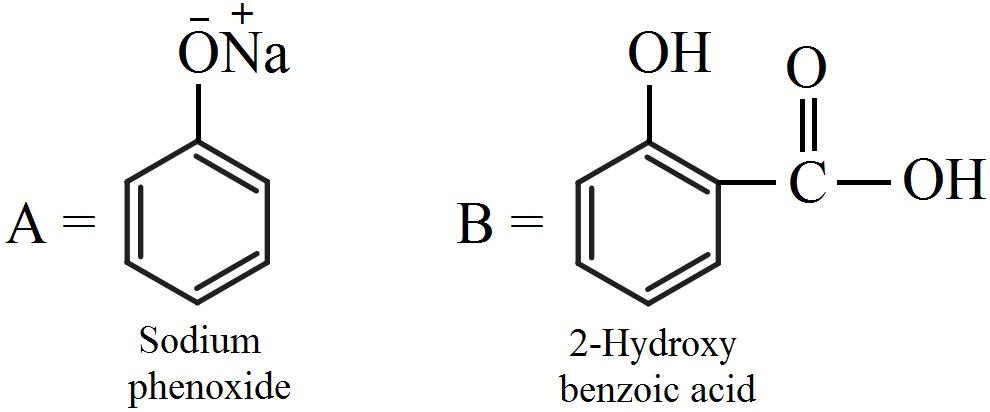
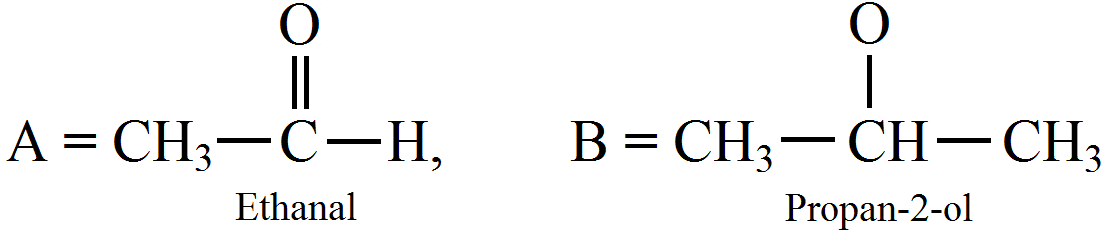
  1.  
  1.  
View full question & answer
Question 25 Marks
  1. The acid strength of alcohols decreases in the order
  1. Phenol is more easily nitrated than benzene.
Answer
  1. The acidic character of alcohols is due to the polar nature of O-H bond. As alkyl groups have +I effect, therefore, electron density on oxygen increases from 1 to 3° alcohols. In other words, the O-H bond in 3° alcohols is most polar whereas it is least polar in 1° alcohols. Thus, the acid strength of alcohols follows the order
  1. Nitration involves attack of electrophile nitronium $(NO_2)$ ion on benzene ring. Due to +R effect of O-H group electron density increases at ortho and para position in phenol. Therefore, phenol is more easily nitrated than benzene.
View full question & answer
Question 45 Marks
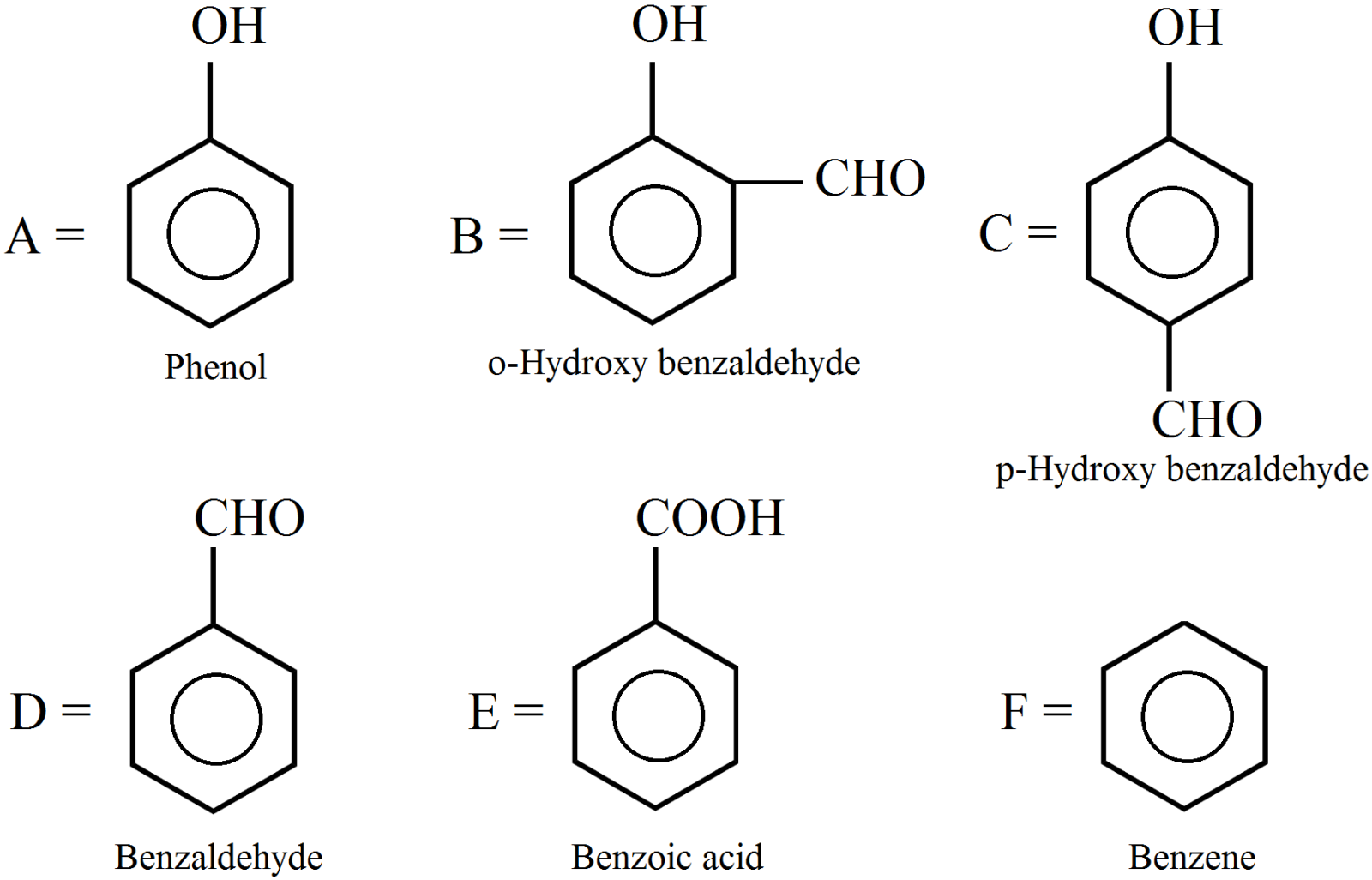
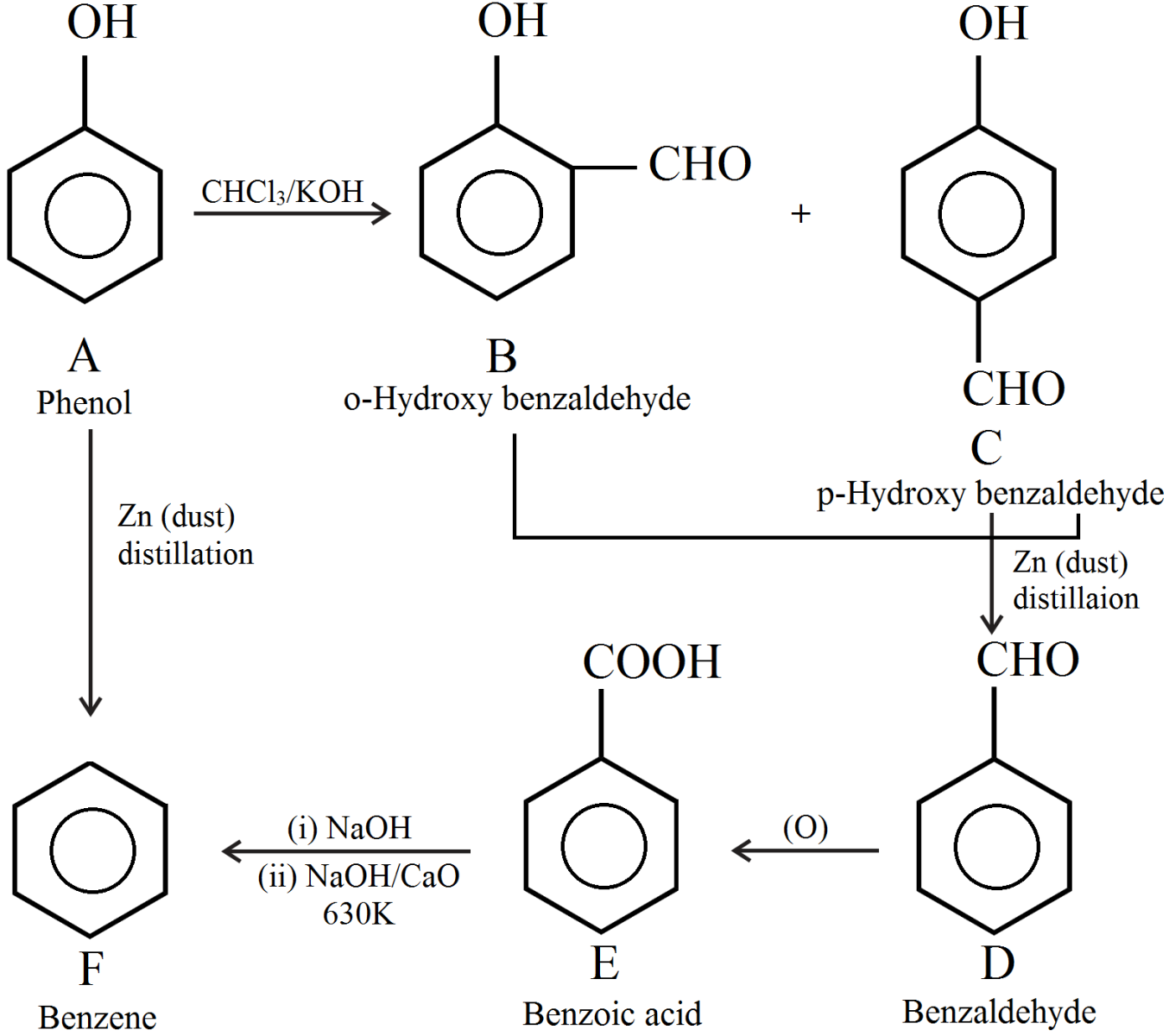
An aromatic compound ‘A’ on treatment with $CHCl_3 / KOH$ gives two compounds ‘B’ and ‘C’. Both B and C give the same product ‘D’ when distilled with zinc dust. Oxidation of D gives E having molecular formula $C_7H_6O_2$. The sodium salt of E on heating with sodalime gives F which may also be obtained by distilling A with zinc dust. Identify A to F.
Answer
Solution is as follow:

View full question & answer
Question 55 Marks
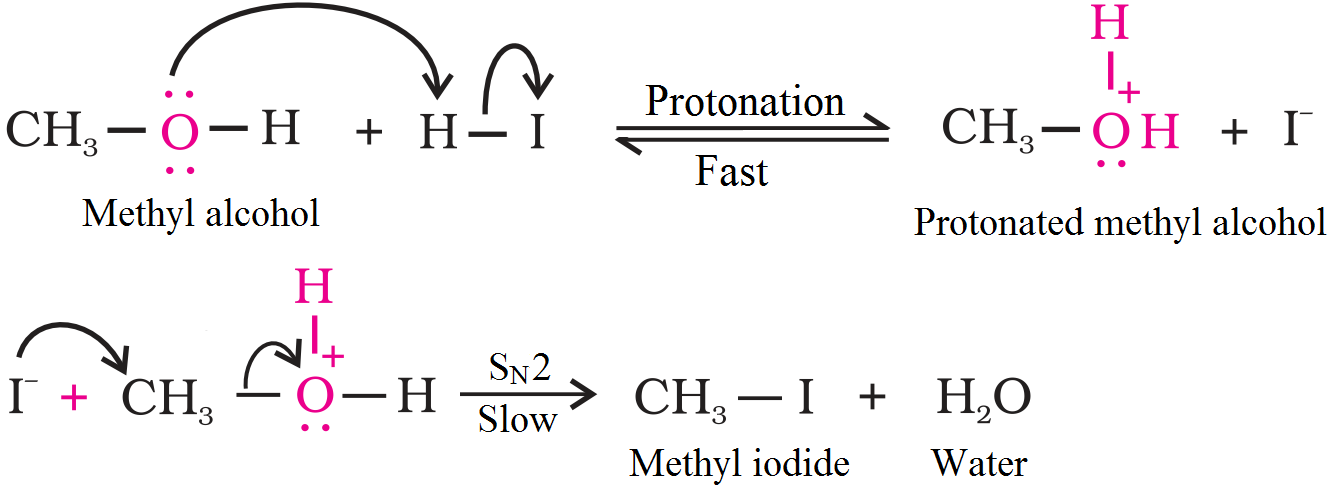
Answer the following question: Write mechanism of the reaction of HI with methoxymethane.
Answer

The cleavage of methoxymethane with HI follows $SN_2$ mechanism.
Step I:

Step II:

If excess of HI is used, methyl alcohol formed in step II further reacts with another molecule of HI to form $CH_3I.$
Step III:
View full question & answer