Question 14 Marks
Read the passage given below and answer the following questions :
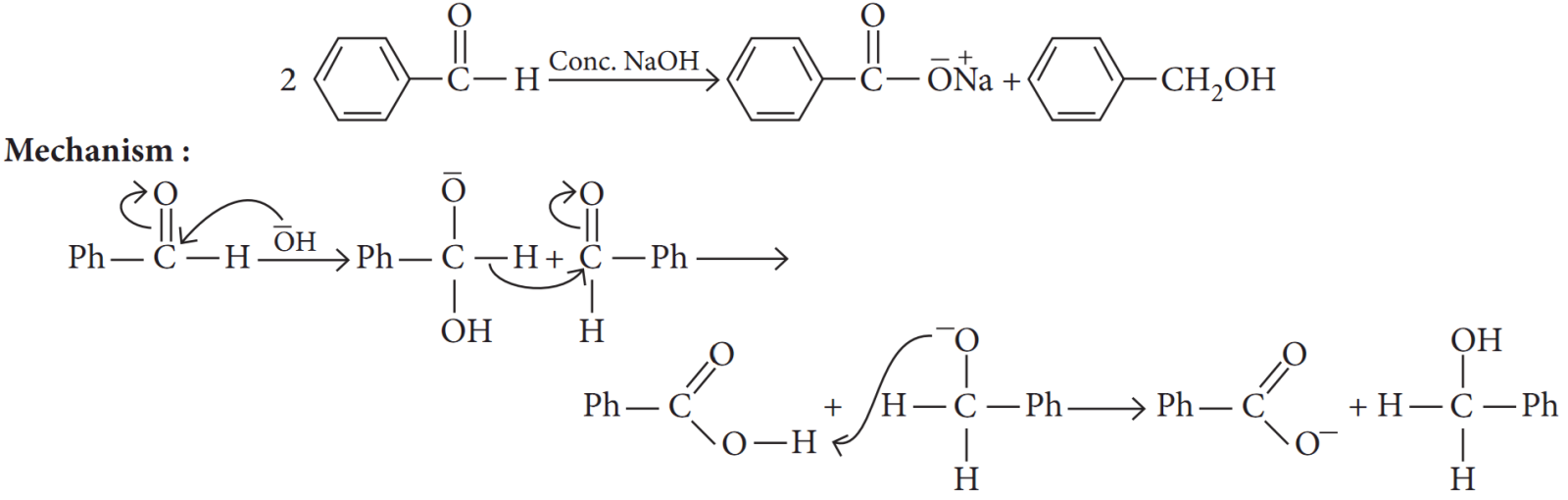
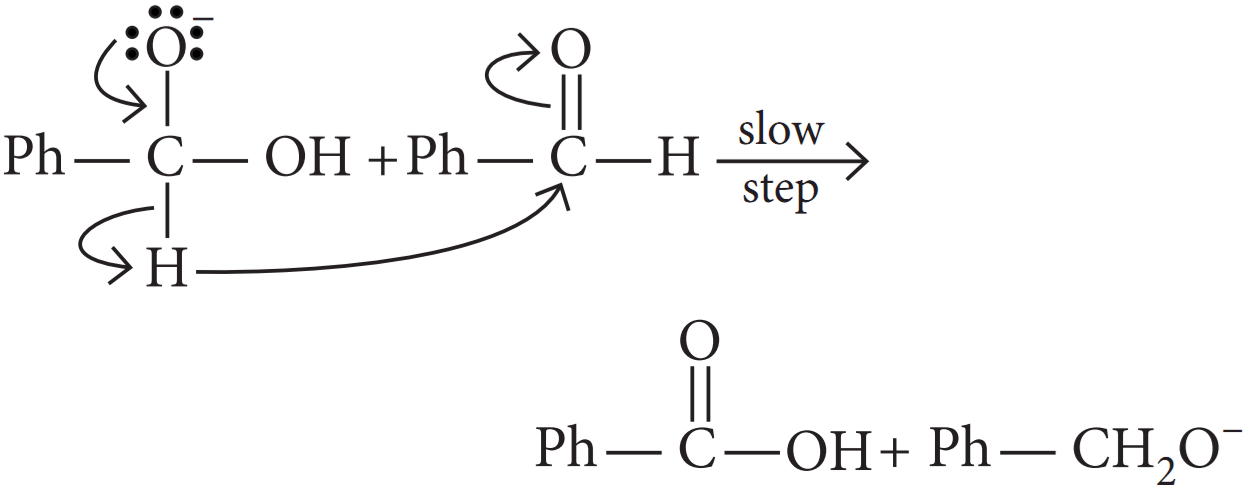
When an aldehyde with no a-hydrogen reacts with concentrated aqueous $NaOH$, half the aldehyde is converted to carboxylic acid salt and other half is converted to an alcohol. In other words, half of the reactant is oxidized
and other half is reduced. This reaction is known as Cannizzaro reaction
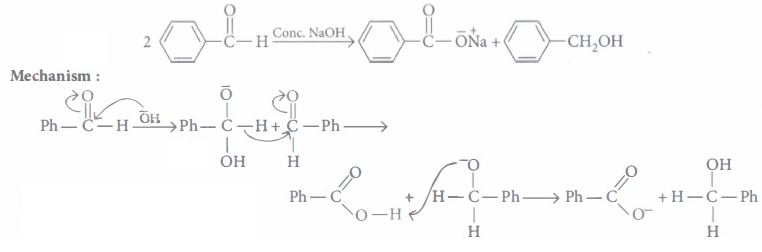
The following questions are multiple choice questions. Choose the most appropriate answer:
When an aldehyde with no a-hydrogen reacts with concentrated aqueous $NaOH$, half the aldehyde is converted to carboxylic acid salt and other half is converted to an alcohol. In other words, half of the reactant is oxidized
and other half is reduced. This reaction is known as Cannizzaro reaction
The following questions are multiple choice questions. Choose the most appropriate answer:
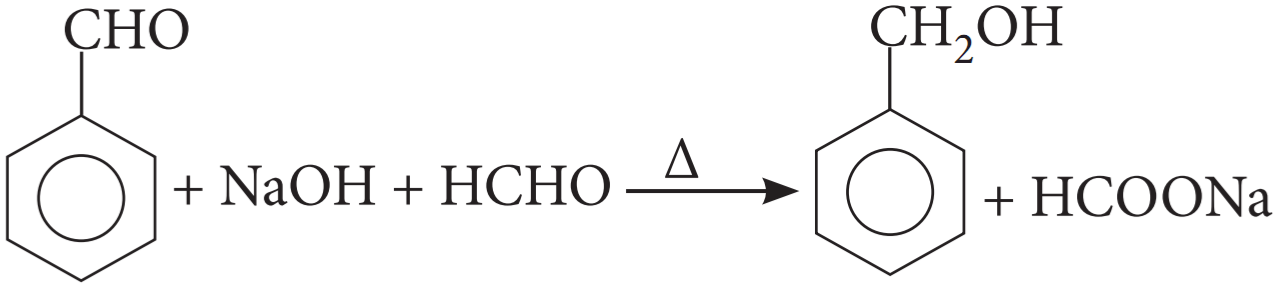
- A mixture of benzaldehyde and formaldehyde on heating with aqueous $NaOH$ solution gives:
- Benzyl alcohol and sodium formate.
- Sodium benzoate and methyl alcohol.
- Sodium benzoate and sodium formate.
- Benzyl alcohol and methyl alcohol.
- Which of the following compounds will undergo Cannizzaro reaction?
- $CH_3CHO$
- $CH_3COCH_3$
- $C_6H_5CHO$
- $C_6H_5CH_2CHO$
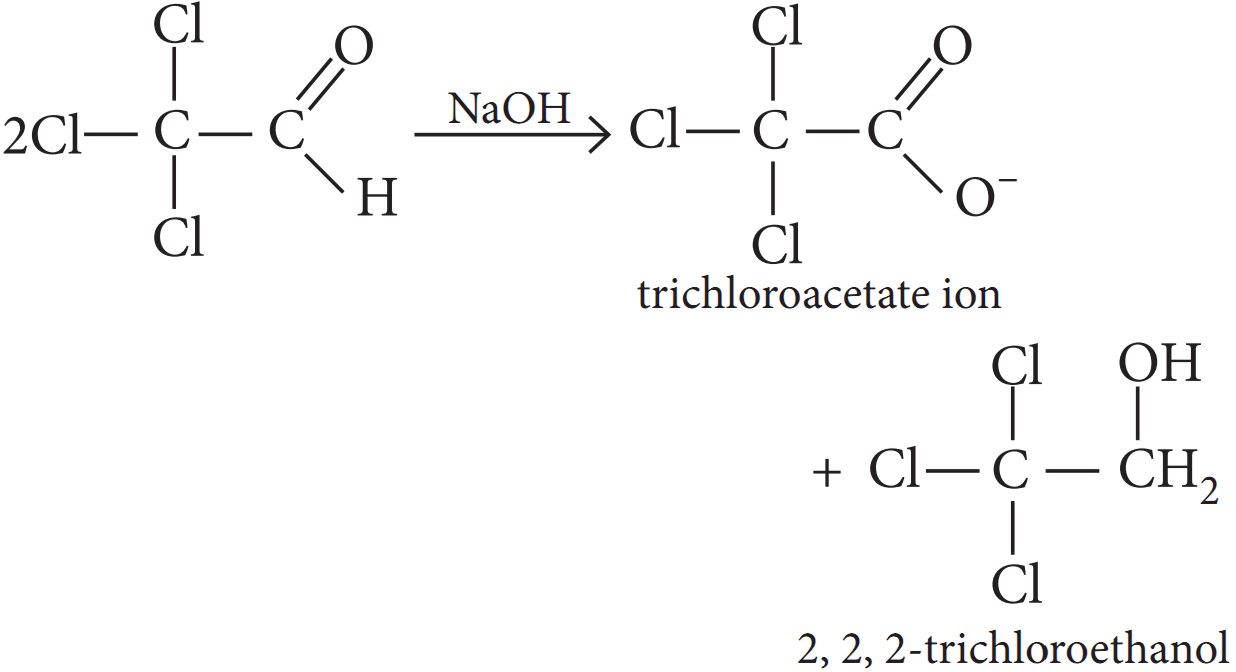
- Trichloroacetaldehyde is subjected to Cannizzaro's reaction by using $NaOH$. The mixture of the products contains sodium trichloroacetate ion and another compound. The other compounds is:
- 2, 2, 2-trichloroethanol
- Trichloromethanol
- 2, 2, 2-trichloropropanol
- Chloroform
- Which of the following reaction will not result in the formation of carbon-carbon bonds?
- Cannizzaro reaction
- Wurtz reaction
- Reimer- Tiemann reaction
- Friedel - Crafts acylation
Answer
It is an example of cross Cannizzaro reaction where aromatic aldehyde gets reduced to alcohol and aliphatic aldehyde gets oxidised to its sodium salt (both aldehydes must not contain any αα-hydrogen).

The Cannizzaro product of given reaction yields 2, 2, 2-trichloroethanol.

C - C bond is not formed in Cannizzaro reaction while other reactions result in the formation of C - C bond.
View full question & answer→- (a) Benzyl alcohol and sodium formate.
It is an example of cross Cannizzaro reaction where aromatic aldehyde gets reduced to alcohol and aliphatic aldehyde gets oxidised to its sodium salt (both aldehydes must not contain any αα-hydrogen).
- (c) $C_6H_5CHO$
- (a) 2, 2, 2-trichloroethanol
The Cannizzaro product of given reaction yields 2, 2, 2-trichloroethanol.
- (a) Cannizzaro reaction
C - C bond is not formed in Cannizzaro reaction while other reactions result in the formation of C - C bond.



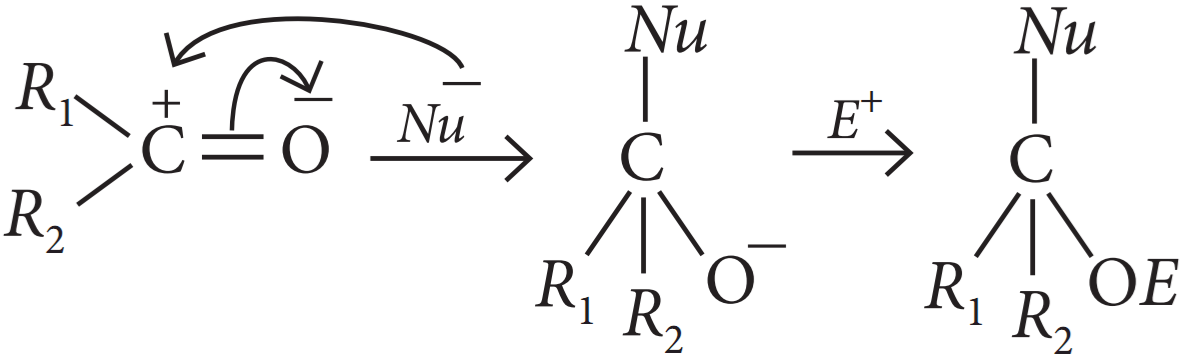
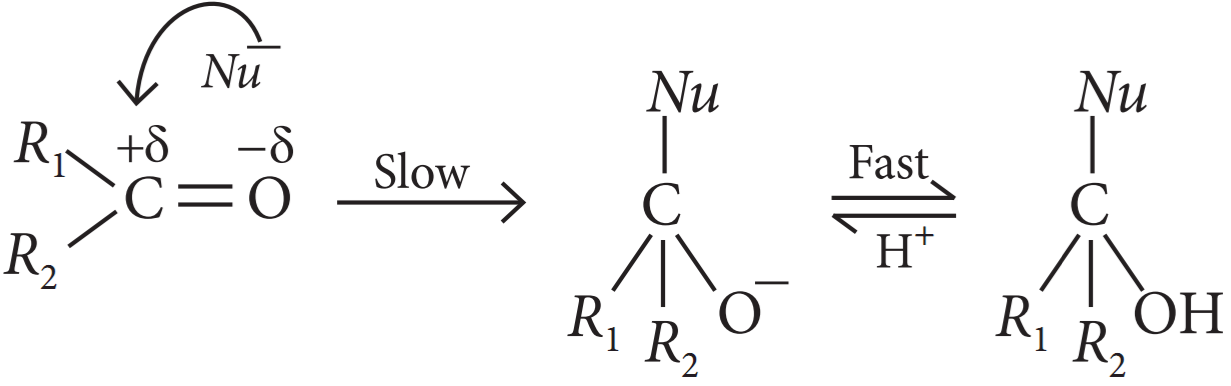
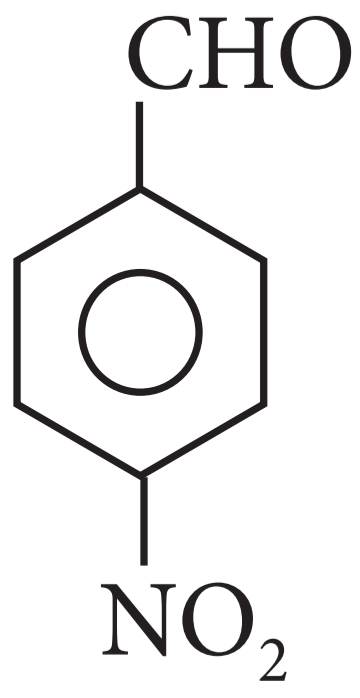 is more reactive towards nucleophilic addition reaction than
 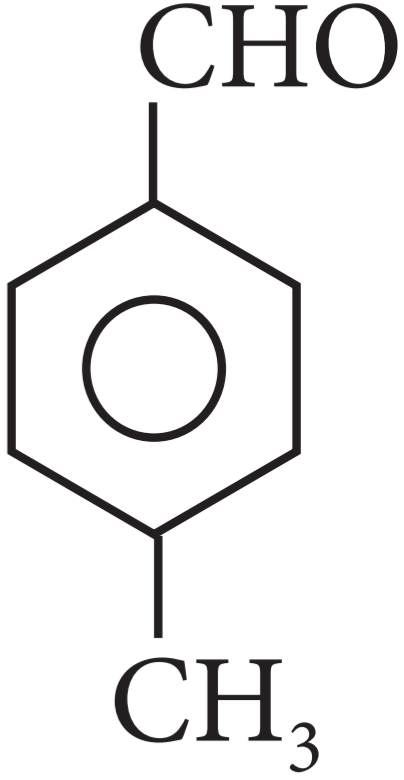 .
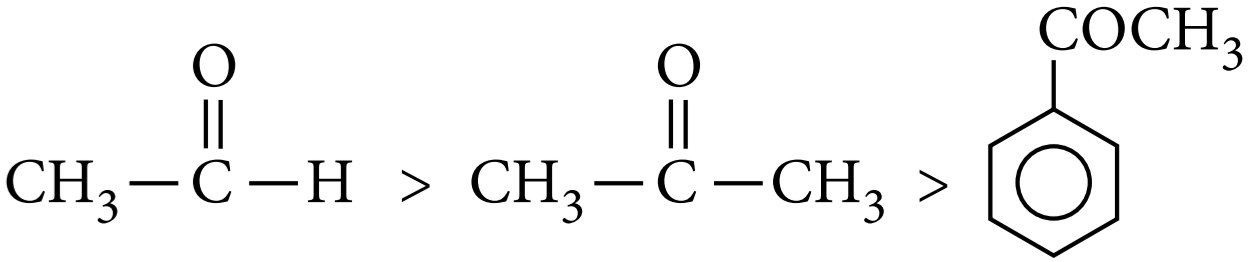
.
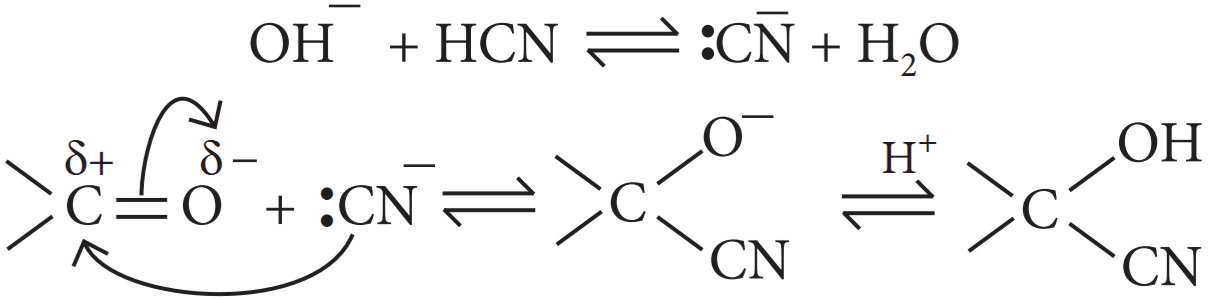
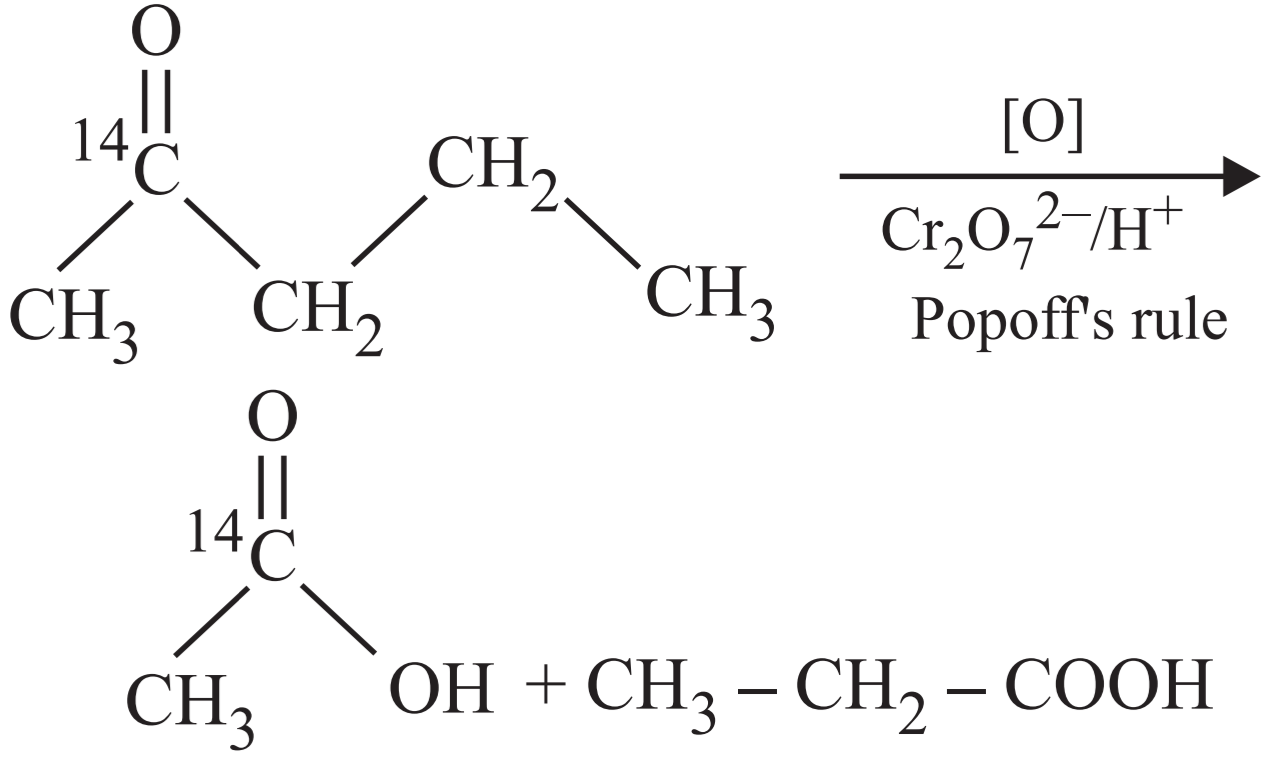
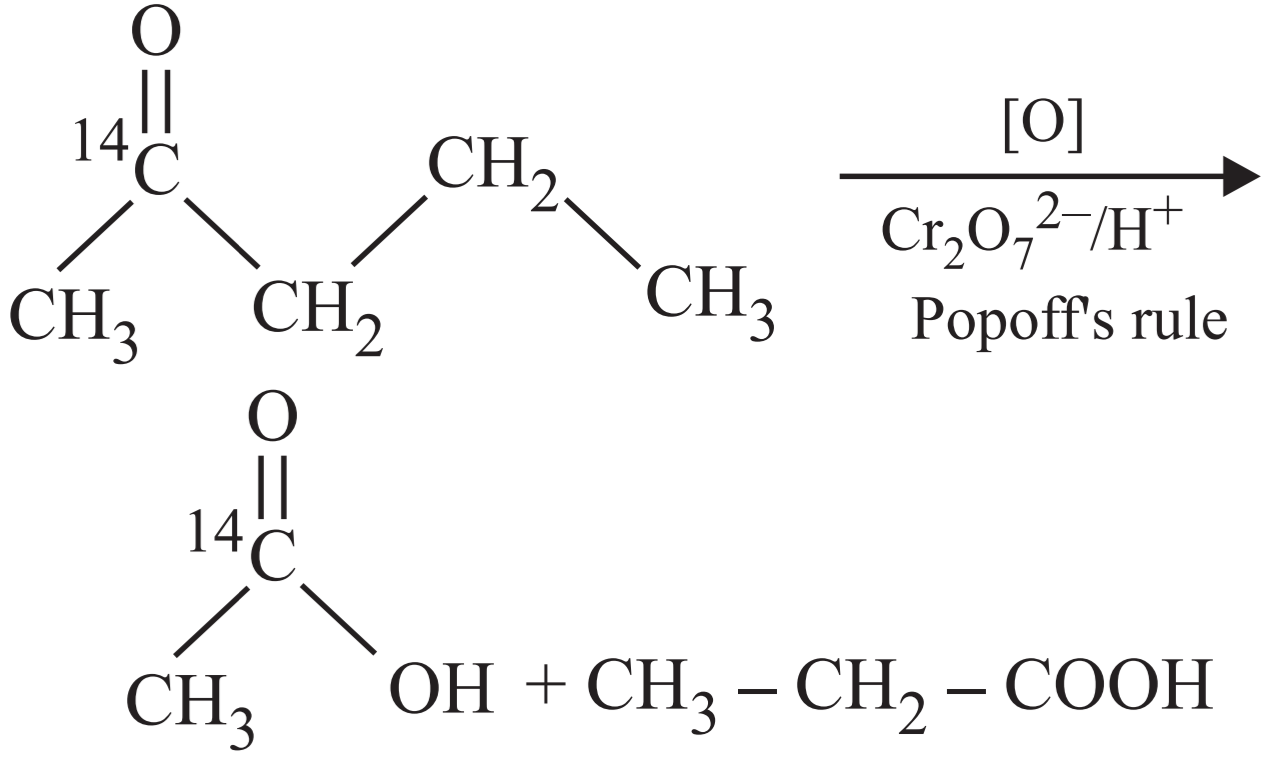
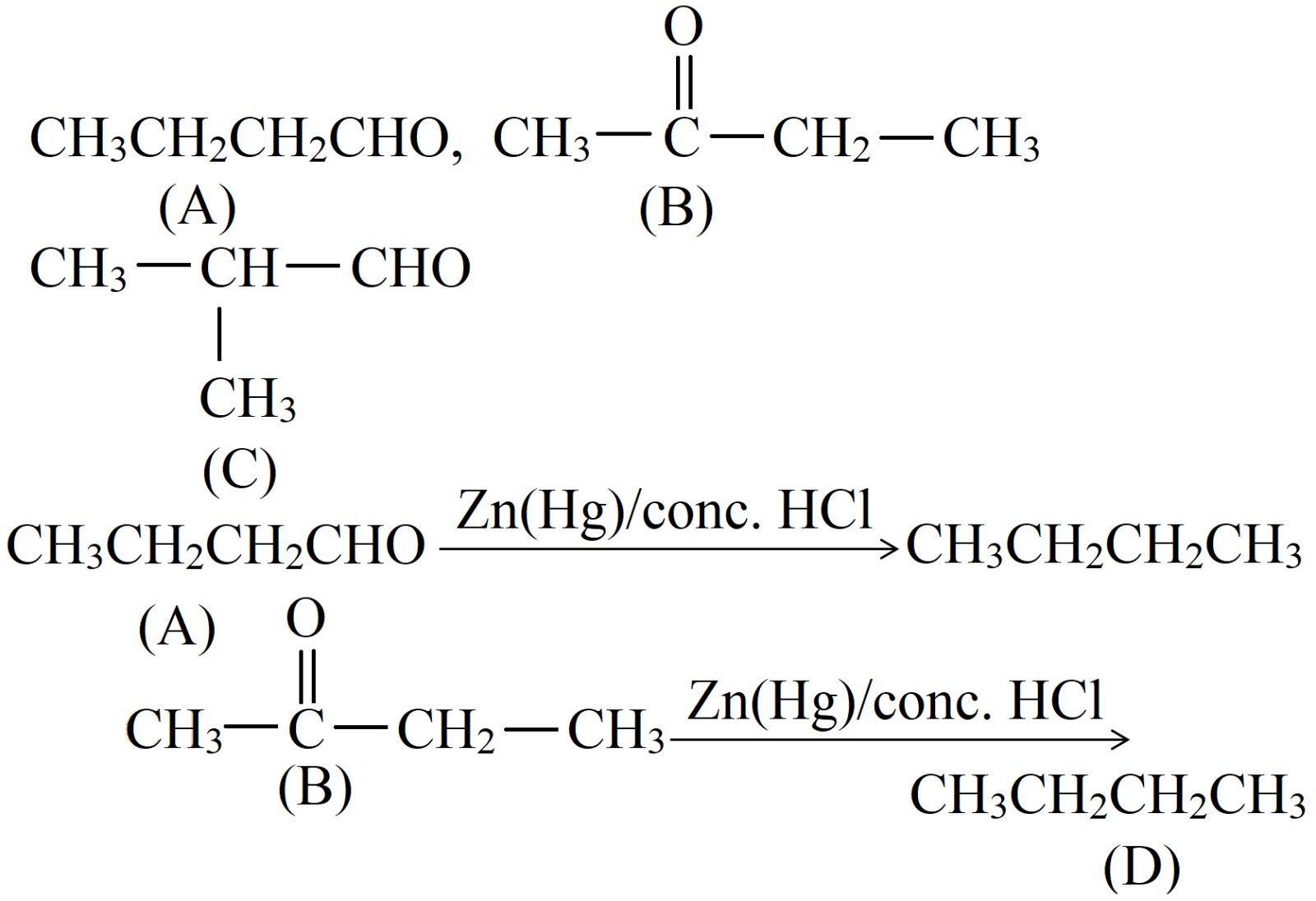
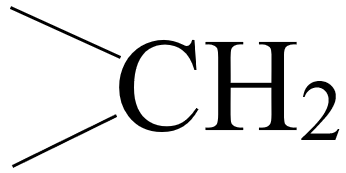 group on treatment with Zn-Hg and cone. HCl (Clemmensen reduction) or with hydrazine followed by NaOH or KOH in highly boiling solvent such as ethylene glycol (Wolff-Kishner reduction).Aldehydes differ from ketones in their oxidation reactions. Aldehydes are easily oxidised to carboxylic acids on treatment with $HNO_3, KMnO_4, K_2Cr_2O_7$ etc. Even mild oxidising agents mainlyTollens' reagent and Fehling's solution also oxidise aldehydes. Ketones are generally oxidised under vigorous conditions i.e., strong oxidising agents and at elevated temperatures, to give mixture of carboxylic acids having lesser number of C-atoms than the parent ketone.
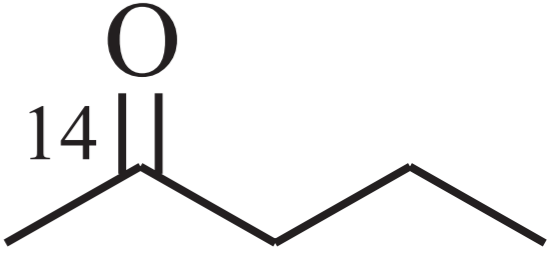 by acidified $K_2Cr_2O_7$, the products are: