Questions · Page 1 of 6

M.C.Q (1 Marks)

🎯

Test yourself on this topic

50 questions · timed · auto-graded

MCQ 11 Mark
Assertion : Electric appliances with metallic body; e.g. heaters, presses etc, have three pin connections, whereas an electric bulb has a two pin connection.
Reason : Three pin connections reduce heating of connecting cables.
  • A
     If both assertion and reason are true and the reason is the correct explanation of the assertion.
  • B
    If both assertion and reason are true but reason is not the correct explanation of the assertion.
  •  If assertion is true but reason is false.
  • D
     If the assertion and reason both are false.
Answer
Correct option: C.
 If assertion is true but reason is false.
 If assertion is true but reason is false.
View full question & answer
MCQ 21 Mark
Assertion : Heat is generated continuously is an electric heater but its temperature becomes constant after some time.
Reason : At the stage when heat produced in heater is equal to the heat dissipated to its surrounding the temperature of heater becomes constant.
  •  If both assertion and reason are true and the reason is the correct explanation of the assertion.
  • B
    If both assertion and reason are true but reason is not the correct explanation of the assertion.
  • C
    If assertion is true but reason is false.
  • D
     If the assertion and reason both are false.
Answer
Correct option: A.
 If both assertion and reason are true and the reason is the correct explanation of the assertion.
 If both assertion and reason are true and the reason is the correct explanation of the assertion.
View full question & answer
MCQ 31 Mark
The magnetic induction at a point P which is distant 4 cm from a long current carrying wire is $10^{-18}$ tesla. The field of induction at a distance 12 cm from the same current would be
  • A
    $ 3.33\times 10^{-9} $ tesla
  • B
    $ 1.11\times 10^{-4} $ tesla
  • $3 \times 10^{-3} $ tesla
  • D
    $ 9 \times 10^{-2} $ tesla
Answer
Correct option: C.
$3 \times 10^{-3} $ tesla
(c) $3 \times 10^{-3} $ tesla
View full question & answer
MCQ 41 Mark
Assertion : The presence of water molecules makes separation of ions easier in electrolyte.
Reason : The presence of water molecules in electrolyte decreases the resistance of electrolyte.
  • A
    If both assertion and reason are true and the reason is the correct explanation of the assertion.
  •  If both assertion and reason are true but reason is not the correct explanation of the assertion.
  • C
    If assertion is true but reason is false.
  • D
     If the assertion and reason both are false.
Answer
Correct option: B.
 If both assertion and reason are true but reason is not the correct explanation of the assertion.
 If both assertion and reason are true but reason is not the correct explanation of the assertion.
View full question & answer
MCQ 51 Mark
Assertion : In all conductors, for studying the thermoelectric behaviour or metals, lead is taken as a reference metal.
Reason : In lead, the Thomson effect is negative.
  • A
     If both assertion and reason are true and the reason is the correct explanation of the assertion.
  • B
     If both assertion and reason are true but reason is not the correct explanation of the assertion.
  •  If assertion is true but reason is false.
  • D
     If the assertion and reason both are false.
Answer
Correct option: C.
 If assertion is true but reason is false.
 If assertion is true but reason is false.
View full question & answer
MCQ 61 Mark
Assertion : A domestic electrical appliance, working on a three pin will continue working even if the top pin is removed.
Reason : The third pin is used only as a safety device.
  •  If both assertion and reason are true and the reason is the correct explanation of the assertion.
  • B
     If both assertion and reason are true but reason is not the correct explanation of the assertion.
  • C
    If assertion is true but reason is false.
  • D
     If the assertion and reason both are false.
Answer
Correct option: A.
 If both assertion and reason are true and the reason is the correct explanation of the assertion.
 If both assertion and reason are true and the reason is the correct explanation of the assertion.
View full question & answer
MCQ 71 Mark
Assertion : A laser beam 0.2 W power can drill holes through a metal sheet, whereas 1000 W torch-light cannot.
Reason : The frequency of laser light is much higher then that of torch light.
  • A
     If both assertion and reason are true and the reason is the correct explanation of the assertion.
  • B
    If both assertion and reason are true but reason is not the correct explanation of the assertion.
  • If assertion is true but reason is false.
  • D
    If the assertion and reason both are false.
Answer
Correct option: C.
If assertion is true but reason is false.
 If assertion is true but reason is false.
View full question & answer
MCQ 81 Mark
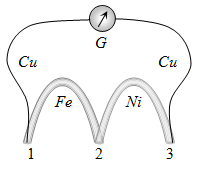
Three wires of copper, iron and nickel are joined to form three junctions as shown in Fig. When the temperature of junction 1 is kept 50℃ with the other two junctions at 0℃, the sensitive galvanometer gives a deflection of 14 divisions. When the temperature of junction 3 is kept 50℃, with the other two junctions at 0℃, the galvanometer gives a deflection of 11 divisions. Then the deflection given by the galvanometer, when temperature of the junction 2 is kept at 50℃, with the other two junctions at 0℃, will be

  • A
    3 div
  • B
    11 div
  • C
    14 div
  • 25 div
Answer
Correct option: D.
25 div
(d) 25 div
View full question & answer
MCQ 91 Mark
A thermo couple uses Bismuth and Tellurium as the dissimilar metals. The sensitivity of bismuth is -72μV/℃ and that of the tellurium is 500μV/℃. If the difference between hot and cold junction is 100℃ then the maximum output will be
  • A
     50 mV
  • B
    7.2 mV
  • C
    42.8 mV
  • 57.2 mV
Answer
Correct option: D.
57.2 mV
57.2 mV
View full question & answer
MCQ 101 Mark
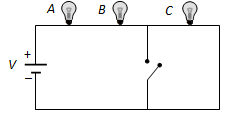
Assertion : If three identical bulbs are connected in series as shown in figure then on closing the switches. Bulb C short circuited and hence illumination of bulbs A and B decreases.


Reason : Voltage on A and B decreases
  • A
    If both assertion and reason are true and the reason is the correct explanation of the assertion.
  • B
    If both assertion and reason are true but reason is not the correct explanation of the assertion.
  • C
    If assertion is true but reason is false.
  • If the assertion and reason both are false.
Answer
Correct option: D.
If the assertion and reason both are false.
(d) If the assertion and reason both are false.
View full question & answer
MCQ 111 Mark
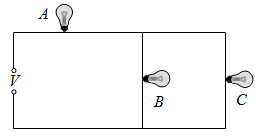
Assertion : In the given circuit if lamp B or C fuses then light emitted by lamp A decreases.


Reason : Voltage on A decreases. 
  • If both assertion and reason are true and the reason is the correct explanation of the assertion.
  • B
    If both assertion and reason are true but reason is not the correct explanation of the assertion.
  • C
    If assertion is true but reason is false.
  • D
    If the assertion and reason both are false.
Answer
Correct option: A.
If both assertion and reason are true and the reason is the correct explanation of the assertion.
(a) If both assertion and reason are true and the reason is the correct explanation of the assertion.
View full question & answer
MCQ 121 Mark
Assertion : Leclanche cell is used, when constant supply of electric current is not required.
Reason : The e.m.f. of a Leclanche cell falls, if it is used continuously.
  •  If both assertion and reason are true and the reason is the correct explanation of the assertion.
  • B
    If both assertion and reason are true but reason is not the correct explanation of the assertion.
  • C
     If assertion is true but reason is false.
  • D
     If the assertion and reason both are false.
Answer
Correct option: A.
 If both assertion and reason are true and the reason is the correct explanation of the assertion.
If both assertion and reason are true and the reason is the correct explanation of the assertion.
View full question & answer
MCQ 131 Mark
Assertion : In practical application, power rating of resistance is not important.
Reason : Property of resistance remain same even at high temperature.
  • A
    If both assertion and reason are true and the reason is the correct explanation of the assertion.
  • B
     If both assertion and reason are true but reason is not the correct explanation of the assertion.
  • C
    If assertion is true but reason is false.
  • If the assertion and reason both are false.
Answer
Correct option: D.
If the assertion and reason both are false.
 If the assertion and reason both are false.
View full question & answer
MCQ 141 Mark
Assertion : Neutral temperature of a thermocouple does not depend upon temperature of cold junction.
Reason : Its value is constant for the given metals of the couple.
  • A
     If both assertion and reason are true and the reason is the correct explanation of the assertion.
  •  If both assertion and reason are true but reason is not the correct explanation of the assertion.
  • C
     If assertion is true but reason is false.
  • D
    If the assertion and reason both are false.
Answer
Correct option: B.
 If both assertion and reason are true but reason is not the correct explanation of the assertion.
 If both assertion and reason are true but reason is not the correct explanation of the assertion.
View full question & answer
MCQ 151 Mark
Assertion : Through the same current flows through the line wires and the filament of the bulb but heat produced in the filament is much higher then that in line wires.
Reason : The filament of bulbs is made of a material of high resistance and high melting point.
  •  If both assertion and reason are true and the reason is the correct explanation of the assertion.
  • B
     If both assertion and reason are true but reason is not the correct explanation of the assertion.
  • C
     If assertion is true but reason is false.
  • D
     If the assertion and reason both are false.
Answer
Correct option: A.
 If both assertion and reason are true and the reason is the correct explanation of the assertion.
 If both assertion and reason are true and the reason is the correct explanation of the assertion.
View full question & answer
MCQ 161 Mark
Assertion : Current is passed through a metallic wire, heating it red. When cold water is poured on half of its portion, then rest of the half portion become more hot.
Reason : Resistances decreases due to decrease in temperature and so current through wire increases.
  • If both assertion and reason are true and the reason is the correct explanation of the assertion.
  • B
    If both assertion and reason are true but reason is not the correct explanation of the assertion
  • C
    If assertion is true but reason is false.
  • D
    If the assertion and reason both are false.
Answer
Correct option: A.
If both assertion and reason are true and the reason is the correct explanation of the assertion.
 If both assertion and reason are true and the reason is the correct explanation of the assertion.
View full question & answer
MCQ 171 Mark
Assertion : An electric bulb is first connected to a dc source and then to a ac source having the same brightness in both the cases.
Reason : The peak value of voltage for an A.C. source is $\sqrt 2$ times the root mean square voltage.
  • A
    If both assertion and reason are true and the reason is the correct explanation of the assertion.
  • B
    If both assertion and reason are true but reason is not the correct explanation of the assertion.
  • C
    If assertion is true but reason is false
  • If assertion is false but reason is true.
Answer
Correct option: D.
If assertion is false but reason is true.
(d) If assertion is false but reason is true.
View full question & answer
MCQ 181 Mark
Assertion : The possibility of an electric bulb fusing is higher at the time of switching ON and OFF
Reason : Inductive effects produce a surge at the time of switch ON and OFF
  •  If both assertion and reason are true and the reason is the correct explanation of the assertion.
  • B
     If both assertion and reason are true but reason is not the correct explanation of the assertion.
  • C
    If assertion is true but reason is false.
  • D
    If the assertion and reason both are false.
Answer
Correct option: A.
 If both assertion and reason are true and the reason is the correct explanation of the assertion.
 If both assertion and reason are true and the reason is the correct explanation of the assertion.
View full question & answer
MCQ 191 Mark
Assertion : The 200 W bulbs glows with more brightness then 100 W bulbs.
Reason : A 100 W bulb has more resistance than a 200 W bulb.
  • If both assertion and reason are true and the reason is the correct explanation of the assertion.
  • B
    If both assertion and reason are true but reason is not the correct explanation of the assertion.
  • C
    If assertion is true but reason is false.
  • D
    If the assertion and reason both are false.
Answer
Correct option: A.
If both assertion and reason are true and the reason is the correct explanation of the assertion.
View full question & answer
MCQ 201 Mark
Assertion : Fuse wire must have high resistance and low melting point.
Reason : Fuse is used for small current flow only.
  • A
    If both assertion and reason are true and the reason is the correct explanation of the assertion.
  • B
    If both assertion and reason are true but reason is not the correct explanation of the assertion.
  •  If assertion is true but reason is false.
  • D
     If the assertion and reason both are false.
Answer
Correct option: C.
 If assertion is true but reason is false.
 If assertion is true but reason is false.
View full question & answer
MCQ 211 Mark
Assertion : Two electric bulbs of 50 and 100 W are given. When connected in series 50 W bulb glows more but when connected parallel 100 W bulb glows more.
Reason : In series combination, power is directly proportional to the resistance of circuit. But in parallel combination, power is inversely proportional to the resistance of the circuit.
  • If both assertion and reason are true and the reason is the correct explanation of the assertion.
  • B
     If both assertion and reason are true but reason is not the correct explanation of the assertion.
  • C
     If assertion is true but reason is false.
  • D
    If the assertion and reason both are false.
Answer
Correct option: A.
If both assertion and reason are true and the reason is the correct explanation of the assertion.
 If both assertion and reason are true and the reason is the correct explanation of the assertion.
View full question & answer
MCQ 221 Mark
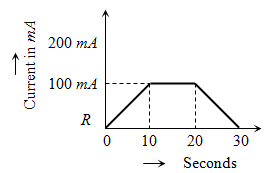
In a copper voltameter, mass deposited in 30 second is m gm. If the time-current graph is as shown in figure, ECE of copper is]
  • A
    m
  • m/2
  • C
    0.1 m
  • D
    0.6 m
Answer
Correct option: B.
m/2
(b) m/2
View full question & answer
MCQ 231 Mark
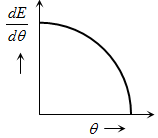
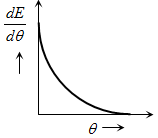
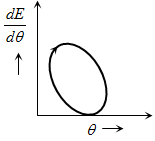
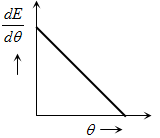
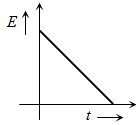
Two different metals are joined end to end. One end is kept at constant temperature and the other end is heated to a very high temperature. The graph depicting the thermo e.m.f. is
  • A
  • B
  • C
Answer
Correct option: D.
(d)
View full question & answer
MCQ 241 Mark
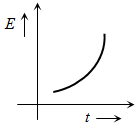
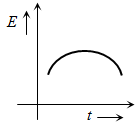
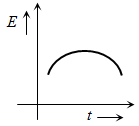
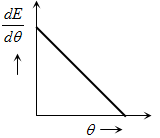
Which of the following graphs shows the variation of thermoelectric power with temperature difference between hot and cold junction in thermocouples
  • B
  • C
  • D
Answer
Correct option: A.
(a)
View full question & answer
MCQ 251 Mark
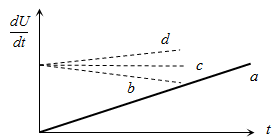
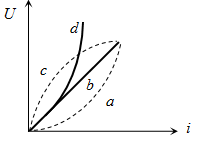
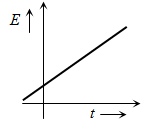
A constant current i is passed through a resistor. Taking the temperature coefficient of resistance into account, indicate which of the plots shown in figure best represents the rate of production of thermal energy in the resistor
  • A
    a
  • B
    b
  • C
    c
  • d
Answer
Correct option: D.
d
(d) d
View full question & answer
MCQ 261 Mark
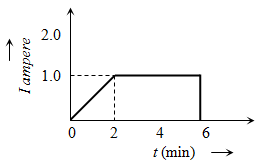
In a copper voltameter, mass deposited in 6 minutes is m gram. If the current-time graph for the voltameter is as shown here, then the E.C.E of the copper is
  • A
    m / 5
  • m / 300
  • C
    5 m
  • D
    m / 18000
Answer
Correct option: B.
m / 300
(b) m / 300
View full question & answer
MCQ 271 Mark
Water of volume $2$ litre in a container is heated with a coil of $1 \ kW$ at $27^{\circ} \mathrm{C}$. The lid of the container is open and energy dissipates at rate of $160 \mathrm{~J} / \mathrm{s}$. In how much time temperature will rise from $27^{\circ} \mathrm{C}$ to $77^{\circ} \mathrm{C}$ [Given specific heat of water is $4.2 \mathrm{~kJ} / \mathrm{kg} ]$
 
  • $8$ min $20 s$
  • B
    $  6$ min $2 s$
  • C
    $7$ min
  • D
    $14$ min
Answer
Correct option: A.
$8$ min $20 s$
$8$ min $20 s$
View full question & answer
MCQ 281 Mark
The thermo e.m.f. of a thermocouple varies with the temperature θ of the hot junction as $\mathrm{E}=\mathrm{a} \theta+\mathrm{b} \theta^2$ in volts where the ratio a/b is 700℃. If the cold junction is kept at 0℃, then the neutral temperature is
  • A
    700℃
  • B
    350℃
  • C
    1400℃
  • No neutral temperature is possible for this thermocouple
Answer
Correct option: D.
No neutral temperature is possible for this thermocouple
(d) No neutral temperature is possible for this thermocouple
View full question & answer
MCQ 291 Mark
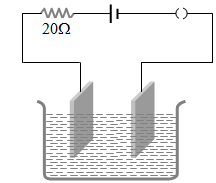
In a Ag voltameter 2.68 gm of silver is deposited in 10 min. The heat developed in 20Ω resistor during the same period will be

  • 192 kJ
  • B
    192 J
  • C
    200 J
  • D
    132 kJ
Answer
Correct option: A.
192 kJ
(a) 192 kJ
View full question & answer
MCQ 301 Mark
The wiring of a house has resistance 6Ω A 100 W bulb is glowing. If a geyser of 1000 W is switched on, the change in potential drop across the bulb is nearly
  • A
    Nil
  • 23 V
  • C
    32 V
  • D
    12 V
Answer
Correct option: B.
23 V
23 V
View full question & answer
MCQ 311 Mark
A silver voltameter of resistance 2 ohm and a 3 ohm resistor are connected in series across a cell. If a resistance of 2 ohm is connected in parallel with the voltameter, then the rate of deposition of silver
  • A
     Decreases by 25%
  • B
     Increases by 25%
  • C
     Increases by 37.5%
  •  Decreases by 37.5%
Answer
Correct option: D.
 Decreases by 37.5%
 Decreases by 37.5%
View full question & answer
MCQ 321 Mark
Silver and copper voltameter are connected in parallel with a battery of e.m.f. 12 V. In 30 minutes, 1 gm of silver and 1.8 gm of copper are liberated. The power supplied by the battery is ($Z_{Cu}=6.6\times 10^{-4}$ gm/C and $Z_{Ag}=11.2\times 10^{-4}$ gm/C)
  • 24.13 J/sec
  • B
    2.413 J/sec
  • C
    0.2413 J/sec
  • D
    2413 J/sec
Answer
Correct option: A.
24.13 J/sec
(a) 24.13 J/sec
View full question & answer
MCQ 331 Mark
The same mass of copper is drawn into two wires 1 mm and 2 mm thick. Two wires are connected in series and current is passed through them. Heat produced in the wire is in the ratio
  • A
     2 : 1
  • B
    1 : 16
  • C
    4 : 1
  • 16 : 1
Answer
Correct option: D.
16 : 1
 16 : 1
View full question & answer
MCQ 341 Mark
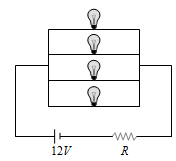
Four identical electrical lamps are labelled 1.5V, 0.5A which describes the condition necessary for them to operate at normal brightness. A 12V battery of negligible internal resistance is connected to lamps as shown, then

  • A
    The value of R for normal brightness of each lamp is (3/4) W
  • The value of R for normal brightness of each lamp is (21/4) W
  • C
    Total power dissipated in circuit when all lamps are normally bright is 24W
  • D
    Power dissipated in R is 21W when all lamps are normally bright
Answer
Correct option: B.
The value of R for normal brightness of each lamp is (21/4) W
(b) The value of R for normal brightness of each lamp is (21/4) W
View full question & answer
MCQ 351 Mark
n immersion heater is rated 836 watt. It should heat 1 litre of water from 10℃ to 40℃ in about
  • A
    200 sec
  •  150 sec
  • C
     836 sec
  • D
     418 sec
Answer
Correct option: B.
 150 sec
 150 sec
View full question & answer
MCQ 361 Mark
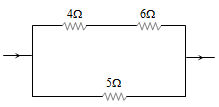
In the circuit shown in figure, the heat produced in 5 ohm resistance is 10 calories per second. The heat produced in 4 resistance is

  • A
    1 cal / sec
  • 2 cal/sec
  • C
    3 cal / sec
  • D
    4 cal/sec
Answer
Correct option: B.
2 cal/sec
(b) 2 cal/sec
View full question & answer
MCQ 371 Mark
A house is served by 220 V supply line in a circuit protected by a 9 ampere fuse. The maximum number of 60 W lamps in parallel that can be turned on, is
  • A
    44
  • B
    20
  • C
    22
  • 33
Answer
Correct option: D.
33
 33
View full question & answer
MCQ 381 Mark
A coil of wire of resistance 50Ω is embedded in a block of ice. If a potential difference of 210 V is applied across the coil, the amount of ice melted per second will be
  • A
    4.12 gm
  • B
     4.12 kg
  • C
     3.68 kg
  •  2.625 gm
Answer
Correct option: D.
 2.625 gm
2.625 gm
View full question & answer
MCQ 391 Mark
A thermocouple of resistance 1.6Ω is connected in series with a galvanometer of 8Ω resistance. The thermocouple develops and e.m.f. of 10 μV per degree temperature difference between two junctions. When one junction is kept at 0℃ and the other in a molten metal, the galvanometer reads 8 millivolt. The temperature of molten metal, when e.m.f. varies linearly with temperature difference, will be
  • 960℃
  • B
    1050℃
  • C
     1275℃
  • D
    1545℃
Answer
Correct option: A.
960℃
960℃
View full question & answer
MCQ 401 Mark
A silver and a copper voltmeters are connected in parallel across a 6 volt battery of negligible resistance. In half an hour, 1 gm of copper and 2 gm of silver are deposited. The rate at which energy is supplied by the battery will approximately be (Given E.C.E. of copper = $3.294\times 10^{-4}$g/C  and E.C.E. of silver = $1.118 \times 10^{-3}$g/C
  • A
    64 W
  • B
    32 W
  • C
    96 W
  • 16 W
Answer
Correct option: D.
16 W
(d) 16 W
View full question & answer
MCQ 411 Mark
An ammeter, suspected to give inaccurate reading, is connected in series with a silver voltameter. The ammeter indicates 0.54 A. A steady current passed for one hour deposits 2.0124 gm of silver. If the E.C.E. of silver is $1.118\times 10^{-3}$ gmC${^{-1}}$ , then the error in ammeter reading is
  • + 0.04 A
  • B
    + 0.02 A
  • C
    – 0.03 A
  • D
    – 0.01 A
Answer
Correct option: A.
+ 0.04 A
(a) + 0.04 A
View full question & answer
MCQ 421 Mark
A current of 1.5 A flows through a copper voltameter. The thickness of copper deposited on the electrode surface of area $50$ cm$^2$ in 20 minutes will be (Density of copper = 9000 kg/m$^3$ and E.C.E. of copper = 0.00033 g/C)
  • A
    $2.6\times 10^{-5}$ m
  • B
    $2.6 \times 10^{-4}$ m
  • $1.3 \times 10^{-5}$ m
  • D
    $1.3 \times 10^{-4}$ m
Answer
Correct option: C.
$1.3 \times 10^{-5}$ m
(c) $1.3 \times 10^{-5}$ m
View full question & answer
MCQ 431 Mark
Assertion : Two bulbs of same wattage, one having a carbon filament and the other having a metallic filament are connected in series. Metallic bulbs will glow more brightly than carbon filament bulb.
Reason : Carbon is a semiconductor.
  • A
     If both assertion and reason are true and the reason is the correct explanation of the assertion.
  • B
    If both assertion and reason are true but reason is not the correct explanation of the assertion.
  • C
     If assertion is true but reason is false.
  •  If the assertion and reason both are false.
Answer
Correct option: D.
 If the assertion and reason both are false.
If the assertion and reason both are false.
View full question & answer
MCQ 441 Mark
Resistance of a voltameter is 2Ω, it is connected in series to a battery of 10 V through a resistance of 3Ω. In a certain time mass deposited on cathode is 1 gm. Now the voltameter and the 3Ω resistance are connected in parallel with the battery. Increase in the deposited mass on cathode in the same time will be
  • A
     0
  •  1.5 gm
  • C
    2.5 gm
  • D
    2 gm
Answer
Correct option: B.
 1.5 gm
1.5 gm
View full question & answer
MCQ 451 Mark
Which of the following plots may represent the thermal energy produced in a resistor in a given time as a function of the electric current
  • A
    a
  • B
    b
  • C
    c
  • d
Answer
Correct option: D.
d
(d) d
View full question & answer
MCQ 461 Mark
Peltier co-efficient of a thermo couple is 2 nano volts. How much heat is developed at a junction if 2.5 amp current flows for 2 minute
  • 6 ergs
  • B
    $6\times 10^{-7}$ ergs
  • C
    16 ergs
  • D
    $6\times 10^{-3}$ ergs
Answer
Correct option: A.
6 ergs
(a) 6 ergs
View full question & answer
MCQ 471 Mark
A thermo couple is formed by two metals X and Y metal X comes earlier to Y in Seebeck series. If temperature of hot junction increases beyond the temperature of inversion. Then direction of current in thermocouple will so
  • A
    X to Y through cold junction
  • B
    X to Y through hot junction
  • C
    Y to X through cold junction
  •  Both (b) and (c)
Answer
Correct option: D.
 Both (b) and (c)
 Both (b) and (c)
View full question & answer
MCQ 481 Mark
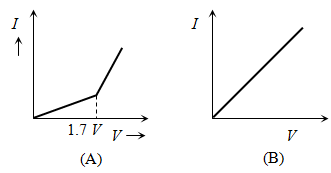
The V-i graphs A and B drawn for two voltameters. Identify each graph
  • A for water voltameter and B for Cu voltameter
  • B
    A for Cu voltameter and B for water voltameter
  • C
    Both A and B represents Cu voltameter
  • D
    None of these
Answer
Correct option: A.
A for water voltameter and B for Cu voltameter
(a) A for water voltameter and B for Cu voltameter
View full question & answer
MCQ 491 Mark
A thermo couple develops 200μV between 0℃ and 100℃. If it develops 64μV and 76μV respectively between (0℃ - 32℃) and (32℃ - 70℃) then what will be the thermo emf it develops between 70℃ and 100℃
  • A
    65 μV
  •  60 μV
  • C
     55 μV
  • D
     50 μV
Answer
Correct option: B.
 60 μV
 60 μV
View full question & answer
MCQ 501 Mark
An electric bulb rated for 500 watts at 100 volts is used in a circuit having a 200-volt supply. The resistance R that must be put in series with the bulb, so that the bulb draws 500 W is
  • A
    10 Ω
  •  20 Ω
  • C
     50 Ω
  • D
     100 Ω
Answer
Correct option: B.
 20 Ω
 20 Ω
View full question & answer