Questions

[5 Marks Each] QUE-ANS

🎯

Test yourself on this topic

10 questions · timed · auto-graded

Question 15 Marks
What is dislocation and fracture of a bone? What precaution should one take when one gets a fracture?
Answer
Dislocation and fracture: Any careless, sudden movement— a jump, fall or knock— may cause an injury to the skeleton. It may be a dislocation or a fracture. In case of dislocation the bones at the joint are dislodged from their normal position. The ligaments may be torn apart or injured causing pain and swelling.
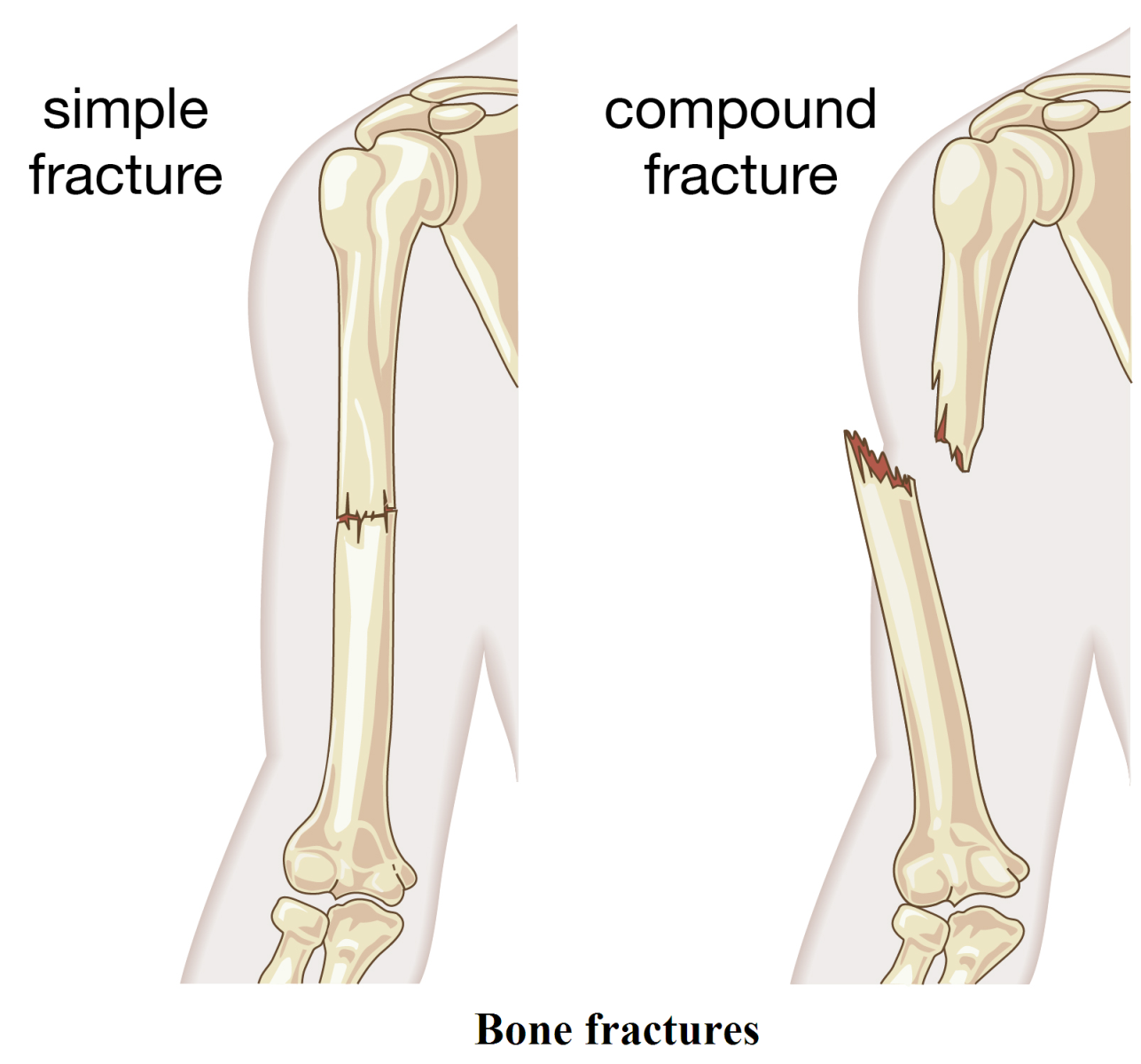
A fracture is a break in the bone. The break may be of a hair line crack or serious break in one or more points. Fracture also causes pain and swelling. In all these cases, the patient should soon be taken to a doctor or a hospital.
  • Never try to reset the bones.
  • Place the injured part in a comfortable position.
  • Care should be taken to avoid jerk or movement of the injured part.
View full question & answer
Question 25 Marks
Given below is a list of different types of movements in animals.
Running, jumping, walking, slithering, crawling, flying, swimming, creeping.
Write the types of movements seen in each animal.
  1. Duck.
  2. Horse.
  3. Kangaroo.
  4. Snail.
  5. Snake.
  6. Fish.
  7. Human beings.
  8. Cockroach.
Answer
The types of movements seen in each animals are as follows:
  1. Duck- Flying, walking and swimming.
  2. Horse- Running and walking.
  3. Kangaroo- Jumping and walking.
  4. Snail- Creeping.
  5. Snake- Slithering.
  6. Fish- Swimming.
  7. Human being- Walking and running.
  8. Cockroach- Walking and flying (short distances).
View full question & answer
Question 35 Marks
How is the skeleton of a bird well-suited for flying?
Answer
The skeleton of a bird is well-suited for flying because:
  1. Their bones are hollow and light in weight.
  2. Their forelimbs are modified as wings.
  3. The shoulder bones are strong, thus helpful in flying.
  4. The breast bones are modified to hold flight muscles which are used to move the wings up and down for flying.
  5. They have a streamlined body, which reduces the air resistance.
View full question & answer
Question 45 Marks
Match the name of the animals given in Column $I$ with its body parts used for movement given in Column $II.$
Serial Number
Column $I$
Serial Number
Coulmn $II$
$A.$
Humanbeing
$i.$
Fins
$B.$
Cow
$ii.$
Wings
$C.$
Snake
$iii.$
Legs
$D.$
Eagle
$iv.$
Whole Body
$E.$
Fish
$v.$
Limbs
Answer
Serial Number
Column $I$
Serial Number
Coulmn $II$
$A.$
Humanbeing
$iii.$ Legs
$B.$
Cow
$v.$ Limbs
$C.$
Snake
$iv.$ Whole Body
$D.$
Eagle
$ii.$ Wings
$E.$
Fish
$i.$ Fins
View full question & answer
Question 55 Marks
Match the items in Column $I$ with one or more items of Column $II$.
S.No
Column $I$
 
Column $II$
$(i)$
Upper jaw
$(i)$
Have fins on the body.
$(ii)$
Fishes
$(ii)$
Has an outer skeleton.
$(iii)$
Ribs
$(iii)$
Can fly in the air.
$(iv)$
Snail
$(iv)$
Is an immovable joint.
$(v)$
Cockroach
$(v)$
Protect the heart.
 
-
$(vi)$
Shows very slow movement.
 
-
$(vii)$
Have a streamlined body.
Answer
 
Column $I$
 
Column $II$
$(i)$
Upper jaw
$(iv)$ Is an immovable joint.
$(ii)$
Fishes
$(vii)$, $(i)$ Have a streamlined body, have fins on the body.
$(iii)$
Ribs
$(v)$ Protect the heart.
$(iv)$
Snail
$(vi)$ Shows very slow movement.
$(iv)$
Cockroach
$(ii)$, $(iii)$ Has an outer skeleton, can fly in the air.
View full question & answer
Question 65 Marks
Unscramble the jumbled words and write them in the blank spaces provided.
  1. Neosb __________ .
  2. Tnemevom ___________ .
  3. Iontcaronct ______________ .
  4. Llsecsum _____________________ .
  5. Aarctigeal ______________________ .
  6. Epahs ____________________________ .
  7. Sangro inerlan _________________________ .
  8. Laxaeriont ________________________________ .
Answer
  1. Neosb bones.
  2. Tnemevom movement.
  3. Iontcaronct contraction.
  4. Llsecsum muscles.
  5. Aarctigeal cartilage.
  6. Epahs shape.
  7. Sangro inerlan internal organs.
  8. Laxaeriont relaxation.
View full question & answer
Question 75 Marks
Read the following paragraph and fill in the blanks using the words you unscrambled.
______$(a)$______ and ______$(b)$______ form the skeleton of the human body. They provide the framework, give ______$(c)$______ to the body and help in ______$(d)$______ They protect the ______$(e)$______ The bones are moved by alternate ______$(f)$______ and ______$(g)$______ of two sets of ______$(h)$______ attached to them.
Answer
Bones and cartilage form the skeleton of the human body. They provide the framework, give shape to the body and help in movement. They protect the internal organs. The bones are moved by alternate contraction and relaxation of two sets of muscles attached to them.
View full question & answer
Question 85 Marks
What is a bone joint? Describe various kinds of joints found in our body.
Answer
Joints: The place where two or more bones meet together is called a joint. There are five main types of joints in our body.
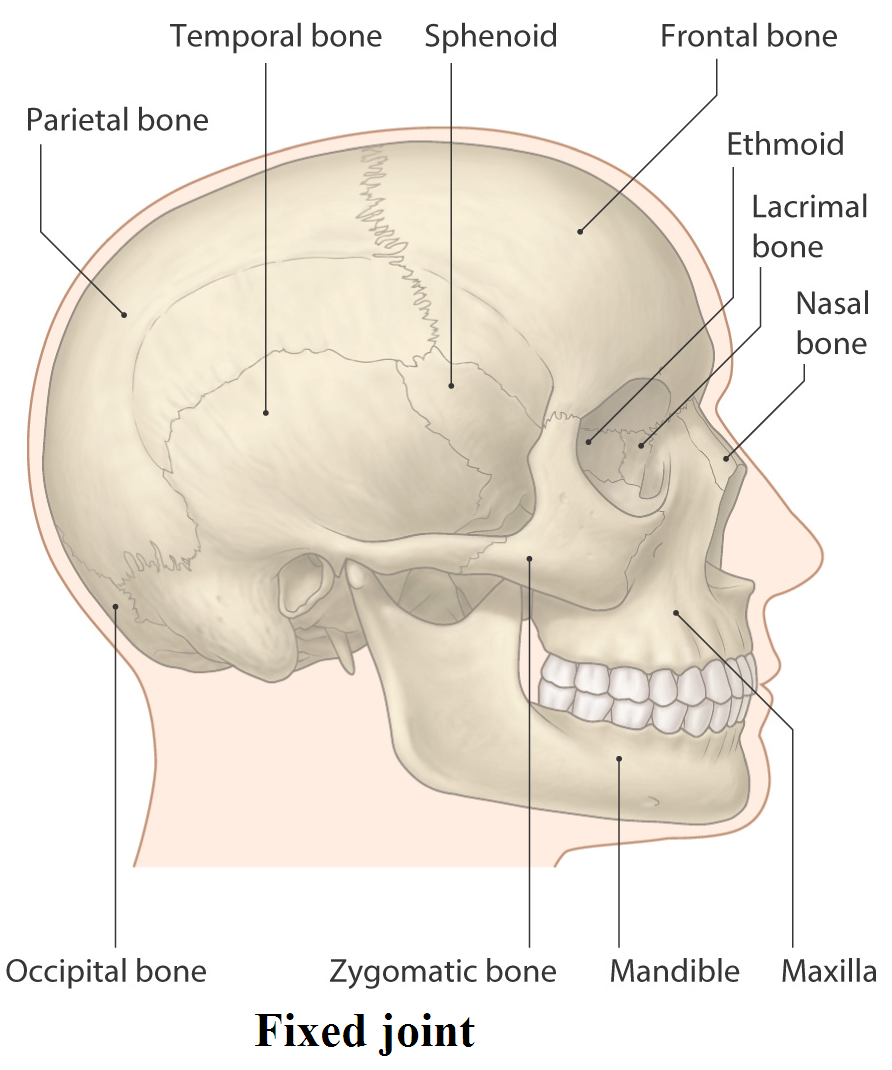
  1. Fixed joints: Some attachments of bones do not allow movement. They are fixed joints. Joint of the cranium is a fixed joint.
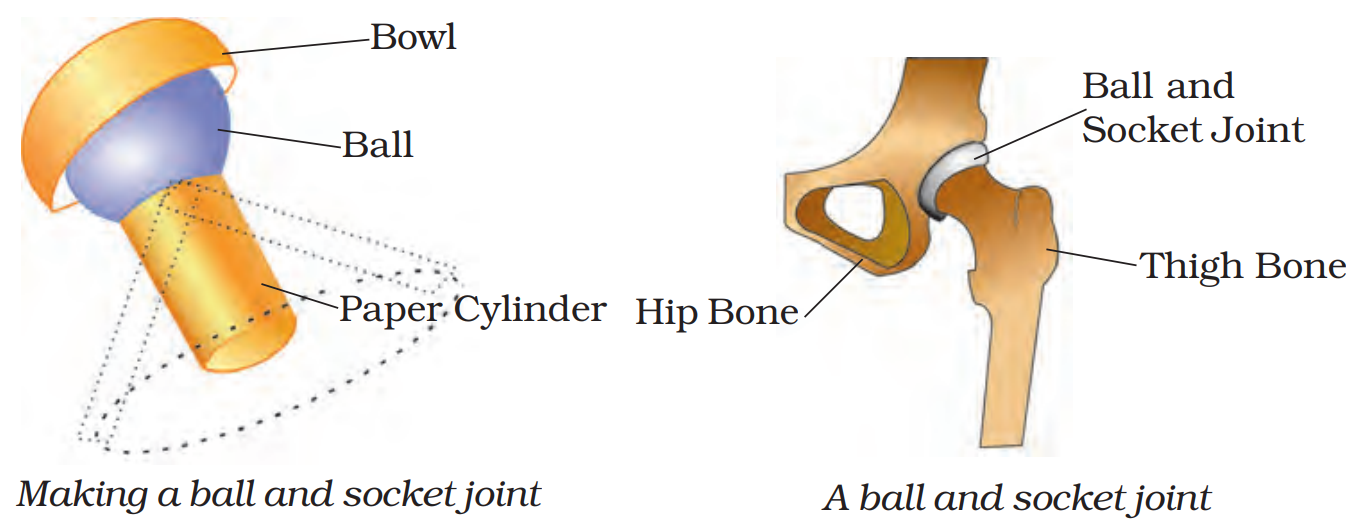
  1. Ball and socket joints: The rounded end of one bone fits into the hollow space of the other bone. Such a kind of joint allows movements in all directions and is called ball and socket joint. For example, the joint between the upper arm and the shoulder; the thigh and the hip.
  1. Pivotal joints: The skull is joined to the first two vertebrae of the backbone like a ball to a stick. This type of joints allows movements in many planes— up and down, to the side and all other planes.
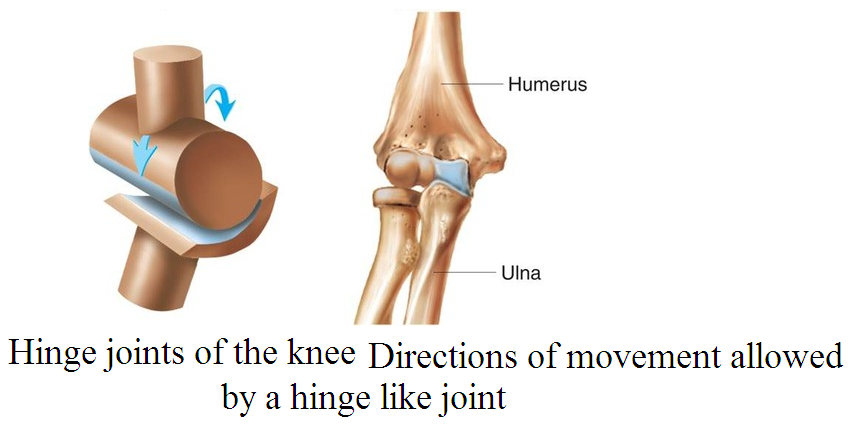
  2. Hinge joints: These joints allow movement only in one plane like a door hinge and not more than 180 degree. For example, the fingers, the knee. The wrist is a double hinge joint.
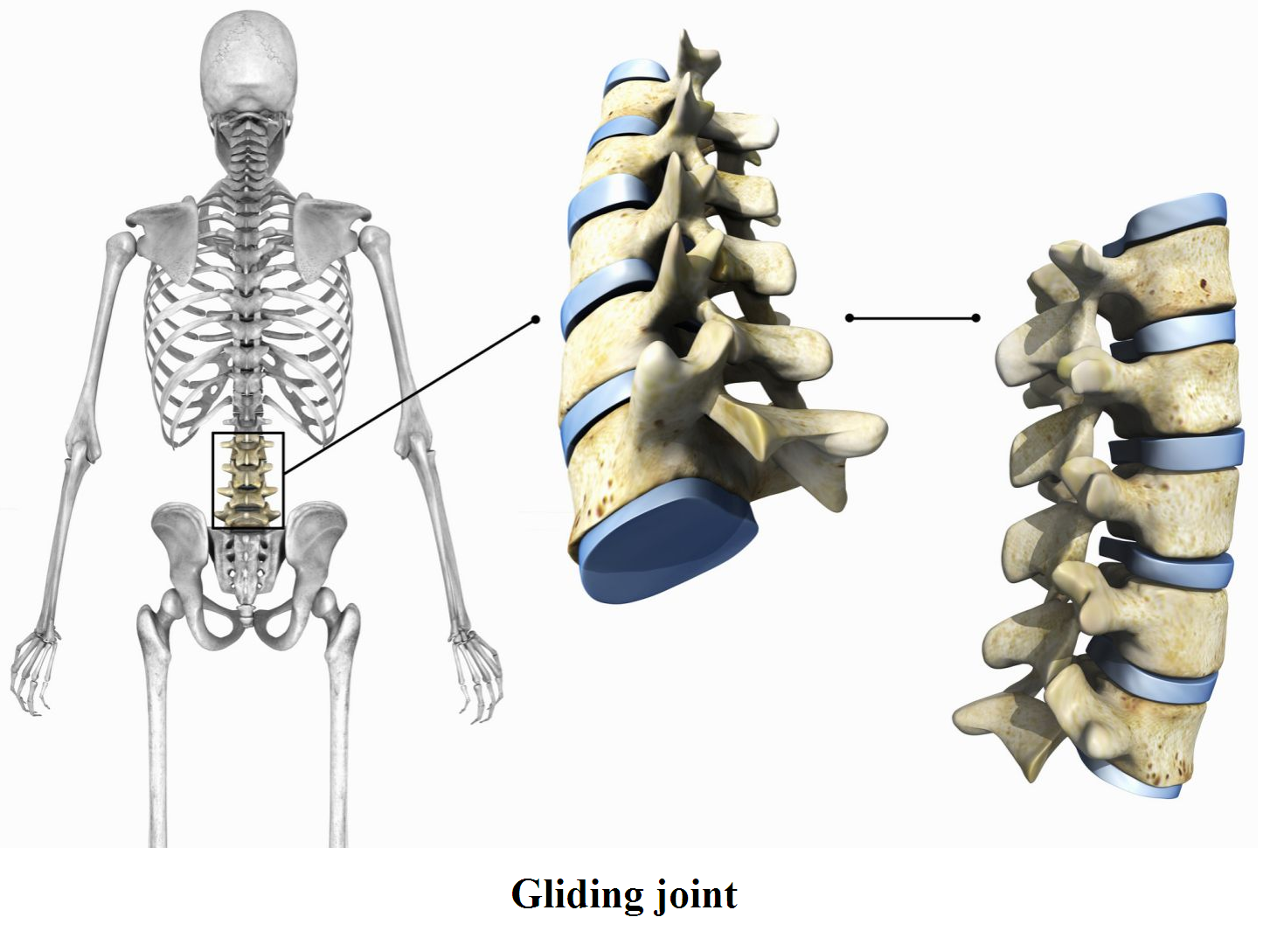
  1. Gliding joints: These joints allow only a limited amount of movement of sliding nature of cartilages (Fig. 8.20). For example, the joints in backbone.

View full question & answer
Question 95 Marks
Comment on the mode of locomotion in following animals:
  1. Snake.
  2. Cockroach.
  3. Snail.
  4. Earthworm.
Answer
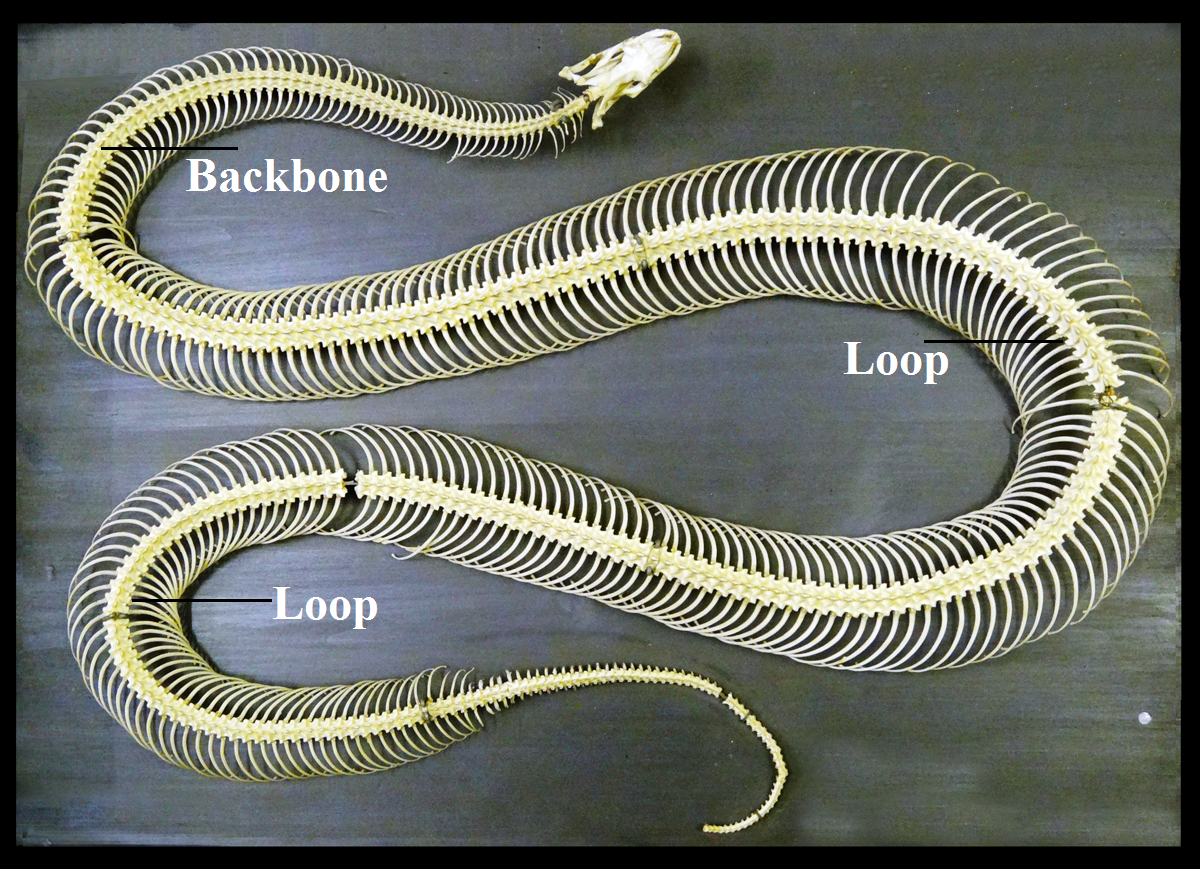
  1. Snake: In long snakes, there are large number of vertebrae. The body muscles are very slender and numerous. They interconnect the adjoining vertebrae, ribs and skin.
Locomotion in a snake is like swimming on land. They make many loops at the sides. It is mainly the forward thrust of the loops against the surface that makes the snake to move forward. They also hitch the skin and body alternately dragging the ventral scales on the ground. Some snakes can swim well in water.
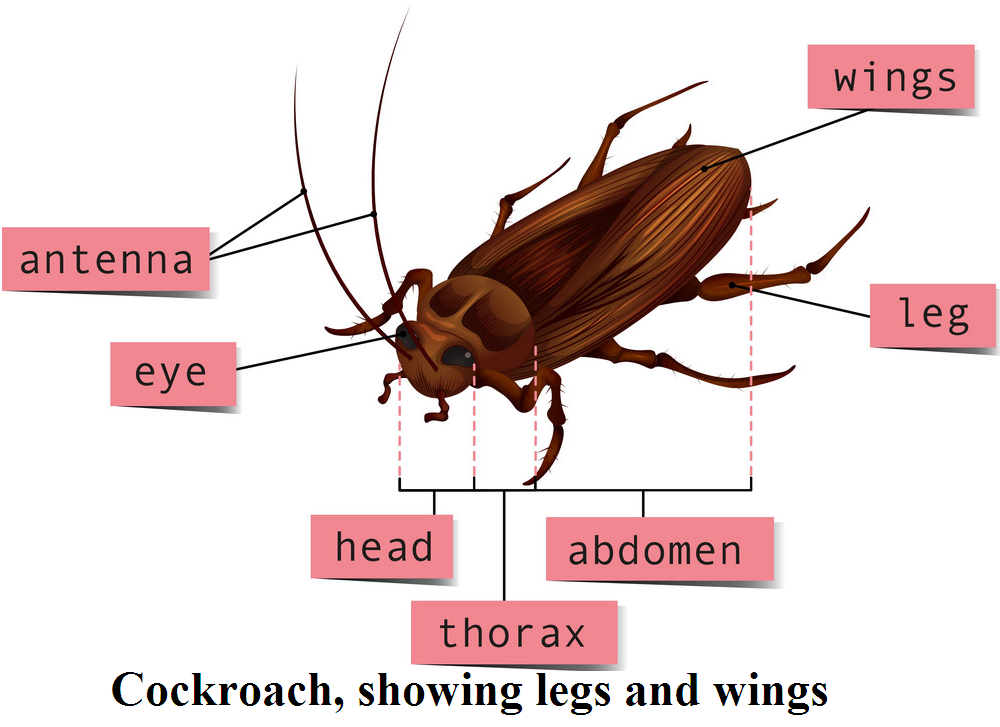
  1. Cockroach: The cockroach walks on limb as well as fly in the air. They have three pairs of joined legs attached to the breast region. These help in walking. There are two pairs of wings attached to the breast. The fore wings are narrow. The hind wings are broad and thin with supporting veins.
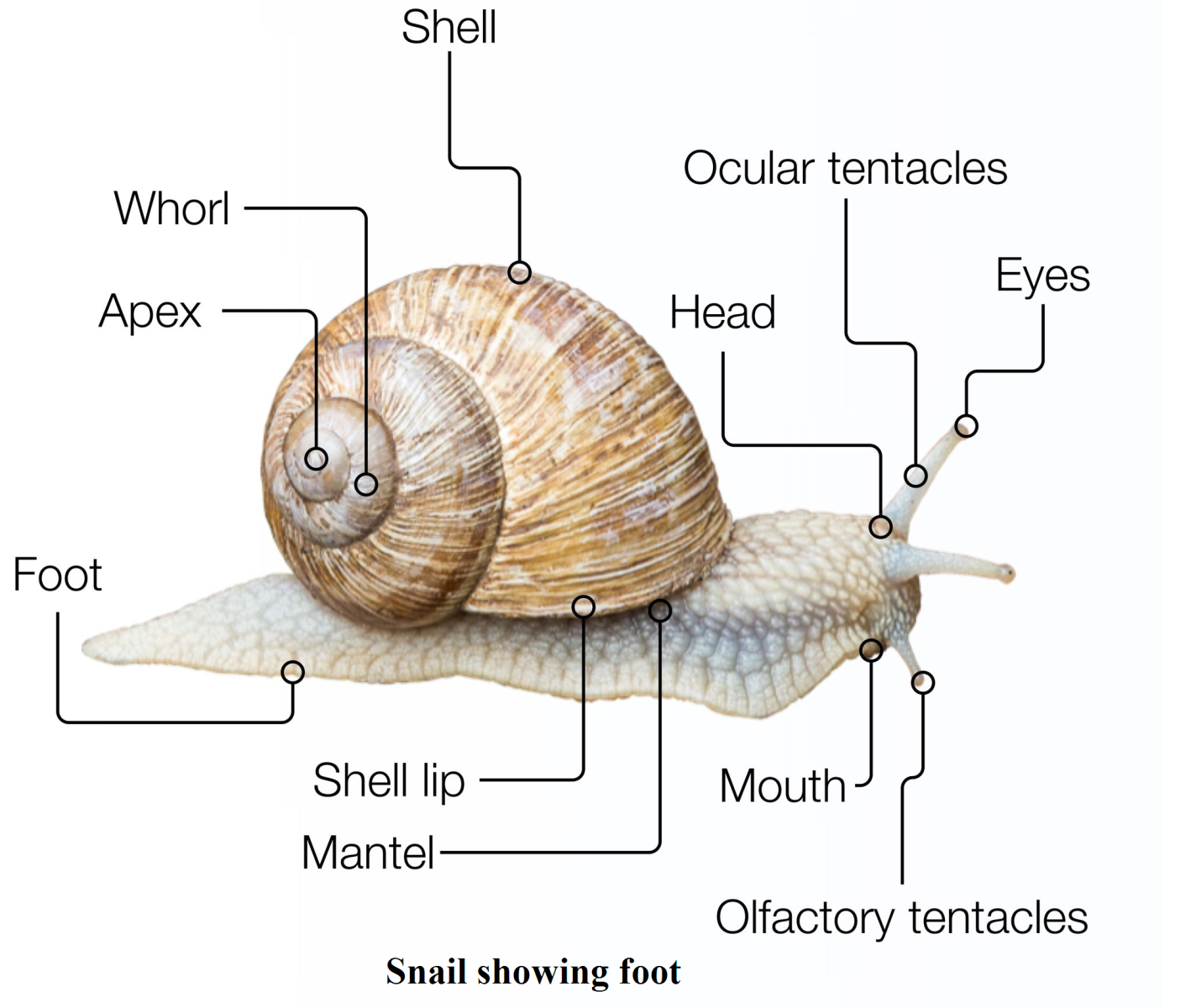
  1. Snail: The body of a snail is covered with a hard shell. It has an opening with a lid. Through the opening of the shell, a strong muscular foot comes out (The foot is a part of its belly) and performs a very slow wavy motion. The shell cannot help in locomotion. It has to be dragged along.
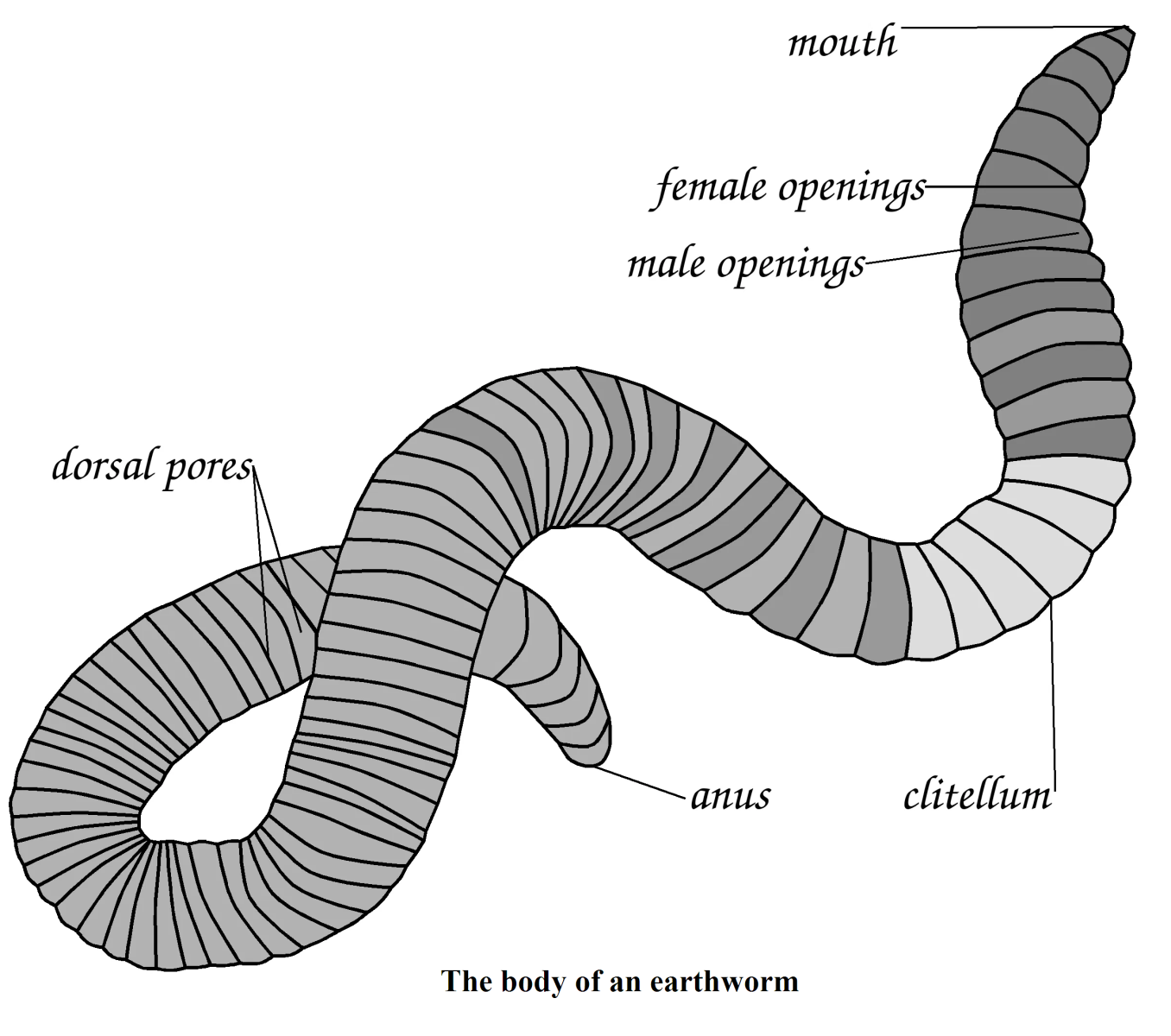
  1. Earthworm: The body of a mature earthworm seems to be made of many rings joined end to end. From the paler under surface of the body, a large number of minute bristles project out. The bristles are connected with muscles at their bases. The bristles help to get a good grip on the ground. There’are muscles in the body wall which help to extend and shorten the body. During movement, the earthworm first extends the front part of body keeping the rear fixed to the ground. Then it fixes the front end and releases the rear end. Thereafter, it shortens the body and pulls the rear end forward. The earthworm follows this process repeatedly to move ahead. On a slippery surface, its movement is affected due to the loose grip on the surface.
View full question & answer
Question 105 Marks
Write short notes on the following.
  1. Skull.
  2. Chest bones.
  3. Backbone.
  4. Hip bone.
  5. The shoulder bone.
  6. Limb bone.
Answer
  1. The skull: The skull has two main parts. They are the cranium (cra-ni-um) or the brain case and the facial bones. The bones of the cranium are flat. They are held firmly like a zipper. The cranium covers and protects the brain. The facial bones comprise of the upper and lower jaws and a few other bones. The lower jaw is movable. The movement of the lower jaw enables us to eat, talk, and sing. The skull also includes a pair of eye sockets. These form a safe pocket for the eyes.
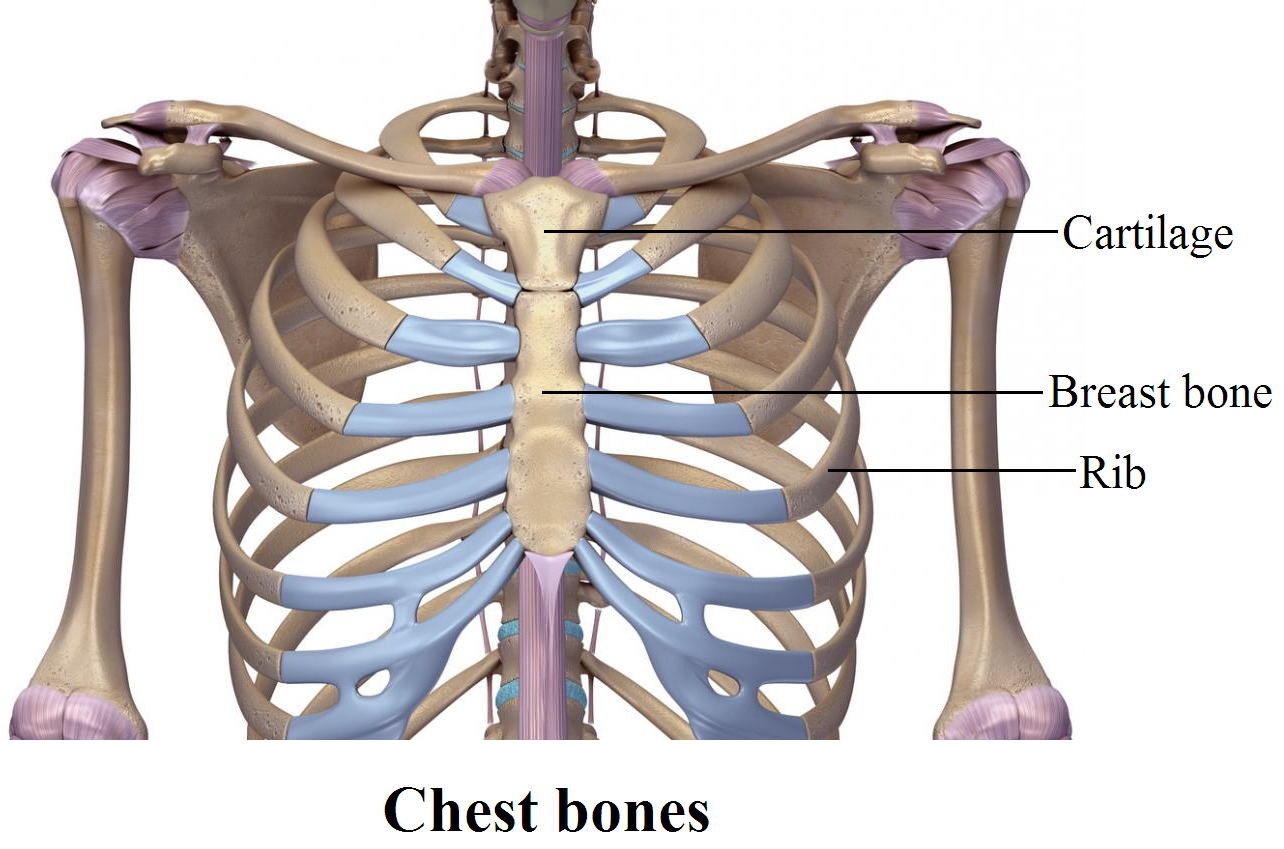
  2. The chest bones: The chest is a cone-shaped cage. It encloses the heart and the lungs. At the back are the vertebrae, 12 pairs of ribs curve surround the sides. Ribs are attached to the sides of each vertebrate. Ten of them are also attached by cartilage to the breast bone at the front. Two ribs are free. These are called floating ribs.

The ribs are joined in such a way that they allow the necessary movement of the chest during breathing.
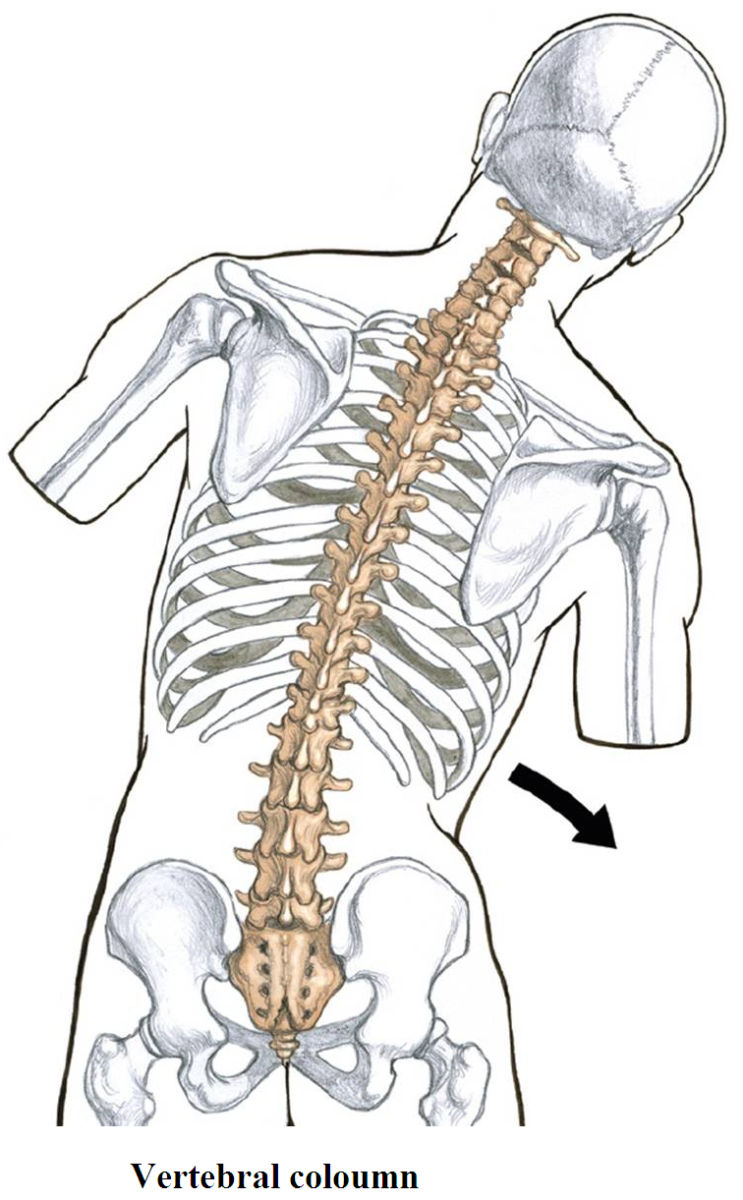
  1. Backbone: Vertebral column or backbone is composed of 33 small, ring-like vertebrae joined end to end. Thus it forms a hollow bony tube. The main nerve cord passes through it. The backbone has five regions from top to bottom, they are the neck, chest, belly, hip and tail. Five vertebrae of the hip and four vertebrae of tail are fused to form 1 bone [turn 26 bones of vertebrae in an adult.
  2. Hip bone: The hip bone is formed by the fusion of three bones. The hip bones together with the last two parts of the backbone form a large bony bowl. It is called the pelvis (pel-vis). It is the lowest and strongest part on which we sit on. The thigh bones are attached to the hip bones.
  3. Shoulder bones: The shoulder bone is formed by the collar bone and the shoulder blades. It connects the upper part of the chest and the bones of the hand. The bones of the upper arm attach with the shoulder bones.
  4. Limb bones: The hand comprises of the upper arm, fore arm, wrist, palm and fingers. The leg includes the thigh, lower leg, ankle, feet, and the toes. The bones in hand and leg are in same pattern and are called limb bones, upper arm and thigh has one long bone. The thigh bone is strongest and longest bone in the body. In the fore arm and lower leg, there are two long bones. Wrist and ankle are made up of several small bones. Palm and foot have five longer bones. Each finger and toe are made up of three small bones, except thumb, which has two bones.
View full question & answer