Questions

[5 Marks Each] QUE-ANS

Take a timed test

8 questions · self-marked practice — reveal the answer and mark yourself.

Question 15 Marks
Directions: Read the passage $(s)$ given below and answer the questions that follow. Passage - $1$ Look at the following food chain and then answer the questions that follow. Grain $\rightarrow $ grasshopper $\rightarrow $ frogs $\rightarrow $ snakes $\rightarrow $ owls bacteria Which organism in this food chain is responsible for recycling nutrients?
  1. Snakes.
  2. Bacteria.
  3. Owls.
  4. Grasshopper.
Answer
  1. Various types of food given by plants are as follows:
  • Vegetables: Tomato, cabbage, spinach, potato, etc.
  • Fruits: Banana, grapes, apple, etc.
  • Cereals or grains: Rice, wheat, barley, ragi, etc.
  • Pulses: Gram, pea, beans, etc.
  • Oil or fat: Mustard, groundnut, sunflower, etc.
  1. Generally we eat fruits of many plants. Besides fruits, we also eat flowers, leaves, roots, rhizomes and stem of some plants.
Various edible parts of plants with some examples are listed below:
S.NO.
Edible part of plants`
Examples
$1.$
Roots
Beet, Carrot, Sweet potato, Radish, etc.
$2.$
Stem
Onion, Potato, Ginger, Sugarcane, etc.
$3.$
Leaves
Spinach, Soya-methi, Bathua, etc.
$4.$
Flowers
Cauliflower
$5.$
Seeds
Mustard, Sweet pea, Lotus, Groundnut
$6.$
Fruits
Banana, Mango, Apple, etc.
 
  1. Examples of plants having two edible parts, and the food obtained are given below:
Name of plant
First edible part
Second edible part
 
Part
Food type
Part
Food type
Mustard
Seeds
Spices, oil
Leaves
Vegetables
Lotus
Seeds
Dry fruit
Stem
Vegetables
Radish
Root
Vegetables
Leaves
Vegetables
Methi
Seeds
Spices
Leaves
Vegetables
Drum stick
Fruit
Vegetables
Flowers
Vegetables
Gram
Seeds
Pulse
Leaves
Vegetables
  1.  
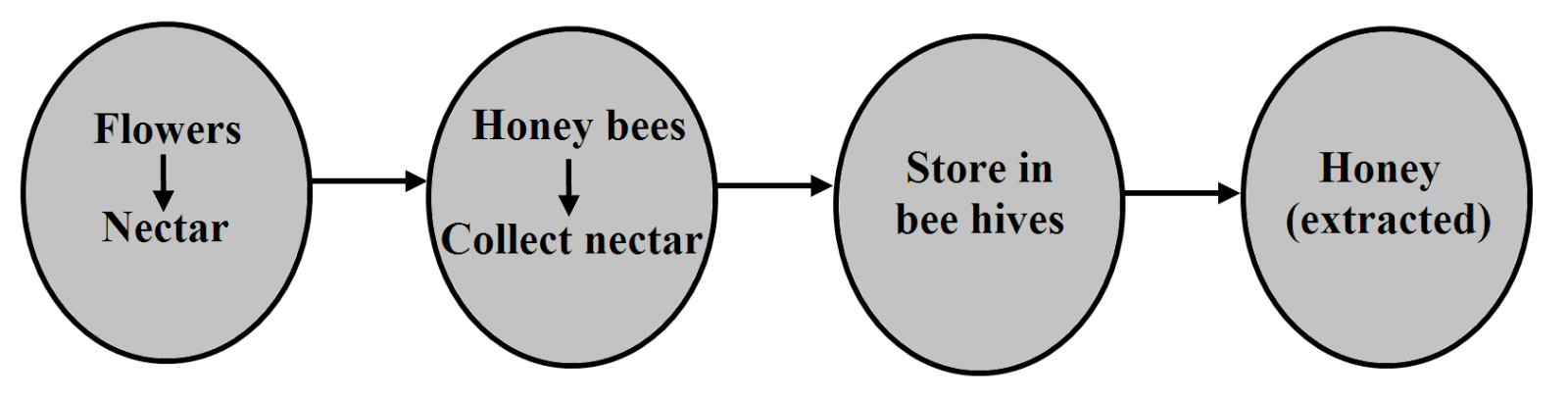
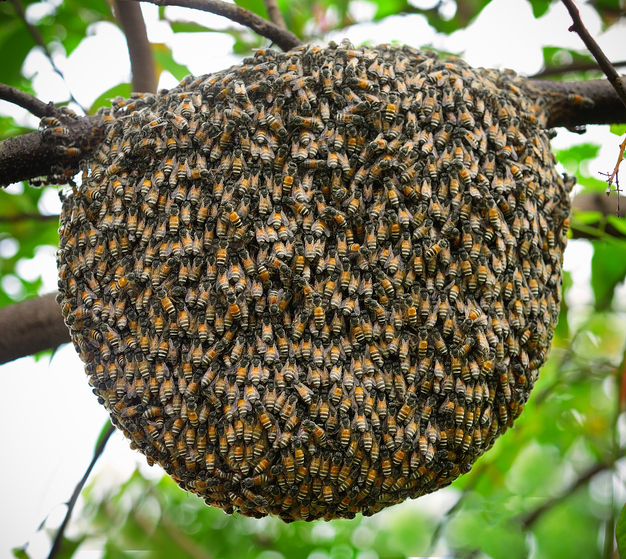
  • A sweet substance (liquid) prepared by bees from the nectar, i.e., sweet juice collected from flowers, is called honey.
  • Honey consists of water, sugar, minerals and enzymes. It is easily digestible, and used in medicines as an antiseptic (which destroys the growth of microorganisms).
  1. We get honey from honey bees.
Production of honey: Honey bees develop their nests called hives on tall trees and buildings. Bee workers collect nectar from flowers and store in container. The honey bees are also reared in artificial hives.
Extraction of honey: Honey is extracted from bee hives either manually or with the of an artificial help extractor.
  1.  
  2.  
  • Roots
  • Stem
  • Leaves
  • Flowers
  • Fruits
  • Seeds
  • Spices
  1. The germinating seeds at the initial stage when a white structure grows out from the seed (radicle) are called sprouted seeds.
View full question & answer
Question 25 Marks
Directions: Read the passage $(s)$ given below and answer the questions that follow. Passage $- 1$ Look at the following food chain and then answer the questions that follow. Grain $\rightarrow $ grasshopper $\rightarrow $ frogs $\rightarrow $ snakes $\rightarrow $ owls bacteria Which organism in this food chain is responsible for recycling nutrients?
  1. Snakes.
  2. Bacteria.
  3. Owls.
  4. Grasshopper.
Answer
  1.  
  • Herbivores: Animals which eat only the plants or the plant products like fruits, flowers, seeds, nectar, etc., are called herbivores. For example, deer, cow, rat, etc.
  • Carnivores: Animals which eat other animals are called carnivores. For example, tiger, lion, etc.
  • Omnivores: Animals which eat both plants and their products as well as other animals are called omnivores. For example, human beings, cat, crow, etc.
  1. Man is omnivorous, i.e., he can feed on both plants and animals. But due to some religious or traditional reasons some people strictly avoid the food containing meat, fish, egg, etc., while some have no hesitation to have such food stuffs. On this basis, there are two types of food habits found in our society:
  • Vegetarian: People who do not eat meat, fish, egg, etc.
  • Non-vegetarian: People who eat meat, fish, egg, etc.
  1.  
  • Scavengers: Some carnivores and omnivores eat dead animals. They help in cleaning our surroundings. For example: crow, jackel, hyena, etc.
  • Parasites: These are some very small animals which live on or inside other animals and get their food from them. For example: fleas, leeches, mosquitoes, bed- bugs, etc.
  1. Cereals are known as ‘energy rich food’. For example: rice, wheat, jowar, maize, etc.
  2. One day because of heavy load of work during the day, I could not have my lunch and at the end of the day, I felt very tired, and exhausted. I was too weak to do work. The hunger was in alarming condition.
  3. No, his diet is not complete. This food is not enough to provide sufficient energy required by him. He will not be able to work and play for the whole day because he will soon get tired due to lack of energy.
View full question & answer
Question 35 Marks
Name five plants and their parts that we eat.
Answer
Following are the five plants products:
  1. Apple tree-fruit.
  2. Wheat plant-Seed.
  3. Potato plant-Stem.
  4. Beetroot-Root.
  5. Spinach plant-Leaves.
View full question & answer
Question 45 Marks
Match the organisms given in column $I$ with their part/ product in column $II$ that is used by human beings as food.
 
$COLUMN\ I$
 
$COLUMN\ II$
$a$
Mustard plant
$i$
Meat
$b$
Goat
$ii$
Fruits and vegetable
$c$
Hen
$iii$
Seed
$d$
smoke
$iv$
Direction of air flow
$e$
wind
$v$
Prevent dust particles
Answer
 
$COLUMN\ I$
 
$COLUMN\ II$
$a$
Mustard plant
$iii$
Seed
$b$
Goat
$i$
Meat
$c$
Hen
$iv$
Direction of air flow
$d$
smoke
$v$
Prevent dust particles
$e$
wind
$ii$
Fruits and vegetable
Explanation:
  1. Seeds of mustard plant are used to extract oils.
  2. Goat’s meat is called chevon or mutton.
  3. A windvane or weather cock is an instrument for showing the direction of the wind. It has a hen (cockerel design) on the top.
  4. Smoke and dust are two major components of particulate matter that should be prevented.
  5. Wind has both direct and indirect effects on plant growth, fruits and vegetable.
View full question & answer
Question 55 Marks
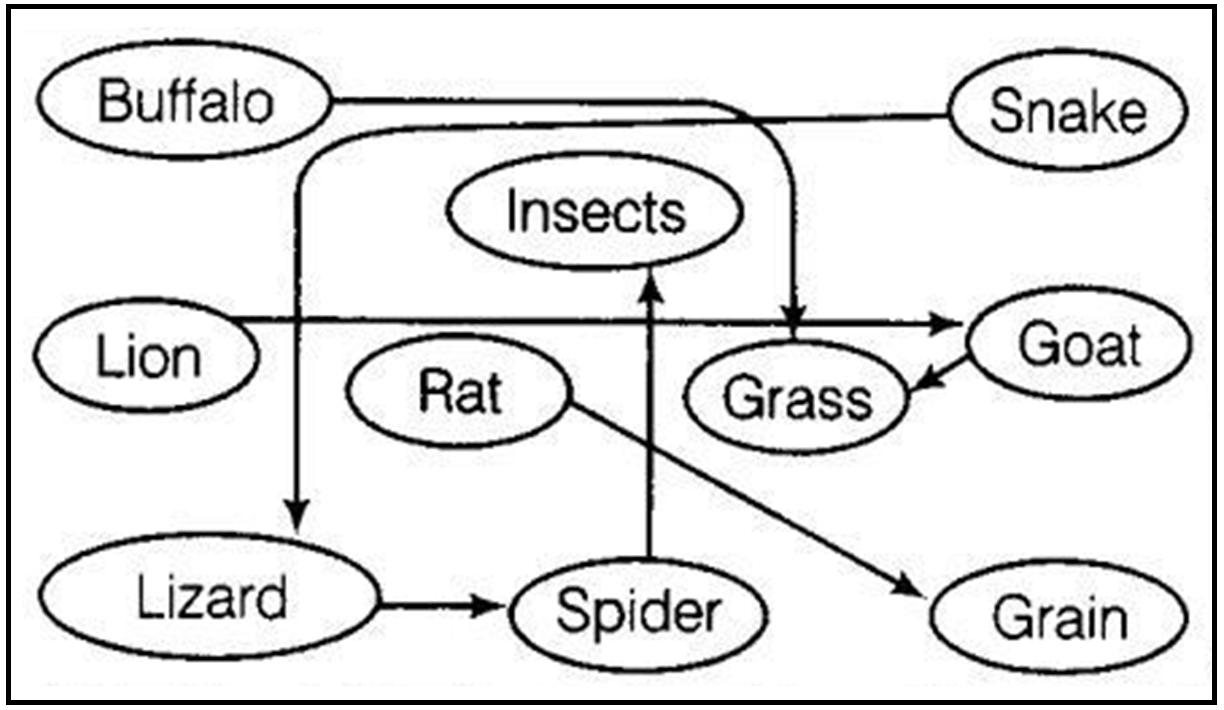
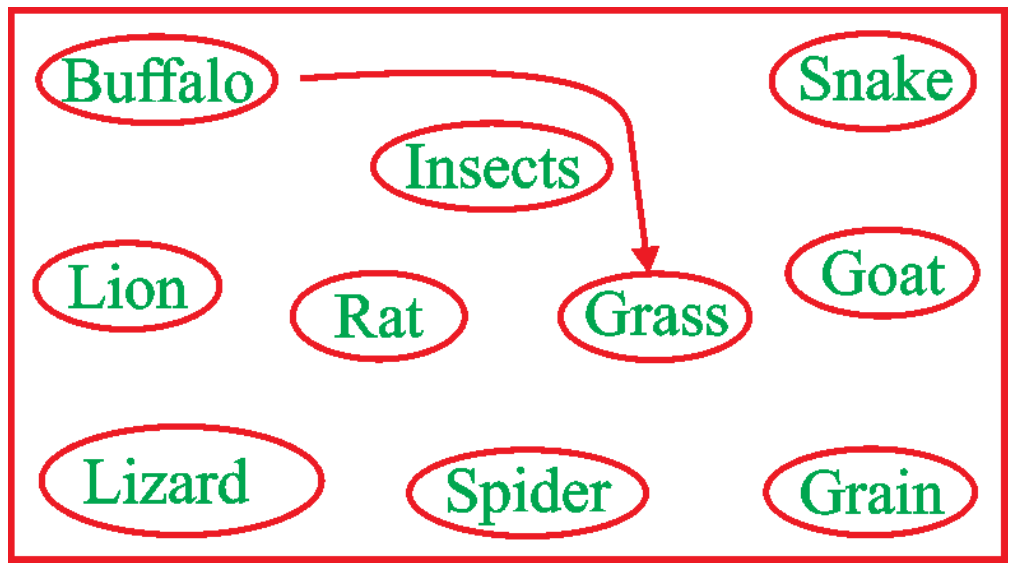
Connect the animal with the food it eats by an arrow using different colours in the figure given below. One is done for you.
Answer
The complete figure is as follows:
View full question & answer
Question 65 Marks
Differentiate between herbivore, carnivore and omnivores.
Answer
S. No.
Herbivore
Carnivore
Omnivores
$1.$
Animals that eat only plants.
Animals that eat flesh of other animals.
Animals that eat both plants as well as animals.
$2.$
They depend on plants.
They depend on herbivores.
They depend on both.
$3.$
Teeth are not sharp but have front pointed teeth.
Teeth are sharp for chewing and grasping the meat, have pointed teeth.
Teeth are not sharp they are either pointed front teeth.
$4.$
Salivary glands are well developed.
Salivary glands are not well developed.
Salivary glands are well developed.
$5.$
Examples: Cow, Deer, etc.
Examples: Lion, Tiger, etc.
Examples: Human being, Crow, etc.
View full question & answer
Question 75 Marks
Activity 1.
Ask your friends in the school about the items they would be eating during a day. See if you can also get this information from friends staying in different states of India.
List all the items in your notebook as given in Table $1$, for as many friends as possible.
S.NO.
Name of the student/friend
Food item eaten in a day
$1.$
T.S. Sree Kumar (Kerala)
Idli, dosa, curd, rice, sambar, etc.
$2.$
Sarthak Sharma (Uttar Pradesh)
Vegetable, dal, chapati, curd, rice, etc.
$3.$
Sanchit Bose (W. Bengal)
Fish curry, rice, vegetable, etc.
$4.$
Sohan Singh (Punjab)
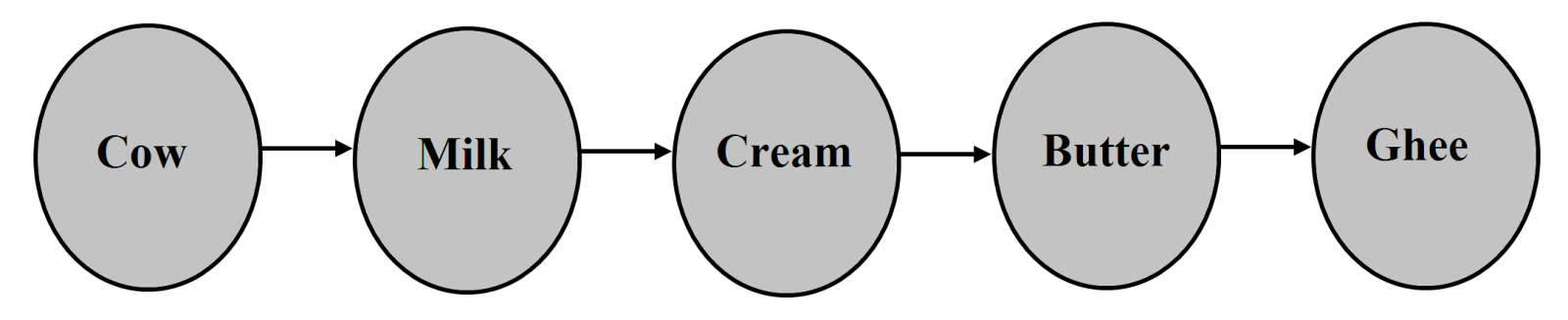
Makki roti, rajma, sarson saag, curd, ghee, etc.
$5.$
P. Prasada Rao (Andhra Pradesh)
Rice, tuar dal, rasam, kunduru, ghee, pickle, etc.
Activity 2.
Choose some of the items you listed in Table $1$ and try to find out what ingredients are used to prepare these, by discussing with your friends and elders at home. List them in Table $2$. Some examples are given here. Add some more items to this list.
S.NO.
Food item
Ingredients
$1.$
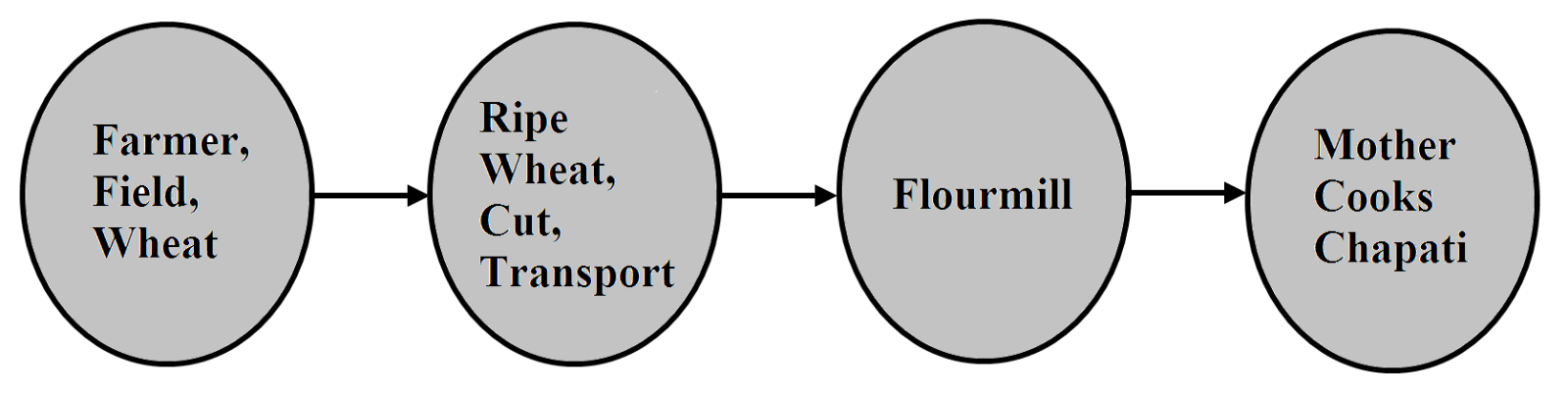
Roti/chapati
Atta, water
$2.$
Dal
Pulses, water, salt, oil/ ghee, spices
$3.$
Idli
Rice, urad dal, salt, water
$4.$
Fish curry
Fish, spices, oil/ ghee, salt, water.
Food Materials and Sources:
  1. Name the animals which provide us milk.
  2. Name the animals which give us meat.
  3. Name some other animals that give us food.
  4. What are the two main sources of food?
  5. Name two sugar producing plants.
Answer
  1. Some important animals that give us milk are cow, buffalo, goat and camel.
  2. Some important meat giving animals are goat, sheep and pig.
  3. Besides milk and meat, animals give us useful food products.
For example:
  • Birds like chicken, fowl and ducks give us eggs and meat.
  • Fish provides us meat.
  • Bees provide us honey.
  1. The two main sources of food are:
  • Plants: We get fruits, vegetables, pulses, etc., from plants.
  • Animals: We get milk, eggs, meat, etc., from animals.
  1. The two sugar producing plants are:
  • Sugarcane.
  • Sugar beet.
View full question & answer
Question 85 Marks
Directions: Read the passage $(s)$ given below and answer the questions that follow. Passage - $1$ Look at the following food chain and then answer the questions that follow. Grain $\rightarrow $ grasshopper $\rightarrow $ frogs $\rightarrow $ snakes $\rightarrow $ owls bacteria Which organism in this food chain is responsible for recycling nutrients?
  1. Snakes.
  2. Bacteria.
  3. Owls.
  4. Grasshopper.
Answer
Almost all parts of the plants such as leaves, stems, roots, fruits, and seeds are considered to be edible parts:
  1. Roots: Carrot, turnip, radish and beetroot.
  2. Stem: Coriander, sugarcane, potato and ginger.
  3. Leaves: Spinach, cabbage, curry leaves, Onion is a form of leaf which is underground.
  4. Flowers: Cauliflower, pumpkin and roses are also edible.
  5. Fruits: Mango, guava, orange, apple, pear, grapes, banana etc. Almonds, cashew nuts are used as nuts.
View full question & answer
[5 Marks Each] QUE-ANS - Science STD 6 Questions - Vidyadip