Questions · Page 1 of 3

Que-Ans (Each of 2 Mark )

🎯

Test yourself on this topic

50 questions · timed · auto-graded

Question 12 Marks
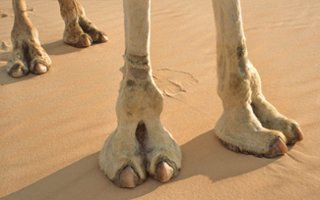
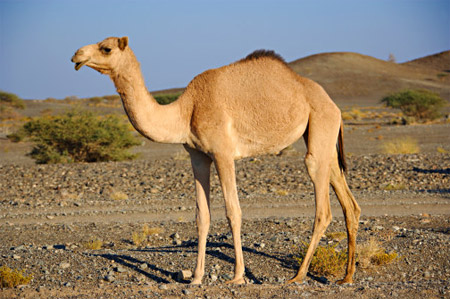
Why do camels have large flat feet? A camel. A large flat foot of camel.
Answer
Camels have large flat feet so that there is a greater area in contact with the sand which produces less pressure on the sand and the camels can move easily on the sand.
View full question & answer
Question 22 Marks
A stone and the earth attract each other with an equal and opposite force. Why then we see only the stone falling towards the earth but not the earth rising towards the stone?
Answer
The mass of a stone is very small, due to which the gravitational force produces a large acceleration in it. Due to large acceleration of stone, we see stone falling towards the earth. The mass of earth is, however, very, very large. Due to the very large mass of the earth, the same gravitational force produces very, very small acceleration in the earth, that it cannot be observed. And hence we do not see the earth rising up towards the stone.
View full question & answer
Question 32 Marks
Explain why, buildings and dams have wide foundations.
Answer
The foundations of buildings and dams are laid on a large area of ground so that the weight of the building or dam produces less pressure on the ground and they may not sink into the ground.
View full question & answer
Question 42 Marks
Explain why a truck or a motor bus has much wider tyres?
Answer
The truck and motorbus have wider tyres with respect to the property that "more the area, less the pressure." As the area is more the pressure will decrease, so there will be less need for applying more pressure to handle the vehicle. The vehicle will move smoothly.
View full question & answer
Question 52 Marks
Define thrust. What is its unit$?$
Answer
The force acting on a body perpendicular to its surface is called thrust. The $SI$ unit of thrust is Newton $(N).$
View full question & answer
Question 62 Marks
Find the ratio of weights of a body on the earth and jupiter, given $g$ on jupiter is $2.5$ times that on the earth.
Answer
Let, Mass of body is $m$ On Earth the weight We $= mg$ On Jupiter the weight $Wj = m(2.5g)$ Ratio $We : Wj = 1 : 2.5 = 2 : 5$
View full question & answer
Question 72 Marks
When does an object float or sink when placed on the surface of a liquid?
Answer
If the buoyant force exerted by the liquid is less than the weight of the object, the object will sink in the liquid. If the buoyant force exerted by the liquid is equal to or greater than the weight of the object, the object will float in the liquid.
View full question & answer
Question 82 Marks
The density of gold is $19 \mathrm{~g} / \mathrm{cm}^3$. Find the volume of $95g$ of gold.
Answer
$\text{Dencity of gold}=\frac{\text{mass of gold}}{\text{volume of gold}}$
$\text{Volume of gold}=\frac{\text{mass of gold}}{\text{dencity of gold}}$
$=\frac{95}{19}=5\text{cm}^3$
View full question & answer
Question 92 Marks
What force acting on an area of $0.5 \mathrm{m}^2$ will produce a pressure of $500Pa?$
Answer
$\text{Pressure}=\frac{\text{Force}}{\text{Area}}$
$\text{Force}=\text{Area}\times\text{pressure}$
$=0.5\times500$
$=250\text{N}$
View full question & answer
Question 102 Marks
Can a body have mass but no weight$?$ Give reasons for your answer.
Answer
Yes, weight of a body is not constant, it varies with the value of acceleration due to gravity, $g.$ Weight of a body is zero, when it is taken to the centre of the earth or in the interplanetary space, where $g = 0.$
View full question & answer
Question 112 Marks
A heavy object seems lighter in water. Which force is responsible for this?
Answer
When objects are placed in water, their mass does not change. They seem to feel lighter, though because of buoyancy. Archemedes's principle states that the force pushing on an object under water is equal to the mass of the water it has pushed out of the way.
View full question & answer
Question 122 Marks
Why is Newton's law of gravitation called as universal law?
Answer
Newton's law of universal gravitation states that every particle attracts every other particle in the universe with a force which is directly proportional to the product of their masses and inversely proportional to the square of the distance between their centers.
View full question & answer
Question 132 Marks
Explain why, big boulders can be moved easily by flood.
Answer
Big boulders weigh much less while in water and as such are easily moved by the flood.
View full question & answer
Question 142 Marks
A block of wood can float while a similar sized block of concrete can be used as an anchor. Why?
Answer
The block of the wood can be float on the water and it can be similar in size block of the concrete and it can be used as the anchor. Because the block can be light weighted on the other hand and it can be sized in similar so the concrete is heavy this is the reason for using the anchor.
View full question & answer
Question 152 Marks
Why are buildings provided with broad foundation?
Answer
To avoid sinking their foundations are made wide, so that pressure on the ground decreases. Buildings are massive structures which exerts tremendous pressure on the ground and likely to sink.
View full question & answer
Question 162 Marks
If a fresh egg is put into a beaker filled with water, it sinks. On dissolving a lot of salt in the water, the egg begins to rise and then floats. Why?
Answer
When a lot of salt is dissolved in water, then the density of salt solution becomes much more than pure water. Due to its much higher density, the salt solution exerts a greater upward buoyant force on the egg making it rise and then float.
View full question & answer
Question 172 Marks
How is weight related to mass? Is weight of a body constant$?$
Answer
Mass is the measure of the amount of matter in a body. Mass is denoted using $m$ or $M$. Weight is the measure of the amount of force acting on a mass due to the acceleration due to gravity. Weight usually is denoted by $W.$ Weight is mass multiplied by the acceleration of gravity.
View full question & answer
Question 182 Marks
A body of mass $10\ kg$ is taken to the centre of the earth. What will be its mass there$?$
Answer
The mass will remain the same since the matter in it will be the same $10\ kg$
The weight at the previous place $=10 \times 9.8=98 \mathrm{~N}$
The gravitational force at the centre of the earth is $0 \mathrm{~m} / \mathrm{s}^2$
Therefore,
weight $=0 \mathrm{~m} / \mathrm{s}^2 \times 10 \mathrm{~kg}=0 \mathrm{~N}$
View full question & answer
Question 192 Marks
Why moon does not have an atmosphere$?$
Answer
Moon does not have atmosphere because the value of escape velocity on moon is $2.3\ km$ per second but the average velocity of particles of gas is $2.5\ km$ per second so it is not possible on moon to have its atmosphere because all gaseous particles with escape from the Moon surface.
View full question & answer
Question 202 Marks
What is pascal?
Answer
A force of one newton spread over a square meter doesn't produce much pressure, as it turns out. A pascal unit is equal to about a hundredth of a millibar, and that's pretty low, considering that atmospheric pressure is approximately equal to 1 bar.
View full question & answer
Question 212 Marks
Why does a block of plastic released under water come up to the surface of water?
Answer
The floating or sinking of a body in the water is decided by the density of both the body and water’s buoyant force acting on the body by the liquid. The density of plastic is less than the water and the buoyant force exerted by water on the plastiq block is greater than the force exerted by plastic on the water.
View full question & answer
Question 222 Marks
Why does an object float or sink when placed on the surface of water?
Answer
The density of the objects and water decides the floating or sinking of the object in water. The density of water is $1 \mathrm{gm} / \mathrm{cm}^3$.
  • If the density of an object is less than the density of water then the object will float.
  • If the density of an object is more than the density of water then the object will sink.
View full question & answer
Question 232 Marks
Gravitational force on the surface of the moon is only $\frac{1}6$ as strong as gravitational force on the earth. What is the weight in newtons of a $10kg$ object on the moon and on the earth$?$
Answer
Weight of an object on the moon $=\frac{1}{6} \times$ Weight of an object on the Earth Also, Weight $=$ Mass $\times$ Acceleration Acceleration due to gravity, $g=9.8 \mathrm{~m} / \mathrm{s}^2$
Therefore, weight of a $10\ kg$ object on the Earth $=10 \times 9.8=98 \mathrm{~N}$ And, weight of the same object on the moon $=1.6 \times 9.8=16.3 \mathrm{~N}$.
View full question & answer
Question 242 Marks
What happens to the buoyant force as more and more volume of a solid object is immersed in a liquid? When does the buoyant force become maximum?
Answer
As more and more volume of the solid object is immersed in the liquid, the upward ‘buoyant force’ also keeps on increasing. When the object is completely immersed in the liquid, the buoyant force acting on the solid becomes maximum and remains constant thereafter.
View full question & answer
Question 252 Marks
When a boat is partially immersed in water, it displaces $600\ kg$ of water. How much is the buoyant force acting on the boat in newtons? $(g = 10ms^{-2})$
Answer
Mass of water displaced $= 600kg$ Weight of water displaced, $W = m × g = 600 × 10 = 6000N$ Since, the weight of water displaced by the boat is $6000N,$ therefore the buoyant force acting on the boat will also be $6000N.$
View full question & answer
Question 262 Marks
What is the actual shape of the orbit of a planet around the sun? What assumption was made by Newton regarding the shape of an orbit of a planet around the sun for deriving his inverse square rule from Kepler’s third law of planetary motion?
Answer
The actual shape of the orbit of a planet around the sun is elliptical. The assumption made by the Newton regarding the shape of an orbit of a planet around the sun was that the orbit of a planet around the sun is ‘circular’.
View full question & answer
Question 272 Marks
A pressure of $10Pa$ acts on an area of $3.0m^2$. What is the force acting on the area? What force will be exerted by the application of same pressure if the area is made one-third?
Answer
If the area is made one third i.e. $3m^2$, then the force would be:
$\text{Pressure}=\frac{\text{Force}}{\text{Area}}$
$\text{Force}=\text{Area}\times\text{pressure}$
$=3\times10$
$=30\text{N}$
If the area is made one third i.e. $1m^2​​​​​​​$, then the force would be:
$\text{Pressure}=\frac{\text{Force}}{\text{Area}}$
$\text{Force}=\text{Area}\times\text{pressure}$
$=1\times10$
$=10\text{N}$
View full question & answer
Question 282 Marks
State the equations of free fall.
Answer
The problems using the equations of motion $v = u + at$
$\text{s} = \text{ut} + \frac{1}{2} \text{at}^22$
The number and are articulated as, $ \text{h} = \frac{1}{2} \text{gt}^2$
$\text{v} = \text{gt}$
Average velocity $\text{v}^2= \text{u}^2 + 2\text{as}$
View full question & answer
Question 292 Marks
State the universal law of gravitation.
Answer
The universal law of gravitation states that every object in the universe attracts every other object with a force called the gravitational force. The force acting between two objects is directly proportional to the product of their masses and inversely proportional to the square of the distance between their centers.
For two objects of masses $m_1$ and $m_2$ and the distance between them $r$, the force $( F ) $ of attraction acting between them is given by the universal law of gravitation as:
$\text{F}=\frac{\text{Gm}_1\text{m}_2}{\text{r}^2}$
Where, $G$ is the universal gravitation constant given by:
$\text{G}=6.67\times10^{-11}\text{Nm}^2\ \text{kg}^{-2}$
View full question & answer
Question 302 Marks
A stone is released from the top of a tower of height $19.6m.$ Calculate its final velocity just before touching the ground.
Answer
According to the equation of motion under gravity:
$v^2-u^2=2 g s$
Where,
$\mathrm{u}$=Initial velocity of the stone$=0$
$v=$ Final velocity of the stone
$s=$ Height of the stone $=19.6 \mathrm{~m}$
$\mathrm{g}=$ Acceleration due to gravity $=9.8 \mathrm{~m} \mathrm{~s}^{-2}$
$v^2-0^2=2 \times 9.8 \times 19.6$
$v^2=2 \times 9.8 \times 19.6=(19.6)^2$
$v=19.6 \mathrm{~m} \mathrm{~s}^{-1}$
Hence, the velocity of the stone just before touching the ground is $19.6 \mathrm{~m} \mathrm{~s}^{-1}$.
View full question & answer
Question 312 Marks
State Archimedes’ principle.
Answer
Archimedes' Principle: When an object is wholly (or partially) immersed in a liquid, it experiences a buoyant force (or upthrust) which is equal to the weight of liquid displaced by the object. Buoyant force on an object = weight of liquid displaced by that object.
View full question & answer
Question 322 Marks
A body floats in kerosene of density $0.8 \times 10^3 \mathrm{~kg} / \mathrm{m}^3$ up to a certain mark. If the same body is placed in water of density $1.0 \times 10^3 \mathrm{~kg} / \mathrm{m}^3$, will it sink more or less? Give reason for your answer.
Answer
The body will sink less in water. This is because the density of water is more than that of kerosene due to which water will exert a greater upward buoyant force on the body.
View full question & answer
Question 332 Marks
A boy gets into a floating boat.
  1. What happens to the boat?
  2. What happens to the weight of water displaced?
  3. What happens to the buoyant force on the boat?
Answer
  1. The boat sinks a little more in water, that is, the boat floats lower in water.
  2. The weight of water displaced (by the submerged part of the boat) increases.
  3. The buoyant force acting on the boat increases.
View full question & answer
Question 342 Marks
If the moon attracts the earth, why does the earth not move towards the moon?
Answer
The Earth and the moon experience equal gravitational forces from each other. However, the mass of the Earth is much larger than the mass of the moon. Hence, it accelerates at a rate lesser than the acceleration rate of the moon towards the Earth. For this reason, the Earth does not move towards the moon.
View full question & answer
Question 352 Marks
Gravitational force acts on all objects in proportion to their masses. Why then, a heavy object does not fall faster than a light object?
Answer
All objects fall on ground with constant acceleration, called acceleration due to gravity (in the absence of air resistances). It is constant and does not depend upon the mass of an object. Hence, heavy objects do not fall faster than light objects.
View full question & answer
Question 362 Marks
A beaker full of water is suspended from a spring balance. Will the reading of the balance change:
  1. If a cork is placed in water?
  2. If a piece of heavy metal is placed in it?
Give reasons for your answer.
Answer
  1. The reading of spring balance will not change if a cork is placed in water because cork, being lighter than water, floats in water.
  2. The reading of spring balance will change if a piece of heavy metal is placed in water because heavy metal being denser than water, sinks in water.
View full question & answer
Question 372 Marks
Does the acceleration of a freely falling object depend to any extent on the location, i.e. whether the object is on top of Mount Everest or in Death Valley, California? Explain.
Answer
In actuality yes but under almost every case the difference is negligible since the distance that matters is the distance between the object and the earth center and this distance is much larger than the respective altitude difference. $9.81 \mathrm{~m} / \mathrm{s}^2$ and $32.2 \mathrm{ft} / \mathrm{s}^2$ will most always be used.
View full question & answer
Question 382 Marks
Why do we feel lighter when we swim?
Answer
A person in water feels an upward force called buoyant force, exerted by the water acting in upward direction. This reduces the weight of the body and hence, we feel lighter in a swimming pool.
View full question & answer
Question 392 Marks
The volume of $50\ g$ of a substance is $20\ cm^3$. If the density of water is $1\ g\ cm ^{-3}$, will the substance float or sink$?$
Answer
Mass $= 50\ g$ Volume $= 20\ cm^3$ Density
$=\frac{\text{Mass}}{\text{Volume}}$
$\therefore$ Density of a given substance $=\frac{50\text{g}}{20\text{cm}^3}$
$= 2.5g/ cm^3$
Density of water $= 1g/ cm^3 $
As the density of a given substance is more than the density of water.
The substance will sink in water.
View full question & answer
Question 402 Marks
Weight of a girl on the earth's surface is $66N.$ Find out her weight on the moon.
Answer
$\frac{\text{Weight of moon}}{\text{Weight of earth}}=\frac{1}{6}$Therefore,
$\frac{1}{6}\times66=11$
Therefore, her weight on moon will be $11N.$
View full question & answer
Question 412 Marks
If two equal weights of unequal volumes are balanced in air, what will happen when they are completely dipped in water? Why?
Answer
The two equal weights of unequal volumes which are balanced in air, will get imbalanced when they are completely dipped in water because due to their unequal volumes, they will displace unequal volumes of water and hence suffer unequal loss in weight.
View full question & answer
Question 422 Marks
The earth and the moon are attracted to each other by gravitational force. Does the earth attract the moon with a force that is greater or smaller or the same as the force with which the moon attracts the earth? Why?
Answer
According to the universal law of gravitation, two objects attract each other with equal force, but in opposite directions. The Earth attracts the moon with an equal force with which the moon attracts the earth.
View full question & answer
Question 432 Marks
State two factors on which magnitude of buoyant force acting on a body, immersed in a fluid depends.
Answer
The buoyant force or upthrust depends upon two factors: Volume of the object immersed: If the volume of the object is more, the buoyant force acting on it is more and if the volume of the object is less, then the buoyant force acting on it is less.
View full question & answer
Question 442 Marks
Explain why, a piece of glass sinks in water but it floats in mercury.
Answer
A piece of glass sinks in water but it floats in mercury because density of glass is more than that of water but less than that of mercury.
View full question & answer
Question 452 Marks
What happens to the force between two objects, if the mass of one object is doubled$?$
Answer
From Universal law of gravitation, force exerted on an object of mass m by earth is given by,$\text{F}=\text{G}\frac{\text{Mm}}{\text{r}^2}$
Now, $m$ is $2m$
$\text{F}'=\text{G}\frac{\text{M}\times2\text{m}}{\text{r}^2}=\text{G}\frac{2\text{Mm}}{\text{r}^2}$
So as the mass of any one of the object is doubled the force is also doubled.
View full question & answer
Question 462 Marks
Suppose gravity of earth suddenly becomes zero, then in which direction will the moon begin to move if no other celestial body affects it?
Answer
The moon will begin to move in a straight line in the direction in which it was moving at that instant because the circular motion of moon is due to the centripetal force provided by the gravitational force of earth and if gravitational force becomes zero it means no centripetal force is there to help the moon to move in circular orbit. Therefore it will move in a straight line.
View full question & answer
Question 472 Marks
What is the difference between perihelion and aphelion.
Answer
Perihelion and Aphelion, The perihelion is the point on the orbit of a planet or comet that is closest to the sun. The point on the orbit farthest from the sun is the aphelion. The speed of a body in the solar system is greatest at the perihelion and least at the aphelion.
View full question & answer
Question 482 Marks
What happens to the force between two objects, if the distance between the objects is doubled and tripled$?$
Answer
The force F is inversely proportional to the distance between the objects. So if the distance between two objects is doubled then the gravitational force of attraction between them is reduced to one fourth $(1/4)$ of its original value. Similarly, if the distance between two objects is tripled, then the gravitational force of attraction becomes one ninth $(1/9)$ of its original value.
View full question & answer
Question 492 Marks
Giving reasons state the reading on a spring balance when it is attached to a floating block of wood which weighs $50g$ in air.
Answer
The reading on spring balance will be zero. This is because the weight of floating block of wood is fully supported by the liquid in which it is floating and hence it does not exert any force on the spring balance.
View full question & answer
Question 502 Marks
State two applications of universal law of gravitation.
Answer
  1. Universal law of gravitation is used to determine the masses of the sun, the earth and the moon accurately.
  2. Universal law of gravitation helps in discovering new stars and planets.
View full question & answer