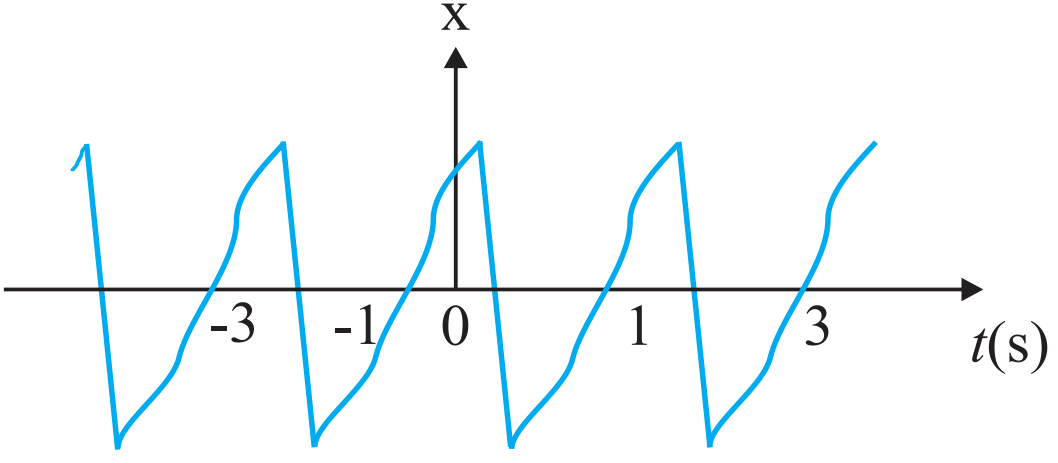
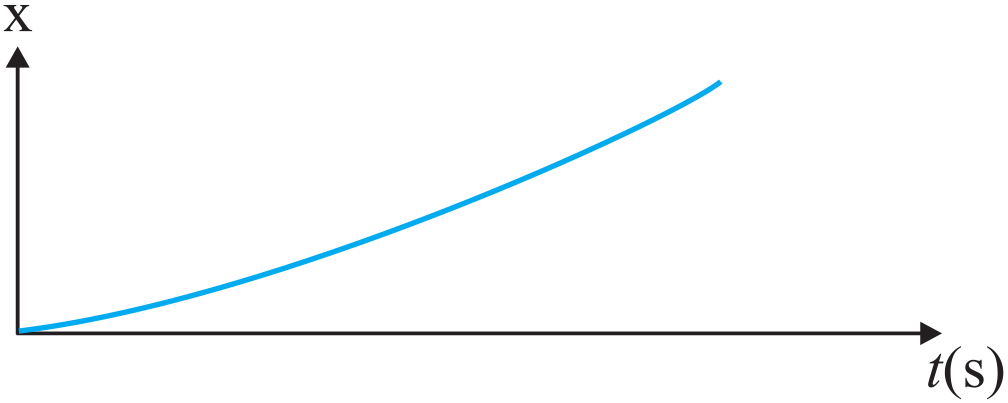
- a = 0.7x
- a = -200x2
- a = -10x
- a = 100x3
- a = -10x
Explanation:
In SHM, acceleration a is related to displacement by the relation of the form a = -kx, which is for relation (c).
50 questions · timed · auto-graded
Explanation:
In SHM, acceleration a is related to displacement by the relation of the form a = -kx, which is for relation (c).
A hydrogen molecule rotating about its centre of mass.
At 4cm away from B going towards A.
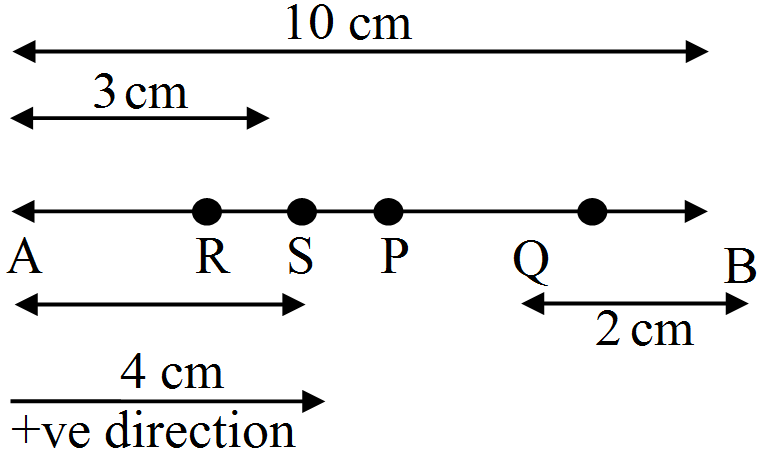
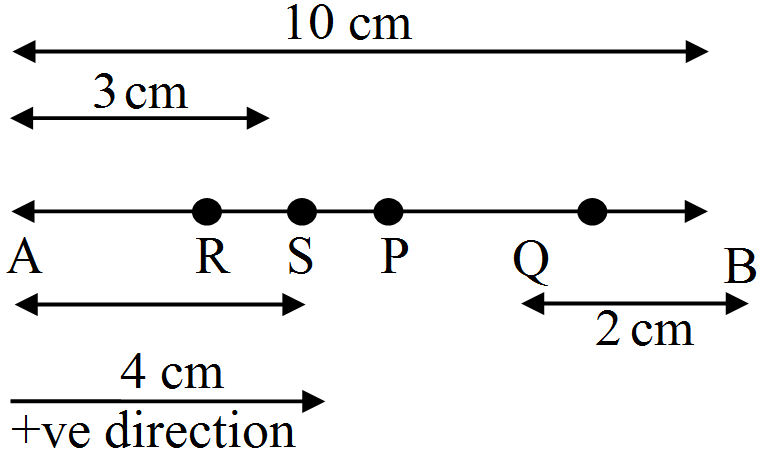
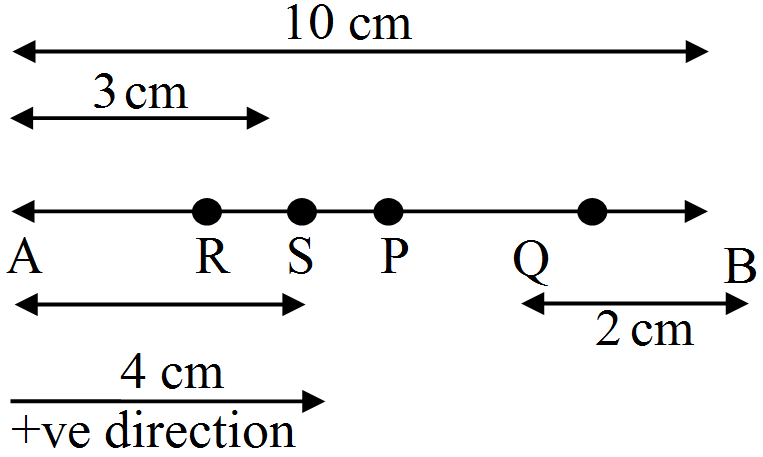
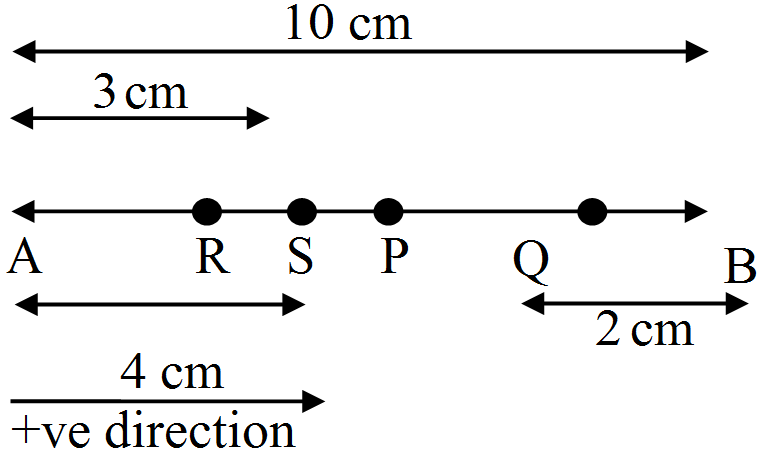
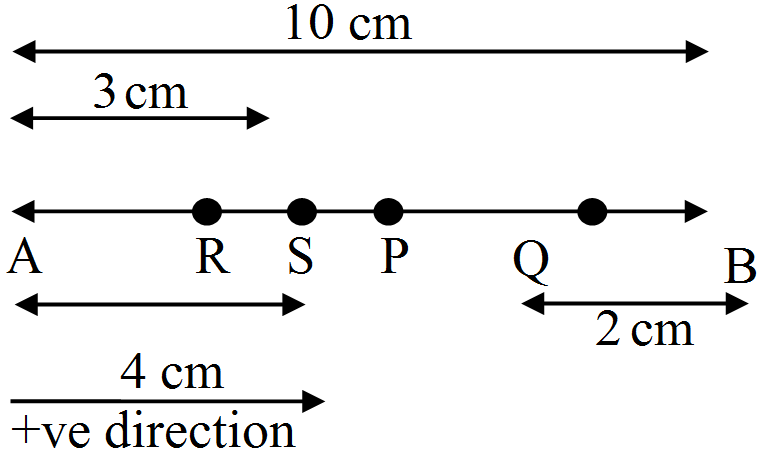
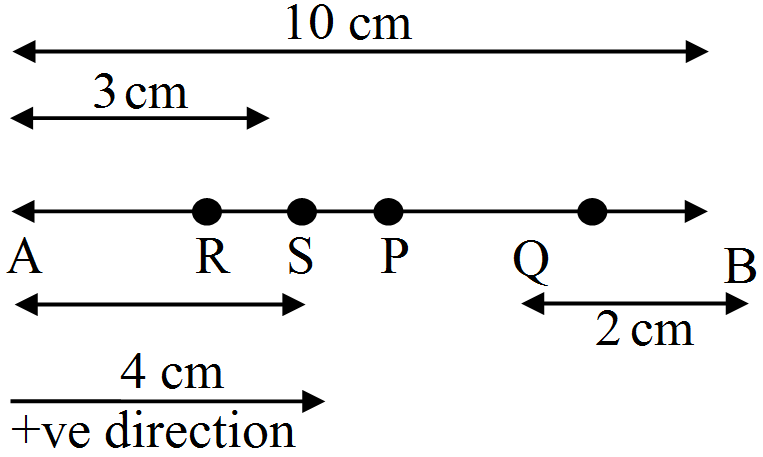
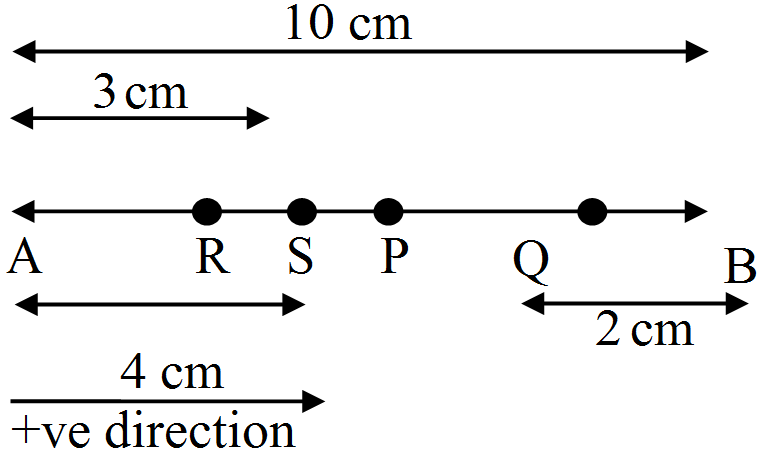
From above figure, where A and B represent the two extreme positions of a SHM. For velocity, the direction from A to B is taken to b positive. The acceleration and the force, along AP are taken as positive and along Bp are taken as negative.
At 4cm away from A going towards A, the particles is at S, with a tendency to move along SA, which is negative direction. Therefore, velocity is negative but acceleration is directed towards mean position, along SP. Hence it is positive and also force is positive similarly.
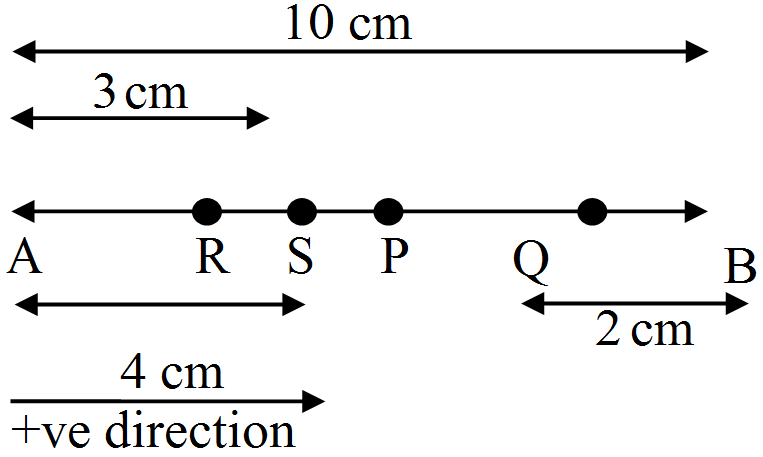
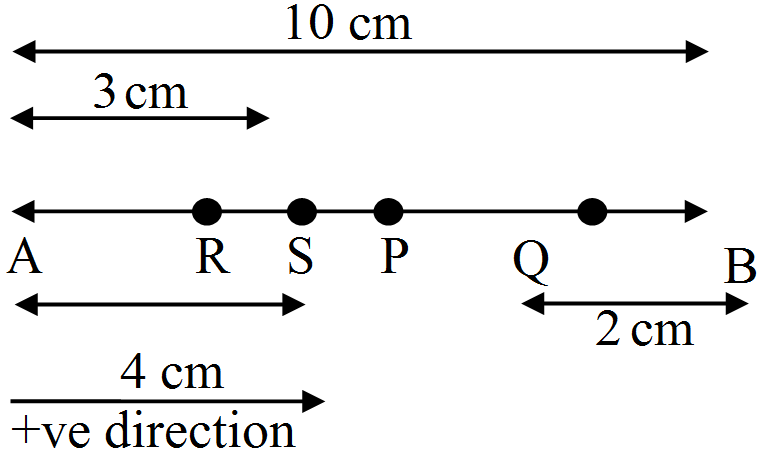
From above figure, where A and B represent the two extreme positions of a SHM. For velocity, the direction from A to B is taken to b positive. The acceleration and the force, along AP are taken as positive and along Bp are taken as negative.
At the end A, the particle executing SHM is momentarily at rest being its extreme position of motion. Therefore, its velocity is zero. Acceleration is positive because it is directed along AP, Force is also Positive since the force is directed along AP.
At 2cm away from B going towards A.
From above figure, where A and B represent the two extreme positions of a SHM. For velocity, the direction from A to B is taken to b positive. The acceleration and the force, along AP are taken as positive and along Bp are taken as negative.
At 2cm away from B going towards A, the particle is at Q, with a tendency to move along QP, which is negative direction. Therefore, velocity, acceleration and force all are positive.
General vibrations of a polyatomic molecule about its equilibrium position.


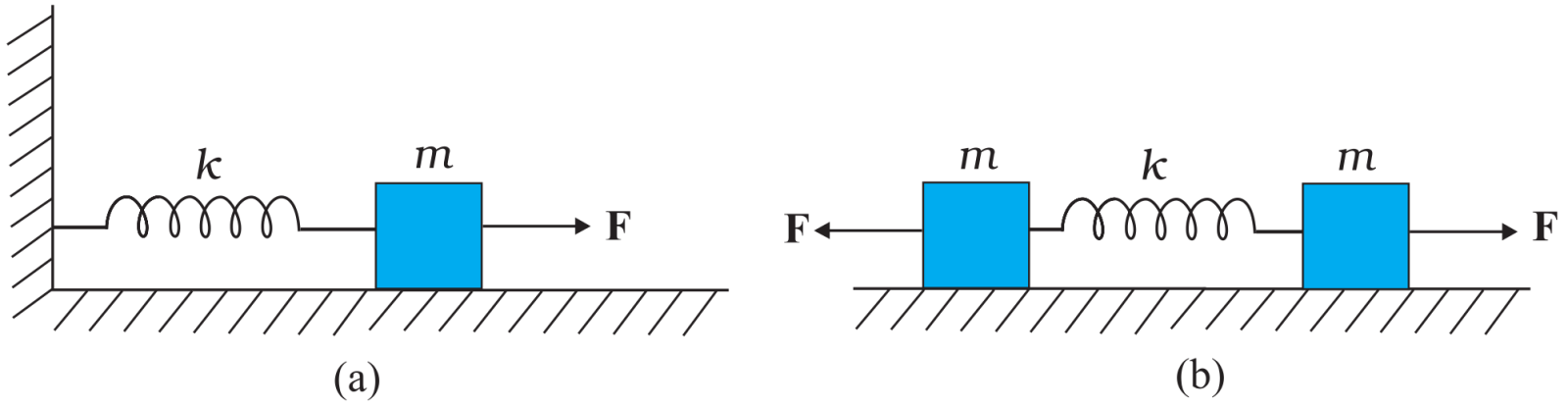
What is the maximum extension of the spring in the two cases?


At the mid-point of AB going towards A.
From above figure, where A and B represent the two extreme positions of a SHM. For velocity, the direction from A to B is taken to b positive. The acceleration and the force, along AP are taken as positive and along Bp are taken as negative.
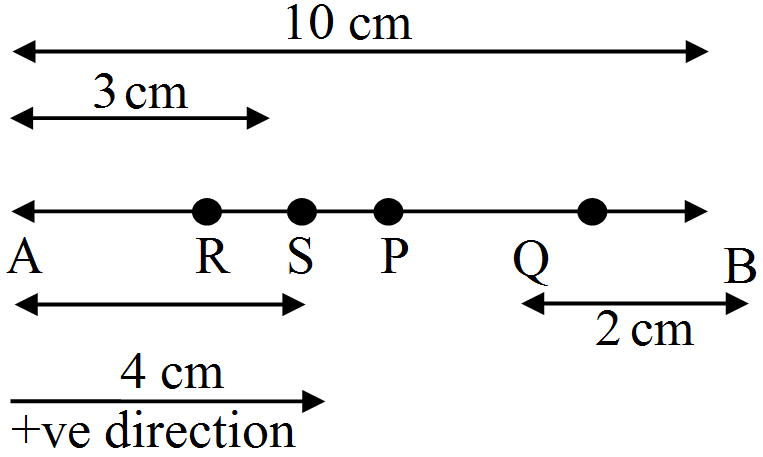
At the mid-point of AB going towards A, the particle is at its mean position P, with a tendency to move along PA. Hence, velocity is positive. Both acceleration and force are zero.
From above figure, where A and B represent the two extreme positions of a SHM. For velocity, the direction from A to B is taken to b positive. The acceleration and the force, along AP are taken as positive and along Bp are taken as negative.
At the end B, velocity is zero. Here, acceleration and force are negative as they are directed along BP.
At 3cm away from A going towards B.
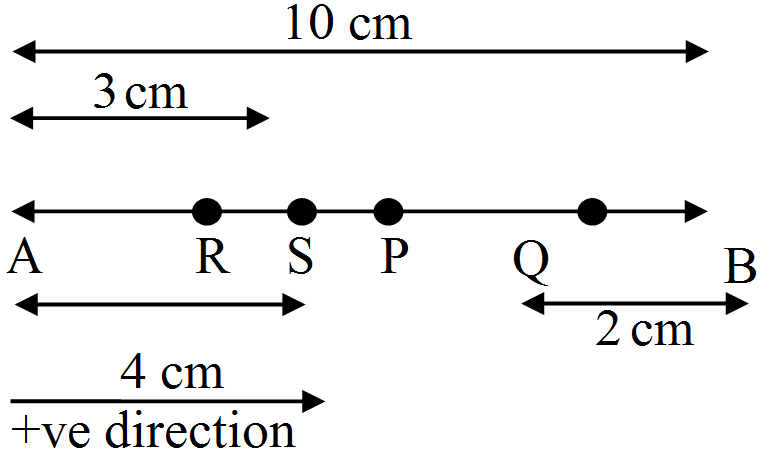
From above figure, where A and B represent the two extreme positions of a SHM. For velocity, the direction from A to B is taken to b positive. The acceleration and the force, along AP are taken as positive and along Bp are taken as negative.
At 3cm away from A going towards B, the particle is at R, with a tendency to move along RP, which is positive direction. Here, velocity, acceleration all are positive.
What is the frequency of oscillation of a simple pendulum mounted in a cabin that is freely falling under gravity?
$\text{T}^2_2=\frac{(2)^2}{3}$
$\text{T}_2=\frac{2}{\sqrt{3}}\text{ sec}$
At the mid-point of AB going towards A.
From above figure, where A and B represent the two extreme positions of a SHM. For velocity, the direction from A to B is taken to b positive. The acceleration and the force, along AP are taken as positive and along Bp are taken as negative.
At the mid-point of AB going towards A, the particle is at its mean position P, with a tendency to move along PA. Hence, velocity is positive. Both acceleration and force are zero.
At 3cm away from A going towards B.
From above figure, where A and B represent the two extreme positions of a SHM. For velocity, the direction from A to B is taken to b positive. The acceleration and the force, along AP are taken as positive and along Bp are taken as negative.
At 3cm away from A going towards B, the particle is at R, with a tendency to move along RP, which is positive direction. Here, velocity, acceleration all are positive.
A hydrogen molecule rotating about its centre of mass.

At 2cm away from B going towards A.
From above figure, where A and B represent the two extreme positions of a SHM. For velocity, the direction from A to B is taken to b positive. The acceleration and the force, along AP are taken as positive and along Bp are taken as negative.
At 2cm away from B going towards A, the particle is at Q, with a tendency to move along QP, which is negative direction. Therefore, velocity, acceleration and force all are positive.
At 4cm away from B going towards A.
From above figure, where A and B represent the two extreme positions of a SHM. For velocity, the direction from A to B is taken to b positive. The acceleration and the force, along AP are taken as positive and along Bp are taken as negative.
At 4cm away from A going towards A, the particles is at S, with a tendency to move along SA, which is negative direction. Therefore, velocity is negative but acceleration is directed towards mean position, along SP. Hence it is positive and also force is positive similarly.
$=\frac{3}{4}$

$\frac{\text{T}_2^2}{\text{T}_1^2}=\frac{(2)^2}{3}$
$\text{T}_2=\frac{2}{\sqrt{3}}\text{s}$
$\frac{\text{a}_{\text{max}}}{\text{v}_{\text{max}}}=\frac{\text{a}}{\text{v}}=-\omega,$
Also $\text{v}=\omega\text{A}=\frac{\text{a}}{\text{v}}\text{A}$
$\therefore\text{A}=\frac{\text{v}^2}{\text{a}}$
From above figure, where A and B represent the two extreme positions of a SHM. For velocity, the direction from A to B is taken to b positive. The acceleration and the force, along AP are taken as positive and along Bp are taken as negative.
At the end B, velocity is zero. Here, acceleration and force are negative as they are directed along BP.
$\text{dU}=\text{F}.\text{dx}\ \text{or}\ \text{F}=\frac{-\text{dU}}{\text{dx}}$ (here restoring force is opposite to displacement)
$\text{F}=\frac{-\text{d}}{\text{dx}}[\text{U}_0(1-\cos\text{ax})=\frac{-\text{d}}{\text{dx}}[\text{U}_0+\text{U}_0\cos\text{a}_\text{x}]$
$\text{F}=-[0-\text{U}_0(-\sin\text{ax}).\text{a}]$
$\text{F}=-\text{aU}_0\sin\text{a}\text{x}$
For SHM. ax is small
So sin ax becomes ax ...(i)
$\therefore\text{F}=-\alpha.\text{U}_0\text{ax}=-\text{a}^2\text{U}_0\text{x}\ ...(\text{ii})$
$\alpha_2\text{U}_0$ are constants.
$\therefore\text{F}\propto-\text{x}.$ so motion is SHM.
Here from (ii) k = a2U0
$\text{m}\omega^2=\text{a}^2\text{U}_0\Rightarrow\omega^2=\text{a}^2\frac{\text{U}_0}{\text{m}}$
$\Big(\frac{2\pi}{\text{T}}\Big)^2=\text{a}^2\frac{\text{U}_0}{\text{m}}\Rightarrow\text{T}^2=4\pi\frac{\text{m}}{\text{U}_0\text{a}^2}\ \text{or}$
$\text{T}=\frac{2\pi}{\text{a}}\sqrt{\frac{\text{m}}{\text{U}_0}}.$
From (i) this time period is valid for small angle ax.
$\text{exp}(-\omega^2\text{t}^2)$