Question types

PART - 1 CH - 4 Laws of Motion question types

153 questions across 9 question groups — pick any mix to generate a Physics paper with step-by-step answer keys.

153
Questions
9
Question groups
5
Question types
Sample Questions

PART - 1 CH - 4 Laws of Motion questions

One sample from each question group in this chapter. Select any group above to see the full set with answer keys.

A person jumping from a moving bus onto the road falls forward, the reason for this is
  • A
    Due to inertia of steady state, the road is left behind and the man moves forward.
  • Due to inertia of moving state, the upper part of person remains in motion while the feet come in stationary state due to coming in contact with the road.
  • C
    The person leans forward due to his old habit.
  • D
    Due to all of the above mentioned effects.

Answer: B.

View full solution
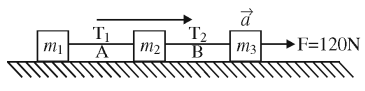
Three cubic shaped bodies whose masses are $m _1=20$ $kg , m _2=40 kg$ and $m _3=60 kg$ are kept on a frictionless surface as shown in figure. All three bodies are connected by an inextensible string. The values of $T _1$ and $T_2$ will be :
Image
  • A
    20 N and 10 N
  • 20 N and 60 N
  • C
    40 N and 20 N
  • D
    10 N and 20 N

Answer: B.

View full solution
The stationary reference frame situated on the earth's surface is
  • A
    inertial
  • Non-inertial but can generally be considered inertial
  • C
    Inertial or non inertial according to state
  • D
    Non-inertial

Answer: B.

View full solution
A car of mass 1000 kg passes on inclined curve of radius 90 m on a frictionless road. If the inclination of turn is $45^{\circ}$ then the speed of car is
  • A
    $20 m / s$
  • $30 m / s$
  • C
    $5 m / s$
  • D
    $10 m / s$

Answer: B.

View full solution
One end of a string of length $l$ is connected to a particle of mass m and the other to a small peg on a smooth horizontal table. If the particle moves in a circle with speed v the net force on the particle (directed towards the centre) is :
(i) T$\quad$$\quad$(ii) $T -\frac{m v^2}{l}$$\quad$$\quad$(iii) $T +\frac{m v^2}{l}$$\quad$$\quad$(iv) 0
T is the tension in the string.
[Choose the correct alternative.]
View full solution
A stone of mass 0.25 kg tied to the end of a string is whirled round in a circle of radius 1.5 m with a speed of 40 rev./min in a horizontal plane. If the speed of the stone is increased beyond the maximum permissible value, and the string breaks suddenly, which of the following correctly describes the trajectory of the stone after the string breaks :
(a) the stone moves radially outwards.
(b) the stone flies off tangentially from the instant the string breaks.
(c) the stone flies off at an angle with the tangent whose magnitude depends on the speed of the particle?
View full solution
A rocket with a lift-off mass 20,000 kg is blasted upwards with an initial acceleration of 5.0 $ms ^{-2}$. Calculate the initial thrust (force) of the blast.
View full solution
A bob of mass 0.1 kg hung from the ceilling of a room by a string 2 m long is set into oscillation. The speed of the bob at its mean position is $1 m s ^{-1}$. What is the trajectory of the bob if the string is cut when the bob is (a) at one of its extreme positions, (b) at its mean position.
View full solution
Q 263 Marks Question3 Marks
The driver of a three-wheeler moving with a speed of 36 km/h sees a child standing in the middle of the road and brings his vehicle to rest in 4.0 s just in time to save the child. What is the average retarding force on the vehicle ? The mass of the three-wheeler is 400 kg and the mass of the driver is 65 kg.
View full solution
Q 273 Marks Question3 Marks
A constant force acting on a body of mass 3.0 kg changes its speed from $2.0 ms^{-1}$ to $3.5 ms^{-1}$ in 25 s . The direction of the motion of the body remains unchanged. What is the magnitude and direction of the force?
View full solution
Q 283 Marks Question3 Marks
A constant retarding force of 50 N is applied to a body of mass 20 kg moving intially with a speed of $15 ms^{-1}$. How long does the body take to stop?
View full solution
Q 293 Marks Question3 Marks
A pebble of mass 0.05 kg is thrown vertically upwards. Give the direction and magnitude of the net force on the pebble,
(a) During its upward motion,
(b) During its downward motion,
(c) At the highest point where it is momentarily at rest. Do your answers change if the pebble was thrown at an angle of $45^{\circ}$ with the horizontal direction? Ignore air resistance.
View full solution
Q 303 Marks Question3 Marks
A shell of mass 0.020 kg is fired by a gun of mass 100 kg. If the muzzle speed of the shell is 80 $ms ^{-1}$, what is the recoil speed of the gun?
View full solution
Q 324 Marks Question4 Marks
View full solution
Q 334 Marks Question4 Marks
Explain why
(a) a horse cannot pull a cart and run in empty space.
(b) passengers are thrown forward from their seats when a speeding bus stops suddenly.
(c) it is easier to pull a lawn mower than to push it.
(d) a cricketer moves his hands backward while holding a catch.
View full solution
Q 344 Marks Question4 Marks
A stone of mass 0.25 kg tied to the end of a string is whirled round in a circle of radius 1.5 m with a speed of 40 rev./min in a horizontal plane. What is the tension in the string? What is the maximum speed with which the stone can be whirled around if the string can withstand a maximum tension of 200 N?
View full solution
Q 354 Marks Question4 Marks
A batsman deflects a ball by an angle of 45º without chainging its initial speed which is equal to 54 km/h. What is the impulse imparted to the ball? (Mass of the ball is 0.15 kg.)
View full solution
Column - AColumn - B
1. The law of action and reaction applies to all types of forces, e.g.,(A) in Equilibrium
2. If total external force on the system is zero, then
$\frac{d P}{d t}=$
(B) Area
3. If an object is in equili- brium under the influence of concurrent forces, then the vector sum of all concurrent forces acting on the object is(C) Constant.
4. Three concurrent forces whose magnitude are 4N, 10 N and 5N respectively cannot be(D) Gravitational, Electromagnetic forces
5. The value µs does not depend on virtual contact................ of surface(E) zero
View full solution
Column – AColumn - B
1. Linear momentum $\overrightarrow{ P }=$(A) Newton, $M ^1 L^1 T^{-2}$
2. Having constant momentum $v \propto$(B) $m \stackrel{\rightharpoonup}{v}$
3. If $m _1< m _2$ then(C) $\frac{t_2}{t_1}$
4. The unit and dimension of weight is(D) $\vec{v}_1>\vec{v}_2$
5. $\frac{\overrightarrow{F_1}}{\overrightarrow{F_2}}$(E) $\frac{1}{m}$
View full solution
Two masses 8 kg and 12 kg are connected at the two ends of a light inextensible string that goes over a frictionless pulley. Find the acceleraton of the masses, and the tension in the string when the masses are released.
View full solution
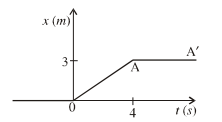
Shows the position-time graph of a particle of mass 4 kg. What is the (a) force on the particle for $t<0, t>4 s, 0<t<4 s$ ? (b) impulse at $t=0$ and $t=4 s$ ? (Consider one-dimensional motion only).
Image
View full solution
A truck starts from rest and accelerates uniformly at $2.0 ms^{-2}$. At $t =10 s$, a stone is dropped by a person standing on the top of the truck ( 6 m high from the ground). What are the (a) velocity, and (b) acceleration of the stone at $t=11 s$ ? (Neglect air resistance.)
View full solution
A body of mass 0.40 kg moving initially with a constant speed of $10 ms^{-1}$ to the north is subject to a constant force of 8.0 N directed towards the south for 30 s . Take the instant the force is applied to be $t=0$, the position of the body at that time to be $x=0$, and predict its position at $t=-5 s, 25 s, 100 s$.
View full solution

Generate a PART - 1 CH - 4 Laws of Motion paper free

Pick question groups from the list above, set marks and difficulty, and export a branded PDF with step-by-step answer keys. First 3 chapters free — no signup.

Download App