Questions

M.C.Q (1 Marks)

Take a timed test

201 questions · 2 auto-graded MCQ + 199 self-marked written.

Question 11 Mark
Any statement about demand for a good is considered complete only when the following is/are mentioned in it.
  1. Price of the good.
  2. Quantity of the good.
  3. Period of time.
  4. All of the above.
Answer
  1. All of the above.
View full question & answer
Question 21 Mark
Demand for a good is termed inelastic through the expenditure approach when if.
  1. Price of the good falls, expenditure on it rises.
  2. Price of the good falls, expenditure on it falls.
  3. Price of the good falls, expenditure on it remains unchanged.
  4. Price of the good rises, expenditure on it falls.
Answer
  1. Price of the good falls, expenditure on it falls.
View full question & answer
Question 31 Mark
If Marginal Rate of Substitution is increasing throughout, the Indifference Curve will be: (Choose the correct alternative)
  1. Downward sloping convex.
  2. Downward sloping concave.
  3. Downward sloping straight line.
  4. Upward sloping convex.
Answer
  1. Downward sloping concave.
View full question & answer
Question 41 Mark
If due to fall in the price of good X, demand for good Y rises, the two goods are: (Choose the correct alternative)
  1. Substitutes.
  2. Complements.
  3. Not related.
  4. Competitive.
Answer
  1. Complements.
View full question & answer
Question 61 Mark
The expenditure on a good would change in the opposite direction as the price changes only when demand is.
  1. Elastic.
  2. Inelastic.
  3. Perfectly inelastic.
  4. Unitary elastic.
Answer
  1. Elastic.
View full question & answer
Question 71 Mark
The demand of a commodity when measured through the expenditure approach is inelastic. A fall in its price will result in:
  1. No change in expenditure on it.
  2. Increase in expenditure on it.
  3. Decrease in expenditure on it.
  4. Any one of the above.
Answer
  1. Decrease in expenditure on it.
View full question & answer
Question 81 Mark
As we move along a downward sloping straight line demand curve from left to right, price elasticity of demand:
  1. Remains unchanged.
  2. Goes on falling.
  3. Goes on rising.
  4. Falls initially then rises.
Answer
  1. Goes on falling.
View full question & answer
Question 91 Mark
When income of the consumer falls the impact on price-demand curve of an inferior good is: (choose the correct alternative)
  1. Shifts to the right.
  2. Shifts to the left.
  3. There is upward movement along the curve.
  4. There is downward movement along the curve.
Answer
  1. Shifts to the right.
View full question & answer
Question 101 Mark
If Marginal Rate of Substitution is constant throughout, the Indifference curve will be: (choose the correct alternative)
  1. Parallel to the x-axis.
  2. Downward sloping concave.
  3. Downward sloping convex.
  4. Downward sloping straight line.
Answer
  1. Downward sloping straight line.
View full question & answer
Question 111 Mark
Which of the following measures of price elasticity shows elastic supply?
  1. 0.
  2. 0.5.
  3. 1.0.
  4. 1.5.
Answer
  1. 1.5.
View full question & answer
MCQ 121 Mark
Generally the Marginal Rate of Substitution (MRS) -
  • Decreases
  • B
    Increases
  • C
    Remains stable
  • D
    First increases and then decreases
Answer
Correct option: A.
Decreases
A
View full question & answer
MCQ 131 Mark
The slope of the budget line is -
  • A
    $P 1 / P 2$
  • $-P 1 / P 2$
  • C
    $P 2 / P 1$
  • D
    $-P 2 / P 1$
Answer
Correct option: B.
$-P 1 / P 2$
B
View full question & answer
Question 141 Mark
With a fall in the price of a commodity:
  1. Consumer's real income increases.
  2. Consumer's real income decreases.
  3. There is no change in the real income of the consumer.
  4. None of these.
Answer
  1. Consumer's real income increases.
View full question & answer
Question 151 Mark
Which refers to a set of combinations of two goods that offers same level of satisfaction to a consumer?
  1. Budget line.
  2. Indifference set.
  3. Budget set.
  4. Indifference map.
Answer
  1. Indifference set.
View full question & answer
Question 161 Mark
Which one of the following leads to the law of variable proportions?
  1. Some factors are constant.
  2. Some factors are more efficient than other.
  3. Specialization of factors.
  4. None of these.
Answer
  1. Some factors are constant.
View full question & answer
Question 171 Mark
Which one of the following is not an assumption of the theory of demand PIE based on analysis of indifference curve?
  1. Given scale of preferences as between different combinations of two goods.
  2. Diminishing marginal rate of substitution.
  3. Constant marginal utility of money.
  4. Consumers would always prefer more of a particular piece of goods to less of it, other things remaining the same.
Answer
  1. Constant marginal utility of money.
View full question & answer
Question 191 Mark
Which of the following pairs represents substitute goods?
  1. Car and petrol.
  2. Coffee and tea.
  3. Bread and butter.
  4. All of the above.
Answer
  1. Coffee and tea.
View full question & answer
Question 201 Mark
Which of the following pairs of goods is an example of substitutes?
  1. Tea and sugar.
  2. Tea and coffee.
  3. Pen and ink.
  4. Shirt and trousers.
Answer
  1. Tea and coffee.
View full question & answer
Question 211 Mark
Which of the following options is a le property of an indifference curve?
  1. It is convex to the origin.
  2. The marginal rate of substitution Het is constant as you move along an indifference curve.
  3. Marginal utility is constant as you move along an indifference curve.
  4. Total utility is the greatest where the 45 degrees line cuts the indifference curve.
Answer
  1. It is convex to the origin.
View full question & answer
Question 221 Mark
Which of the following is not the property of indifference curve?
  1. Higher the indifference curve higher the level of satisfaction.
  2. Two indifference curves cannot intersect each other.
  3. Indifference curve is concave to origin.
  4. Indifference curve is downward sloping.
Answer
  1. Indifference curve is concave to origin.
View full question & answer
Question 231 Mark
Which of the following is not correct about consumer equilibrium through utility analysis?
  1. Law of Marginal Utility does not operate.
  2. Remains constant.
  3. _______ =.
  4. Consumer is rational.
Answer
  1. Law of Marginal Utility does not operate.

Explanation:

Law of diminishing marginal utility operates which implies that marginal utility must decline as more of a commodity is consumed by consumer. So, the consumer compares its satisfaction with monetary payment for getting maximum satisfaction.

View full question & answer
Question 241 Mark
Which of the following is an assumption of consumer equilibrium (through utility analysis)?
  1. Rationality.
  2. The cardinal measurability of utility.
  3. Constancy of the MU of money.
  4. All of the above.
Answer
  1. All of the above.
View full question & answer
Question 251 Mark
Which of the following equations is incorrect?
  1. $\text{MU}=\text{TUn}+2-\text{TUn}+1$
  2. $\text{MU}=\frac{\text{TU}}{\text{Q}}$
  3. $\text{MU}=\text{TUn}-\text{TUn}-1$
  4. $\text{TU}=\Sigma\text{MU}$
Answer
  1. $\text{MU}=\frac{\text{TU}}{\text{Q}}$
View full question & answer
Question 261 Mark
Which of the following equations is correct?
  1. $\text{MP}=\text{TPn}-\text{TPn}-2$
  2. $\text{MP}=\frac{\text{AP}}{\text{L}}$
  3. $\text{MP}=\frac{\text{TP}}{\text{L}}$
  4. $\text{MP}=\frac{\Delta\text{TP}}{\Delta\text{L}}$
Answer
  1. $\text{MP}=\frac{\Delta\text{TP}}{\Delta\text{L}}$
View full question & answer
Question 271 Mark
Which of the following equations is correct?
(AP: Average product)
(Q: Output)
(L: Variable factor)
(MP: Marginal Product)
  1. $\text{AP}=\frac{\text{Q}}{\text{L}}$
  2. $\text{MP}=\frac{\text{Q}}{\Delta\text{L}}$
  3. $\text{MP}=\frac{\Delta\text{Q}}{\text{L}}$
  4. $\text{None of these}.$
Answer
  1. $\text{AP}=\frac{\text{Q}}{\text{L}}$
View full question & answer
Question 281 Mark
Which of the following commodities will be demanded, even if the prices have gone up very high?
  1. Luxury.
  2. Status symbol.
  3. Prestige.
  4. All of the above.
Answer
  1. All of the above.

Explanation:

These commodities are included in veblen goods which are demanded more even at very high prices, i.e. where law of demand does not operate.

View full question & answer
Question 291 Mark
Which of the following can be referred to as ‘point of satiety'?
  1. Marginal Utility is negative.
  2. Marginal utility is zero.
  3. Total Utility is rising.
  4. Total Utility is falling.
Answer
  1. Marginal utility is zero.
View full question & answer
Question 301 Mark
When TU is increasing at a diminishing rate, MU must be:
  1. Increasing.
  2. Decreasing.
  3. Constant.
  4. Negative.
Answer
  1. Decreasing.
View full question & answer
Question 311 Mark
When total utility is maximum, marginal utility becomes:
  1. Unity.
  2. Negative.
  3. Zero.
  4. Positive.
Answer
  1. Zero.
View full question & answer
Question 321 Mark
When total expenditure increases in response to decrease in the price of the commodity the elasticity of demand is:
  1. Greater than unity.
  2. Less than unity.
  3. Unity.
  4. Infinity.
Answer
  1. Greater than unity.
View full question & answer
Question 331 Mark
When total demand for a commodity whose price has fallen increases, it is due to:
  1. Income effect.
  2. Substitution effect.
  3. Complementary effect.
  4. Price effect.
Answer
  1. Price effect.
View full question & answer
Question 341 Mark
When there is no change in quantity demand in response to any change in price, it is a situation of:
  1. Zero price elasticity.
  2. Infinite price elasticity.
  3. Unitary price elasticity.
  4. None of these.
Answer
  1. Zero price elasticity.
View full question & answer
Question 351 Mark
When there is fall in the price of complementary good and rise in the price of substitute good, it shows:
  1. Increase in demand.
  2. Expansion in demand.
  3. Decrease in demand.
  4. Contraction in demand.
Answer
  1. Increase in demand.
View full question & answer
Question 361 Mark
When same units are demanded at a higher price, it shows:
  1. Increase in demand.
  2. Expansion in demand.
  3. Decrease in demand.
  4. Contraction in demand.
Answer
  1. Increase in demand.
View full question & answer
Question 371 Mark
When Price Elasticity of Demand (Ed) is equal to infinity $(\infty),$ this refers to:
  1. Perfectly elastic demand.
  2. Perfectly inelastic demand.
  3. Unitary elastic demand.
  4. More than unitary elastic demand.
Answer
  1. Perfectly elastic demand.
View full question & answer
Question 381 Mark
When percentage change is quantity demanded is less than the percentage change in price demand curve is:
  1. Flatter.
  2. Steeper.
  3. Rectangular.
  4. Horizontal.
Answer
  1. Steeper.
View full question & answer
Question 391 Mark
When percentage change in quantity demanded is more than the percentage change in price than demand curve is:
  1. Flatter.
  2. Steeper.
  3. Rectangular hyperbola.
  4. Horizontal.
Answer
  1. Flatter.
View full question & answer
Question 401 Mark
When percentage change in quantity demanded is more than the percentage change in price of the commodity, it is said to be:
  1. Less than unitary elastic demand.
  2. Unitary elastic demand.
  3. More than unitary elastic demand.
  4. Perfectly elastic demand.
Answer
  1. More than unitary elastic demand.
View full question & answer
Question 411 Mark
When percentage change in demand is more than percentage change in price, demand is:
  1. Inelastic.
  2. Elastic.
  3. Perfectly inelastic.
  4. Unitary.
Answer
  1. Elastic.
View full question & answer
Question 421 Mark
When percentage change in demand is less than percentage change in price, demand is:
  1. Perfectly inelastic.
  2. Perfectly elastic.
  3. More than unitary elastic.
  4. less than unitary elastic.
Answer
  1. less than unitary elastic.
View full question & answer
Question 431 Mark
When more and more units of a variable factor are combined with the fixed factor, the resulting law is called:
  1. Law of variable proportions.
  2. Law of increasing Returns to Scale.
  3. Law of Decreasing Return to Scale.
  4. Law of Constant Return Scale.
Answer
  1. Law of variable proportions.
View full question & answer
Question 451 Mark
When income of the consumer falls the impact on price-demand curve of an inferior good is:
  1. Shifts to the right.
  2. Shifts to the left.
  3. There is upward movement along the curve.
  4. There is downward movement along the curve.
Answer
  1. Shifts to the right.
View full question & answer
Question 461 Mark
When income of the consumer falls the impact on price-demand curve of an inferior good is:
  1. Shifts to the right.
  2. Shifts to the left.
  3. There is upward movement along the curve.
  4. There is downward movement along the curve.
Answer
  1. Shifts to the right.
View full question & answer
Question 471 Mark
When economists speak of the utility of a certain good, they are referring to
  1. The demand for the good.
  2. The usefulness of the good in consumption.
  3. The satisfaction gained from consuming the good.
  4. The rate at which consumers are willing to exchange one unit of good for an other one.
Answer
  1. The satisfaction gained from consuming the good.
View full question & answer
Question 481 Mark
When demand for a good falls due to rise in its own price, what is the change in demand called?
  1. Fall in quantity demanded.
  2. Contraction of demand.
  3. Fall in demand.
  4. Both (a) and (b).
Answer
  1. Contraction of demand.
View full question & answer
Question 491 Mark
When demand curve is parallel to X-axis, elasticity of demand is:
  1. Unity.
  2. Zero.
  3. Greater than unity.
  4. Infinity.
Answer
  1. Unity.
View full question & answer
Question 501 Mark
When demand curve is downward sloping, its slope is:
  1. Negative.
  2. Positive.
  3. Constant.
  4. Zero.
Answer
  1. Negative.
View full question & answer
Question 511 Mark
When average product (output) increase, marginal product is:
  1. Equal to average product.
  2. Greater than average product.
  3. Less than average product.
  4. Zero.
Answer
  1. Greater than average product.
View full question & answer
Question 521 Mark
What will be the state of total output when marginal product turns negative?
  1. Total output will begin to fall.
  2. Total output will begin to rise.
  3. Total output will remain constant.
  4. None of these.
Answer
  1. Total output will begin to fall.
View full question & answer
Question 531 Mark
What will be the elasticity of demand (Ed) when demand curve is parallel to Y-axis?
  1. Unity.
  2. Zero.
  3. Less than unity.
  4. More than unity.
Answer
  1. Zero.
View full question & answer
Question 541 Mark
What will be the elasticity of demand curve that is a horizontal line parallel to x-axis?
  1. Zero.
  2. Unity.
  3. Ed>1.
  4. Infinity.
Answer
  1. Infinity.
View full question & answer
Question 551 Mark
What will be the condition of total utility when marginal utility stays positive?
  1. Maximum.
  2. Diminishing.
  3. Increasing.
  4. Minimum.
Answer
  1. Increasing.
View full question & answer
Question 561 Mark
What is the value of elasticity of demand on rectangular hyperbola demand curve?
  1. Infinity.
  2. Unity.
  3. Zero s.
  4. Ed>1.
Answer
  1. Unity.
View full question & answer
Question 571 Mark
What happens to MU when TU is maximum and constant?
  1. MU becomes zero.
  2. MU becomes negative.
  3. MU declines.
  4. MU remains same.
Answer
  1. MU becomes zero.
View full question & answer
Question 581 Mark
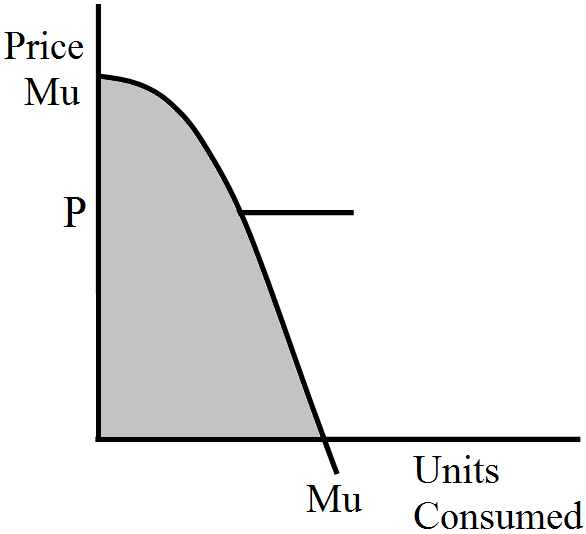
What does the area under the marginal utility curve depict?
  1. Average Utility.
  2. Total Utility.
  3. Indifference Curve.
  4. Consumer Equilibrium.
Answer
  1. Total Utility.
View full question & answer
Question 601 Mark
What causes rightward shift in the demand curve?
  1. Fall in the price of the good.
  2. Fall in the price of substitute good.
  3. Fall in the price of complementary good.
  4. Both (b) and (c).
Answer
  1. Fall in the price of complementary good.
View full question & answer
Question 611 Mark
Veblan good is:
  1. Good of status.
  2. Consumed by very high income group.
  3. Like diamonds.
  4. All of the above.
Answer
  1. All of the above.
View full question & answer
Question 621 Mark
Variable proportions type production function exists:
  1. When with change in the level of output there is change in factor ratio.
  2. When it is possible to increase output by increasing the application of the variable factor.
  3. When scale of production changes with change in the level of output.
  4. Both (a) and (b).
Answer
  1. Both (a) and (b).
View full question & answer
Question 631 Mark
Using total expenditure method , what is Ed when price and demand are as under:
  1. Ed = 1
  2. Ed < 1
  3. Ed > 1
  4. Ed = 0
Answer
  1. Ed > 1
View full question & answer
Question 641 Mark
Under perfect competition, for the producer to be in equilibrium:
  1. AR = MR = AC and AC must be rising.
  2. R = MR = MC and MC must be falling.
  3. AR = MR = MC and MC must be rising.
  4. AR = MR = TC and TC must be rising.
Answer
  1. AR = MR = MC and MC must be rising.
View full question & answer
Question 651 Mark
Total utility is maximum when:
  1. Marginal utility is zero.
  2. Marginal utility is at its highest point.
  3. Marginal utility is equal to average utility.
  4. Average utility is maximum.
Answer
  1. Marginal utility is zero.
View full question & answer
Question 661 Mark
The value of elasticity of co-efficient varies between:
  1. One and infinity.
  2. Zero and infinity.
  3. Zero and one.
  4. -1 and +1.
Answer
  1. Zero and infinity.
View full question & answer
Question 671 Mark
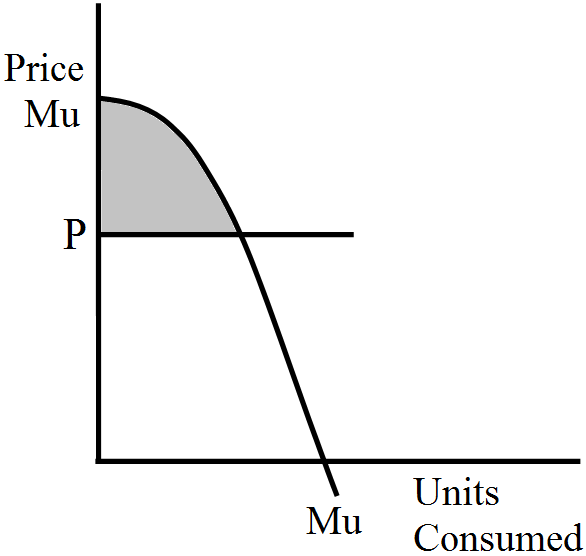
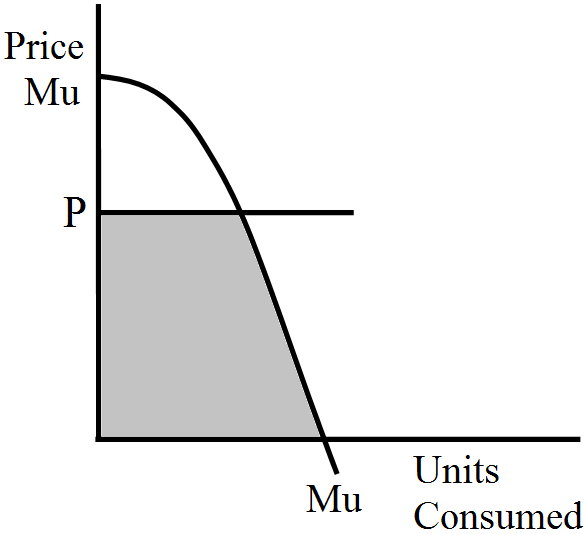
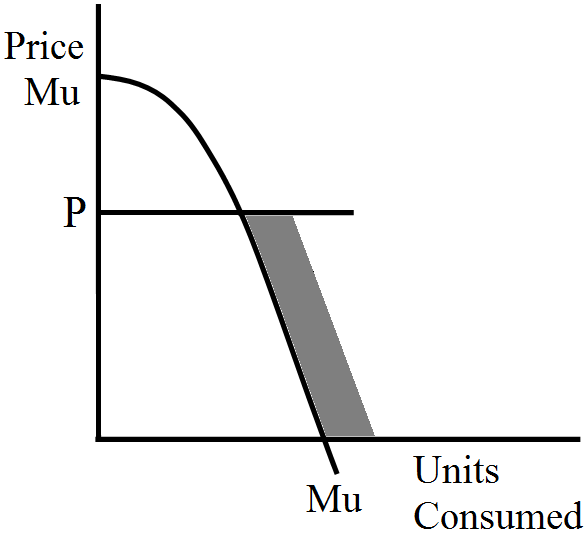
The slope of indifference curves is measured by:
  1. Marginal rate of transformation.
  2. Marginal rate of substitution.
  3. Marginal rate of technical substitution.
  4. None of these.
Answer
  1. Marginal rate of substitution.
View full question & answer
Question 681 Mark
The slope of indifference curve is equal to:
  1. Marginal utility.
  2. Marginal rate of substitution.
  3. Marginal rate of transformation.
  4. None of the above
Answer
  1. Marginal rate of substitution.
View full question & answer
Question 691 Mark
The second glass of lemonade gives lesser satisfaction to a thirsty boy. This is a clear case of
  1. Law of demand.
  2. Law of diminishing returns.
  3. Law of diminishing utility.
  4. Law of supply.
Answer
  1. Law of diminishing utility.
View full question & answer
Question 701 Mark
The ratio of exchange between two goods on an Indifference Curve analysis is shown by the __________.
  1. MRS.
  2. Indifference curve.
  3. Price line.
  4. Income consumption curve.
Answer
  1. MRS.
View full question & answer
Question 711 Mark
The price of tomatoes increases and people buy tomato puree. You infer that tomato puree and tomatoes are:
  1. Normal goods.
  2. Complements.
  3. Substitutes.
  4. Inferior goods.
Answer
  1. Substitutes.
View full question & answer
Question 721 Mark
The price of good X and the quantity demanded of Y bear a positive relationship between each other. What could be the reason behind that?
  1. X and Y are substitutes.
  2. X and Y are complementary goods.
  3. Y is an inferior good while X is an normal good.
  4. None of the above.
Answer
  1. X and Y are substitutes.
View full question & answer
Question 731 Mark
The price elasticity of demand is defined as the responsiveness of:
  1. Price to a change in quantity demanded.
  2. Quantity demanded to a change in price.
  3. Price to a change in income.
  4. Quantity demanded to a change in income.
Answer
  1. Quantity demanded to a change in price.
View full question & answer
Question 741 Mark
The price elasticity of demand for hamburger is:
  1. The change in the quantity demanded of hamburger when the hamburger increases by 30 paise per rupee.
  2. The percentage increase in the quantity demanded of hamburger when the price of hamburger falls by 1 percent per rupee.
  3. The increase in the demand for hamburger when the price of hamburger falls by 10 percent per rupee.
  4. The decrease in the quantity demanded of hamburger when the price of hamburger falls by 1 percent per rupee.
Answer
  1. The percentage increase in the quantity demanded of hamburger when the price of hamburger falls by 1 percent per rupee.
View full question & answer
Question 751 Mark
The points outside the budget line of two goods (X and Y) are:
  1. Unavailable points.
  2. Unattainable points.
  3. Attainable points.
  4. All of these.
Answer
  1. Unattainable points.
View full question & answer
Question 761 Mark
The Law of Demand, assuming other things to remain constant, establishes the relationship between:
  1. Income of the consumer and the quantity of goods demanded by him.
  2. Price of goods and the quantity demanded.
  3. Price of goods and the demand for its substitute.
  4. Quantity demanded of goods and the relative prices of its complementary goods.
Answer
  1. Price of goods and the quantity demanded.
View full question & answer
Question 771 Mark
The graphic presentation of a table showing price and demand relationship for a commodity in the market is called:
  1. Individual demand curve.
  2. Producer’s demand curve.
  3. Market demand curve.
  4. Consumer’s demand curve.
Answer
  1. Market demand curve.
View full question & answer
Question 781 Mark
The demand of which type of goods do not decrease with increase in their price?
  1. Comforts.
  2. Conspicuous goods.
  3. Necessities.
  4. Both (b) and (c).
Answer
  1. Both (b) and (c).
View full question & answer
Question 791 Mark
The demand function of a product X is given as Dx = 30 - 4P, where P is the price of the product. The demand at price of ₹ 4 will be ______:
  1. 20
  2. 12
  3. 14
  4. 10
Answer
  1. 14

Explanation:

Demand Function (Dx) = 30 - 4P

P is given as ₹ 4 put value of Pin demand function

$\therefore$ 30 - 4(4) = 14 

View full question & answer
Question 801 Mark
The consumer is in equilibrium when the following condition is satisfied:

  1. $\frac{\text{MU}_\text{x}}{\text{MU}_\text{y}}>\frac{\text{P}_\text{x}}{\text{P}_\text{y}}$

  2. $\frac{\text{Mu}_\text{x}}{\text{MU}_\text{x}}<\frac{\text{P}_{\text{x}}}{\text{p}_\text{y}}$

  3. $\frac{\text{MU}_\text{x}}{\text{MU}_\text{y}}=\frac{\text{P}_\text{x}}{\text{P}_\text{y}}$

  4. Node of these.

Answer
  1. $\frac{\text{MU}_\text{x}}{\text{MU}_\text{y}}=\frac{\text{P}_\text{x}}{\text{P}_\text{y}}$
View full question & answer
Question 811 Mark
The consumer is in equilibrium at a point where the budget line
  1. Is above an indifference curve.
  2. Is below an indifference curve.
  3. Is tangent to an indifference curve.
  4. Cuts an indifference curve.
Answer
  1. Is tangent to an indifference curve.
View full question & answer
Question 821 Mark
The absolute value of the coefficient of price elasticity of demand ranges from:
  1. Zero to infinity.
  2. Minus infinity to plus infinity.
  3. One to minus infinity.
  4. One to infinity.
Answer
  1. Zero to infinity.
View full question & answer
Question 831 Mark
Suppose the price of Pepsi increases, we will expect the demand curve of Coca-Cola to:
  1. Shift towards left.
  2. Shift towards right.
  3. Initially shift towards left and then to right.
  4. Remains at the same level.
Answer
  1. Shift towards right.
View full question & answer
Question 841 Mark
Slope of the demand curve is estimated as:

  1. $-\frac{\Delta\text{p}}{\Delta\text{q}}$

  2. $\frac{\Delta\text{p}}{\Delta\text{q}}$

  3. $\frac{\Delta\text{q}}{\Delta\text{p}}$

  4. $\frac{\text{p}}{\text{q}}$

Answer
  1. $-\frac{\Delta\text{p}}{\Delta\text{q}}$
View full question & answer
Question 851 Mark
Slope of budget line is:

  1. $\frac{\text{P}_\text{x}}{\text{P}_\text{y}}$

  2. $\frac{\text{P}_\text{y}}{\text{P}_\text{x}}$

  3. $\text{MRS}$

  4. $\text{P}_\text{x}.\text{P}_\text{y}$

Answer
  1. $\frac{\text{P}_\text{x}}{\text{P}_\text{y}}$
View full question & answer
Question 861 Mark
Shift in demand curve means:
  1. Fall in demand due to rise in own price of the commodity.
  2. Rise in demand due to fall in own price of the commodity.
  3. Change in demand due to factors other than the change in own price of the commodity.
  4. None of these.
Answer
  1. Change in demand due to factors other than the change in own price of the commodity.
View full question & answer
Question 871 Mark
Satisfaction obtained by a consumer by consuming given number of the commodity refers to:
  1. Utility.
  2. Marginal utility.
  3. Average utility.
  4. Total utility.
Answer
  1. Total utility.
View full question & answer
Question 881 Mark
'Price of the commodity is one of the determinant of demand'. In the light of this statement, price of the commodity and its quantity demanded are:
  1. Directly related.
  2. Inversely related.
  3. Positively related.
  4. Perfectly related.
Answer
  1. Inversely related.
View full question & answer
Question 891 Mark
Price elasticity of demand on a linear demand curve at the y-axis is equal to:
  1. Zero.
  2. One.
  3. Infinity.
  4. 0 < Ed < 1.
Answer
  1. Infinity.
View full question & answer
Question 901 Mark
Price elasticity of demand on a linear demand curve at the x-axis is equal to:
  1. Zero.
  2. One.
  3. Infinity.
  4. 0 < Ed < 1.
Answer
  1. Zero.
View full question & answer
Question 911 Mark
Price elasticity of demand of a vertical demand curve is called:
  1. Perfectly elastic.
  2. Elastic.
  3. Inelastic.
  4. Perfectly inelastic.
Answer
  1. Perfectly inelastic.
View full question & answer
Question 921 Mark
Price elasticity of demand of a horizontal demand curve is called:
  1. Perfectly elastic.
  2. Perfectly inelastic.
  3. Elastic.
  4. Inelastic.
Answer
  1. Perfectly elastic.
View full question & answer
Question 931 Mark
Price elasticity of demand of a good is (-) 0.75, calculate the percentage fall in its price that will result in 15% rise in its demand.
  1. 11.25%
  2. 5%
  3. 15%
  4. 20%
Answer
  1. 20%

Explanation:

Price elasticity of demand:

= __________________________

= ___________________

% change (fall) in price = ______ =

View full question & answer
Question 941 Mark
Price elasticity of demand is _______ in number because price and quantity demanded are inversely related:
  1. Positive.
  2. Negative.
  3. Constant.
  4. Prime.
Answer
  1. Negative.

Explanation:

Price elasticity of demand has negative value due to inverse relationship between price and quantity demanded of a product therefore to made it positive, we use minus (-) sign in its formula.

$\text{i.e. E}_\text{d}=-\frac{\Delta\text{Q}}{\Delta\text{P}}\times \frac{\text{P}}{\text{Q}}$

View full question & answer
Question 951 Mark
Potato chips and popcorn are substitutes. A rise in the price of potato chips will .............. the demand for popcorn and the demand of potato chips will
  1. Increase; increase.
  2. Increase; decreases.
  3. Decrease; decrease.
  4. Decrease; increase.
Answer
  1. Increase; decreases.
View full question & answer
Question 961 Mark
Per unit production of the variable factor is called:
  1. Total product.
  2. Average product.
  3. Marginal product.
  4. None of these.
Answer
  1. Average product.
View full question & answer
Question 971 Mark
On all points of rectangular hyperbola demand curve, elasticity of demand is:
  1. Equal to unity.
  2. Zero.
  3. Greater than unity.
  4. Less than unity.
Answer
  1. Equal to unity.
View full question & answer
Question 981 Mark
  1. $\text{xy}=\frac{\text{P}\text{x}}{\text{P}_\text{y}}$

  2. $\text{xy}=-\frac{\Delta\text{y}}{\Delta\text{x}}$

  3. $\text{xy}=\frac{\text{P}_\text{y}}{\text{P}_\text{x}}$

  4. $\text{xy}=\frac{\Delta\text{y}}{\Delta\text{x}}$

Answer
  1. $\text{xy}=\frac{\text{P}\text{x}}{\text{P}_\text{y}}$
View full question & answer
Question 991 Mark
_______ measures the change in demand of a commodity due to change in its own price.
  1. Elasticity of demand.
  2. Price elasticity of demand.
  3. Income elasticity of demand.
  4. Cross elasticity of demand.
Answer
  1. Price elasticity of demand.
View full question & answer
Question 1001 Mark
Market demand curve for soup is given and known to us. With the onset of cold weather, price remaining the same the consumer would:
  1. Move to a higher demand curve.
  2. Move downward along same demand curve.
  3. Move to a lower demand curve.
  4. Move upward along the same demand curve.
Answer
  1. Move to a higher demand curve.
View full question & answer
Question 1011 Mark
Marginal utility of a particular commodity at the point of saturation is:
  1. Zero.
  2. Unity.
  3. Greater than unity.
  4. less than unity.
Answer
  1. Zero.
View full question & answer
Question 1021 Mark
Law of Diminishing Marginal Utility states that when more and more units of a commodity ate consumed, marginal utility:
  1. begins to increase.
  2. remains constant.
  3. begins to decrease.
  4. becomes zero.
Answer
  1. begins to decrease.
View full question & answer
Question 1031 Mark
Law of demand must fall in case of:
  1. Normal goods.
  2. Giffen goods.
  3. Inferior goods.
  4. None of these.
Answer
  1. Giffen goods.
View full question & answer
Question 1041 Mark
Law of Demand is a:
  1. Quantitative statement.
  2. Qualitative statement.
  3. Both (a) and (b).
  4. None of these.
Answer
  1. Qualitative statement.
View full question & answer
Question 1051 Mark
Law of Demand is a _______:
  1. Quantitative statement.
  2. Qualitative statement.
  3. Both (a) and (b).
  4. Hypothetical.
Answer
  1. Qualitative statement.
View full question & answer
Question 1061 Mark
Law of demand does not hold in case of:
  1. Emergency.
  2. Expectation of price rise.
  3. Conspicuous goods.
  4. All of the above.
Answer
  1. All of the above.
View full question & answer
Question 1071 Mark
______ is the real purchasing power of the consumer from which he can purchase certain quantitative bundle of two goods at a given price:
  1. Consumer equilibrium.
  2. Budget set.
  3. Consumer's budget
  4. Indifference curve.
Answer
  1. Consumer's budget.
View full question & answer
Question 1081 Mark
In which analysis  can utility be measured in definite numbers such as 1,2,3,4 etc?
  1. Cardinal utility analysis.
  2. Ordinal utility analysis.
  3. Both of these.
  4. None of these.
Answer
  1. Cardinal utility analysis .
View full question & answer
Question 1091 Mark
In the context of producer’s equilibrium which one is wrong:
  1. Minimum difference between TR and TC.
  2. MR=MC.
  3. Producer gets maximum profit.
  4. In equilibrium situation producer has no tendency to change his production.
Answer
  1. Minimum difference between TR and TC.
View full question & answer
Question 1101 Mark
In Marginal utility theory, utility is:
  1. An ordinal concept.
  2. A cardinal concept.
  3. Both ordinal and cardinal concept.
  4. None of the above.
Answer
  1. A cardinal concept.
View full question & answer
Question 1111 Mark
In Marginal utility theory, marginal utility of money:
  1. Rises.
  2. Constant.
  3. Falls.
  4. Rises and then falls.
Answer
  1. Constant.
View full question & answer
Question 1121 Mark
In general, habit of consumer makes the demand:
  1. Less elastic.
  2. More inelastic.
  3. Elastic.
  4. None of these.
Answer
  1. Less elastic.
View full question & answer
Question 1131 Mark
Inferior goods are those whose income effect is:
  1. Negative.
  2. Positive.
  3. Zero.
  4. None of these.
Answer
  1. Negative.
View full question & answer
Question 1141 Mark
Indifference Curves can be a straight line at _______.
  1. Constant Marginal Rate of Substitution.
  2. Increasing Marginal Rate of Substitution.
  3. Increasing return to scale.
  4. None of the above.
Answer
  1. Constant Marginal Rate of Substitution.
View full question & answer
Question 1151 Mark
Indifference curve is downward sloping from left to right since more good-X and less good-Y give ________.
  1. Less satisfaction.
  2. Maximum satisfaction.
  3. Equal satisfaction.
  4. More satisfaction.
Answer
  1. Equal satisfaction.

Explanation:

Indifference curve is a curve showing different combinations of two goods, each combination offering the same level of satisfaction.

View full question & answer
Question 1161 Mark
Indifference curve is a diagrammatic representation of:
  1. A budget line.
  2. An indifference set.
  3. Indifference map.
  4. None of these.
Answer
  1. An indifference set.
View full question & answer
Question 1171 Mark
In case of single commodity, the consumer will be in equilibrium when ________.

  1. $\frac{\text{MU}_\text{X}}{\text{P}_\text{X}}=\frac{\text{MU}_\text{Y}}{\text{P}_\text{Y}}$
  2. $\frac{\text{MU}_\text{X}}{\text{MU}_\text{Y}}=\text{MU}_\text{M}$

  3. $\frac{\text{MU}_\text{X}}{\text{P}_\text{X}}=\frac{\text{MU}_\text{Y}}{\text{P}_\text{X}}$
  4. $\frac{\text{P}_\text{X}}{\text{P}_\text{Y}}=\text{MU}_\text{M}$

Answer
  1. $\frac{\text{MU}_\text{X}}{\text{MU}_\text{Y}}=\text{MU}_\text{M}$
View full question & answer
Question 1181 Mark
In case of single commodity, a consumer is at equilibrium point, marginal utility derived from consumption of commodities is 12, find the price of that commodity? (when m = 1)
  1. ₹ 1
  2. ₹ 2
  3. ₹ 12
  4. ₹ 10
Answer
  1. ₹ 12
View full question & answer
Question 1191 Mark
In case of normal goods, demand curve shows:
  1. A negative slope.
  2. A positive slope.
  3. Zero slope.
  4. None of these.
Answer
  1. A negative slope.
View full question & answer
Question 1201 Mark
In case of inferior goods like bajra, a fall in its price tends to _______:
  1. Make the demand remain constant.
  2. Reduce the demand.
  3. Increase the demand.
  4. Change the demand in an abnormal way.
Answer
  1. Reduce the demand.
View full question & answer
Question 1211 Mark
In case of Giffen’s Paradox the slope of demand curve is:
  1. Negative.
  2. Positive.
  3. Parallel to X-axis.
  4. Parallel to Y-axis.
Answer
  1. Positive.
View full question & answer
Question 1221 Mark
In case of Giffen goods, the demand curve will be:
  1. Horizontal
  2. Downward-sloping to the right.
  3. Vertical.
  4. Upward-sloping to the right.
Answer
  1. Upward-sloping to the right.
View full question & answer
Question 1231 Mark
In case of diminishing returns:
  1. Total product increases at diminishing rate.
  2. Total product increases at increasing rate.
  3. Marginal product diminishes.
  4. Both(a) and (c).
Answer
  1. Both(a) and (c).
View full question & answer
Question 1241 Mark
In case of a straight line demand curve meeting the two axes, the price-elasticity of demand at the midpoint of the line would be:
  1. 0
  2. 1
  3. 1.5
  4. 2
Answer
  1. 1
View full question & answer
Question 1251 Mark
If X and Y are two commodities, indifference curve shows:
  1. X and Y are equally preferred.
  2. u is preferred to X.
  3. X is preferred to Y.
  4. None of these.
Answer
  1. X and Y are equally preferred.
View full question & answer
Question 1261 Mark
If with the rise in price of good Y, demand for good X rises, the two goods are:
  1. Substitutes.
  2. Complements.
  3. Not related.
  4. Jointly demanded.
Answer
  1. Substitutes.
View full question & answer
Question 1271 Mark
If with the rise in price of good Y, demand for good X rises, the two goods are: (Choose the correct alternative)
  1. Substitutes.
  2. Complements.
  3. Not related.
  4. Jointly demanded.
Answer
  1. Substitutes.
View full question & answer
Question 1281 Mark
If two goods are complementary then rise in the price of one results in:
  1. Rise in demand for the other.
  2. Fall in demand for the other.
  3. Rise in demand for both.
  4. None of these.
Answer
  1. Fall in demand for the other.
View full question & answer
Question 1291 Mark
If the price of Pepsi decreases relative +2 the price of Coke and 7-UP, the demand for:
  1. Coke will decrease.
  2. 7-UP will decrease.
  3. Coke and 7-UP will increase.
  4. Coke and 7-UP will decrease.
Answer
  1. Coke and 7-UP will decrease.
View full question & answer
Question 1301 Mark
If the price of any complementary good rises, then ______:
  1. Demand curve shifts to left.
  2. Demand curve shifts to right.
  3. Demand curve moves downward.
  4. Demand curve moves upward
Answer
  1. Demand curve shifts to left.
View full question & answer
Question 1311 Mark
If the income of Mr A increases, then his budget line of two goods X and Y will:
  1. Shift rightward.
  2. Shift inward.
  3. No change.
  4. Positively sloped.
Answer
  1. Shift rightward.

Explanation:

Due to increase in income, purchasing power of the consumer will increase, as a result his budget line will shift rightward.

View full question & answer
Question 1321 Mark
If the consumer consume only one commodity ‘X’ he will be in equilibrium when:
[Here, MUx = Marginal utility of the good X (in terms of money); Px = Price of good -X]
  1. MUx < Px
  2. MUx = Px
  3. MUx > Px
  4. None of these.
Answer
  1. MUx = Px
View full question & answer
Question 1331 Mark
If regardless of changes in its price, the quantity demanded of a good remains unchanged, then the demand curve for the good will be:
  1. Horizontal.
  2. Vertical.
  3. Positively sloped.
  4. Negatively sloped.
Answer
  1. Vertical.
View full question & answer
Question 1341 Mark
If price of X commodity PX) is 36 and slope of budget line is 1.5 then find price of Y commodity PY).
  1. 6.
  2. 4.
  3. 9.
  4. 51.5.
Answer
  1. 4.

 Explanation:

$\text{Slope of budget line}=\frac{\text{P}_\text{x}}{\text{P}_\text{y}}\Rightarrow=\frac{6}{\text{P}_\text{y}}$

$\text{P}_\text{y}=\ ₹\ 4$

View full question & answer
Question 1351 Mark
If price of sugar increases, the demand for tea will _______:
  1. Decrease.
  2. Increase.
  3. Not affected.
  4. None of the above.
Answer
  1. Decrease.
View full question & answer
Question 1361 Mark
If Marginal Rate of Substitution is increasing throughout, the Indifference curve will be:
  1. Downward sloping convex.
  2. Downward sloping concave.
  3. Downward sloping straight line.
  4. Upward sloping convex.
Answer
  1. Downward sloping concave.
View full question & answer
Question 1371 Mark
If Marginal Rate of Substitution is increasing throughout, the Indifference Curve will be: (Choose the correct alternative)
  1. Downward sloping convex.
  2. Downward sloping concave.
  3. Downward sloping straight line.
  4. Upward sloping convex.
Answer
  1. Downward sloping concave.
View full question & answer
Question 1381 Mark
If Marginal Rate of Substitution is constant throughout, the Indifference curve will be:
  1. Parallel to the x-axis.
  2. Downward sloping concave.
  3. Downward sloping convex.
  4. Downward sloping straight line.
Answer
  1. Downward sloping straight line.
View full question & answer
Question 1391 Mark
If Marginal Rate of Substitution is constant throughout, the Indifference curve will be:
  1. Parallel to the x-axis.
  2. Downward sloping concave.
  3. Downward sloping convex.
  4. Downward sloping straight line.
Answer
  1. Downward sloping straight line.
View full question & answer
Question 1401 Mark
If Marginal Rate of Substitution is constant through out, the Indifference curve will be: (choose the correct alternative)
  1. Parallel to the x-axis.
  2. Downward sloping concave.
  3. Downward sloping convex.
  4. Downward sloping straight line.
Answer
  1. Downward sloping straight line.
View full question & answer
Question 1411 Mark
If indifference curve is straight line downward sloping,
  1. MRS is increasing.
  2. MRS is decreasing.
  3. MRS is constant.
  4. MRS is zero.
Answer
  1. MRS is constant.
View full question & answer
Question 1421 Mark
If due to fall in the price of good X, demand for good Y rises, the two goods are:
  1. Substitutes.
  2. Complements.
  3. Not related.
  4. Competitive.
Answer
  1. Complements.
View full question & answer
Question 1431 Mark
If due to fall in the price of good X, demand for good Y rises, the two goods are: (Choose the correct alternative)
  1. Substitutes.
  2. Complements.
  3. Not related.
  4. Competitive.
Answer
  1. Complements.
View full question & answer
Question 1441 Mark
If due to fall in price, total expenditure (Ed) when demand curve is parallel to Y-axis?
  1. A case of inferior good.
  2. Price elasticity of demand is less than unity.
  3. Price elasticity of demand is greater than unity.
  4. Price elasticity of demand is infinity.
Answer
  1. Price elasticity of demand is less than unity.
View full question & answer
Question 1451 Mark
If demand is parallel to X-axis, what will be the nature of elasticity?
  1. Perfectly elastic.
  2. Inelastic.
  3. Elastic.
  4. Highly elastic.
Answer
  1. Perfectly elastic.
View full question & answer
Question 1461 Mark
If a commodity has large number of substitute goods, then its demand would be:
  1. Unitary elastic.
  2. Perfectly elastic.
  3. Perfectly inelastic.
  4. More than unitary elastic.
Answer
  1. More than unitary elastic.

Explanation:

The demand for commodities having more close substitutes is more than unitary elastic as whenever their price increases, people will start buying their substitute goods.

View full question & answer
Question 1471 Mark
Identify the law in the statement below:
'A consumer with a given income allocates his expenditure among commodities, so that last rupee spent on each brings equal Marginal Utility':
  1. Law of Diminishing Marginal Utility.
  2. Law of Equi-marginal Utility.
  3. Law of diminishing MRS.
  4. None of the above.
Answer
  1. Law of Equi-marginal Utility.
View full question & answer
Question 1481 Mark
Identify the factor which generally keeps the price elasticity of demand for a good low:
  1. Variety of uses for that good.
  2. Its low price.
  3. Close substitutes for that good.
  4. High proportion of the consumer's income spent on it.
Answer
  1. Its low price.
View full question & answer
Question 1491 Mark
Identify the coefficient of price elasticity of demand when the percentage increase in the quantity of good demanded is smaller than the percentage fall in its price:
  1. Equal to one.
  2. Greater than one.
  3. Smaller than one.
  4. Zero.
Answer
  1. Smaller than one.
View full question & answer
Question 1501 Mark
How will the demand of sugar change if price of tea rises?
  1. Decrease because both the goods are complementary.
  2. Increase because both the goods are substitutes.
  3. Not change unless the price of sugar changes.
  4. None of the above.
Answer
  1. Decrease because both the goods are complementary.
View full question & answer
Question 1511 Mark
How is law of demand expressed functionally?
  1. DX = f (PX), ceteris paribus.
  2. DX = f (PZ), ceteris paribus.
  3. DX = f (Y), ceteris paribus.
  4. DX = f (T), ceteris paribus.
Answer
  1. DX = f (PX), ceteris paribus.
View full question & answer
Question 1521 Mark
How are goods X and Y when, as a result of rise in the price of good-X , demand for good-Y increases?
  1. Substitute goods.
  2. Complementary goods.
  3. Normal goods.
  4. Inferior goods.
Answer
  1. Substitute goods.
View full question & answer
Question 1531 Mark
Hitesh buys pizza and coke. The marginal utility of last piece of pizza is 80 utils and of last sip of coke is 40 utils. The price of pizza is ₹ 40 and that of coke is ₹ 20. This means that Hitesh is buying:
  1. More pizza and less coke.
  2. More coke and less pizza.
  3. both at optimal level.
  4. Same quantity of both.
Answer
  1. both at optimal level.
View full question & answer
Question 1541 Mark
Higher Indifference Curve indicates _______.
  1. Higher level of satisfaction.
  2. Higher cost.
  3. Lower cost.
  4. Lower level of satisfaction.
Answer
  1. Higher level of satisfaction.
View full question & answer
Question 1551 Mark
Goods X and Y are complementary while goods X and Z are substitutes. What will happen to goods Y and Z if price of good X increases?
  1. The demand for good Y will decrease and for Z it will increase.
  2. The demand for both goods Y and Z will decrease.
  3. The demand for both goods Y and Z will increase.
  4. The demand for good Y will increase and for Z it will decrease.
Answer
  1. The demand for good Y will decrease and for Z it will increase.
View full question & answer
Question 1561 Mark
Goods that exhibit direct price demand relationship are called:
  1. Giffen goods.
  2. Complementary goods.
  3. Substitute goods.
  4. None of these.
Answer
  1. Giffen goods.
View full question & answer
Question 1571 Mark
Given the fact that MRS between goods X and Y is diminishing, IC is:
  1. Convex to the origin.
  2. Concave to the origin.
  3. Straight line.
  4. None of these.
Answer
  1. Convex to the origin.
View full question & answer
Question 1581 Mark
Giffen paradox is an exception of _______:
  1. Law of Demand.
  2. Law of Supply.
  3. Law of Production.
  4. Law of Utility.
Answer
  1. Law of Demand.
View full question & answer
Question 1591 Mark
Giffen good is:
  1. An inferior good.
  2. One with high negative income elasticity of demand.
  3. Consumed by low-paid workers.
  4. All of the above.
Answer
  1. All of the above.
View full question & answer
Question 1601 Mark
Factor which affects market demand but not individual demand can be:
  1. Number of consumers in the market.
  2. Age and sex composition of population.
  3. Distribution of income.
  4. All of the above.
Answer
  1. All of the above.
View full question & answer
Question 1611 Mark
Expansion of demand is shown by:
  1. Upward movement on the demand curve.
  2. Downward movement on the demand curve.
  3. Rightward shift of the demand curve.
  4. Leftward shift of the demand curve.
Answer
  1. Downward movement on the demand curve.
View full question & answer
Question 1621 Mark
Expansion and contraction in demand are caused by _______:
  1. Change in the income of buyer.
  2. Change in the taste and preference of the buyer.
  3. Change in the price of the commodity.
  4. Change in the prices of related goods.
Answer
  1. Change in the taste and preference of the buyer.
View full question & answer
Question 1631 Mark
Ed = $\infty$ in case of:
  1. Luxuries.
  2. Normal goods.
  3. Necessities.
  4. Perfect competition.
Answer
  1. Perfect competition.
View full question & answer
Question 1641 Mark
Ed = _______.
  1. $\frac{\Delta\text{Q}}{\Delta\text{P}}.\frac{\text{P}}{\text{Q}}$
  2. $\frac{\Delta\text{P}}{\Delta\text{Q}}.\frac{\text{Q}}{\text{P}}$
  3. $\frac{\Delta\text{P}}{\Delta\text{Q}}.\frac{\text{P}}{\text{Q}}$
  4. $\frac{\Delta\text{Q}}{\Delta\text{P}}.\frac{\text{Q}}{\text{P}}$
Answer
  1. $\frac{\Delta\text{Q}}{\Delta\text{P}}.\frac{\text{P}}{\text{Q}}$
View full question & answer
Question 1651 Mark
Ed > 1 represents:
  1. Elastic demand.
  2. Inelastic demand.
  3. Unitary elastic demand.
  4. None of these.
Answer
  1. Elastic demand.
View full question & answer
Question 1681 Mark
Due to increase in income of the consumer, the demand curve of normal goods will:
  1. Move upwards.
  2. Shift leftwards.
  3. Shift rightwards.
  4. Move downwards.
Answer
  1. Shift rightwards.
View full question & answer
Question 1701 Mark
Diagrammatic presentation of consumer’s indifference set is called?
  1. Indifference curve.
  2. Utility curve.
  3. Budget line.
  4. Transformation curve.
Answer
  1. Indifference curve.
View full question & answer
Question 1711 Mark
Demand of a commodity depends upon _______:
  1. Price.
  2. Income.
  3. Price of related good.
  4. All of these.
Answer
  1. All of these.
View full question & answer
Question 1721 Mark
Demand is elastic when:
  1. Price level is high.
  2. More substitutes are available.
  3. Income of the consumer is less.
  4. All of the above.
Answer
  1. All of the above.
View full question & answer
Question 1731 Mark
Demand for water is inelastic because:
  1. It is abundant.
  2. It is necessity.
  3. Its use can be postponed.
  4. None of the above
Answer
  1. It is necessity.
View full question & answer
Question 1741 Mark
Demand for electric power is elastic because _______:
  1. It is available at a very high price.
  2. It is essential for life.
  3. It has many uses.
  4. Both (b) and (c).
Answer
  1. It has many uses.
View full question & answer
Question 1751 Mark
Demand for a commodity refers to:
  1. Desire for the commodity.
  2. Need for the commodity.
  3. Quantity demanded of that commodity.
  4. Quantity of the commodity demanded at a certain price during any particular period of time.
Answer
  1. Quantity of the commodity demanded at a certain price during any particular period of time.
View full question & answer
Question 1761 Mark
Contraction of demand is the result of:
  1. Decrease in the number of consumers.
  2. Increase in the price of goods concerned.
  3. Increase in the prices of other goods.
  4. Decrease in the income of purchasers.
Answer
  1. Increase in the price of goods concerned.
View full question & answer
Question 1771 Mark
Consumer's equilibrium through indifference curve analysis is based on:
  1. Cardinal utility approach.
  2. Ordinal utility approach.
  3. Money utility approach.
  4. Both (a) and (b).
Answer
  1. Ordinal utility approach.
View full question & answer
Question 1781 Mark
Budget set is
  1. Right angled triangle formed by the budget line with the axes.
  2. All points on the budget line.
  3. Points inside the budget line.
  4. Points on Y-axis from where budget line starts and the point on X-axis where budget line ends.
Answer
  1. Right angled triangle formed by the budget line with the axes.
View full question & answer
Question 1801 Mark
At the mid-point of as straight line downward sloping demand curve, elasticity of demand (Ed) is:
  1. 2
  2. $\frac{1}{2}$
  3. 1
  4. 4
Answer
  1. 1
View full question & answer
Question 1811 Mark
Attainable combinations of X and Y are drawn on the assumption that Px and Py are:
  1. Constant.
  2. Variable.
  3. Change in the same ratio.
  4. Equal to each other.
Answer
  1. Constant.
View full question & answer
Question 1821 Mark
As we move along a downward sloping straight line demand curve from left to right, price elasticity of demand: (Choose the correct alternative)
  1. Remains unchanged.
  2. Goes on falling.
  3. Goes on rising.
  4. Falls initially then rises.
Answer
  1. Goes on falling.
View full question & answer
Question 1831 Mark
As the consumer has more units of a commodity, his total utility from the commodity:
  1. Increases less than in proportion, reaches a maximum and then falls.
  2. Increases less than in proportion and then falls.
  3. Increases more than in proportion and then reaches a maximum.
  4. Falls, becomes zero and then negative.
Answer
  1. Increases less than in proportion, reaches a maximum and then falls.
View full question & answer
Question 1841 Mark
As a result of rise in consumer’s income , demand curve for coarse grain (inferior good):
  1. Shifts to the left.
  2. Shifts to the right.
  3. Becomes a horizontal straight line.
  4. Becomes a vertical straight line.
Answer
  1. Shifts to the left.
View full question & answer
Question 1851 Mark
A rise in income of the consumer X leads to a fall in the demand for the good A by him. What is the good A called?
  1. Complementary good.
  2. Substitute good.
  3. Inferior good.
  4. Normal good.
Answer
  1. Inferior good.
View full question & answer
Question 1861 Mark
Arational consumer prefers A(10,6) over B(8,4). Which kind of preference is this?
  1. Strictly preferred bundle.
  2. Weakly preferred bundle.
  3. Indifferent bundle.
  4. None of the above.
Answer
  1. Strictly preferred bundle.
View full question & answer
Question 1871 Mark
Any statement about demand for a good is considered complete only when the following is/ are mentioned in it: (Choose the correct alternative)
  1. Price of the good.
  2. Quantity of the good.
  3. Period of time.
  4. All of the above.
Answer
  1. All of the above.
View full question & answer
Question 1881 Mark
An indifference curve slopes down towards right since more of one commodity and less of another result in
  1. Same satisfaction.
  2. Greater satisfaction.
  3. Maximum satisfaction.
  4. Decreasing expenditure.
Answer
  1. Same satisfaction.
View full question & answer
Question 1891 Mark
An indifference curve is related to:
  1. Choice and preferences of the consumer.
  2. Consumer’s income.
  3. Prices of goods X and Y.
  4. Total utility from goods X and Y.
Answer
  1. Choice and preferences of the consumer.
View full question & answer
Question 1901 Mark
A movement along the demand curve for soft drinks is best described as:
  1. An increase in demand.
  2. A decrease in demand.
  3. A change in quantity demanded.
  4. A change in demand.
Answer
  1. A change in quantity demanded.
View full question & answer
Question 1911 Mark
All the points on a budget line represent:
  1. Increasing total expenditure.
  2. The same total expenditure.
  3. Decreasing total expenditure.
  4. None of the above.
Answer
  1. The same total expenditure.
View full question & answer
Question 1921 Mark
All of the following items are determinants of demand except:
  1. Tastes and preferences.
  2. Quantity supplied.
  3. Income.
  4. Price of related goods.
Answer
  1. Quantity supplied.
View full question & answer
Question 1931 Mark
All but one of the following are assumed to remain the same while drawing an individual's demand curve for a commodity. Which one is it?
  1. The preference of the individual.
  2. His monetary income.
  3. Price.
  4. Price of related goods
Answer
  1. Price.
View full question & answer
Question 1941 Mark
Additional utility derived from the consumption of an additional unit of a commodity is called:
  1. Average utility.
  2. Marginal utility.
  3. Total utility.
  4. None of the above.
Answer
  1. Marginal utility.
View full question & answer
Question 1951 Mark
A consumer demands 5 units of a commodity at the  price of ₨4 per unit. He demands 10 units when the price falls to Rs3 per unit. Price elasticity of demand is equal to:
  1. 3
  2. 4
  3. 2
  4. 1.5
Answer
  1. 4
View full question & answer
Question 1961 Mark
A consumer consumes only two goods. If price of one of the goods falls, the indifference curve:
  1. Shifts upwards.
  2. Shifts downwards.
  3. Can shift both upwards or downwards.
  4. Does not shift.
Answer
  1. Does not shift.
View full question & answer
Question 1971 Mark
A consumer consumes only two goods. If price of one of the goods falls, the indifference curve:
  1. Shifts upwards.
  2. Shifts downwards.
  3. Can shift both upwards or downwards.
  4. Does not shift.
Answer
  1. Does not shift.
View full question & answer
Question 1981 Mark
A consumer buys two commodities X and Y, he would be in equilibrium when ________.

  1. $\frac{\text{MU}_\text{X}}{\text{P}_\text{X}}=\frac{\text{MU}_\text{Y}}{\text{P}_\text{Y}}$
  2. $\frac{\text{MU}_\text{X}}{\text{MU}_\text{Y}}=\text{MU}_\text{M}$

  3. $\frac{\text{MU}_\text{X}}{\text{P}_\text{X}}=\frac{\text{MU}_\text{Y}}{\text{P}_\text{X}}$
  4. $\frac{\text{P}_\text{X}}{\text{P}_\text{Y}}=\text{MU}_\text{M}$

Answer
  1. $\frac{\text{MU}_\text{X}}{\text{P}_\text{X}}=\frac{\text{MU}_\text{Y}}{\text{P}_\text{Y}}$
View full question & answer
Question 1991 Mark
According to law of diminishing marginal utility, while eating cake the satisfaction derived from the second slice of it consumed is:
  1. Greater than the consumption of first slice.
  2. Less than the consumption of first slice.
  3. Not comparable to that from the first.
  4. Equal to that from the first.
Answer
  1. Less than the consumption of first slice.
View full question & answer
Question 2001 Mark
According to law of demand, other things being constant:
  1. There exists negative relationship between quantity demanded and price of a commodity.
  2. With increase in price, there is rightward shift in demand curve.
  3. There exists positive relationship between quantity demanded and price of a commodity.
  4. With increase in price, there is leftward shift in demand curve.
Answer
  1. There exists negative relationship between quantity demanded and price of a commodity.
View full question & answer
Question 2011 Mark
According to IC analysis, a consumer attains equilibrium when:
  1. $\text{MRSxy}=\frac{\text{Px}}{\text{Py}}$
  2. $\text{MRSxy}>\frac{\text{Px}}{\text{Py}}$
  3. $\text{MRSxy}<\frac{\text{Px}}{\text{Py}}$
  4. $\text{None of these}$
Answer
  1. $\text{MRSxy}=\frac{\text{Px}}{\text{Py}}$
View full question & answer