Question 13 Marks
How isolation of DNA is done from the cell?###Explain: separation and isolation of the genetic material (DNA).
Answer
View full question & answer→→ Nucleic acid is the genetic material of all organisms without exception.
→ In majority of organisms this is deoxyribonucleic acid or DNA.
→ In order to cut the DNA with restriction enzymes, it needs to be in pure form, free from other macro-molecules.
→ Since the DNA is enclosed within the membranes, we have to break the cell open to release DNA along with other macromolecules such as RNA, proteins, polysaccharides and also lipids.
→ This can be achieved by treating the bacterial cells/plant or animal tissue with enzymes such as lysozyme (bacteria), cellulase (plant cells), chitinase (fungus).
→ Genes are located on long molecules of DNA interwined with proteins such as histones.
→ The RNA can be removed by treatment with ribonuclease whereas proteins can be removed by treatment with protease.
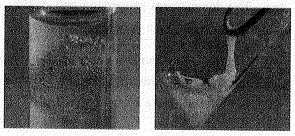
→ Purified DNA ultimately precipitates out after the addition of chilled ethanol.
→ This can be seen as collection of fine threads in the suspension.
→ DNA that separates out can be removed by spooling.
→ In majority of organisms this is deoxyribonucleic acid or DNA.
→ In order to cut the DNA with restriction enzymes, it needs to be in pure form, free from other macro-molecules.
→ Since the DNA is enclosed within the membranes, we have to break the cell open to release DNA along with other macromolecules such as RNA, proteins, polysaccharides and also lipids.
→ This can be achieved by treating the bacterial cells/plant or animal tissue with enzymes such as lysozyme (bacteria), cellulase (plant cells), chitinase (fungus).
→ Genes are located on long molecules of DNA interwined with proteins such as histones.
→ The RNA can be removed by treatment with ribonuclease whereas proteins can be removed by treatment with protease.
→ Purified DNA ultimately precipitates out after the addition of chilled ethanol.
→ This can be seen as collection of fine threads in the suspension.
→ DNA that separates out can be removed by spooling.