Questions

1.5 Marks Questions

Take a timed test

23 questions · self-marked practice — reveal the answer and mark yourself.

Question 12 Marks
With the help of suitable example, explain how cross-breeding is carried out in developing a new breed in animals.
Answer
Cross breeding : In this method, a cross is performed between superior males and females of a bread and hybrids are obtained. Hybrids are economically more beneficial. Advantage of the method is that the desired and superior characters of two different breeds are combined. Many new breeds have been developed by out - crossing methods.
Some examples of hybrid breeds :
Cross breed Cow : Indiginous breeds of cows of our country are allowed to cross breed with bulls of foreign breeds having disease resistant, and high milk yield for long time. Following now breeds are developed :
(i) Karan Swiss, $\quad$(ii) Karan Fries, $\quad$(iii) Frieswal.
View full question & answer
Question 22 Marks
What do you mean by Gene Pool?
Answer
A gene pool referred to as a collection or set of different genes of every individual present in a population. The genes are incorporated in individuals which are inherited from one to the next generation through germ cells of the population.
View full question & answer
Question 32 Marks
Write the scientific names of four sugar producing plants.
Answer
It is the main crop of tropical Asia. It is cultivated in an area of more than 3 million hectares in India. Several improved verieties of sugarcane have been developed by the Sugarcane Breeding Institute, Coimbatore. Among the improved varieties of sugarcane, the varieties are COC671, HM658, CO668, CO8152, CO997 etc.
View full question & answer
Question 42 Marks
Give names of two improved varieties of rice and wheat.
Answer
Wheat - Sonara - 64, Sharbati, Kalyan sona Rice - Jaya, Padna, Poosa, Basmati.
View full question & answer
Question 52 Marks
MOET is helpful in improving rate of production of desired hybrids and herd size of cattle. Give the steps of this program.###Mention the sequential steps of MOET Tech-nology.###What is the MOET?
Answer
Following are step of MOET Program :
(i) Super ovulation : In this step, healthy and high milk capacity female is given hormonal treatment (such as FSH & LH) for stimulating ovulation. A healthy cow can ovulate 6 - 8 ova in place of a single ovum in one cycle.
(ii) Super ovulated females is naturally crossed with super breed bull. Semen super breed bull is artificially inseminated in cow.
(iii) Embryo Transfer : When embryo becomes 8 - 32 celled in super ovulated cow, it isolated through genetic organs with utmost care and transferred in the uterus of a healthy cow (surrogate female). Here the embryo develops to its maturity. MOET technology can be successfully employed in cow, sheep, rabbit, buffallo, horse etc.
View full question & answer
Question 62 Marks
What is inbreeding?
Answer
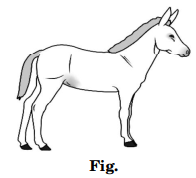
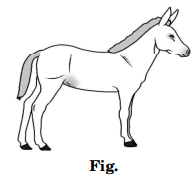
The crossing between two individuals of a species that are related by descent for 4-6 generations is called inbreeding, e.g., a cross between superior cow and superior bull. The cross between two individuals of different species of the same genus is called interspecific hybridisation, e.g., a mule is suitable example that is obtained by crossing between a male donkey and a female horse.
Image
View full question & answer
Question 72 Marks
Name any five hybrid varieties of crop plants which have been developed in India.
Answer
Some hybrid varieties of crop plants which have been developed in India are : Sonalika (wheat), Kalyan Sona (wheat), Jaya (rice), Ratna (rice) and Protina (maize).
View full question & answer
Question 82 Marks
Write in brief about Poultry farm management.
Answer
The four important components of poultry farm management are :
(i) Selection of disease free and suitable breeds.
(ii) Brood house, sanitation and hygiene.
(iii) Care of chicks during brooding.
(iv) Feeding light and summer management.
View full question & answer
Question 92 Marks
If your family owned a dairy farm, what measures would you undertake to improve the quality and quantity of mild production?###Enumurate any six essentials of good effective dary farm management practices.
Answer
Milk yield is primarily dependent on the quality of breeds in the farm, so select a good breed having high yielding potential under the climatic conditions of the area. Moreover, make sure that the breed has resistance to diseases. It should be realised that for the high yield production, the cattle have to be well looked after that is, they have to be housed well, should be provided with adequate water and be maintained disease free. Special care should be taken for quality and quantity of fooder. Stringent cleanliness and hygiene of bath, the cattle and the handler are neccessary while milking, storage and transport of milk and milk products. Besides, answer a regular inspection and maintain a record so that any problems can be soon identified and rectified. Veterinary doctor should also be appointed for regular check - up.
View full question & answer
Question 102 Marks
Explain the concept of blue revolution?
Answer
The term 'blue revolution' refers to the remarkable emergence of aquaculture as an important and highly productive agricultural activity. It has a vision to achieve economic prosperity of the country and the fishers and fish farmers as well as contribute towards food and nutritional security through full potential utilization of water resources for fisheries development in a sustainable manner, keeping in view the bio - security and environmental concersn.
It brings a high aquaculture in India. Aquaculture refers to all forms of active culturing of aquatic animals and plants, occuring in marine, brackish or fresh waters.
View full question & answer
Question 112 Marks
Explain what is meant by Bio - fortification.
Answer
Bio - fortification is breeding of crops with higher levels of vitamins and minerals or higher protein and healthier fats. Hence, it is the most practical means to improve public health.
The main objectives of biofortification are :
(a) Improving protein content and quality
(b) Improving vitamin content
(c) Improving oil content and quality
(d) Improving micronutrient and mineral content.
View full question & answer
Question 122 Marks
What is meant by the term 'breed'? What are the objectives of animal breeding?
Answer
A group of animals related by descent and similar in most characters such as general appearance, features, size, configuration, etc are said to belong to a 'breed'. The main objective of animal breeding is to improve performance of animals in next generation by their genetic improvement.
View full question & answer
Question 132 Marks
Culture medium (nutrient medium) can be referred to as highly inriched laboratory soil. Justify your statement.
Answer
Soil is the reservoir of water and plant nutrients. Similarly, the culture medium is the reservoir of water and plant nutrients for plants being grown on culture medium. Soil may have a higher or lower nutrient content and many nutrients may be missing. But in the culture medium, all the essential nutrietns are supplied as per need. Hence, the culture medium is richer in terms of nutrients for plants. Due to these reasons, the culture medium can be called as a highly - enriched laboratory soil.
View full question & answer
Question 142 Marks
Why are proteins synthesized by spirulina called single cell proteins?
Answer
Sprulina is a single called micro-organism which produces a large quantity of proteins. This protein can be used for human consumption.
View full question & answer
Question 152 Marks
Name a man - made cereal. Trace how it was developed and where it is used?
Answer
Triticale is the first man - made cereal. It was developed by crossing ryegrass and wheat. This cereal gives good quality of breads and can be cultivated in sandy soil.
View full question & answer
Question 162 Marks
Explore various components of nutrient medium used for leaf explant culture.
Answer
Explant culture, is method of whole plant regeneration. In this method, any part of plant is cultured on specific nutrient medium under specific conditions in test tube. The capacity of regenerating whole plant from a cell explant is known as totipotency. For explant culture, nutrient medium is prepared by mixing carbon source. e.g. sucrose, inorganic salts, vitamins, amino acids and growth hormones - auxins, cytokinen, etc. By using this method, thousands of plants can be grown within a short time period.
View full question & answer
Question 172 Marks
Explain the inbreeding and interspecific hybridization and given one example of each.
Answer
The crossing between two individuals of a species that are related by descent for 4-6 generations is called inbreeding, e.g., a cross between superior cow and superior bull. The cross between two individuals of different species of the same genus is called interspecific hybridisation, e.g., a mule is suitable example that is obtained by crossing between a male donkey and a female horse.
Image
View full question & answer
Question 182 Marks
Which part of plant is most suitable for production of virus - free plants and why?
Answer
The shoot meristems of the plant are best suited for making virus free plants because shoot meristems are free of virus, even within a virus infected plant. The factors responsible for making the meristems virus free are :
1. High metabolic activity in the meristematic region : Viruses are unable to multiply in such a tissue with high metabolic activity.
2. Lack of vascular system : Some of the viruses spread through the vascular system. As the meristem is not connected with vascular system, viruses cannot invade the meristematic tissue.
3. High auxin concentration : The auxins have been reported to inhibit the virus replication.
View full question & answer
Question 192 Marks
Write names of different methods used in animal husbandry. Which method is best according to you and why?
Answer
On the basis of the breed used in animal breeding, following different types of methods are used in animal husbandry:
(i) Inbreeding$\qquad$$\quad$ (ii) Out - breeding
(iii) Out - hybridization $\quad$(iv) Hybridization
(v) Inter specific hybridization
(vi) Artificial insemination
The best animal breeding practice is artificial insemination with this method, high quality animals can be reproduced within lesss time.
View full question & answer
Question 202 Marks
What are single cell proteins? What is its significance? Explain with examples
Answer
Single cell protein is the large quantities of biiomass produced by culturing single type of cells or microorganisms which serve as food specially rich in protein, fast, carbohydrates, minerals and vitamins.
Importance : (i) It serves as rich source of protein in human diet.
(ii) it reduces pressure on agricultural production system for the supply of protein requirement.
(iii) It help in reducing environmental pollution.
Example : Spirulina-a cyanobacterium or blue green algae. Methylophilus methylotrophus - a bacterium.
View full question & answer
Question 212 Marks
(a) What are embryoids? How are different from embryos?
(b) What is a clone?
Answer
(a) Embryoids are embryo - like structures formed in plant tissue culture. These are also known as somatic embryoids. On the other hand, embryo is formed by sexual reproduction or by partheno - genesis within embryo - sac.
(b) A clone is a population on cell that are produced by asexual reproduction.
View full question & answer
Question 222 Marks
(a) What do you understand by the term callus?
(b) What is totipotency of the cell? Who coined this term?
Answer
(a) A callus is an undifferentiated mass of cell. Roots or shoots can be stimulated to grow from a callus by adding auxins or cytokinins. Sometimes embryos are product rather than roots and shoots.
(b) The term totipotency was given by German botanist professor Gottlieb Haberlandt. If refers to the ability of a cell to produce a complete plant or a complete intivitual on a culture medium under suitable temperature and rearing conditions.
View full question & answer
Question 232 Marks
Give an account of desirable characters of bee variety suitable for bee keeping. What are the advantages of bee keeping?
Answer
Desirable characters of bee varieties for honey production are :
1. They should have high honey collecting capacity.
2. The should not sting much.
3. Furthermore, they should stay in the beehive for long duration.
4. They should breed very well.
Advantages of Bee Keeping :
  • Wax, a product of bees. You can utilize the wax made in your hive for candles, cosmetics, creams, lipstick, and lip balm.
  • Bees can help make your plants healthy as they pollinate, as well as fruit tree in nearby orchards which helps the local economy!
  • It takes about 30 minutes a week for maintenance, anda bit more time for collecting honey up to twice a year.
  • The benefits of honey are many, starting with the fact that it is an excellent natural sweetner full of nutrients including niacin, riboflavin, pantothenic acid, calcium, copper, iron, magnesium, manganese, phosphorus, potassium and zinc.
View full question & answer