Questions

Case study (4 Marks)

Take a timed test

8 questions · self-marked practice — reveal the answer and mark yourself.

Question 14 Marks
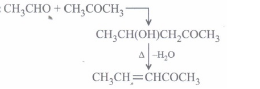
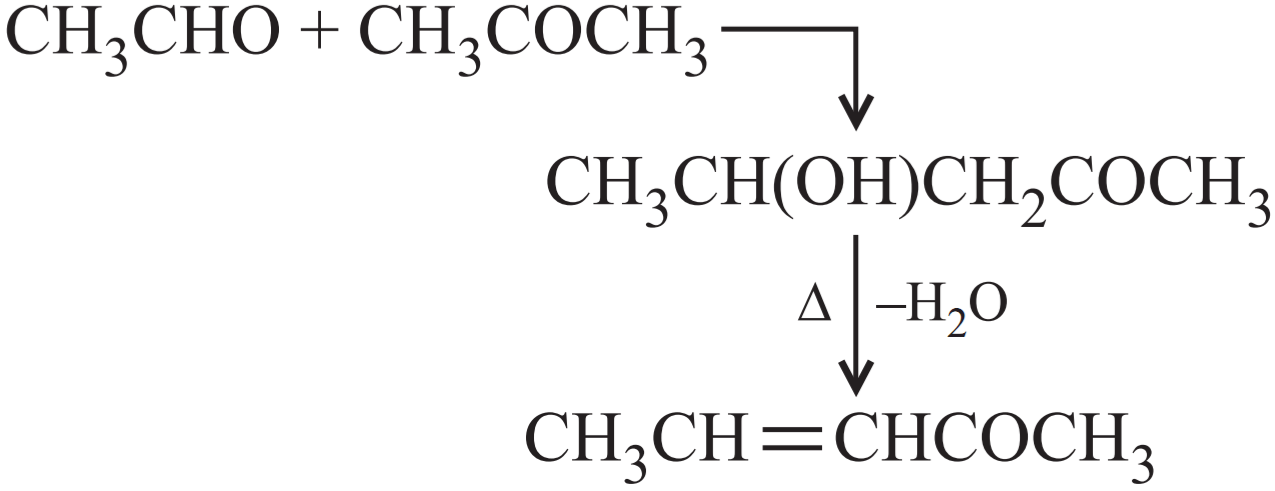
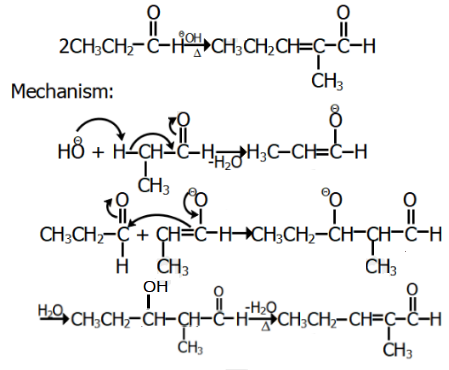
Read the passage given below and answer the following questions: The addition reaction of enol or enolate to the carbonyl functional group of aldehyde or ketone is known as aldol addition. The $\beta-$ hydroxyaldehyde or $\beta\beta-$ hydroxyketone so obtained undergo dehydration in second step to produce a conjugated enone. The first part of reaction is an addition reaction and the second part is an elimination reaction. Carbonyl compound having $\alpha \alpha -$ hydrogen undergoes aldol condensation reaction.
  1. Condensation reaction is the reverse of which of the following reaction?
  1. Lock and key hypothesis
  2. Oxidation
  3. Hydrolysis
  4. Glycogen formation
  1. Which of the following compounds would be the main product of an aldol condensation of acetaldehyde and acetone?
  1. $\ce{CH_3CH=CHCHO}$
  2. $\ce{CH_3CH=CHCOCH_3}$
  3. $\ce{(CH_3)_2C=CHCHO}$
  4. $\ce{(CH_3)_2C=CHCOCH_3}$
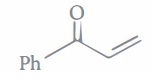
  1. Which combination of carbonyl compounds gives phenyl vinyl ketone by an aldol condensation?
  1.  Acetophenone and Formaldehyde
  2. Acetophenone and acetaldehyde
  3. Benzaldehyde and acetaldehyde
  4. Benzaldehyde and acetone
  5. Which of the following will undergo aldol condensation?
  1. $\ce{HCHO}$
  2. $\ce{CH_3CH_2OH}$
  3. $\ce{C_6H_5CHO}$
  4. $\ce{CH_3CH_2CHO}$
Answer
  1. $(c)$ Hydrolysis
Condensation reaction is the reverse of hydrolysis, which splits a chemical entity into two parts through the action of the polar water molecule.
  1. $(b)\ \ce{CH_3CH=CHCOCH_3}$
  1. $(a)$ Acetophenone and Formaldehyde
  1. $(d)\ \ce{CH_3CH_2CHO}$
View full question & answer
Question 24 Marks
Read the passage given below and answer the following questions: Fehling's reagent: Fehling's reagent is a mixture of two solutions. Fehllng's solution $A$ is aqueous copper sulphate solution. Fehling's solution Bis alkaline sodium potassium tartarate $($Rochelle salt$). \ \ \ \ \ \ \ \ \ \ \ \ \ \ \ \ \ \ \ \ \text{CH(OH)COONa}\\\text{CuSo}_{4\text{(aq)}}+|\\\ \ \ \ \ \ \ \ \ \ \ \ \ \ \ \ \ \ \ \ \text{CH(OH)COOK}$ It is a mild oxidising agent. It is weaker than Tollens' reagent. It oxidises only aliphatic aldehydes to carboxylate ions and itself gets reduced to reddish brown precipitate of cuprous oxide. Aromatic aldehydes do not respond to Fehling's test. This reaction is used for the test of aliphatic aldehydes known as Fehling's reagent test. In these questions $(Q$. No. $l-iv),$ a statement of assertion followed by a statement ofreason is given. Choose the correct answer out of the following choices.
  1. Assertion and reason both are correct statements and reason is correct explanation for assertion.
  2. Assertion and reason both are correct statements but reason is not correct explanation for assertion.
  3. Assertion is correct statement but reason is wrong statement.
  4. Assertion is wrong statement but reason is correct statement.
  1. Assertion : Fehling's solution can be used to distinguish between acetaldehyde and acetone.
Reason : Fehling's reagent is a mixture of two solutions.
  1. Assertion : Aromatic aldehydes can be distinguished from aliphatic aldehydes by Fehling's solution.
Reason : Aromatic aldehydes reduce Fehling's solution, but aliphatic aldehydes do not.
  1. Assertion : Fehling's solution oxidises acetaldehyde to acetic acid but not benzaldehyde to benzoic acid.
Reason : The $C-H$ bond of $-\text{CHO}$ group in benzaldehyde is stronger than in acetaldehyde.
  1. Assertion : $\ce{CH_3CHO}$ and $\ce{C_6H_5CH_2CHO}$ cannot be distinguished chemically by Fehling's solution.
Reason : $\ce{CH_3CHO}$ and $\ce{C_6H_5CH_2CHO}$ cannot be distinguished chemically by Fehling's solution.
  1. Assertion : Formaldehyde, when heated with Fehling's reagent produces a reddish brown ppt, of $\ce{Cu}$.
Reason : Fehling's reagent oxidises fonnaldehyde to formate ion.
Answer
  1. $(b)$ Assertion and reason both are correct statements but reason is not correct explanation for assertion.
All aliphatic aldehydes give red ppt, with Fehling's solution, but ketones do not reduce Pehling's solution.
  1. $(c)$ Assertion is correct statement but reason is wrong statement.
Aliphatic aldehydes reduce Fehling's solution, but aromatic aldehydes do not.
  1. $(a)$ Assertion and reason both are correct statements and reason is correct explanation for assertion.
Fehling's solution is a mild oxidising agent. It cannot oxidise aromatic aldehydes to corresponding carboxylate ion.
  1. $(b)$ Assertion and reason both are correct statements but reason is not correct explanation for assertion.
$\ce{CH_3CHO}$ and $\ce{C_6H_5CH_2CHO}$ both are aliphatic aldehydes,
Hence cannot be distinguished by Fehling's solution.
$\ce{CH_3CHO}$ contains $\ce{CH_3CO}-$ group whereas $\ce{C_6H_5CH_2CHO}$ does not contain any $\ce{CH_3CO}-$ group.
Thus $, \ce{CH_3CHO}$ will give yellow $\text{ppt}$. with $12$ and $\text{NaOH}$ but $\ce{C_6H_5CH_2CHO}$ will not.
  1. $(d)$ Assertion is wrong statement but reason is correct statement.
Formaldehyde when heated with Fehllng's reagent, undergo oxidation to give formate ion and produce reddish brown $\text{ppt}$ . of $\text{Cu_20}$.
$\text{HCHO}+2\text{Cu}^{2+}+5\text{OH}^-\rightarrow\text{HCOO}^-+\text{Cu}_2\text{O}+3\text{H}_2\text{O}\\ \ \ \ \ \ \ \ \ \ \ \ \ \ \ \ \ \ \ \ \ \ \ \ \ \ \ \ \ \ \ \ \ \ \ \ \ \ \ \ \ \ \ \ \ \ \ \ \ \ \ \ \ \ \ \ \ \ \ \ $ Reddish brown $\text{ppt.}$
View full question & answer
Question 34 Marks
Read the passage given below and answer the following questions:
Aldehydes and ketones having acetyl group $\left(\begin{array}{c}\ \ \ \ \ \ \ \ \ \ \ \ \text{O}\\\ \ \ \ \ \ \ \ \ \ \ \ ||\\\ \ \ \text{CH}_3-\text{C}-\end{array}\right)$ are oxidised by sodium hypohalate $(\text{NaOX})$ or halogen and alkali $(X_2 + OH^-)$ to corresponding sodium salt having one carbon atoms less than the carbonyl compound and give a haloform.
$\ \ \ \ \ \ \ \ \text{O}\\\ \ \ \ \ \ \ \ ||\\\text{R}-\text{C}-\text{CH}_3\xrightarrow[\text{orX}_2+\text{NaOH}]{\text{NaOX}}\\ \ \ \ \ \ \ \ \ \text{O}\\\ \ \ \ \ \ \ \ ||\\\text{R}-\text{C}-\stackrel{-}{\hbox{ O}}\stackrel{+}{\hbox{Na}}+\text{CHX}_3(\text{X = Cl, Br, I})$
Sodium hypoiodite $\text{(NaOl)}$ when treated with compounds containing $\ce{CH_3CO}-$ group gives yellow precipitate of iodoform. Haloform reaction does not affect a carbon $-$ carbon double bond present in the compound.
The following questions are multiple choice questions. Choose the most appropriate answer:
  1. Which of the following compounds will give positive iodoform test?
  1. Isopropyl alcohol.
  2. Propionaldehyde.
  3. Ethylphenyl ketone.
  4. Benzyl alcohol.
  1. Which of the following compounds is not formed in iodoform reaction of acetone?
  1. $\ce{CH_3COCH_2l}$
  2. $\ce{lCH_2COCH_2l}$
  3. $\ce{CH_3COCHl_2}$
  4. $\ce{CH_3COCl_3}$
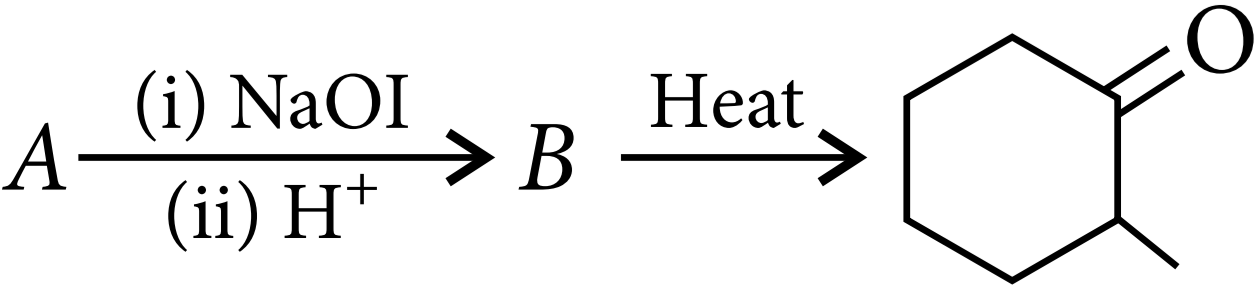
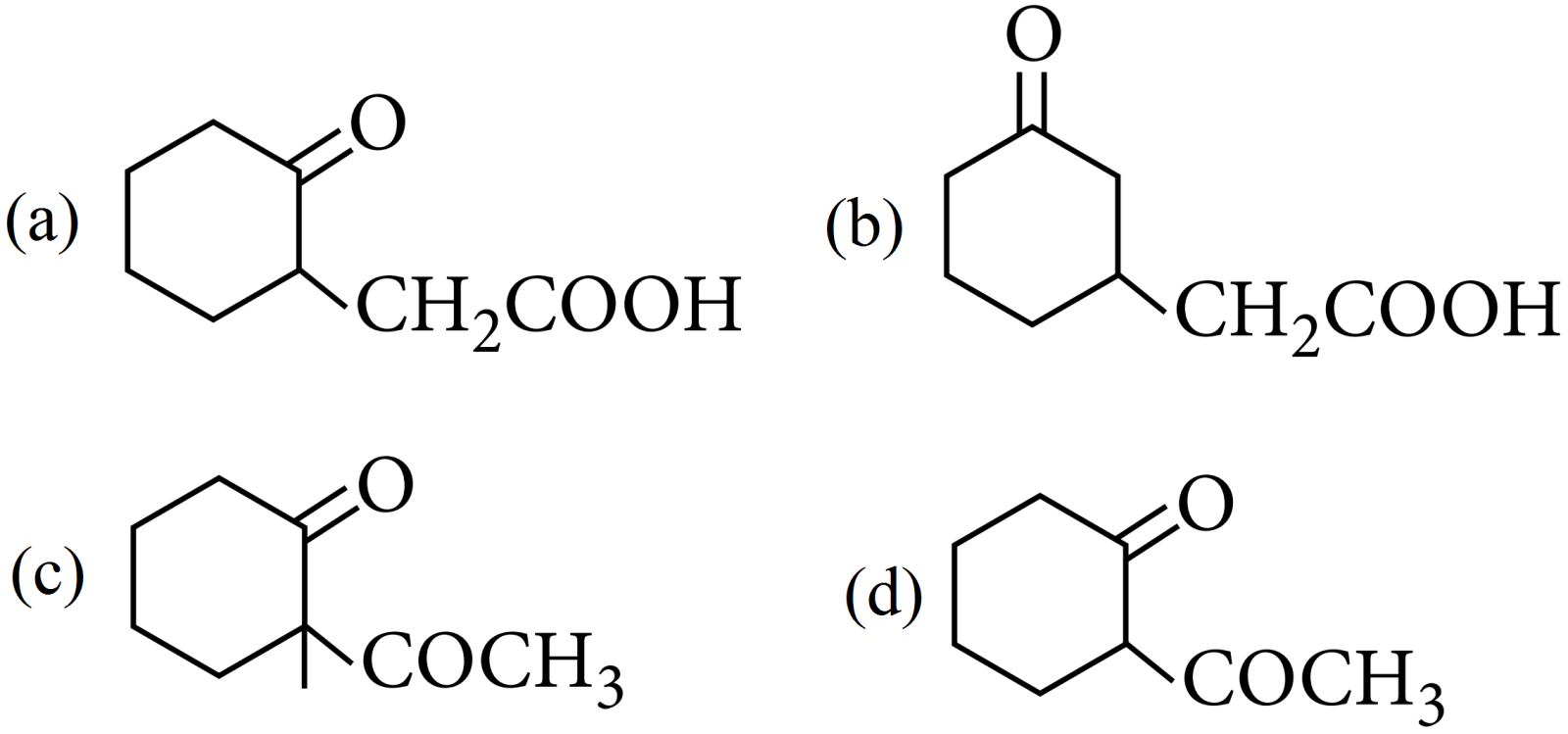
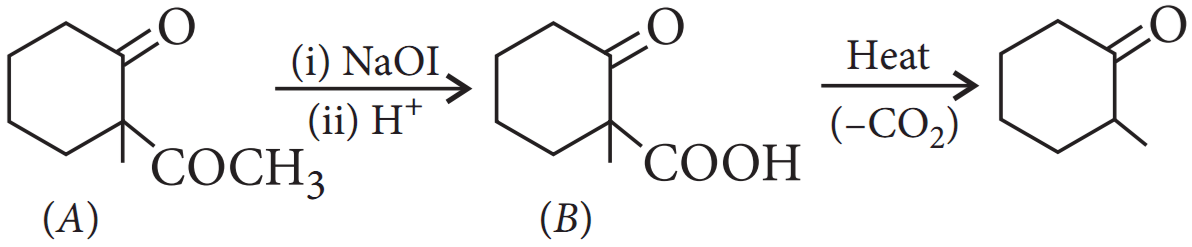
  1. For the given set of reactions,

starting compound $A$ corresponds to:
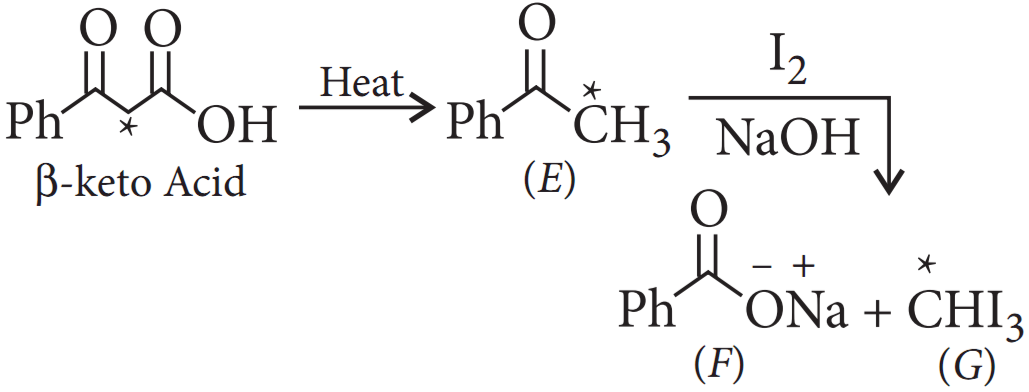
  1. In the following reaction sequence, the correct structures of $E, F$ and $G$ are:

$(*$ implies $^{13}C$ labelled carbon$)$
  1. An organic compound $'A\ '$ has the molecular formula $\ce{C_3H_6O}$. It undergoes iodoform test. When saturated with $\text{HCl}$ it gives $'B\ '$ of molecular formula $\ce{C_9H_{14}O}. 'A\ ' $ and $'B\ '$ respectively are:
  1. propanal and mesityl oxide.
  2. Propanone and mesityl oxide.
  3. propanone and $2,6-$ dimethyl $-2,5-$ hepta $-$ dien $-4-$ one.
  4. propanone and propionaldehyde.
Answer
  1. $(a)$ Isopropyl alcohol.
Iodoform test is given by the organic compounds having $\ \ \ \ \ \ \ \ \ \ \ \ \ \ \ \text{O}\\\ \ \ \ \ \ \ \ \ \ \ \ \ \ \ \ ||\\\ \ \ \text{CH}_3-\text{C}-$ or $\ \ \ \ \ \ \ \ \ \ \ \ \ \ \ \text{OH}\\\ \ \ \ \ \ \ \ \ \ \ \ \ \ \ \ |\\\ \ \ \text{CH}_3-\text{CH}-$ group.
$\text{CH}_3-\text{CH}-\text{OH}\\ \ \ \ \ \ \ \ \ \ \ \ \ \ |\\ \ \ \ \ \ \ \ \ \ \ \ \ \text{CH}_3$:
Isopropyl alcohol
$\ce{CH_3CH_2CHO}:$ Propionaldehyde
$\ \ \ \ \ \ \ \ \ \ \ \ \ \ \ \ \ \text{O}\\\ \ \ \ \ \ \ \ \ \ \ \ \ \ \ \ \ ||\\\ \ \ \text{C}_2\text{H}_5-\text{C}-\text{C}_6\text{H}_5$: Ethylphenyl ketone
$\ce{C_6H_{5 }- CH_{2 }- OH}$: Benzyl alcohol
Therefore, isopropyl alcohol will give positive iodofonn test.
  1. $(b)\ \ce{lCH_2COCH_2l}$
Iodoform reaction of acetone occurs in following steps:
$\ \ \ \ \ \ \ \ \ \ \ \ \text{O}\ \ \ \ \ \ \ \ \ \ \ \ \ \ \ \ \ \ \ \ \ \ \ \ \ \ \ \ \ \ \ \ \ \ \ \ \ \ \ \ \ \ \ \ \ \ \ \text{O}\\ \ \ \ \ \ \ \ \ \ \ \ \ \ ||\ \ \ \ \ \ \ \ \ \ \ \ \ \ \ \ \ \ \ \ \ \ \ \ \ \ \ \ \ \ \ \ \ \ \ \ \ \ \ \ \ \ \ \ \ \ \ ||\\\text{CH}_3-\text{C}-\text{CH}_3+\text{NaOl}\rightarrow\text{CH}_3-\text{C}-\text{CH}_2\text{l}+\text{NaOH}$
$\ \ \ \ \ \ \ \ \ \ \ \ \text{O}\ \ \ \ \ \ \ \ \ \ \ \ \ \ \ \ \ \ \ \ \ \ \ \ \ \ \ \ \ \ \ \ \ \ \ \ \ \ \ \ \ \ \ \ \ \ \ \text{O}\\ \ \ \ \ \ \ \ \ \ \ \ \ \ ||\ \ \ \ \ \ \ \ \ \ \ \ \ \ \ \ \ \ \ \ \ \ \ \ \ \ \ \ \ \ \ \ \ \ \ \ \ \ \ \ \ \ \ \ \ \ \ ||\\\text{CH}_3-\text{C}-\text{CH}_2\text{l}+\text{NaOl}\rightarrow\text{CH}_3-\text{C}-\text{CHl}_2+\text{NaOH}$
$\ \ \ \ \ \ \ \ \ \ \ \ \text{O}\ \ \ \ \ \ \ \ \ \ \ \ \ \ \ \ \ \ \ \ \ \ \ \ \ \ \ \ \ \ \ \ \ \ \ \ \ \ \ \ \ \ \ \ \ \ \ \text{O}\\ \ \ \ \ \ \ \ \ \ \ \ \ \ ||\ \ \ \ \ \ \ \ \ \ \ \ \ \ \ \ \ \ \ \ \ \ \ \ \ \ \ \ \ \ \ \ \ \ \ \ \ \ \ \ \ \ \ \ \ \ \ ||\\\text{CH}_3-\text{C}-\text{CHl}_2+\text{NaOl}\rightarrow\text{CH}_3-\text{C}-\text{Cl}_3+\text{NaOH}$
$\ \ \ \ \ \ \ \ \ \ \ \ \text{O}\\ \ \ \ \ \ \ \ \ \ \ \ \ \ ||\\\text{CH}_3-\text{C}-\text{Cl}_3+\text{NaOH}\rightarrow\text{CH}_3-\text{COONa}+\text{CHl}_3$
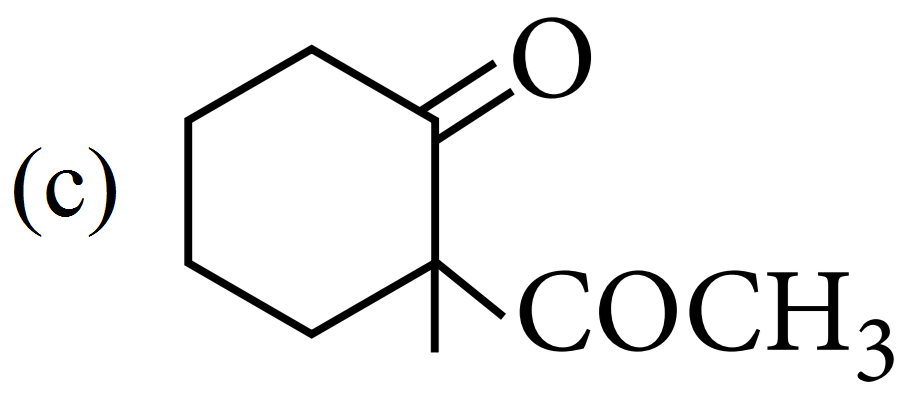
  1. $(c) $

Given reagents indicate the presence of $-\ce{COCH_3}$ group in the starting compound $A$.
Further, since the $-\ce{COOH}$ group introduced in $B$ due to iodofonn reaction is absent in the final product $, B$ should be a $\beta-$ keto acid.
Hence $, A$ should have structure given in option $(c).$
  1. $(d)$

  1. $(c) $ propanone and $2,6-$ dimethyl $-2,5-$ hepta $-$ dien $-4-$ one.
Since compound $A(C_3H_6O)$ undergoes iodoform test, it must be $\ce{CH_3COCH_3} \ ($propanone$).$
Further, the compound $'B\ ' $ obtained from $'A\ '$ has three times more the number of carbon atoms as in $'A\ ' \ ($propanone$), 'B\ '$ must be phorone, i.e. $,2, 6-$ dimethyl $-2, 5-$ heptadien $-4-$ one.
$(\text{CH}_3)\text{C=O}+\text{H}_3\text{CCOCH}_3+{\text{O=C(CH}_3)}_2\\ \ \ \ \ \ \ \ \ \ \ \ \ \ \ \ \ \ \ \ \ \ \ \ \ \ _{\text{A,}\ \text{propanone(3 molecules)}}$
$\xrightarrow{\text{HCl}}(\text{CH}_3)\text{C}=\text{CHCOCH}={\text{C(CH}_3)}_2\\ \ \ \ \ \ \ _{2,6-\text{dimethyl -2,5-heptadien -4-one}}$
View full question & answer
Question 44 Marks
Read the passage given below and answer the following questions:
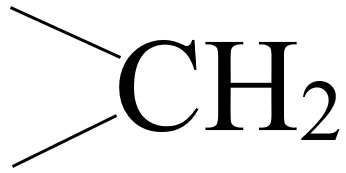
Aldehydes and ketones are reduced to primary and secondary alcohols respectively by $\ce{NaBH}_4$ or $\ce{LiAlH_4}$ as well as catalytic hydrogenation. The carbonyl group of aldehydes and ketones is reduced to  group on treatment with $\ce{Zn-Hg}$ and cone. $\text{HCl} \ ($Clemmensen reduction$)$ or with hydrazine followed by $\ce{NaOH}$ or $\text{KOH}$ in highly boiling solvent such as ethylene glycol $($Wolff $-$ Kishner reduction).Aldehydes differ from ketones in their oxidation reactions. Aldehydes are easily oxidised to carboxylic acids on treatment with $\ce{HNO_3, KMnO_4, K_2Cr_2O_7}$ etc. Even mild oxidising agents mainlyTollens' reagent and Fehling's solution also oxidise aldehydes. Ketones are generally oxidised under vigorous conditions i.e., strong oxidising agents and at elevated temperatures, to give mixture of carboxylic acids having lesser number of $C-$ atoms than the parent ketone.
The following questions are multiple choice questions. Choose the most appropriate answer:
  1. Which of the following cannot be made by reduction of ketone or aldehyde with $\ce{NaBH}_4$ in methanol?
  1. $1-$ Butanol
  2. $2-$ Butanol
  3. $2-$ Methyl $-1-$ propanol
  4. $2-$ Methyl $-2-$ propanol
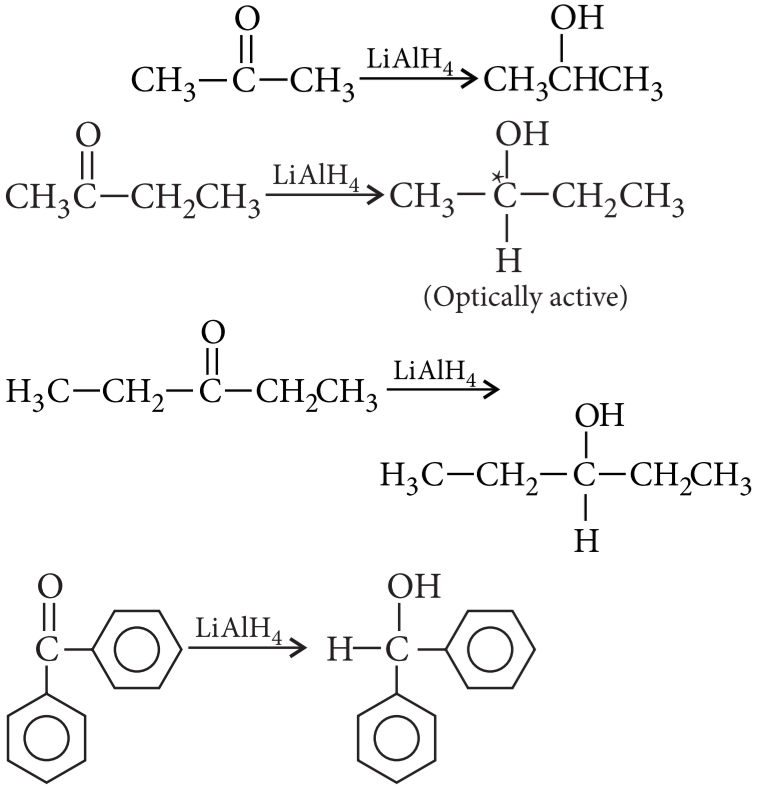
  1. The carbonyl compound producing an optically active product by reaction with $\ce{LiAlH}_4$ is:
  1. Propanone
  2. Butanone
  3. 3-pentanone
  4. Benzophenone
  1. A substance $\ce{C_4H_{10}O} (X)$ yields on oxidation a compound $\ce{C_4H_8O}$ which gives an oxime and a positive iodoform test.
  2. The substance $X$ on treatment with cone. $\ce{H_2SO}_4$ gives $\ce{C_4H_8}$. The structure of the compound $(X)$ is:
  1. $\ce{CH_3CH_2CH_2CH_2OH}$
  2. $\ce{CH_3CH(OH)CH_2CH_3}$
  3. $\ce{(CH_3)_3COH}$
  4. $\ce{CH_3CH_{2 }- O - CH_2CH_3}$
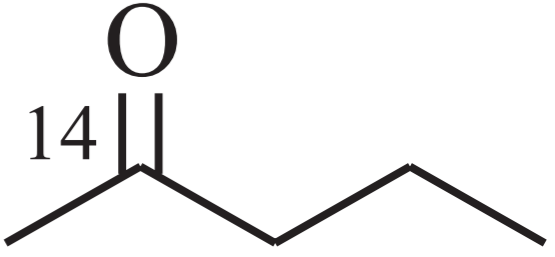
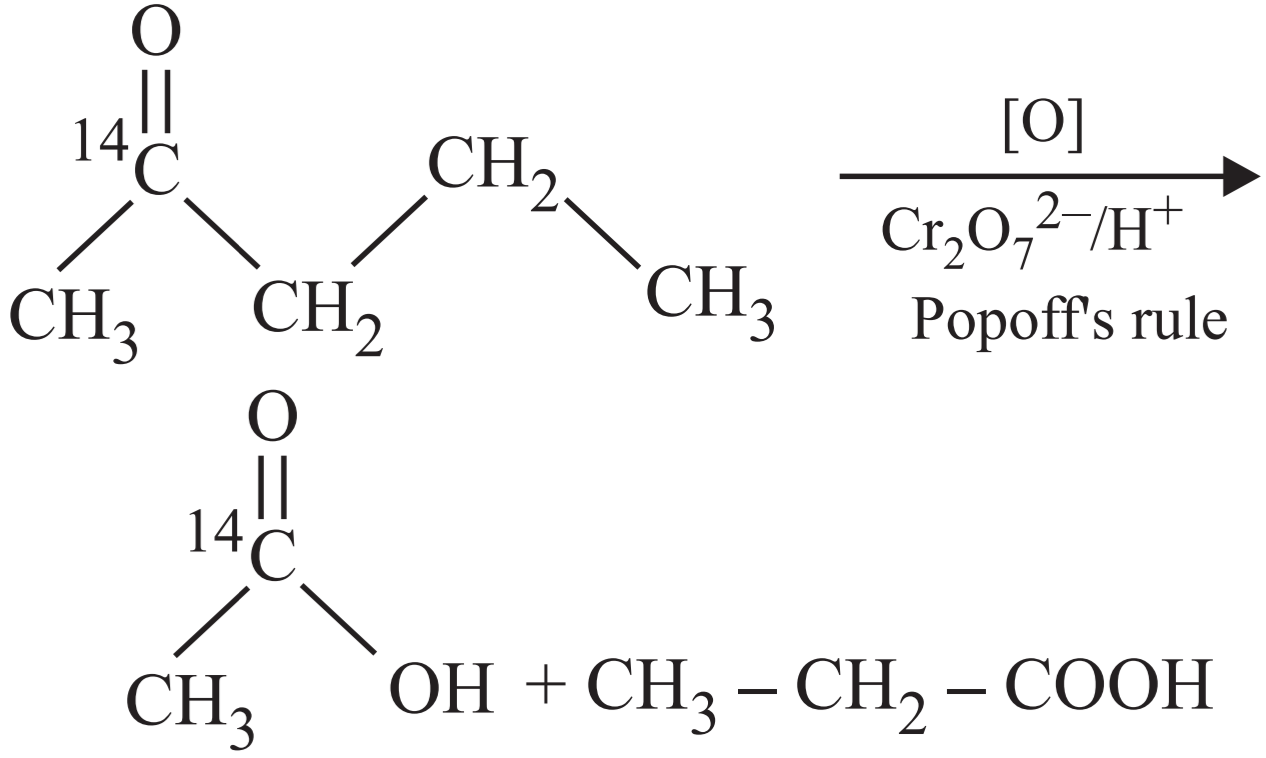
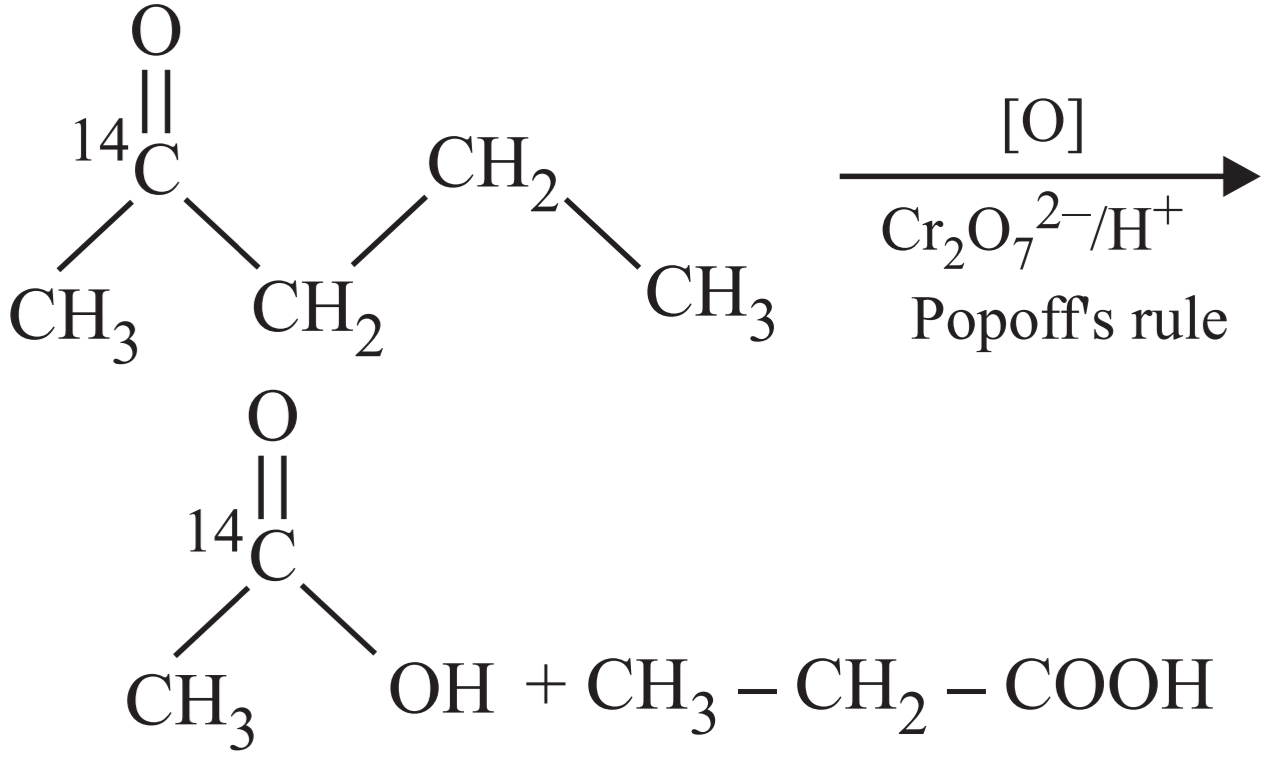
  1. In the oxidation of  by acidified $\ce{K_2Cr_2O_7},$ the products are:
  1. $\ \ \ \ \ \ \ \ \ \ \ \ \ \ \ \ \text{O}\\\ \ \ \ \ \ \ \ \ \ \ \ \ \ \ \ ||\\\text{CH}_3-\ ^\text{14}\text{C}-\text{OH}$ and $\text{CH}_3\text{CH}_2\text{COOH}$
  2. $\ \ \ \ \ \ \ \ \ \ \ \ \ \ \ \ \ \ \ \ \ \ \ \ \ \ \ \ \ \ \ \ \ \ \ \ \text{O}\\ \ \ \ \ \ \ \ \ \ \ \ \ \ \ \ \ \ \ \ \ \ \ \ \ \ \ \ \ \ \ \ \ \ \ \ \ \ ||\\\text{CH}_3(\text{CH}_2)_2\text{COOH}-\text{C}-\text{OH}$ and $ \ \ \ \ \ \ \ 14\\\text{CH}_3\text{CH}_2\text{COOH}$
  3. $\ \ \ \ \ \ \ \ \ \ \ \ \ \ \ \ \ \ \ \ \ \ \ \ \ \ \ \ \ \ \ \ \ \ \ \ \ \ \ \ \ \ 14\\\text{CH}_3\text{CH}_2\text{CH}_2\text{COOH}+\text{HCOOH}$
  4. None of these.
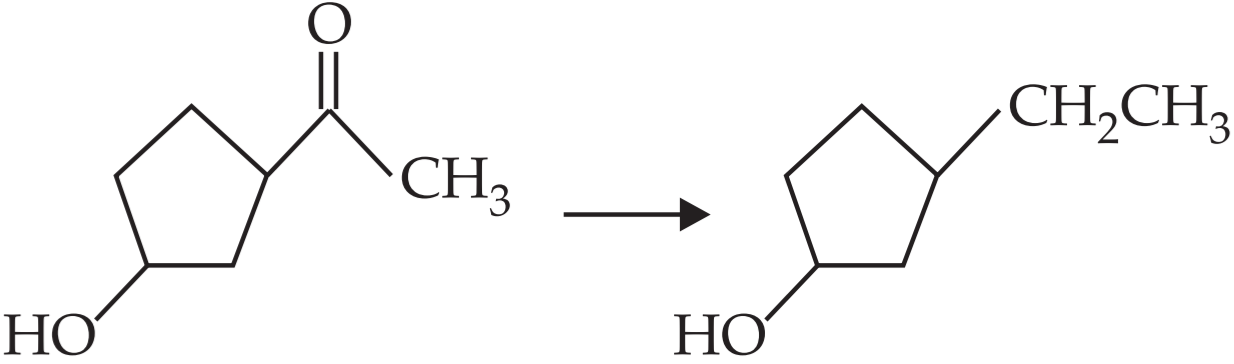
  1. The appropriate reagent for the following transformation is:
  1. $\text{Na}_2\text{NH}_2,^-\text{OH}$
  2. $\text{NaBH}_4$
  3. $\frac{\text{H}_2}{\text{Ni}}$
  4. $\text{AICl}_3$
Answer
  1. $(d)\ 2-$ Methyl $-2-$ propanol
Methyl $-2-$ propanol is $\ \ \ \ \ \ \ \ \ \ \ \ \text{OH}\\\ \ \ \ \ \ \ \ \ \ \ \ \ |\\\text{CH}_3-\text{C}-\text{CH}_3.\\\ \ \ \ \ \ \ \ \ \ \ \ \ |\\\ \ \ \ \ \ \ \ \ \ \ \ \text{CH}_3$ It cannot be obtained by reduction of an aldehyde or ketone with $\ce{NaBH}_4.$
  1. $(b)$ Butanone
  1. $(b)\ \ce{CH_3CH(OH)CH_2CH_3}$
$\ \ \ \ \ \ \ \ \text{OH}\ \ \ \ \ \ \ \ \ \ \ \ \ \ \ \ \ \ \ \ \ \ \ \ \ \ \ \ \ \ \ \ \ \ \ \ \ \ \ \ \ \ \ \ \text{O}\\ \ \ \ \ \ \ \ \ \ \text{|}\ \ \ \ \ \ \ \ \ \ \ \ \ \ \ \ \ \ \ \ \ \ \ \ \ \ \ \ \ \ \ \ \ \ \ \ \ \ \ \ \ \ \ \ \ \ \ \ ||\\\text{CH}_3\text{CH}-\text{CH}_2\text{CH}_3\xrightarrow{\text{Oxidation}}\text{CH}_3\text{CCH}_2\text{CH}_3\\\text{2-Butanol(C}_4\text{H}_{10}\text{O})\ \ \ \ \ \ \ \ \ \ \ \ \ \ \ \ \ \ \ \text{2-Butanone}$
$2-$ Butanone forms oxime on reaction with hydroxylamine $\ce{(NH_2OH)}$ and also gives positive $i$ odofonn test.
$\ \ \ \ \ \ \ \ \text{OH}\\ \ \ \ \ \ \ \ \ \ \text{|}\\\text{CH}_3\text{CH}\text{CH}_2\text{CH}_3\xrightarrow{\text{H}_2\text{SO}_4(\text{conc.})}\text{CH}_3\text{CH}=\text{CH}\text{CH}_3+\text{H}_2\text{O}\\\ \ \ \ (\text{C}_4\text{H}_{10}\text{O})\ \ \ \ \ \ \ \ \ \ \ \ \ \ \ \ \ \ \ \ \ \ \ \ \ \ \ \ \ \ \ \ \ \text{2-Butene}(\text{C}_4\text{H}_8)$
  1. $(a)\ \ \ \ \ \ \ \ \ \ \ \ \ \ \ \ \ \text{O}\\\ \ \ \ \ \ \ \ \ \ \ \ \ \ \ \ ||\\\text{CH}_3-\ ^\text{14}\text{C}-\text{OH}$ and $\text{CH}_3\text{CH}_2\text{COOH}$
  1. $(a)\  \text{Na}_2\text{NH}_2,^-\text{OH}$
This reaction is Wolff $-$ Kishner reduction.
The reagents used for this reduction are $\frac{\text{NH}_2\text{NH}_2}{\text{KOH}}.$
View full question & answer
Question 54 Marks
Read the passage given below and answer the following questions:
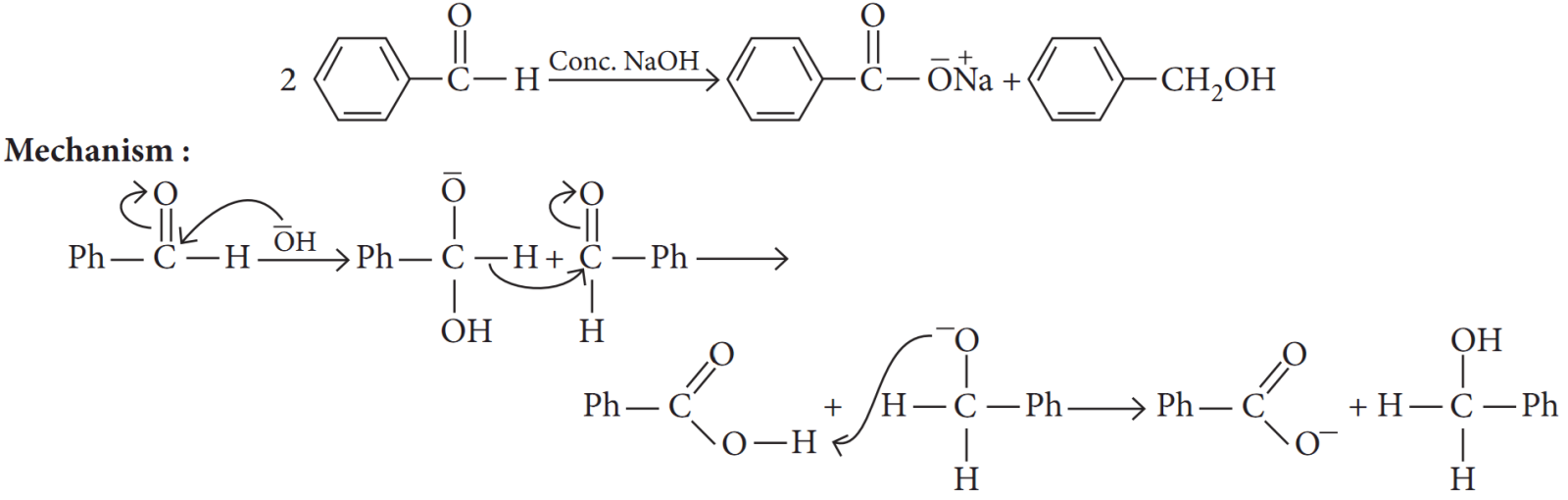
When an aldehyde with no et $-$ hydrogen reacts with concentrated aqueous $\ce{NaOH},$ half the aldehyde is converted to carboxylic acid salt and other half is converted to an alcohol. In other words, half of the reactant is oxidized and other half is reduced. This reaction is known as Cannizzaro reaction.

The following questions are multiple choice questions. Choose the most appropriate answer:
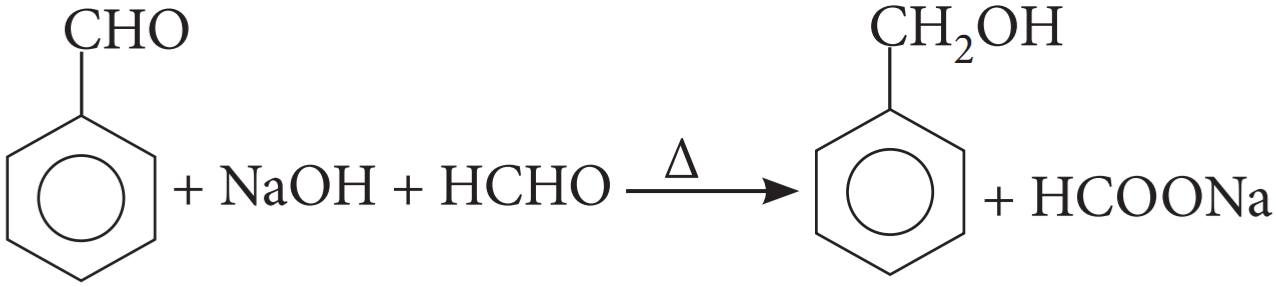
  1. A mixture of benzaldehyde and formaldehyde on heating with aqueous $\ce{NaOH}$ solution gives:
  1. Benzyl alcohol and sodium formate.
  2. Sodium benzoate and methyl alcohol.
  3. Sodium benzoate and sodium formate.
  4. Benzyl alcohol and methyl alcohol.
  1. Which of the following compounds will undergo Cannizzaro reaction?
  1. $\ce{CH_3CHO}$
  2. $\ce{CH_3COCH_3}$
  3. $\ce{C_6H_5CHO}$
  4. $\ce{C_6H_5CH_2CHO}$
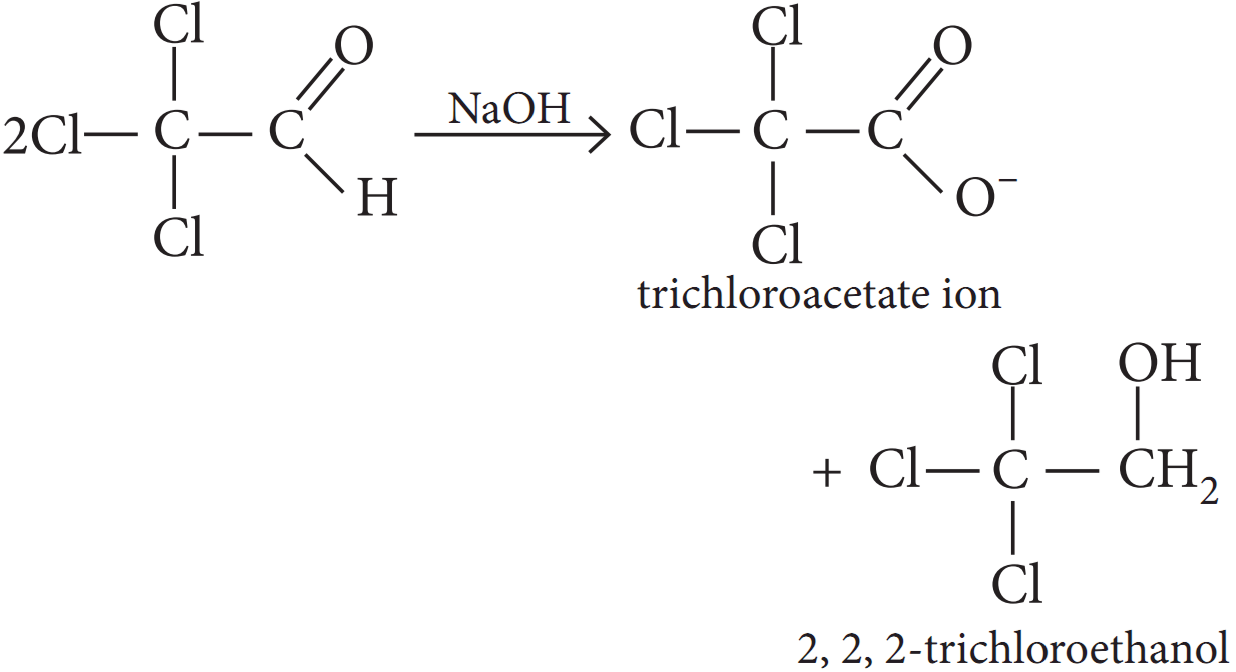
  1. Trichloroacetaldehyde is subjected to Cannizzaro's reaction by using $\ce{NaOH}$. The mixture of the products contains sodium trichloroacetate ion and another compound. The other compounds is:
  1. $2, 2, 2-$ trichloroethanol.
  2. Trichloromethanol.
  3. $2, 2, 2-$ trichloropropanol.
  4. Chloroform.
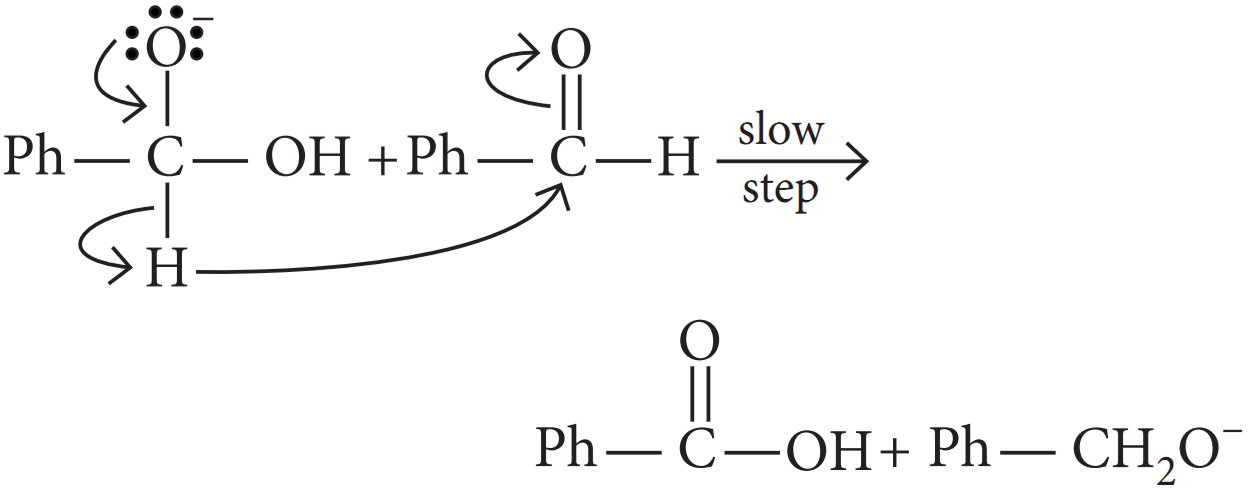
  1. In Cannizzaro reaction given below:
$2\text{PhCHO}\xrightarrow{\stackrel{-}{\hbox{ OH}}}\text{PhCH}_2+\text{OH}+\text{PhCO}_2^-$ the slowest step is:
  1. The attack $^-OH$ at the carboxyl group.
  2. The transfer of hydride to the carbonyl group.
  3. The abstraction of proton from the carboxylic group.
  4. The deprotonation of $\ce{PhCH_2OH}.$
  1. Which of the following reaction will not result in the formation of carbon $-$ carbon bonds?
  1. Cannizzaro reaction.
  2. Wurtz reaction.
  3. Reimer $-$Tiemann reaction.
  4. Friedel $-$ Crafts' acylation.
Answer
  1. $(a)$ Benzyl alcohol and sodium formate.
It is an example of cross Cannizzaro reaction where aromatic aldehyde gets reduced to alcohol and aliphatic aldehyde gets oxidised to its sodium salt $($both aldehydes must not contain any propto $-$ hydrogen$)$.
  1. $(c)\ \ce{C_6H_5CHO}$
  2. $(a)\  2, 2, 2-$ trichloroethanol.
The Cannizzaro product of given reaction yields $2, 2, 2-$ trichloroethanol.
  1. $(b)$ The transfer of hydride to the carbonyl group.
Hydride transfer is the slowest step.
  1. $(a)$ Cannizzaro reaction.
​​​​​​​​​​​​​​​​​​​​​​​​​​$C-C$ bond is not formed in Cannizzaro reaction while other reactions result in the formation of $C-C$ bond.
View full question & answer
Question 64 Marks
Read the passage given below and answer the following questions:
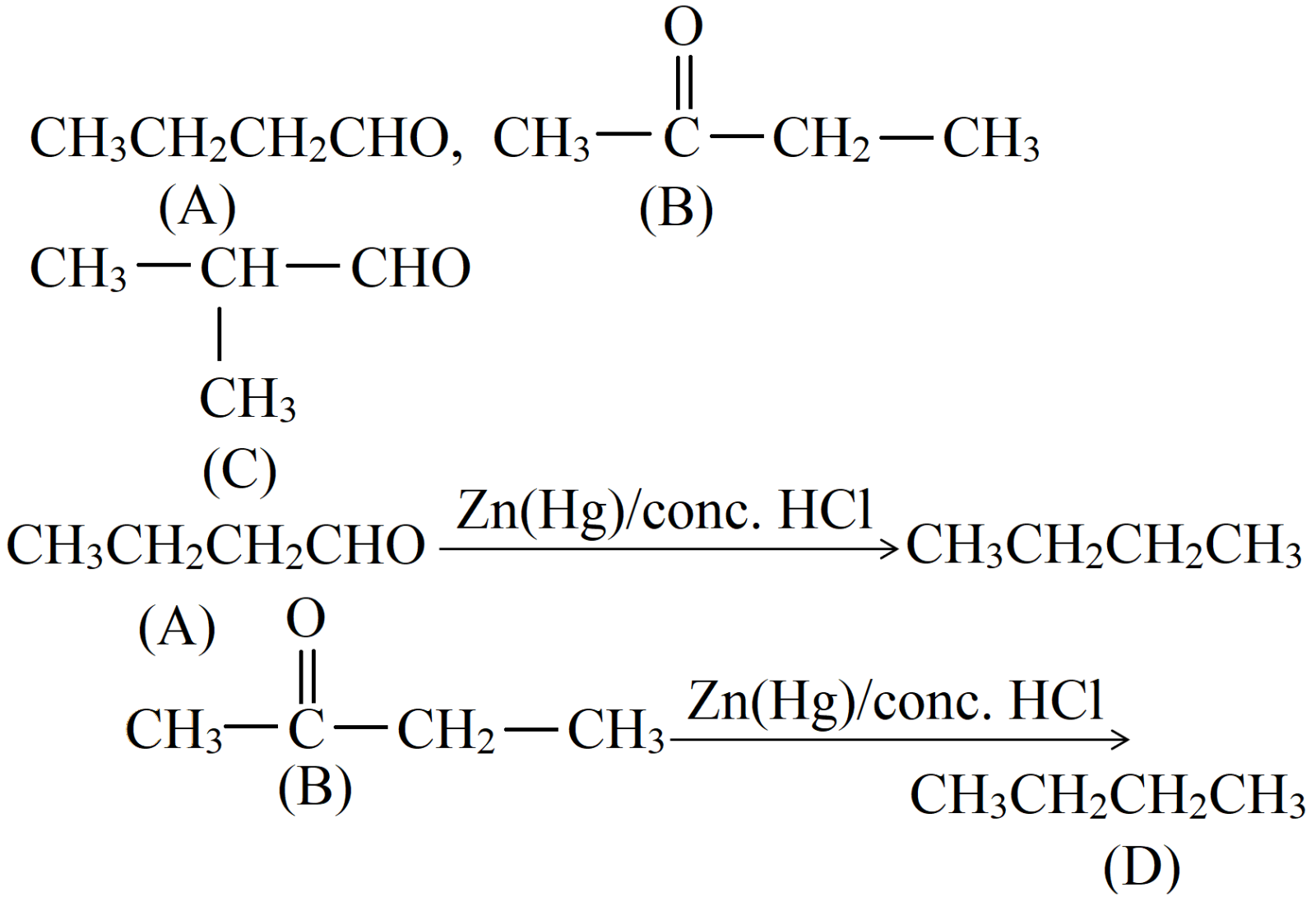
$(A), (B)$ and $(C)$ are three non $-$ cyclic functional isomers of a carbonyl compound with molecular formula $\ce{C_4H_8O}$. Isomers $(A)$ and $(C)$ give positive Tollen's test whereas isomer $(B)$ does not give Tollen's test but gives positive iodoform test. Isomers $(A)$ and $(B)$ on reduction with $\frac{Zn}{(Hg)}$ conc.  $\text{HCl}$ give the same product $(D).$
The following questions are multiple choice questions. Choose the most appropriate answer:
  1. Compound $A$ is:
  1. $\text{CH}_3-\text{CH}-\text{CHO}\\\ \ \ \ \ \ \ \ \ \ \ \ \ |\\ \ \ \ \ \ \ \ \ \ \ \ \ \text{CH}_3$
  2. $\text{CH}_3\text{CH}_2\text{CH}_2\text{CHO}$
  3. $\ \ \ \ \ \ \ \ \ \ \ \ \text{O}\\\ \ \ \ \ \ \ \ \ \ \ \ \ ||\\\text{CH}_3-\text{C}-\text{CH}_2-\text{CH}_3$
  4. None of these.
  1. Compound $(C)$ is:
  1. Iso $-$ butyraldehyde
  2. Butyraldehyde
  3. Crotonaldehyde
  4. Acrolein
  1. Compound $(B)$ can be obtained by:
  1. $\text{CH}_3-\text{C}\equiv\text{C}-\text{CH}_2-\text{CH}_3\xrightarrow[333\text{K}]{\text{dil.H}_2\text{SO}_4+\text{HgSO}_4}$
  2. $(\text{CH}_3\text{CH}_2\text{COO})_2\text{Ca}\xrightarrow{\text{Dry distill}}$
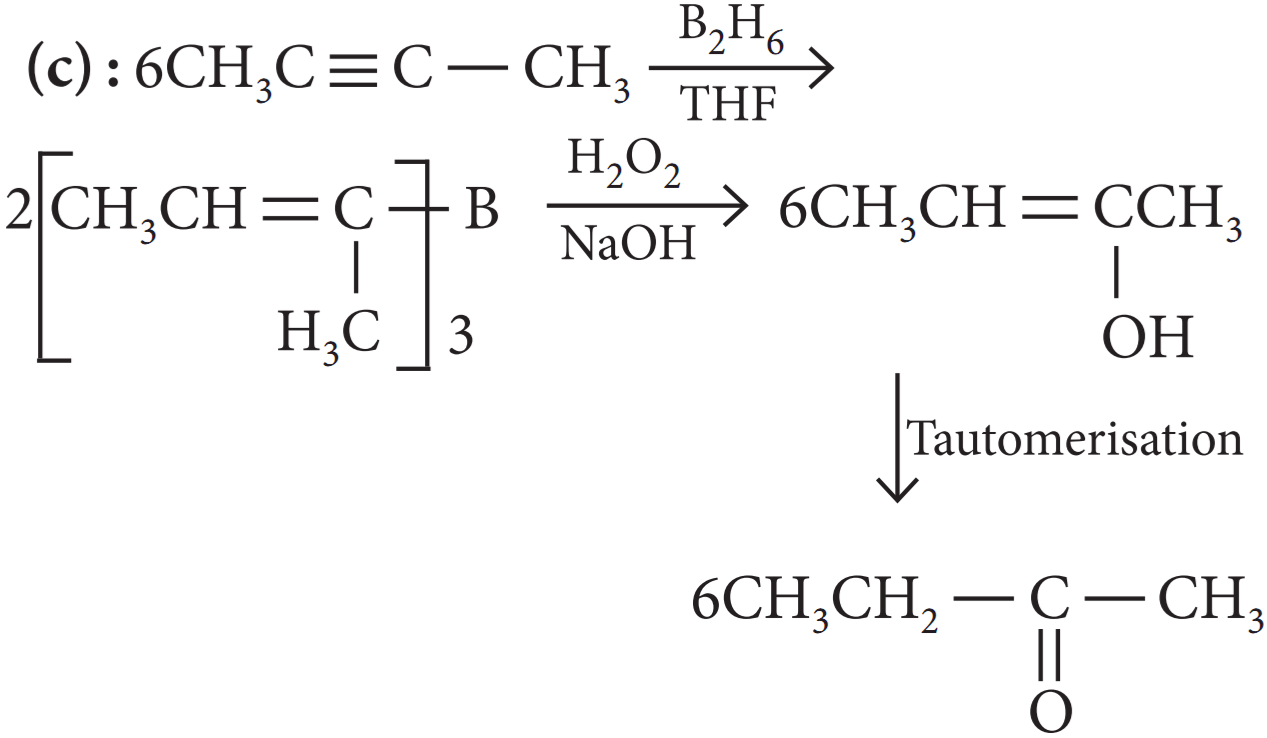
  3. $\text{CH}_3-\text{C}\equiv\text{C}-\text{CH}_3\xrightarrow[\frac{\text{H}_2\text{O}_2}{\text{NaOH}}]{\frac{\text{B}_2\text{H}_6}{\text{THF}}}$
  4. $\text{CH}_3-\text{CH}=\text{CH}-\text{CH}_3\xrightarrow[\frac{\text{ZN}}{\text{H}_2\text{O}}]{\text{O}_3}$
  1. Out of $(A), (B)$ and $(C)$ isomers, which one is least reactive towards addition of $\text{HCN}$ ?
  1. $A$
  2. $B$
  3. $C$
  4. All are equally reactive.
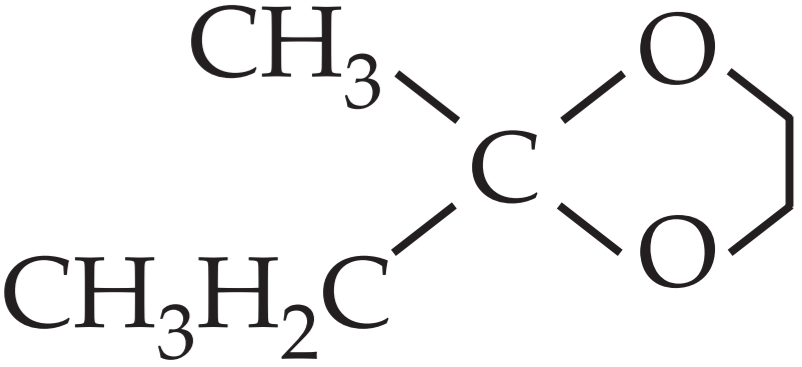
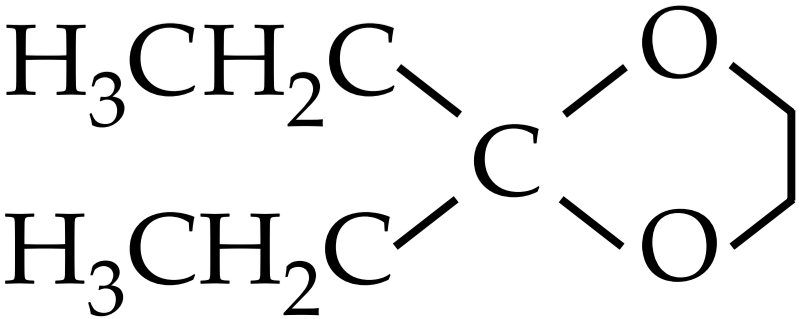
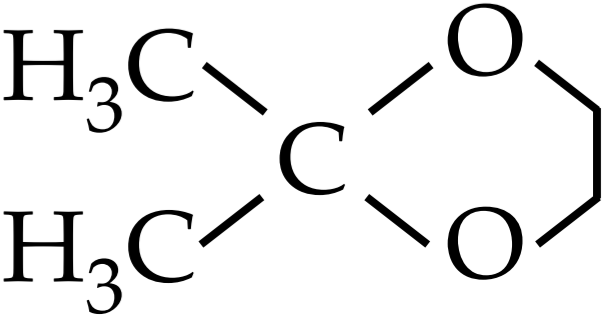
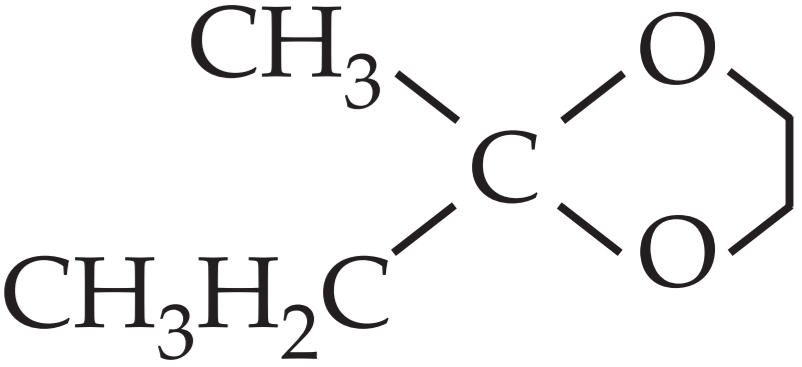
  1. What will be the product when $(B)$ reacts with ethylene glycol in presence of $\text{HCl}$ gas?
  1.  
  1.  
  1.  
  1. None of these.
Answer
  1. $(b)\ \text{CH}_3\text{CH}_2\text{CH}_2\text{CHO}$
As $(A)$ and $(C)$ gives 'positive Tollens' test thus these two should be aldehydes while $(B)$ should be a ketone $($does not give Tollen's test$)$ with $-\text{C}-\text{CH}_3\\\ \ \ ||\\\ \ \ \text{O}$ group $($as it gives positive iodofonn test$).$
Three isomers are,
  1. $(d)$ Acrolein
  2. $(c)\  \text{CH}_3-\text{C}\equiv\text{C}-\text{CH}_3\xrightarrow[\frac{\text{H}_2\text{O}_2}{\text{NaOH}}]{\frac{\text{B}_2\text{H}_6}{\text{THF}}}$
  1. $(b)\ B$
$(B)$ is least reactive among the three isomers towards addition of $\text{HCN}$.
Aldehydes are more reactive than ketones towards $n$ ucleophilic addition reactions.
  1. $(a)$

When butanone reacts with ethylene glycol in presence of $\text{HCl},$ it forms a ketal.
View full question & answer
Question 74 Marks
Read the passage given below and answer the following questions:
The addition reaction of enol or enolate to the carbonyl functional group of aldehyde or ketone is known as aldol addition. The $\beta-$ hydroxyaldehyde or $\beta-$ hydroxyketone so obtained undergo dehydration in second step to produce a conjugated enone. The first part of reaction is an addition reaction and the second part is an elimination reaction. Carbonyl compound having propto $-$ hydrogen undergoes aldol condensation reaction.
The following questions are multiple choice questions.
Choose the most appropriate answer:
  1. Condensation reaction is the reverse of which of the following reaction?
  1. Lock and key hypothesis.
  2. Oxidation.
  3. Hydrolysis.
  4. Glycogen formation.
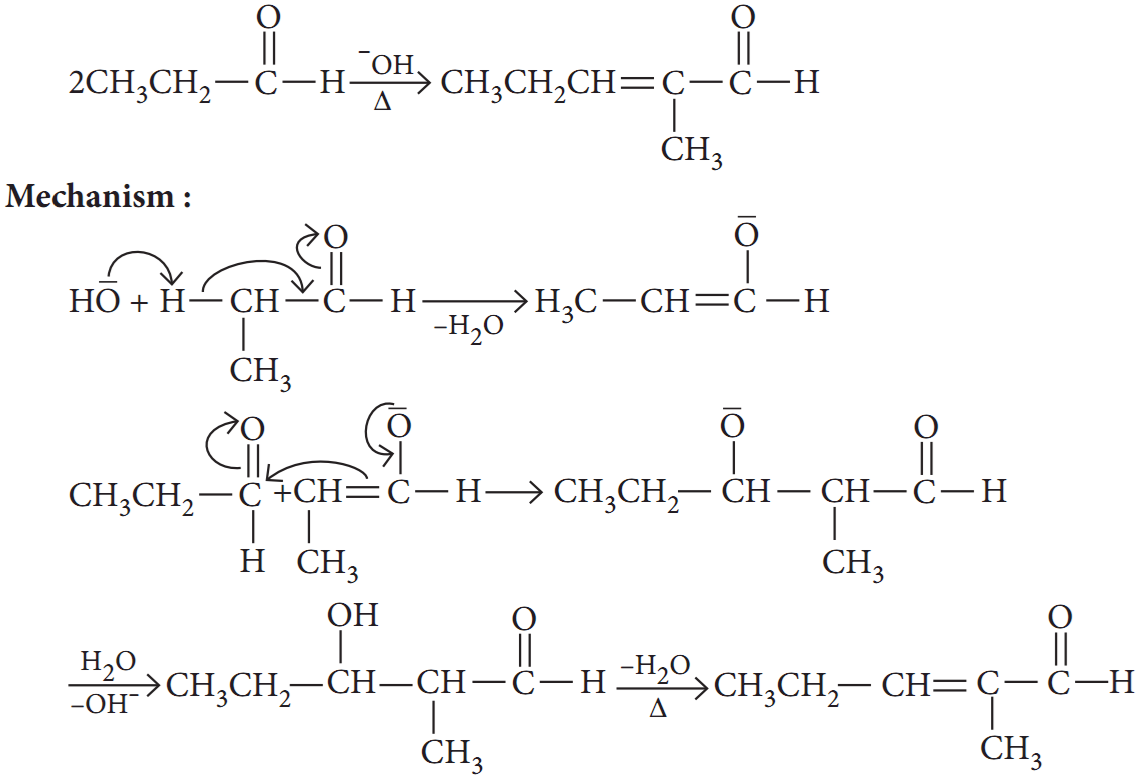
  1. Which of the following compounds would be the main product of an aldol condensation of acetaldehyde and acetone?
  1. $\ce{CH_3CH = CHCHO}$
  2. $\ce{CH_3CH = CHCOCH_3}$
  3. $\ce{(CH_3)_2C = CHCHO}$
  4. $\ce{(CH_3)_2C = CHCOCH_3}$
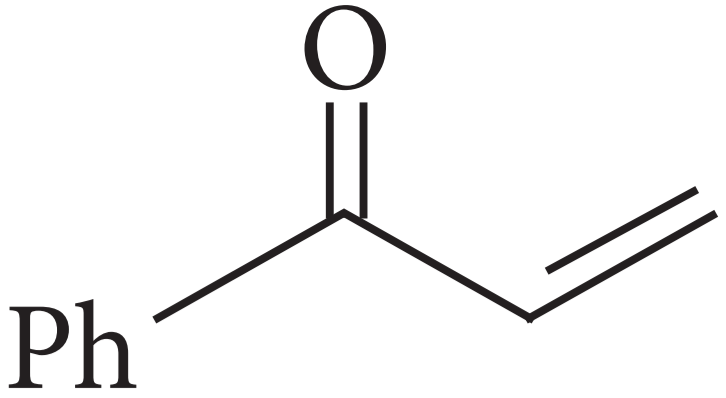
  1. Which combination of carbonyl compounds gives phenyl vinyl ketone by an aldol condensation?
  1. Acetophenone and Formaldehyde.
  2. Acetophenone and acetaldehyde.
  3. Benzaldehyde and acetaldehyde.
  4. Benzaldehyde and acetone.
  1. Which of the following will undergo aldol condensation?
  1. $\ce{HCHO}$
  2. $\ce{CH_3CH_2OH}$
  3. $\ce{C_6H_5CHO}$
  4. $\ce{CH_3CH_2CHO}$
  1. Which of the following does not undergo aldol condensation?
  1. $\ce{CH_3CHO}$
  2. $\ce{CH_3CH_2CHO}$
  3. $\ce{CH_3COCH_3}$
  4. $\ce{C_3H_2CHO}$
Answer
  1. $(c)$ Hydrolysis.
Condensation reaction is the reverse of hydrolysis, which splits a chemical entity into two parts through the action of the polar water molecule.
  1. $(b)\ \ce{CH_3CH = CHCOCH_3}$
​​​​
  1. $(a)$ Acetophenone and Formaldehyde.
  2. $(d)\ \ce{CH_3CH_2CHO}$
  3. $(d)\ \ce{C_3H_2CHO}$
​​​​​​​​​​​​​​​​​​​​​​​​​Benzaldehyde $\ce{(C_6H_5CHO)}$ with no a $-$ hydrogen cannot undergo aldol condensation.
View full question & answer
Question 84 Marks
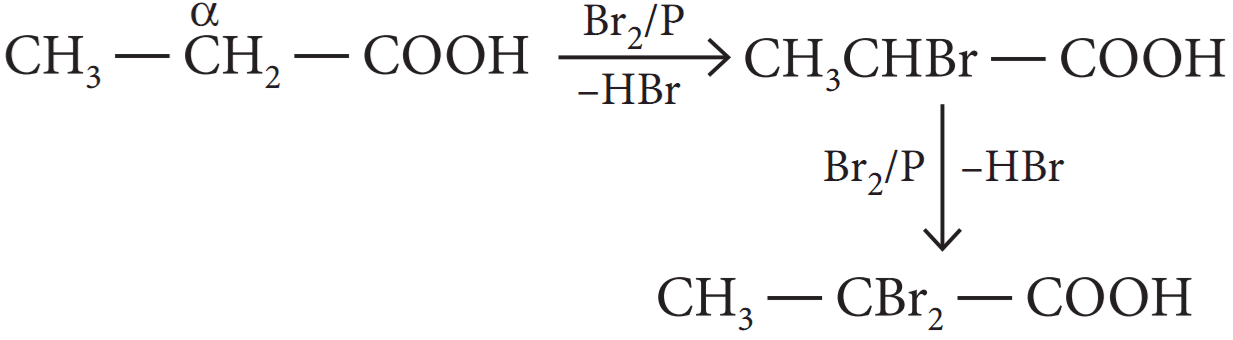
Read the passage given below and answer the following questions: Carboxylic acids having an $\alpha-$ hydrogen atom when treated with chlorine or bromine in the presence of small amount of red phosphorus gives $\alpha-$ halocarboxytic acids. The reaction is known as Hell $-$ Volhard $-$ Zelinsky reaction. $\text{R}-\text{CH}_2-\text{COOH}+\text{X}_2\xrightarrow{\text{red p}}\text{R}-\text{CH}-\text{COOH}\\ \ \ \ \ \ \ \ \ \ \ \ \ \ \ \ \ \ \ \ \ \ \ \ \ \ \ \ \ \ \ \ \ \ \ \ \ \ \ \ \ \ \ \ \ \ \ \ \ \ \ \ \ \ \ \ \ \ \ \ \ \ |\\ \ \ \ \ \ \ \ \ \ \ \ \ \ \ \ \ \ \ \ \ \ \ \ \ \ \ \ \ \ \ \ \ \ \ \ \ \ \ \ \ \ \ \ \ \ \ \ \ \ \ \ \ \ \ \ \ \ \ \ \ \text{X}\\ \ \ \ \ \ \ \ \ \ \ \ \ \ \ \ \ \ \ \ \ \ \ \ \ \ \ \ \ \ \ \ \ \ \ \ \ \ \ \ \ \ \ \ \ \ \ \ \ \ \ \ \ \ \ (\text{X = Cl, Br)}$ When sodium salt of carboxylic acid is heated with soda lime it loses carbon dioxide and gives hydrocarbon with less number of $C-$ atoms. $\text{R}-\text{COOH}\xrightarrow{\text{NaOH}}\text{R}-\text{COONa}\xrightarrow[\Delta]{\text{NaOH}+\text{CaO}}\text{R}-\text{H}+\text{Na}_2\text{CO}_3\\\text{Carboxylic}\ \ \ \ \ \ \ \ \ \ \ \ \ \ \ \ \ \ \ \ \ \text{Sod.}\ \ \ \ \ \ \ \ \ \ \ \ \ \ \ \ \ \ \ \ \ \ \ \ \ \ \ \ \ \text{Alkane}\\\ \ \ \ \ \text{acid}\ \ \ \ \ \ \ \ \ \ \ \ \ \ \ \ \ \ \ \ \ \ \text{carboxylate}$ In these questions $(Q$. No. $l-iv),$ a statement of assertion followed by a statement ofreason is given. Choose the correct answer out of the following choices.
  1. Assertion and reason both are correct statements and reason is correct explanation for assertion.
  2. Assertion and reason both are correct statements but reason is not correct explanation for assertion.
  3. Assertion is correct statement but reason is wrong statement.
  4. Assertion is wrong statement but reason is correct statement.
  1. Assertion : $\ce{(CH_3)_3CCOOH}$ does not give $\text{H.V.Z}$ reaction.
Reason : $\ce{(CH_3)_3CCOOH}$ does not have $\alpha-$ hydrogen atom.
  1. Assertion : $\text{H.V.Z}$. reaction involves the treatment of carboxylic acids having $\alpha-$ hydrogens with $Cl_2$ or $Br_2$ in presence of small amount of red phosphorus.
Reason : Phosphorus reacts with halogens to form phosphorus trihalides.
  1. Assertion : Propionic acid with $\frac{\text{Br}_2}{\text{P}}$ yields $\ce{CH_2Br - CHBr - COOH}$.
Reason : Propionic acid has two $\alpha-$ hydrogen atoms.
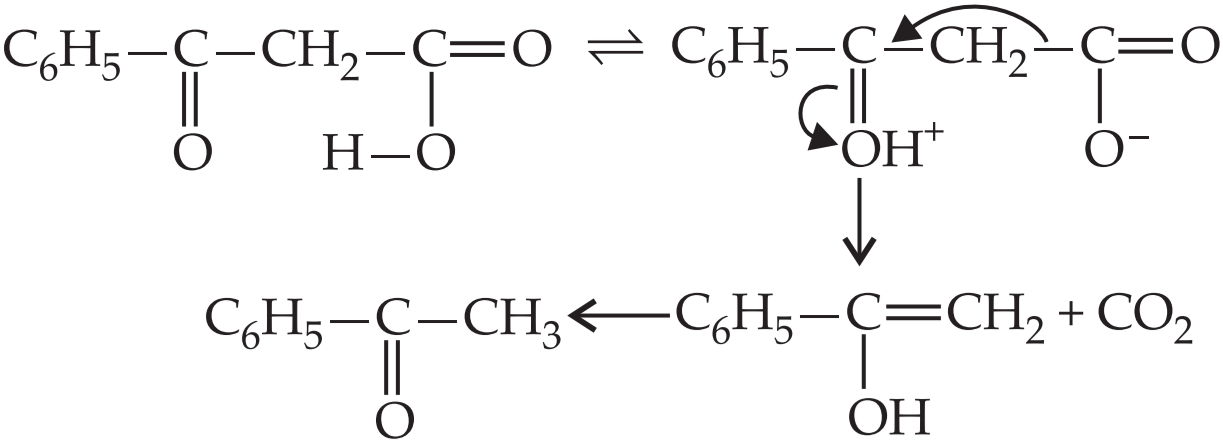
  1. Assertion : $\ce{C_6H_5COCH_2COOH}$ undergoes decarboxylation easily than $\ce{C_6H_5COCH_2COOH}.$
Reason : $\ce{C_6H_5COCH_2COOH}$ is $\beta-$ keto acid.
  1. Assertion : On heating $3-$ methylbutanoic acid with soda lime, isobutane is obtained.
Reason : Soda lime is a mixture of $\ce{NaOH + CaO}$ in the ratio $3 : 1.$
Answer
  1. $(a)$ Assertion and reason both are correct statements and reason is correct explanation for assertion.
  2. $(c)$ Assertion is correct statement but reason is wrong statement.
Phosphorus converts a little of the acid into acid chloride which is more reactive than the parent carboxylic acid.
Thus, it is the acid chloride, not the acid itself, that undergoes chlorination at the $\alpha-$ carbon.
  1. $(d)$ Assertion is wrong statement but reason is correct statement.
Bromination occurs at $\alpha-$ positions.
  1. $(a)$ Assertion and reason both are correct statements and reason is correct explanation for assertion.
$\beta-$ ketoacids are unstable acids.
They readily undergo decarboxylation through a cyclic transition state.
  1. $(b)$ Assertion and reason both are correct statements but reason is not correct explanation for assertion.
$\text{CH}_3-\text{CH}-\text{CH}_2\text{COOH}\xrightarrow{\frac{\text{NaOH}}{\text{CaO}}}\\\ \ \ \ \ \ \ \ \ \ \ \ \ |\\\ \ \ \ \ \ \ \ \ \ \ \ \ \text{CH}_3\\\ \ \ \ \ \ \ \ \ \ \ \ \ \ \ \ \ \ \ \ \ \ \text{CH}_3-\text{CH}-\text{CH}_3+\text{Na}_2\text{CO}_3\\\ \ \ \ \ \ \ \ \ \ \ \ \ \ \ \ \ \ \ \ \ \ \ \ \ \ \ \ \ \ \ \ \ \ \ |\\\ \ \ \ \ \ \ \ \ \ \ \ \ \ \ \ \ \ \ \ \ \ \ \ \ \ \ \ \ \ \ \ \ \ \ \text{CH}_3$
View full question & answer