Question 511 Mark
What is the ratio of wavelength of radiations emitted when an electron in hydrogen atom jump from fourth orbit to second orbit and from third orbit to second orbit(a) 27 : 25(b) 20 : 27(c) 20 : 25(d) 25 : 27
MCQ 521 Mark
If in a nuclear fission, piece of uranium of mass $0.5 g$ is lost, the energy obtained in $\text{kWh}$ is
- ✓
$1.25 \times 10^7$
- B
$2.25 \times 10^7$
- C
$3.25 \times 10^7$
- D
$0.25 \times 10^7$
AnswerCorrect option: A. $1.25 \times 10^7$
$1.25 \times 10^7$
View full question & answer→Question 531 Mark
The curve of binding energy per nucleon as a function of atomic mass number has a sharp peak for helium nucleus. This implies that helium(a) Can easily be broken up(b) Is very stable (c) Can be used as fissionable material(d) Is radioactive
Question 541 Mark
A nucleus is bombarded with a high speed neutron so that resulting nucleus is a radioactive one. This phenomenon is called(a) Artificial radioactivity(b) Fusion(c) Fission(d) Radioactivity
Question 551 Mark
What is used as a moderator in a nuclear reactor(a) Water (b) Graphite(c) Cadmium(d) Steel
MCQ 561 Mark
A nucleus of $_{84}^{210}PO$ originally at rest emits a particle with speed $v.$ What will be the recoil speed of the daughter nucleus
- ✓
$4v/206$
- B
$4v/214$
- C
$v/206$
- D
$v/214$
AnswerCorrect option: A. $4v/206$
$4v/206$
View full question & answer→Question 571 Mark
Nuclear fusion is common to the pair(a) Thermonuclear reactor, uranium based nuclear reactor(b) Energy production in sun, uranium based nuclear reactor(c) Energy production in sun, hydrogen bomb(d) Disintegration of heavy nuclei, hydrogen bomb
Answer(c) Energy production in sun, hydrogen bomb
View full question & answer→Question 581 Mark
The principle of controlled chain reaction is used in(a) Atomic energy reactor(b) Atom bomb(c) The core of sun(d) Artificial radioactivity
Answer(a) Atomic energy reactor
View full question & answer→Question 591 Mark
Heavy water is(a) Water at 4 ℃(b) Compound of deuterium and oxygen (c) Compound of heavy oxygen and heavy hydrogen(d) Water, in which soap does not lather
Answer(b) Compound of deuterium and oxygen
View full question & answer→Question 601 Mark
Mark the correct statement(a) Nuclei of different elements can have the same number of neutrons(b) Every element has only two stable isotopes(c) Only one isotope of each element is stable(d) All isotopes of every element are radioactive
Answer(a) Nuclei of different elements can have the same number of neutrons
View full question & answer→Question 611 Mark
The binding energy of nucleus is a measure of its(a) Charge(b) Mass(c) Momentum(d) Stability
Question 621 Mark
The kinetic energy of electron in the first Bohr orbit of the hydrogen atom is(a) – 6.5 eV(b) – 27.2 eV(c) 13.6 eV(d) – 13.6 eV
MCQ 631 Mark
Taking Rydberg’s constant $R_H=1.097\times 10^7m$ first and second wavelength of Balmer series in hydrogen spectrum is
- A
$2000\ \mathring A , 3000\ \mathring A $
- B
$1575\ \mathring A , 2960\ \mathring A $
- C
$6529\ \mathring A , 4280\ \mathring A $
- ✓
$6552\ \mathring A , 4863\ \mathring A $
AnswerCorrect option: D. $6552\ \mathring A , 4863\ \mathring A $
$6552\ \mathring A , 4863\ \mathring A $
View full question & answer→Question 641 Mark
The kinetic energy of an electron revolving around a nucleus will be(a) Four times of P.E.(b) Double of P.E.(c) Equal to P.E.(d) Half of its P.E.
Question 651 Mark
As the electron in Bohr orbit of Hydrogen atom passes from state n = 2 to n = 1, the kinetic energy K and potential energy U change as(a) K two-fold, U four-fold(b) K four-fold, U two-fold(c) K four-fold, U also four-fold (d) K two-fold, U also two-fold
Answer(c) K four-fold, U also four-fold
View full question & answer→Question 661 Mark
The ground state energy of hydrogen atom is – 13.6 eV. What is the potential energy of the electron in this state(a) 0 eV(b) – 27.2 eV(c) 1 eV (d) 2 eV
MCQ 671 Mark
The energy of electron in the nth orbit of hydrogen atom is expressed as $\mathrm{E}_{\mathrm{n}}=-\frac{13.6}{\mathrm{n}^2} \mathrm{eV}$. The shortest and longest wavelength of Lyman series will be
- ✓
$910 \mathring A , 1213 \mathring A$
- B
$5463 \mathring A , 7858 \mathring A$
- C
$1315 \mathring A , 1530 \mathring A$
- D
AnswerCorrect option: A. $910 \mathring A , 1213 \mathring A$
$910 \mathring A , 1213 \mathring A$
View full question & answer→MCQ 681 Mark
Which one of the relation is correct between time period and number of orbits while an electron is revolving in a orbit
- A
$\mathrm{n}^2$
- B
$\frac{1}{\mathrm{n}^2}$
- ✓
$\mathrm{n}^3$
- D
$\frac{1}{n}$
AnswerCorrect option: C. $\mathrm{n}^3$
$\mathrm{n}^3$
View full question & answer→Question 691 Mark
In the spectrum of hydrogen atom, the ratio of the longest wavelength in Lyman series to the longest wavelength in the Balmer series is(a) 5/27(b) 1/93(c) 4/9(d) 3/2
Question 701 Mark
After 280 days, the activity of a radioactive sample is 6000 dps. The activity reduces to 3000 dps after another 140 days. The initial activity of the sample in dps is (a) 6000 (b) 9000(c) 3000 (d) 24000
Question 711 Mark
The half-life of a radioactive substance is 40 years. How long will it take to reduce to one fourth of its original amount and what is the value of decay constant(a) 40 year, 0.9173/year(b) 90 year, 9.017/year(c) 80 year, 0.0173 year(d) None of these
MCQ 721 Mark
The example of nuclear fusion is
- A
Formation of $Ba$ and $Kr$ from $U^{235}$
- ✓
Formation of $He$ from $H$
- C
Formation of $Pu – 235$ from $U - 235$
- D
Formation of water from hydrogen and oxygen
AnswerCorrect option: B. Formation of $He$ from $H$
Formation of $He$ from $H$
View full question & answer→Question 731 Mark
Fission of nuclei is possible because the binding energy per nucleon in them(a) Increases with mass number at high mass numbers(b) Decreases with mass number at high mass numbers(c) Increases with mass number at low mass numbers(d) Decreases with mass number at low mass numbers
Answer(b) Decreases with mass number at high mass numbers
View full question & answer→MCQ 741 Mark
If the mass number of an atom is $A = 40$ and its electron configuration is $1s^2,2s^2,2p^6,3s^2,3p^6,$ the number of neutrons and protons in its nucleus will be
- ✓
$22, 18$
- B
$18, 22$
- C
$20, 20$
- D
$18, 18$
AnswerCorrect option: A. $22, 18$
$22, 18$
View full question & answer→MCQ 751 Mark
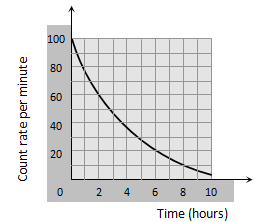
The count rate of $10g$ of radioactive material was measured at different times and this has been shown in the figure. The half life of material and the total counts $($approximately$)$ in the first half life period, respectively are
- A
$4h, 9000$
- ✓
$3h, 14000$
- C
$3h, 235$
- D
$3h, 50$
AnswerCorrect option: B. $3h, 14000$
$3h, 14000$
View full question & answer→MCQ 761 Mark
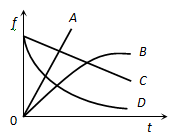
The fraction $f$ of radioactive material that has decayed in time $t,$ varies with time $t.$ The correct variation is given by the curve
View full question & answer→MCQ 771 Mark
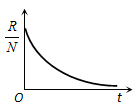
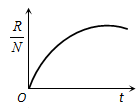
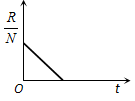
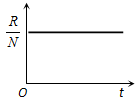
A radioactive sample has $N_0$ active atoms at $t = 0.$ If the rate of disintegration at any time is $R$ and the number of atoms is $N,$ then the ratio $R/N$ varies with time as
View full question & answer→MCQ 781 Mark
In the disintegration series ${ }_{\mathrm{S}}^{238} \mathrm{ U} \xrightarrow{\alpha} \mathrm{X} \xrightarrow{\beta}{ }_{\mathrm{Z}}^{\mathrm{A}} \mathrm{Y}$ the values of $Z$ and $A$ respectively will be
- A
$92, 236$
- B
$88, 230$
- C
$90, 234$
- ✓
$91, 234$
AnswerCorrect option: D. $91, 234$
$91, 234$
View full question & answer→MCQ 791 Mark
Assertion : For the scattering of $\alpha-$particles at a large angles, only the nucleus of the atom is responsible.
Reason : Nucleus is very heavy in comparison to electrons.
- ✓
If both assertion and reason are true and the reason is the correct explanation of the assertion.
- B
If both assertion and reason are true but reason is not the correct explanation of the assertion.
- C
If assertion is true but reason is false.
- D
If the assertion and reason both are false.
AnswerCorrect option: A. If both assertion and reason are true and the reason is the correct explanation of the assertion.
If both assertion and reason are true and the reason is the correct explanation of the assertion.
View full question & answer→Question 801 Mark
Assertion : Electron capture occurs more often than positron emission in heavy elements.
Reason : Heavy elements exhibit radioactivity.(a) If both assertion and reason are true and the reason is the correct explanation of the assertion.(b) If both assertion and reason are true but reason is not the correct explanation of the assertion.(c) If assertion is true but reason is false.(d) If the assertion and reason both are false.
Answer(b) If both assertion and reason are true but reason is not the correct explanation of the assertion.
View full question & answer→MCQ 811 Mark
Assertion : Fragments produced in the fission of $U^{235}$ are radioactive.
Reason : The fragments have abnormally high proton to neutron ratio.
- A
If both assertion and reason are true and the reason is the correct explanation of the assertion.
- B
If both assertion and reason are true but reason is not the correct explanation of the assertion.
- ✓
If assertion is true but reason is false.
- D
If the assertion and reason both are false.
AnswerCorrect option: C. If assertion is true but reason is false.
If assertion is true but reason is false.
View full question & answer→MCQ 821 Mark
Assertion : Radioactivity of $10^8$ undecayed radioactive nuclei of half life of $50$ days is equal to that of $1.2 \times 10^8$ number of undecayed nuclei of some other material with half life of $60$ days
Reason : Radioactivity is proportional to half-life.
- A
If both assertion and reason are true and the reason is the correct explanation of the assertion.
- B
If both assertion and reason are true but reason is not the correct explanation of the assertion.
- ✓
If assertion is true but reason is false.
- D
If the assertion and reason both are false.
AnswerCorrect option: C. If assertion is true but reason is false.
If assertion is true but reason is false.
View full question & answer→MCQ 831 Mark
Assertion : Amongst alpha, beta and gamma rays, $\alpha-$particle has maximum penetrating power.
Reason : The alpha particle is heavier than beta and gamma rays.
- A
If both assertion and reason are true and the reason is the correct explanation of the assertion.
- B
If both assertion and reason are true but reason is not the correct explanation of the assertion.
- C
If assertion is true but reason is false.
- ✓
If the assertion and reason both are false.
AnswerCorrect option: D. If the assertion and reason both are false.
If the assertion and reason both are false.
View full question & answer→Question 841 Mark
Assertion : All the radioactive elements are ultimately converted in lead.
Reason : All the elements above lead are unstable. (a) If both assertion and reason are true and the reason is the correct explanation of the assertion.(b) If both assertion and reason are true but reason is not the correct explanation of the assertion.(c) If assertion is true but reason is false.(d) If the assertion and reason both are false.
Answer(c) If assertion is true but reason is false.
View full question & answer→Question 851 Mark
The ratio of areas within the electron orbits for the first excited state to the ground state for hydrogen atom is(a) 16 : 1 (b) 18 : 1(c) 4 : 1 (d) 2 : 1
Question 861 Mark
The colour of the second line of Balmer series is(a) Blue(b) Yellow(c) Red(d) Violet
Question 871 Mark
The Bohr model of atoms (a) Assumes that the angular momentum of electrons is quantized(b) Uses Einstein’s photo-electric equation(c) Predicts continuous emission spectra for atoms(d) Predicts the same emission spectra for all types of atoms
Answer(a) Assumes that the angular momentum of electrons is quantized
View full question & answer→Question 881 Mark
The shortest wavelength in the Lyman series of hydrogen spectrum is 912 Å corresponding to a photon energy of 13.6 eV. The shortest wavelength in the Balmer series is about(a) 3648 Å(b) 8208 Å(c) 1228 Å(d) 6566 Å
Question 891 Mark
Which of the following is quantised according to Bohr’s theory of hydrogen atom(a) Linear momentum of electron(b) Angular momentum of electron(c) Linear velocity of electron(d) Angular velocity of electron
Answer(b) Angular momentum of electron
View full question & answer→MCQ 901 Mark
Radius of first Bohr orbit is $r.$ What is the radius of $2^{nd}$ Bohr orbit?
- A
$8r$
- B
$2r$
- ✓
$4r$
- D
$2\sqrt{2r}$
View full question & answer→MCQ 911 Mark
In the following reaction $12^{\mathrm{Mg}^{24}}+2^{\mathrm{He}^4} \rightarrow 14^{\mathrm{Si}^{\mathrm{X}}}+0^{\mathrm{n}^1}, \mathrm{X}$ is
View full question & answer→MCQ 921 Mark
In a fission reaction ${ }_{92}^{236} \mathrm{U} \rightarrow 117_{\mathrm{X}}+117_{\mathrm{Y}}+\mathrm{n}+\mathrm{n}$, the binding energy per nucleon of $X$ and $Y$ is $8.5\ \text{MeV}$ whereas of $236_{\mathrm{U}}$ is $7.6\ \text{MeV}$ The total energy liberated will be about
- A
$200\ \text{KeV}$
- B
$2\ \text{MeV}$
- ✓
$200\ \text{MeV}$
- D
$2000\ \text{MeV}$
AnswerCorrect option: C. $200\ \text{MeV}$
$200\ \text{MeV}$
View full question & answer→MCQ 931 Mark
Atomic weight of boron is $10.81$ and it has two isotopeses $5^{8^{10}}$ and $5^{8^{11}}$. Then ratio of $5^{8^{10}}: 5^{8^{11}}$ in nature would be
- ✓
$19 : 81$
- B
$10 : 11$
- C
$15 : 16$
- D
$81 : 19$
AnswerCorrect option: A. $19 : 81$
$19 : 81$
View full question & answer→MCQ 941 Mark
The ratio of the largest to shortest wavelengths in Lyman series of hydrogen spectra is
- A
$\frac {25}{9}$
- B
$\frac {17}{6}$
- C
$\frac {9}{5}$
- ✓
$\frac {4}{3}$
AnswerCorrect option: D. $\frac {4}{3}$
$\frac {4}{3}$
View full question & answer→MCQ 951 Mark
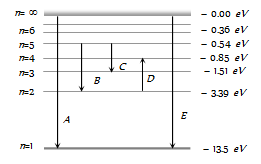
The energy levels of the hydrogen spectrum is shown in figure. There are some transitions $A, B, C, D$ and $E.$ Transition $A, B$ and $C$ respectively represent
- A
First member of Lyman series, third spectral line of Balmer series and the second spectral line of Paschen series
- B
Ionization potential of hydrogen, second spectral line of Balmer series and third spectral line of Paschen series
- ✓
Series limit of Lyman series, third spectral line of Balmer series and second spectral line of Paschen series
- D
Series limit of Lyman series, second spectral line of Balmer series and third spectral line of Paschen series
AnswerCorrect option: C. Series limit of Lyman series, third spectral line of Balmer series and second spectral line of Paschen series
Series limit of Lyman series, third spectral line of Balmer series and second spectral line of Paschen series
View full question & answer→MCQ 961 Mark
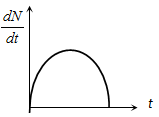
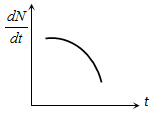
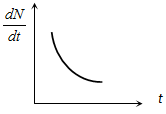
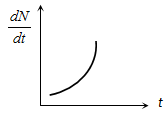
Radioactive element decays to form a stable nuclide, then the rate of decay of reactant $\big(\frac{dN}{dt}\big)$ will vary with time $(t)$ as shown in figure
View full question & answer→MCQ 971 Mark
The number of neutrons released when $92^{\mathrm{U}^{235}}$ undergoes fission by absorbing $0^{n^1}$ and $(\left.56^{\mathrm{Ba}^{144}}+36^{\mathrm{Kr}^{89}}\right)$ are tormed, is
View full question & answer→Question 981 Mark
In a nuclear fission reaction(a) Two light nuclei combine to produce a heavier nucleus(b) A light nucleus bombarded by thermal neutrons breaks up(c) A heavy nucleus bombarded by thermal neutrons breaks up(d) A heavy nucleus breaks up by itself
Answer(c) A heavy nucleus bombarded by thermal neutrons breaks up
View full question & answer→MCQ 991 Mark
Which of these is a fusion reaction
- ✓
${ }_3^1 \mathrm{H}+{ }_2^1 \mathrm{H}={ }_4^2 \mathrm{He}+{ }_1^0 \mathrm{n}$
- B
${ }^{238} \mathrm{U} \rightarrow{ }_{82}^{206} \mathrm{~Pb}+8\left({ }_2^4 \mathrm{He}\right)_{+6}\left({ }_{-1}^0 \beta\right)$
- C
${ }_7^{12} \mathrm{C} \rightarrow{ }_6^{12} \mathrm{C}+\beta^{+}+\gamma$
- D
AnswerCorrect option: A. ${ }_3^1 \mathrm{H}+{ }_2^1 \mathrm{H}={ }_4^2 \mathrm{He}+{ }_1^0 \mathrm{n}$
${ }_3^1 \mathrm{H}+{ }_2^1 \mathrm{H}={ }_4^2 \mathrm{He}+{ }_1^0 \mathrm{n}$
View full question & answer→MCQ 1001 Mark
In the nuclear reaction: $X(n, \alpha ) 3^{\mathrm{Li}^7}$ the term $X$ will be $3$
- ✓
$5^{\mathrm{B}^{10}}$
- B
$5^{8^9}$
- C
$5^{\mathrm{B}^{11}}$
- D
$2^{\mathrm{He}^4}$
AnswerCorrect option: A. $5^{\mathrm{B}^{10}}$
$5^{\mathrm{B}^{10}}$
View full question & answer→