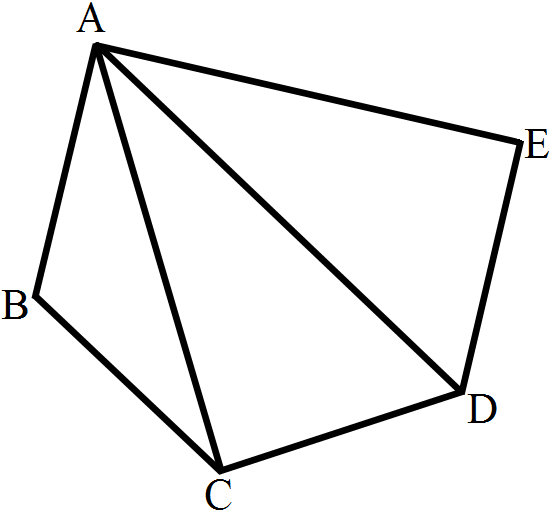
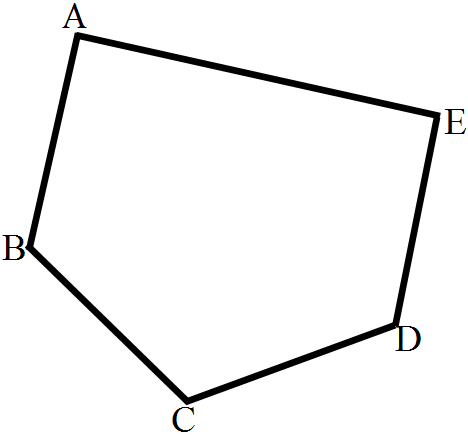
The number of diagonals in a hexagon is $9.$ Solution: Number of sides in hexagon $(n) = 6$
Number of diagonals $=\frac{\text{n}(\text{n}-3)}{2}=\frac{6(6-3)}{2}=9$
In Fig. $2.15,$ points $A, B, C, D$ and $E$ are collinear such that $AB = BC = CD = DE.$ Then,
$a.\ AD = AB + ......$
$b.\ AD = AC + ......$
$c.$ Mid point of $AE$ is $......$
$d.$ Mid point of $CE$ is $......$
$e.\ AE = $......$ \times AB.$
Answer
$a.\ AD = AB+ BC + CD = AB + BD$
$b.\ AD = AB + BC + CD = AC + CD$
$c.$ Given, $AB = BC =CD = DE$
$\therefore\text{AE}=\text{AC}+\text{CE}$ So, $C$ is the mid-point of $AE.$
$d.$ Given, $AB = BC = CD = DE$ $CE = CD + DE$ So, $D$ is the mid-point of $CE.$
$e.\ AE = AB + BC + CD + DE$ $AE = AB + AB + AB + AB$
$AE = 4 AS$
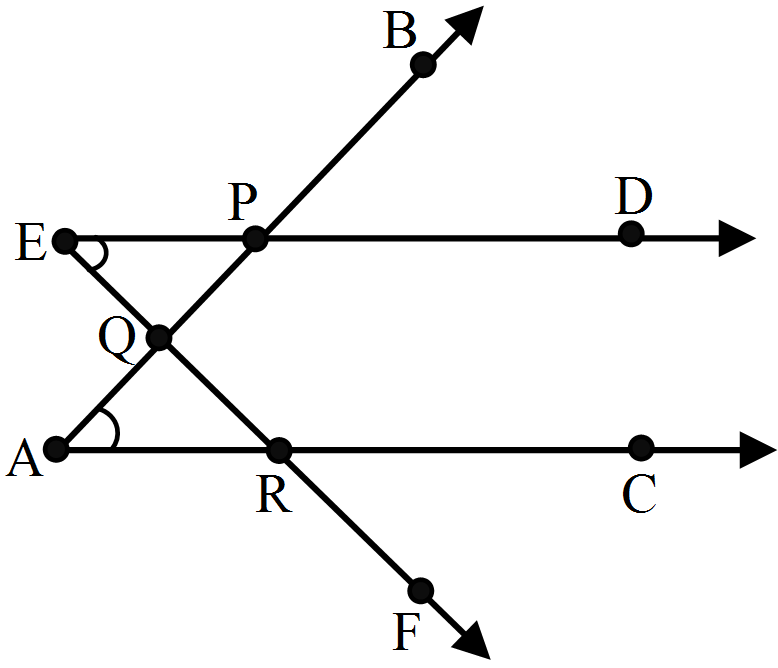
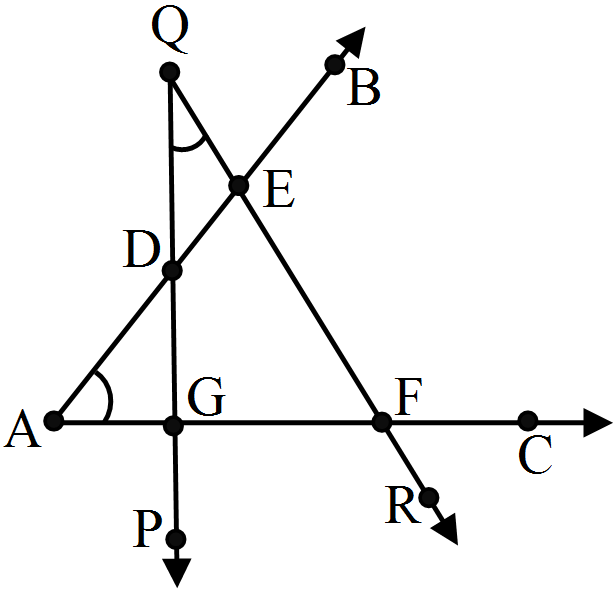
The number of common points in the two angles marked in ______ .
Answer
The number of common points in the two angles marked in $3.$ Solution:
The common points in $\angle\text{DEF}$ and $\angle\text{BAC}$ are $P, 0$ and $R.$
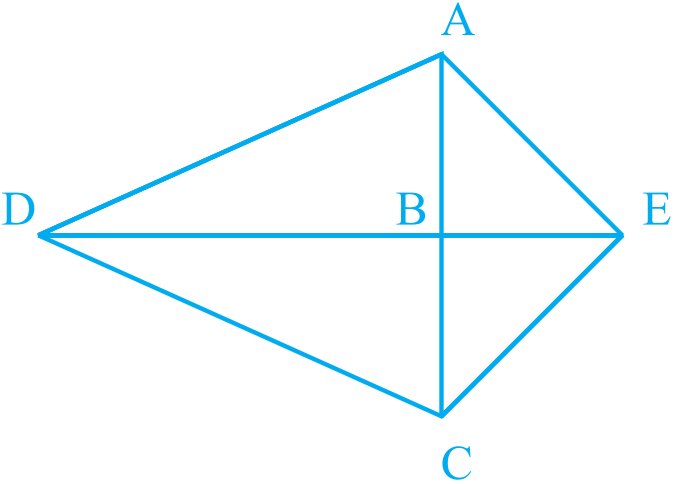
There are five vertices in the given figure, namely $A, B, C, D$ and $E$ and there are seven line segments in the given figure, namely $AS, SC, CD, DE, EA, AC$ and $AD.$
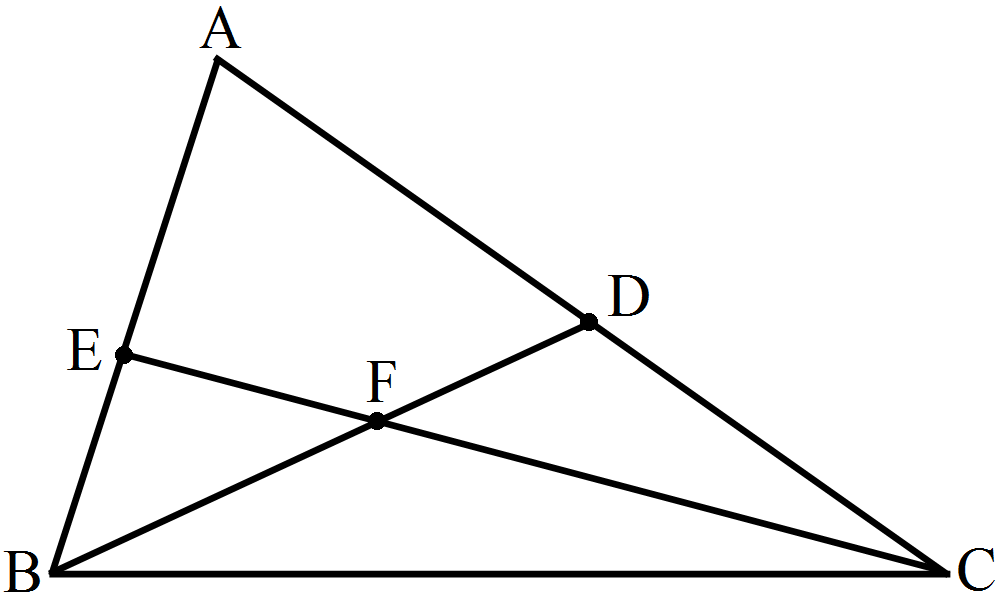
A line segment is a part of line having finite length. Hence, all the line segments shown in the figure are $AB, AC, AD, AE, BC, BD, BE, CD, CE$ and $DE.$
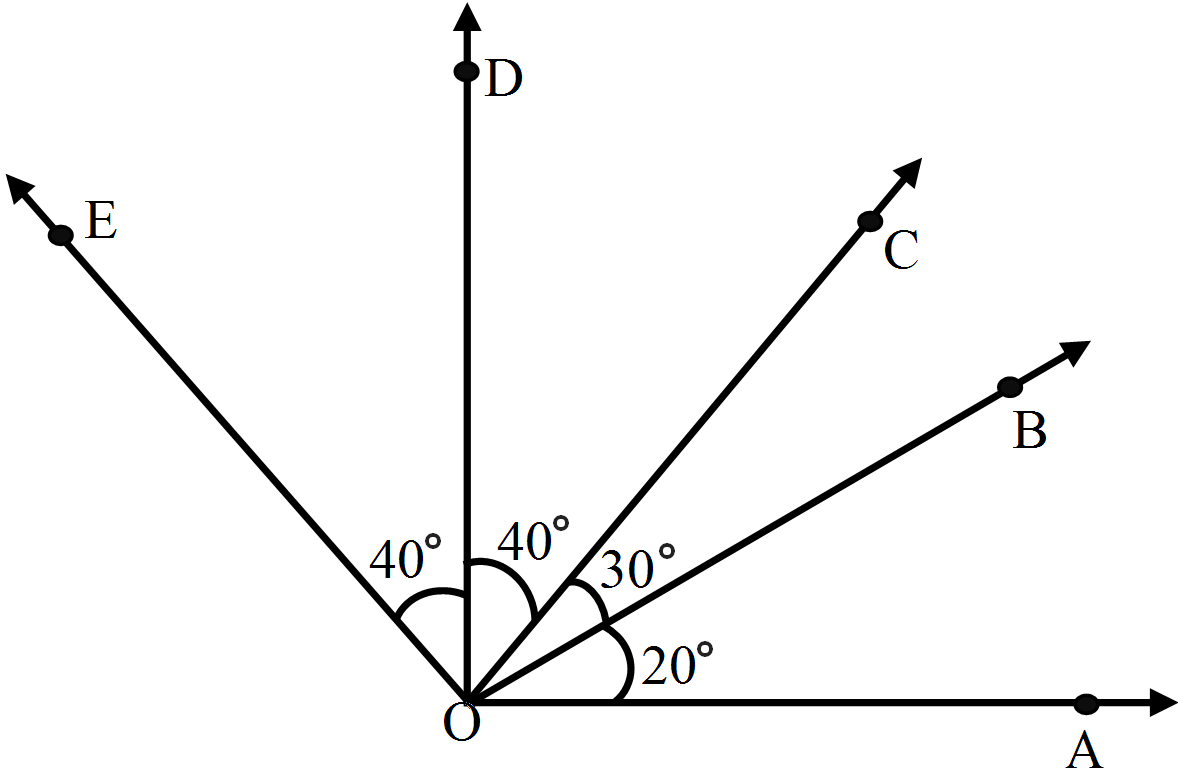
In Figure:
$a.\ \angle\text{AOD}$ is a/ an $.....$ angle.
$b.\ \angle\text{COA}$ is a/ an $.....$ angle.
$c.\ \angle\text{AOE}$ is a/ an $.....$ angle.
Answer
$a.\ \angle\text{AOD}$ is a/ an right angle.
$b.\ \angle\text{COA}$ is a/ an acute angle.
$c.\ \angle\text{AOE}$ is a/ an obtuse angle. Solution:
$a.$ Since, $\angle\text{AOD}=\angle\text{AOB}+\angle\text{BOC}+\angle\text{COD}=30^\circ+20^\circ+40^\circ=90^\circ$
So, $\angle\text{AOD}=90^\circ$ is a right angle.
$b.$Since, $\angle\text{COA}=\angle\text{COB}+\angle\text{BOA}=20^\circ+30^\circ=50^\circ$ Because $\angle\text{COA}=50^\circ<90^\circ.$
So, $\angle\text{COA}$ is an acute angle.
$c.$Since, $\angle\text{AOE}=\angle\text{AOB}+\angle\text{BOC}+\angle\text{COD}+\angle\text{DOE},$
$=30^\circ+20^\circ+40^\circ+40^\circ=130^\circ$
Because $\angle\text{AOE}=130^\circ>90^\circ$ So, $\angle\text{AOE}$ is an obtuse angle.
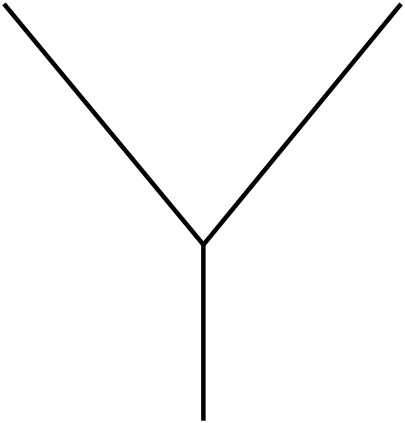
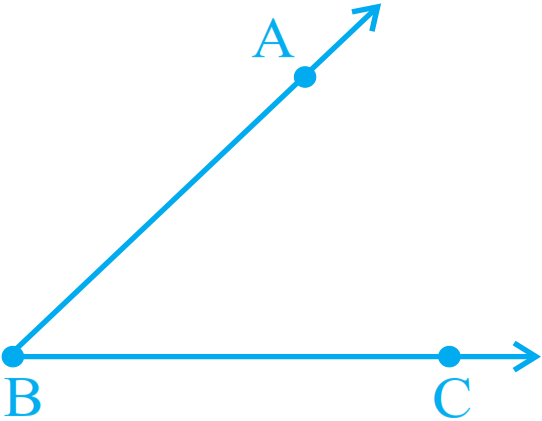
Find out the incorrect statement, if any, in the following:
An angle is formed when we have:
$a.$ Two rays with a common end$-$point.
$b.$ Two line segments with a common end$-$point.
$c.$ A ray and a line segment with a common end$-$point.
Answer
Angle is made by two rays or lines having a common end point. So, options $(b)$ and $(c)$ are incorrect.
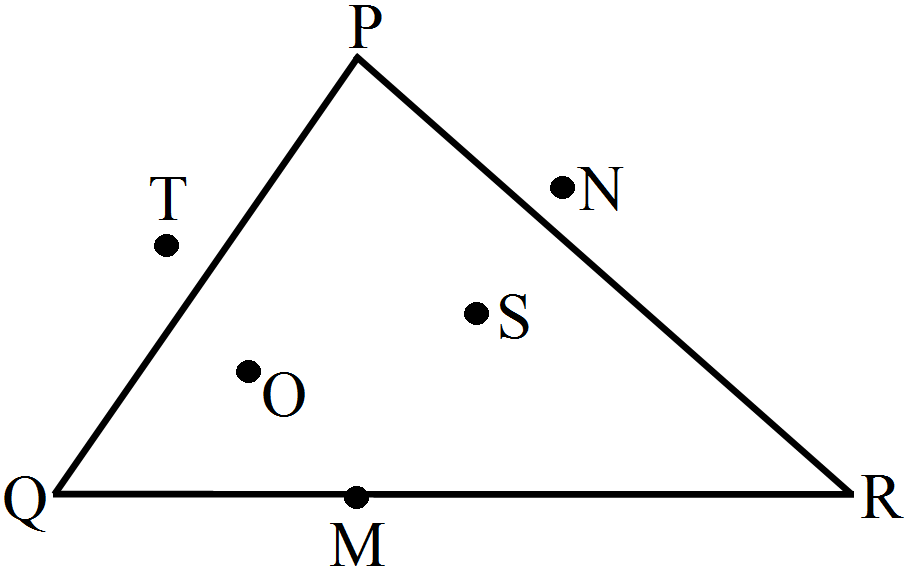
In Fig. Points lying in the interior of the triangle $PQR$ are ______, that in the exterior are ______ and that on the triangle itself are ______.
Answer
Those points which lie inside the triangle are known as interior points and those lie outside the triangle are known as exterior points. In the given figure, points lying in the interior of $\triangle\text{PQR}$ are $O$ and $S.$ Points lying in the exterior of $\triangle\text{PQR}$ are $N$ and $T.$ Points lying on the $\triangle\text{PQR}$ is $M, P, Q$ and $R.$
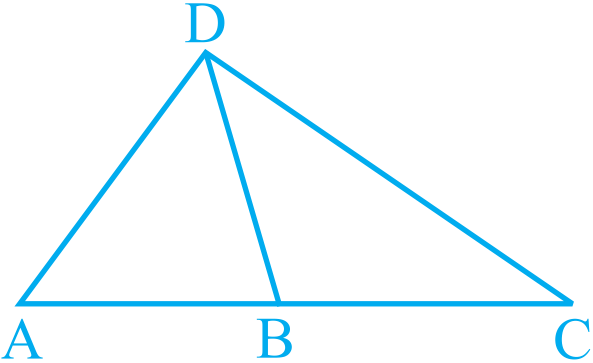
What conclusion can be drawn from Figure, if:
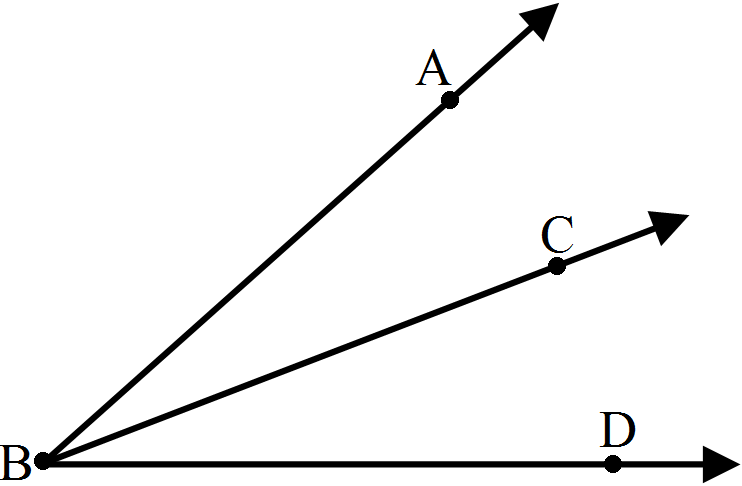
$DB$ is the bisector of $\angle\text{ADC}?$
Answer
If $DB$ is the bisector of $\angle\text{ADC,}$
then $\angle\text{ADB}=\angle\text{CDB}$
Because an angle bisector bisects an angle into two equal angles.
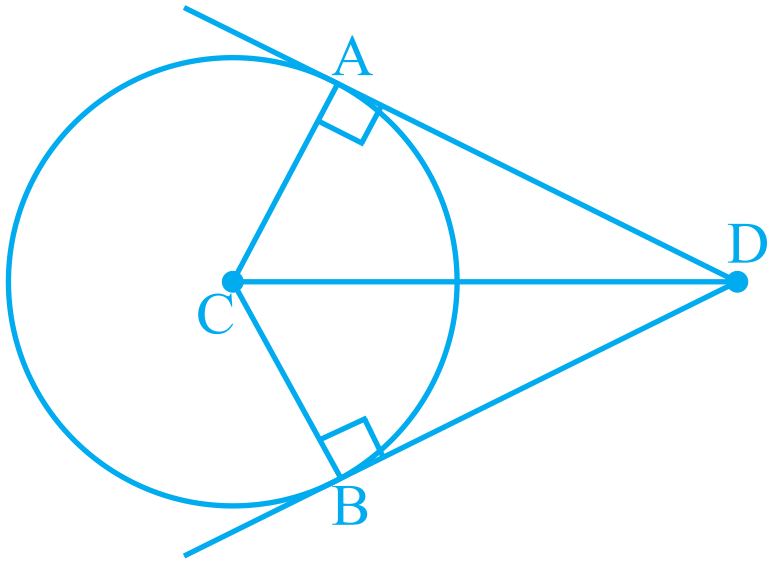
What conclusion can be drawn from Figure, if:
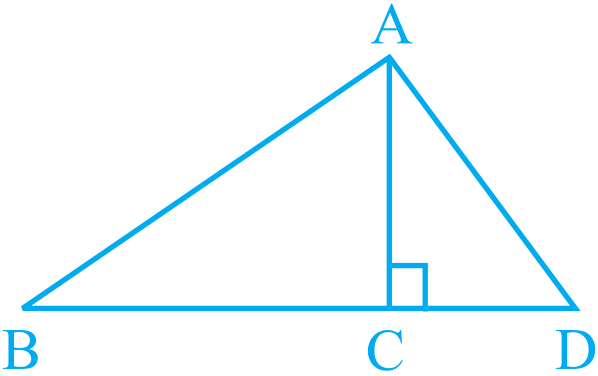
$DC$ is the bisector of $\angle\text{ADB}, \text{CA}\bot\text{DA}$ and $\text{CB}\bot\text{DB}?$
Answer
If $DC$ is the bisector of $\angle\text{ADB,}$
then $\angle\text{ADC} = \angle\text{BDC.}$
Also, $CADA$ and $CBLDB,$
then $\angle\text{CAD}=90^\circ$ and $\angle\text{CBD}=90^\circ$
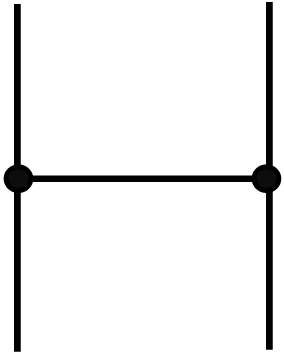
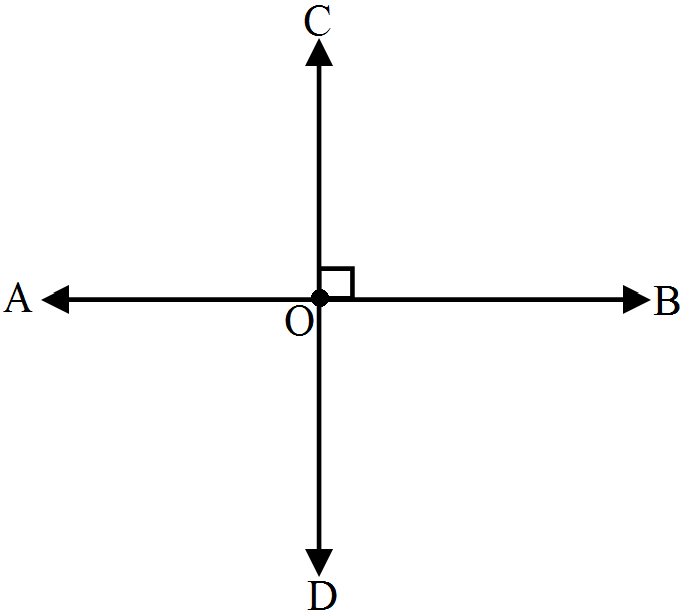
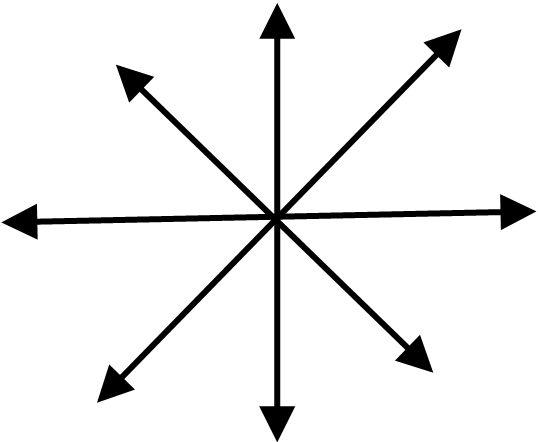
A horizontal line and a vertical line always intersect at right angles.
Answer
Lines that never slant up or down are called horizontal lines.
Lines that go straight up and down are called vertical lines.
Let $AS$ be a horizontal line and $CD$ be a vertical line, which intersect at $0.$
Clearly, $\angle\text{AOD}, \angle\text{AOC},\angle\text{COB}$ and $\angle\text{BOD}$ are right angles.
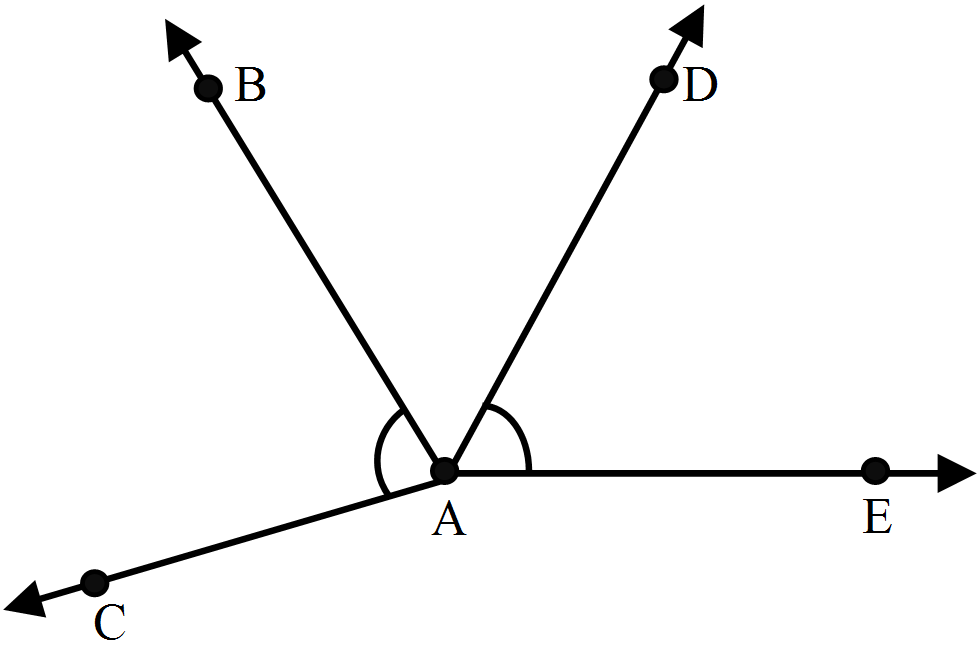
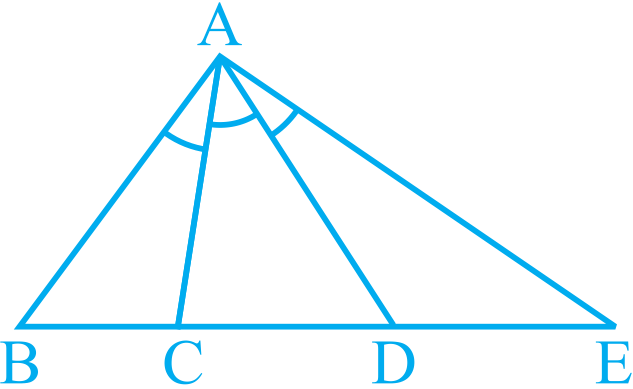
An angle is said to be trisected, if it is divided into three equal parts. If in Fig., $\angle\text{BAC} =\angle\text{CAD} =\angle\text{DAE,}$ how many trisectors are there for $\angle\text{BAE?}$
Answer
For an angle to be trisected, we need two trisectors.
So, for $\angle\text{BAE,}$ we have two trisectors,
i.e. $AC$ and $AD. $
$AC$ and $AD$ divides the $\angle\text{BAE}$ in three equal angles.
The number of common points in the two angles marked in Fig. is _____________ .
Answer
The number of common points in the two angles marked in Fig. is $4.$ Solution: The common points in $\angle\text{PQR}$ and $\angle\text{BAC}$ are $D, E, F$ and $G.$
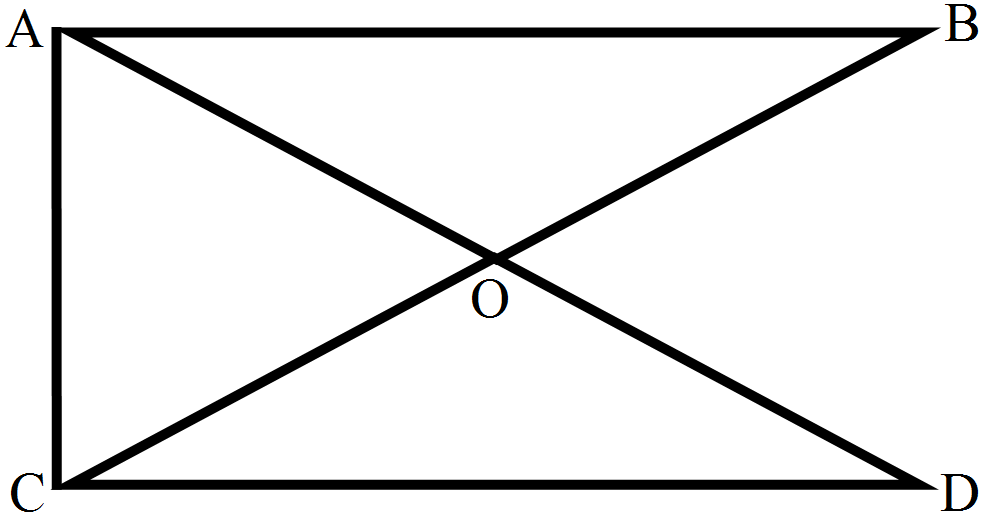
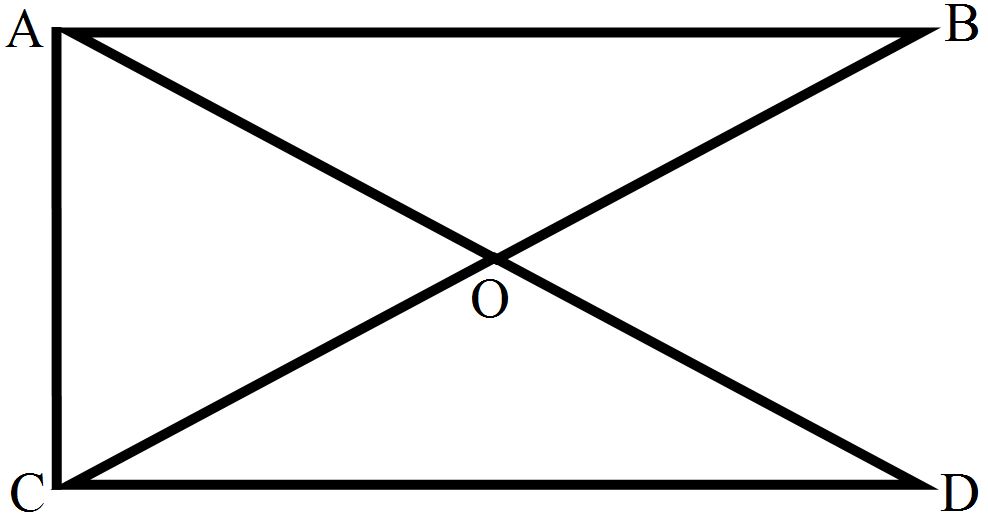
Number of angles less than $180^\circ $ in Fig. is ______ and their names are ______.
Answer
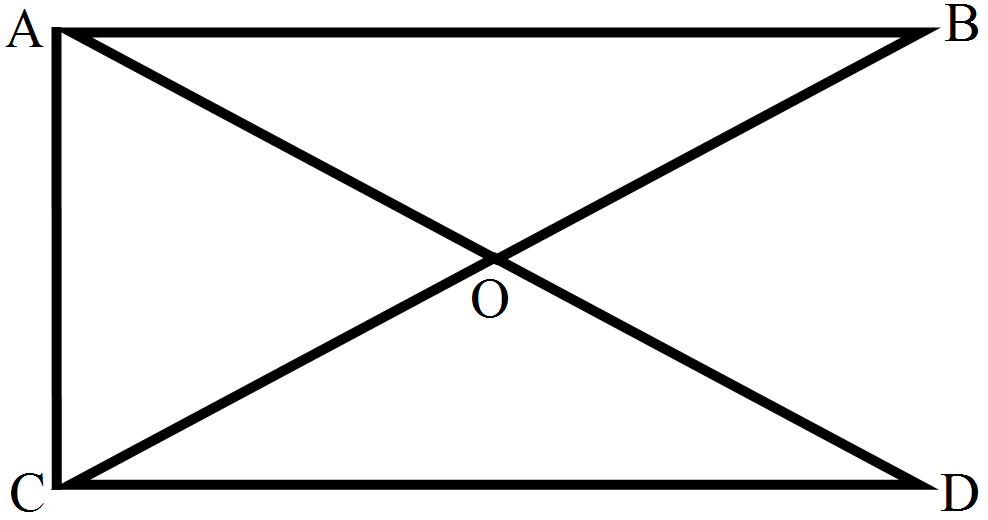
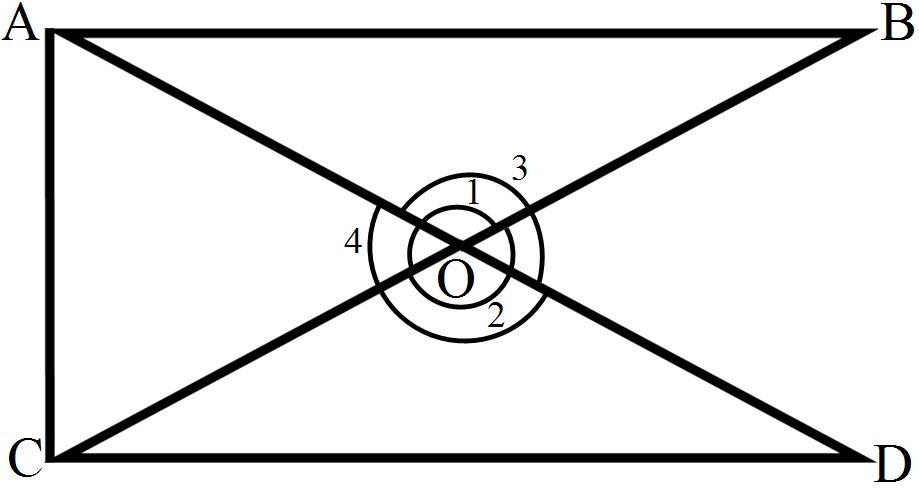
Number of angles less than $180^\circ $ in Fig. is $12$ and their names are: $\angle\text{OAB},\angle\text{OBA},\angle\text{OAC},\angle\text{OCA},\angle\text{OCD},\angle\text{ODC}$
$\angle\text{AOB},\angle\text{AOC},\angle\text{COD},\angle\text{DOB},\angle\text{BAC},\angle\text{ACD}.$
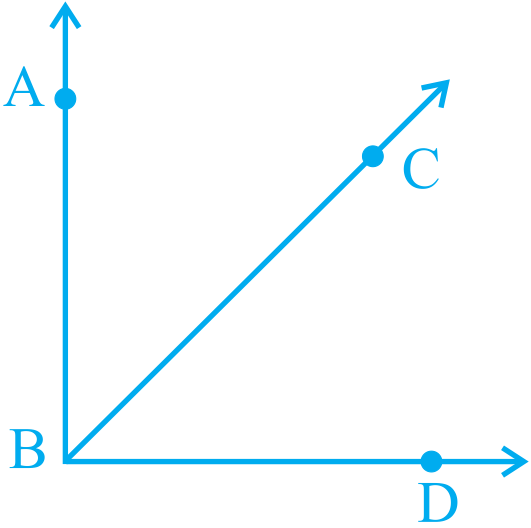
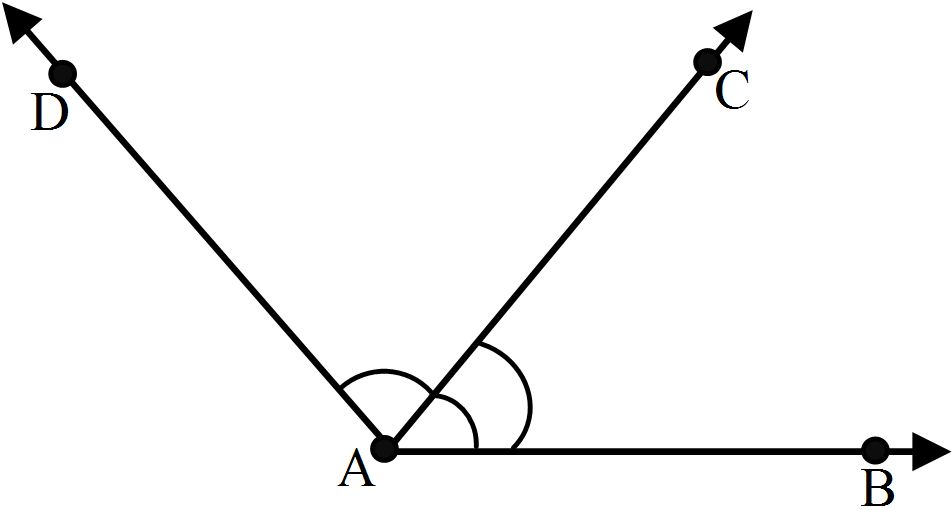
The common part between the two angles $BAC$ and $DAB$ in Fig is ______ .
Answer
The common part between the two angles $BAC$ and $DAB$ in Fig is Ray AS. Solution: Since, the common part between $\angle\text{DAB}$ and $\angle\text{BAC}$ is ray $AB.$
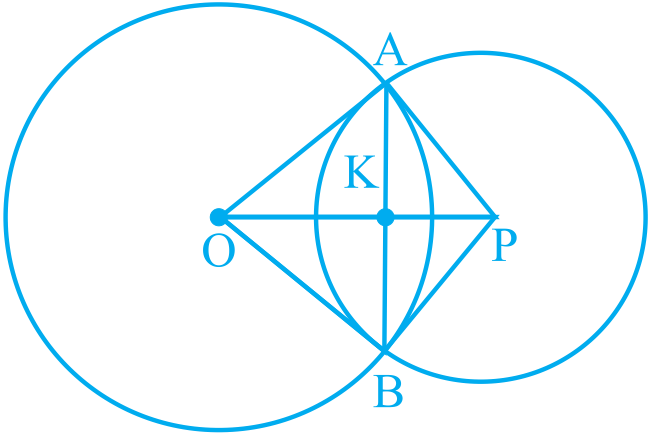
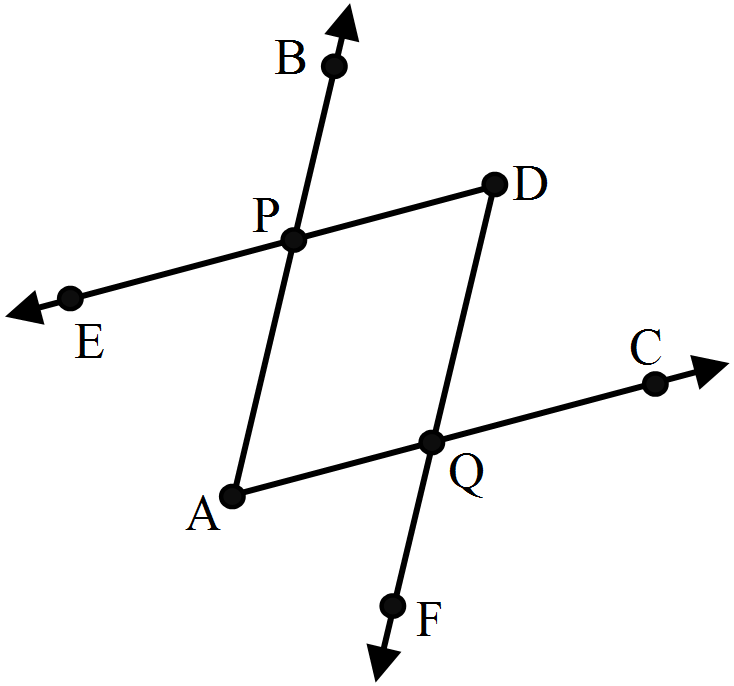
The number of common points in the two angles marked in Fig. is ______.
Answer
The number of common points in the two angles marked in Fig. is $2.$ Solution: The common points in the $\angle\text{PDQ}$ and $\angle\text{PAQ}$ are $P$ and $Q.$