Questions

5 Marks Questions

Take a timed test

25 questions · self-marked practice — reveal the answer and mark yourself.

Question 15 Marks
List the advantages of recombinant insulin.
Answer
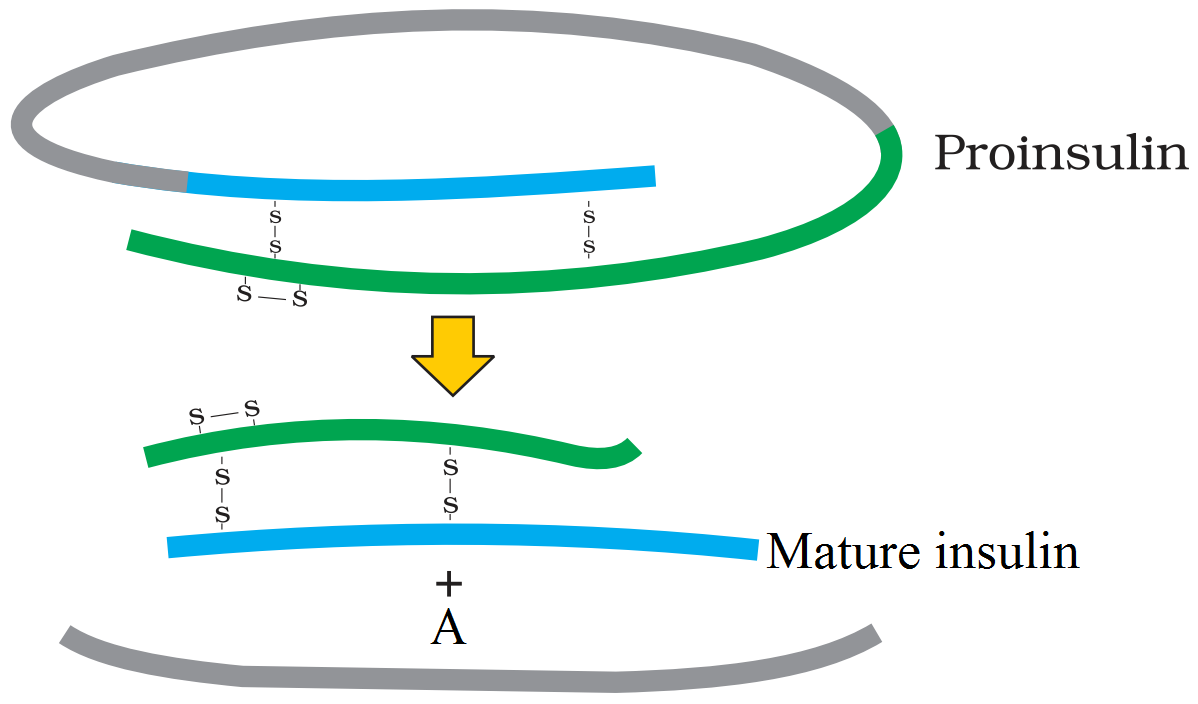
Insulin used for diabetes was earlier extracted from pancreas of slaughtered cattle and pigs. Insulin from an animal source, though caused some patients to develop allergy or other types of reactions to the foreign protein. Insulin consists of two short polypeptide chains: chain A and chain B, that are linked together by disulphide bridges. In mammals, including humans, insulin is synthesised as a pro-hormone (like a pro-enzyme, the pro-hormone also needs to be processed before it becomes a fully mature and functional hormone) which contains an extra stretch called the C peptide. This C peptide is not present in the mature insulin and is removed during maturation into insulin. The main challenge for production of insulin using rDNA techniques was getting insulin assembled into a mature form. In 1983, Eli Lilly an American company prepared two DNA sequences corresponding to A and B, chains of human insulin and introduced them in plasmids of E. coli to produce insulin chains. Chains A and B were produced separately, extracted and combined by creating disulfide bonds to form human insulin.
View full question & answer
Question 25 Marks
Compare and contrast the advantages and disadvantages of production of genetically modified crops.
Answer
The production of genetically modified (GM) or transgenic plants has several advantages.
  1. Most of the genetically modified crops have been developed for pest resistance, which increases the crop productivity and reduces the reliance on chemical pesticides.
  2. Many varieties of genetically modified food crops have been developed, which has good nutritional quality. For example, golden rice is a transgenic variety in rice, which is rich in vitamin A.
  3. These plants prevent the loss of fertility of soil by increasing the efficiency of mineral usage.
  4. They are highly resistant to unfavourable abiotic conditions.
  5. The use of genitically modified crops decreases the post harvesting loss of crops.
But, there are certain controversies regarding the use of genetically modified crops around the world. The use of these crops can affect the native biodiversity in an area. For example, the use of Bt toxin to decrease the amount of pesticide is posing a threat for beneficial insect pollinators such as honey bee. If the gene expressed for Bt toxin gets expressed in the pollen, then the honey bee might be affected. As a result, the process of pollination by honey bees would be affected. Also, genetically modified crops are affecting human health. They supply allergens and certain antibiotic resistance markers in the body. Also, they can cause genetic pollution in the wild relatives of the crop plants. Hence, it is affecting our natural environment.
View full question & answer
Question 35 Marks
Read the following and answer any four questions from (i) to (v) given below:
Transgenic animals can serve as factories that in some cases, may produce large amount of proteins more efficiently. Transgenic mice have been engineered to express human antibodies by introducing large segment of human DNA encoding human immunoglobulin genes. In transgenic large animals such as cow or sheep proteins of pharmaceutical value can be produced in large quantities in milk which is later purified. Transgenesis can be used to alter many phenotypic properties including growth rate, fat composition, milk production, hair texture, etc.
  1. The production of transgenic animals includes
  1. Identification and separation of desired gene.
  2. Combining the desired gene with appropriate vector.
  3. Introduction of vector in cells, tissues or embryos.
  4. All of these.
  1. In transgenic animals, i.e., cow and sheep proteins of pharmaceutical value are produced in large quantities in the
  1. Blood.
  2. Accumulated fat.
  3. Mammary glands.
  4. None of these.
  1. Mouse is mostly preferred animal for studies on gene transfer because.
  1. Short oestrous cycle.
  2. Long gestation period.
  3. Short generation time.
  4. Production of one or two offspring per pregnancy.
  1. Both (A) and (C)
  2. Both (A) and (B)
  3. Only D
  4. Both (C) and (D).
  1. Transgenic genes alter many phenotypic properties including:
  1. Growth rate.
  2. Fat composition.
  3. Milk production.
  4. All of these.
  1. Assertion: Transgenic mice have been engineered to express human antibodies.
Reason: Large segment of human DNA encoding human immunoglobulin have been transferred to mice.
  1. Both assertion and reason are true and reason is the correct explanation of assertion.
  2. Both assertion and reason are true but reason is not the correct explanation of assertion.
  3. Assertion is true but reason is false.
  4. Both assertion and reason are false.
Answer
  1. (d) All of these.
  1. (c) Mammary glands.
  1. (a) Both (A) and (C)
Explanation:

Mouse has short gestation period and it produces several number of offspring per pregnancy.
  1. (d) All of these.
  1. (a) Both assertion and reason are true and reason is the correct explanation of assertion.
View full question & answer
Question 45 Marks
  1. How is mature insulin different from proinsulin secreted by pancreas in humans?
  2. Explain how was human functional insulin produced using rDNA technology.
  3. Why is the functional insulin thus produced considered better than the ones used earlier by diabetic patients?
Answer
  1.  
Proinsulin Mature Insulin
It has A, B and C polypeptide strands. It has only A and B polypeptide strands.
It is non functional. It is functional.
  1. Two DNA sequences corresponding to its A and B chains were prepared, and were introduced in plasmids of E. coli, to produce insulin chains, chains A and B were produced separately, extracted, and combined by creating disulphide bonds.
  2. Because it does not develop allergy or other type of reactions which was developed by the use of insulin used earlier.
View full question & answer
Question 55 Marks
What is meant by the term biopesticide? Name and explain the mode of action of a popular biopesticide.
Answer
Biopesticides: An application of biotechnology in agriculture is the production of pest-resistant plants which could decrease the amount of pesticides being used. Bt toxin is produced by a bacterium c led Bacillus thuringiensis. Bt toxin gene has been cloned from the bacteria and been expressed in plants ro provide resistance to the insects without the need for insecticides and so named as biopesticide, e.g. Br cotton, Bt corn, rice, tomato, potato and soybean, etc.
View full question & answer
Question 65 Marks
How have pest-resistant plants been produced using biotechnology? Explain.
Answer
Pest resistant plants:
  • A nematode Meloidegyne incognitia infects the roots of tobacco plants which reduces the production of tobacco.
  • It can be prevented by using RNA interference (RNAi) process which is checked by silencing of specific mRNA due to a complementary dsRNA.
  • dsRNA binds and prevents translation of the mRNA (silencing).
  • By using Agrobacterium vectors, nematode-specific genes were introduced into the host plants which produce both sense and anti-sense RNA in the host cells.
  • These two RNAs are complementary to each other and form a double-stranded RNA (dsRNA) that initiates RNAi and hence silence the specific mRNA of the nematode.
  • The parasite cannot survive in the transgenic host, so protects the plants from pests.
View full question & answer
Question 75 Marks
  1. How do organic farmers control pests? Give two examples.
  2. State the difference in their approach from that of conventional pest control methods.
Answer
  1. Natural predation/biological control.
Examples - lady bird used to kill aphids// dragon flies used to kill mosquitoes// Bacillus thuringiensis used to kill cotton bollworm/caterpillar/butterfly caterpillar.
  1.  
S.No. Conventional Pest Control Organic farming based pest control
1. Use of chemical insecticides & pesticides. No chemical used.
2. Harmful to non-target organisms. Not harmful to non-target organisms.
3. Cause environmental pollution. No adverse impact on environment.
View full question & answer
Question 85 Marks
Sakshi's father announced that the children are going to spend this weekend with their grandparents. During the journey, Sakshi saw some farmers who were spraying agrochemicals in their field. She requested her father to stop them. Her father praised her and contacted the farmers. He explained the side effects of such agrochemicals. He also suggested them to use biopesticides and biofertilisers instead of such chemicals. The farmers gave up spraying agrochemicals.
  1. What did Sakshi's father explain to the farmers?
  2. What are agrochemicals?
  3. Why are biofertilisers or biopesticides preferred to chemical fertilisers or pesticides?
  4. What values did Sakshi promote?
Answer
  1. Sakshi's father explained the harmful effects of agrochemicals on the health, environment and the fields.
  2. Agrochemical is a term used to refer to the various chemical products used in agriculture such as fertilisers, pesticides and herbicides.
  3. Biofertilisers or biopesticides are preferred because they are cost effective, environment friendly and provide better nourishment to plants.
  4. Health awareness, eco-friendly nature, careful and vigilant attitude.
View full question & answer
Question 95 Marks
Gene expression can be controlled with the help of RNA. Explain the method with an example.
Answer
Gene expression can be controlled with the help of RNA interference (RNAi). RNAi takes place in all eukaryotic organisms and is part of the cellular defense. Under this method, a complementary dsRNA binds to and prevents translation of mRNA (silencing) and thus silences a specific mRNA. Thus gene expression which could have been carried out by the mRNA does not happen.
This method has been used to encounter a nematode in plants. Agrobacterium is used as vector to introduce nematode specific gene into the host plant. The introduction of DNA results in production of sense and anti-sense RNA in the host cells. These two RNAs form dsRNA and silence the specific mRNA.
View full question & answer
Question 105 Marks
Prashant's mother is suffering from a disorder for which doctor suggests her to take insulin injections. But his mother declines as she presumes injections are prepared by slaughtering of animals. Doctor smiled and explained him about the genetically engineered human insulin produced these days. He also convinced her to take injections.
  1. Name the bacterium that is used to produce human insulin.
  2. Name the company that first produced human insulin.
  3. Name the disease that is treated by using human insulin.
  4. What values are shown by the doctor?
Answer
  1. E. coli.
  2. Eli Lilly (an American company).
  3. Diabetes.
  4. The doctor is responsible, caring and honest towards his duty.
View full question & answer
Question 115 Marks
Explain with the help of one example how genetically modified plants can:
  1. Reduce usage of chemical pesticides.
  2. Enhance nutritional value of food crops.
Answer
  1. Reduce usage of chemical pesticides: Bt toxin is produced by a bacterium called Bacillus thuringiensis (Bt for short). Bt toxin gene has been cloned from the bacteria and been expressed in plants to provide resistance to insects without the need for insecticides; in effect created a bio-pesticide. Examples are Bt cotton, Bt com, rice, tomato, potato and soyabean etc.
  2. Enhance nutritional value of food crops: Golden rice is the transgenic variety of basmati rice which gives high yield and rich in vitamin A, so it is used in the deficiency of vitamin-A causing night blindness and skin disorder.
View full question & answer
Question 125 Marks
What are the various advantages of using genetically modified plants to increase the overall yield of the crop?
Answer
GM plants have been useful in many ways. Genetic modification has:
  1. Made crops more tolerant to abiotic stresses (cold, drought, salt, heat).
  2. Reduced reliance on chemical pesticides (pest-resistant crops).
  3. Helped to reduce post-harvest losses.
  4. Increased efficiency of mineral usage by plants (this prevents early exhaustion of fertility of soil).
  5. Enhanced nutritional value of food>e.g., Vitamin ‘A’ enriched rice.
In addition to these uses, GM has been used to create tailor-made plants to supply alternative resources to industries, in the form of starches, fuels and pharmaceuticals.
View full question & answer
Question 135 Marks
A group of scientists is working on creating transgenic cows to produce milk with medicinal properties. But there are adverse side effects seen on the cows due to this procedure. Their lifespan shortened; they became prone to diseases and died very early.
  1. What do you mean by transgenic animals?
  2. Should the scientists continue with the production of transgenic cows? Give reason.
  3. Is there any law to regulate such acts?
  4. What values did scientists lack?
View full question & answer
Question 145 Marks
Match the items of column A with those given in column B.
S. No
Column A
S. No
Column B
(i)
Eli Lilly
(a)
Cotton bollworm
(ii)
Pest resistance
(b)
Meloidegyne incognitia
(iii)
Crylab
(c)
Golden Rice
(iv)
CryIAC
(d)
Humulin
(v)
RNAi
(e)
Corn borer
(vi)
Vitamin A
(f)
Bt cotton
Answer
S. No
Column A
S. No
Column B
(i)
Eli Lilly
(a)
Humulin
(ii)
Pest resistance
(b)
Bt cotton
(iii)
Crylab
(c)
Corn borer
(iv)
CryIAC
(d)
Cotton bollworm
(v)
RNAi
(e)
Meloidegyne incognitia
(vi)
Vitamin A
(f)
Golden Rice
View full question & answer
Question 155 Marks
Read the following and answer any four questions from (i) to (v) given below:
Crown gall is a neoplastic disease of most dicotyledonous plants and is caused by the soil bacterium Agrobacterium tumefaciens. A large extra chromosomal plasmid in these bacteria was found to be responsible for this disease. The plasmid is known as Ti plasmid. Bacteria free crown gall cells can be cultured in the absence of phytohormones. Ti plasmid is widely used in genetic engineering to deliver the desirable genes. The part of Ti plasmid transferred into plant cell DNA is called T-DNA. T-DNA with desired DNA segment is inserted into the chromosome of the host plant where it produces copies of itself.
  1. Which of the following is the full full of T-DNA?
  1. Transfer DNA.
  2. Tumour inducing DNA.
  3. Transgenic DNA.
  4. None of these.
  1. Ti plasmid cannot infect and develop crown gall in,
  1. Tomato.
  2. Maize.
  3. Soybean.
  4. sunflower.
  1. While making transgenic plant, T-DNA is inserted into the host cell, it is then:
  1. Integrated into the target host genome.
  2. Lie independent of the host genome.
  3. Rupture the host cell wall.
  4. Produce oncogenic factors in the host.
  1. Agrobacterium mediated gene transfer in plants:
  1. Allows relatively large segment of DNA.
  2. Transfer of DNA with defined ends and minimal rearrangement.
  3. High quality and fertility in transgenic plants.
  4. All of these.
  1. Assertion: In Agrobacterium mediated gene transfer in plants, transgenic plants do not develop tumors.
Reason: In T-DNA tumor producing genes are deleted during the process of gene transfer.
  1. Both assertion and reason are true and reason is the correct explanation of assertion.
  2. Both assertion and reason are true but reason is not the correct explanation of assertion.
  3. Assertion is true but reason is false.
  4. Both assertion and reason are false.
Answer
  1. (a) Transfer DNA.
Explanation:

Transfer DNA (T-DNA) is the transferred DNA of Ti plasmid of some species of bacteria.
  1. (b) Maize.
Explanation:

Agrobacteriurn infects all broad-leaved agricultural crops. It does not infect cereals.
  1. (a) Integrated into the target host genome.
Explanation:

Part of Ti plasmid transferred into the plant cell DNA, is called T-DNA. This T-DNA with desired DNA spliced into it, is inserted into the chromosomes of the host plant where it produces copies of itself, by migrating from one chromosomal position to another at random. But it no longer produces tumors.
  1. (d) All of these.
  1. (a) Both assertion and reason are true and reason is the correct explanation of assertion.
View full question & answer
Question 165 Marks
One of the main objectives of biotechnology is to minimise the use of insecticides on cultivated crops. Explain with the help of a suitable example how insect resistant crops have been developed using techniques of biotechnology.
Answer
Bt toxin gene is isolated from Bacillus thuringiensis, this gene is incorporated in the cotton plant, using a vector, the plant is now a Bt cotton and it produces crystals of protoxin, which is an insecticidal protein, when the insect ball worm infects the cotton plant the toxin is taken in, pH of the gut solubilizes these crystals, converts it into active form which binds to the epithelial cells of the gut, causes swelling, leads to lysis and results in death of insect.
View full question & answer
Question 175 Marks
Read the following and answer any four questions from (i) to (v) given below:
Gene therapy is the technique of genetic engineering to replace a faulty gene by a normal healthy functional gene. It is a way of treating genetic disease by introducing a piece of DNA into the cells of an affected individual. Liposomes can be used for gene therapy as they target the cells affected by a genetic disease.
  1. A patient suffers from adenosine deaminase (ADA) deficiency, an autosomal recessive immune deficiency in which bone marrow lymphoblasts cannot replicate to generate immuno-competent lymphocytes. The treatment option that would cure the patient is:
  1. Germ-line gene therapy to replace one ADA gene copy.
  2. Germ-line gene therapy to replace both ADA gene copies.
  3. Somatic cell gene therapy to replace both ADA gene copies in circulating lymphocytes.
  4. Somatic cell gene therapy to replace one ADA gene copy in bone marrow lymphoblasts.
  1. Which type of gene therapy is least effective in transferring DNA to the nucleus?
  1. Adenoviruses.
  2. DNA attached to a ligand.
  3. Liposomes.
  4. Retroviruses.
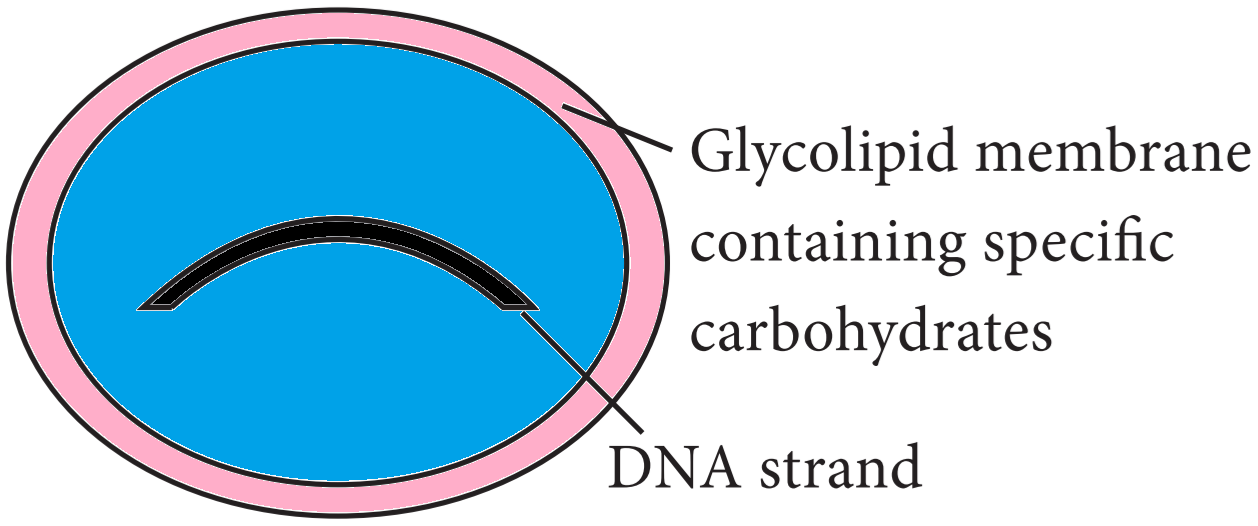
  1. Liposomes can be used for gene therapy as they target the cells affected by a genetic disease. The diagram shows the structure of a liposome.


What feature of a cell surface membrane allows the liposome to target cells affected by a genetic disease?
  1. Carrier molecules.
  2. Phosphate groups.
  3. Protein channels.
  4. Receptor molecules.
  1. Which of the following disorders would gene therapy be least effective?
  1. Cystic fibrosis.
  2. Huntington's disease.
  3. Sickle cell anaemia.
  4. Type II diabetes.
  1. Following are some reasons explaining why gene therapy is not yet fully an effective treatment for genetic diseases.
  1. Lack of knowledge of DNA sequences.
  2. Lack of efficient and safe gene delivery system.
  3. Cost of the technology.
  4. Some diseases involve multiple genes.
  5. Problems with appropriate gene regulation.
Select the correct option.
  1. I, III and V only
  2. II, IV and V only
  3. Ill, IV and V only
  4. I, III and IV only
Answer
  1. (d) Somatic cell gene therapy to replace one ADA gene copy in bone marrow lymphoblasts.
Explanation:

Viral delivery using adenoviruses and retroviruses are specific and ensure effectiveness. The viral vector recognises and bind to receptor on cell and enters cells. The vector is able to deliver genes to specific target tissues and is able to deliver DNA to the nucleus.
  1. (b) DNA attached to a ligand.
Explanation:

Viral delivery using adenoviruses and retroviruses are specific and ensure effectiveness. The viral vector recognises and bind to receptor on cell and enters cells. The vector is able to deliver genes to specific target tissues and is able to deliver DNA to the nucleus.
  1. (d) Receptor molecules.
Explanation:

The liposome's glycolipid membrane containing specific carbohydrates recognises and binds to receptor molecules on cell surface membrane of target cells. The liposome is thus able to deliver genes to specific target cells and is able to deliver DNA into the cell.
  1. (d) Type II diabetes.
Explanation:

Type II diabetes is a type of multifactorial and polygenic (complex) disorder where manifestation of disease may be dependent on the effects of multiple genes in combination with lifestyle and environmental factors.
  1. (b) II, IV and V only
View full question & answer
Question 185 Marks
What is meant by the term bio-pesticide? Name and explain the mode of action of a popular bio-pesticide.
Answer
A biological agent which works as pesticide is called bio pesticide.
Bio pesticides can be of following types:
  • Microbial: Many Bacteria and fungi have pesticidal properties.
  • Herbal: Some plants; like neem and canola can help in controlling pesticides.
  • Plant Incorporated Protectants: These are incorporated into the genes of a plant through genetic engineering. Bt cotton is an example of plant with incorporated pesticidal property. Bacillus thuringiensis affects the pests of Lepidoptera, Coleoptera and Diptera. It is a well-known example of microbial pesticide. A gene in B. thuringiensis produces a toxin which remains inactive in the bacterium. Once this toxin enters the gut of the pest; the alkaline pH makes it active. The toxin results in perforations in the gut of the pest and eventually the pest is killed. This gene has been incorporated in Bt cotton, Bt tomato, Bt brinjal, etc. These GM crops are giving good results.
View full question & answer
Question 195 Marks
Read the following and answer any four questions from (i) to (v) given below:
Insulin used to cure diabetes was earlier extracted from pancreas of slaughtered cattle and pigs. Insulin extracted from an animal source, though caused some patients to develop allergy or other types of reactions to the foreign protein. Human insulin consists of two short polypeptide chains : chain A and chain B, that are linked together by disulphide bridges. In mammals including humans, insulin is synthesised as a pro-hormone which contains an extra stretch called the C-peptide. This C peptide is not present in mature insulin and is removed during maturation into insulin.
  1. Identify A in the given figure.
  1. Polypeptide chain A.
  2. Polypeptide chain B.
  3. Polypeptide chain C.
  4. None of these.
  1. The following is a list of some stages involved in producing human insulin from genetically engineered bacteria.
  1. The bacteria are cultured in a fermenter for large scale production.
  2. Recombinant insulin is extracted from the bacterial cells that expresses insulin gene.
  3. The same restriction enzyme is used again to cut the bacterial plasmid for insertion of the human insulin gene.
  4. Bacteria take up the plasmid carrying the insulin gene.
  5. A restriction enzyme is used to cut human DNA to extract the insulin gene.
Select the correct order of these stages.
  1. 1, 5, 3, 4, 2
  2. 2, 4, 3, 5, 1
  3. 4, 5, 3, 2, 1
  4. 5, 3, 4, 1, 2
  1. To insert the insulin gene into bacterial DNA, both the bacterial plasmid and the human chromosome containing the insulin gene are treated with the same restriction enzyme. Using the same restriction enzyme ensures that
  1. DNA ligase is able to join the segments of human and bacterial DNA.
  2. The exact length of nucleotides matching the insulin gene is removed from the plasmid.
  3. Both the bacterial and human DNA will contain sticky ends.
  4. Sticky ends in the cut plasmid and insulin gene are complementary.
  1. Why is the fermentor important for the production of human insulin by transgenic bacteria?
  1. It provides optimal conditions for the transgenic to multiply rapidly.
  2. It facilitates the extraction and purification of insulin from the transgenic bacteria.
  3. It maximise the rate of fermentation of the transgenic bacteria.
  4. It provides the low-oxygen conditions that are important for insulin production.
  1. A bacteriologist carries out his first attempt at engineering E.coli with the gene for human insulin. During the process, he realises that his stock of DNA ligase has depleted but decides to continue anyway. What is a likely consequence of his decision?
  1. Bacteria with the rDNA will not be able to form colonies in a fermenter.
  2. The resulting plasmids are not able to enter the E.coli bacteria even after applying heat shock.
  3. The resulting E.coli bacteria do not contain the human insulin gene.
  4. The bacterial plasmids do not have sticky ends and are unable to accommodate the human gene.
Answer
  1. (c) Polypeptide chain C.
Explanation:

A represents polypeptide chain Cwhich is removed prior to insulin formation.
  1. (d) 5, 3, 4, 1, 2
  1. (d) Sticky ends in the cut plasmid and insulin gene are complementary.
Explanation:

Each particular restriction enzyme produces unique sticky ends. Using the same enzyme for both the bacterial and human DNA will produce complementary sticky ends that can bind together by complementary base pairing. This would allow the human insulin gene to be inserted into the plasmid.
  1. (a) It provides optimal conditions for the transgenic to multiply rapidly.
Explanation:

The optimal temperature, pH, oxygen and nutrient conditions in the fermenter allow the bacteria containing the insulin gene to reproduce quickly and produce large quantities of it.
  1. (c) The resulting E.coli bacteria do not contain the human insulin gene.
Explanation:

DNA ligase forms strong hydrogen bonds between the DNA bases on the human insulin gene and the bacterial plasmid, producing a continuous double stranded DNA loop. Without DNA ligase, the human insulin gene, despite being able to undergo complementary base pairing with the bacterial DNA at the sticky ends would not be securely inserted into the plasmid. Thus, the resulting E.coli bacteria would receive plasmids that lack the human insulin gene.
View full question & answer
Question 205 Marks
Read the following and answer any four questions from (i) to (v) given below:
Stem cells hold the potential for manifold applications in biotechnology based next generation therapeutics. Scientists are trying to formulate better and more personalised treatment modalities against some seemingly irremediable diseases, by harnessing body's own stem cells and stem cell niche. Stem cells of different origin and level of potency are being investigated for tissue regeneration, treatment of bone defect, drug testing, gene therapy and cell based therapy for muscle damage, spinal cord injury, cancer therapy, etc. 'Tile properties of embryonic and adult stem cells to either self-renew or differentiate into multiple cell lineages make them an attractive source for cell therapies, tissue engineering and as model system for drug screening.
  1. Stem cells are widely used in medical research. Which property of stem cells makes them particularly useful in this research?
  1. They can be fused together to form a zygote.
  2. They can divide and eventually give rise to a whole organism.
  3. They can divide and be made to differentiate into various types of cell.
  4. They will continue to divide indefinitely.
  1. Stem cells can be divided into four main types. Which of the four types of stem cell can differentiate into a limited range of tissues?
  1. Adult stem cells.
  2. Embryonic stem cells.
  3. Fetal stem cells.
  4. Zygotic stem cells.
  1. Which feature of stem cells obtained from blood in the umbilical cord enables their use in the treatment of a variety of blood cancers?
  1. They can differentiate into bone marrow cells.
  2. They can differentiate into any cellular component of blood.
  3. They can replace blood stem cells affected by cancer.
  4. They are totipotent.
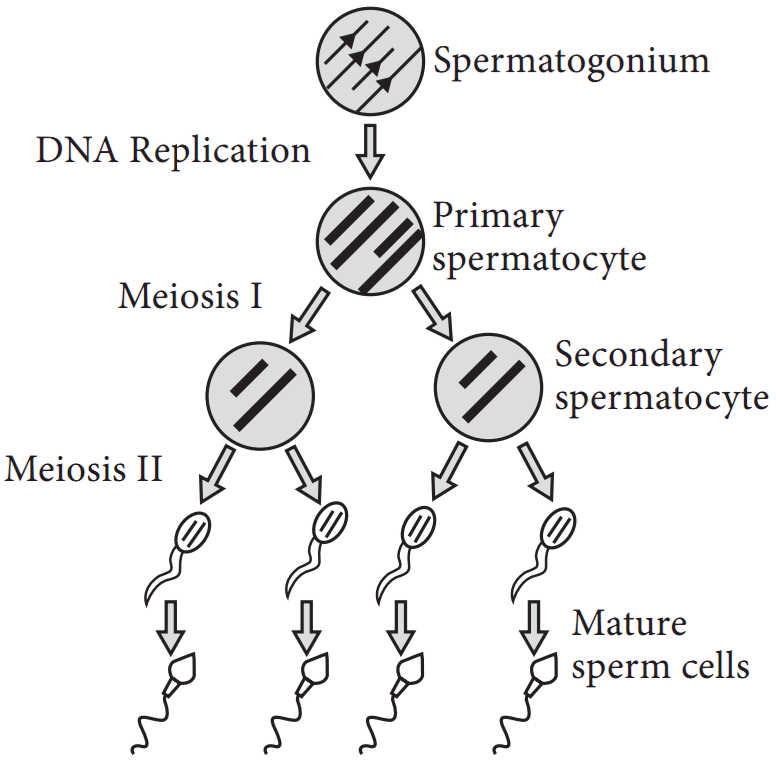
  1. The search for pluripotent stem cells is intense. The spennatogonium is the diploid precursor of haploid sperm in the development pathway of mouse gametes as shown below.


Scientists were interested to find out which stages of sperm development have stem cell capacity. Two experiments were carried out using sterile host males with testes that lacked germ cells. The results are shown in the table.
  Type of cells used Result
Experiment 1 Secondary spermatocytes were injected Fertility was not restored
Experiment 2 Spermatogonia were injected Fertility was restored for the rest of the mouse's life
What property of a stem cell is missing in the secondary spermatocytes?
  1. Specialisation.
  2. Self-renewal.
  3. Commitment.
  4. A proper stem-cell niche.
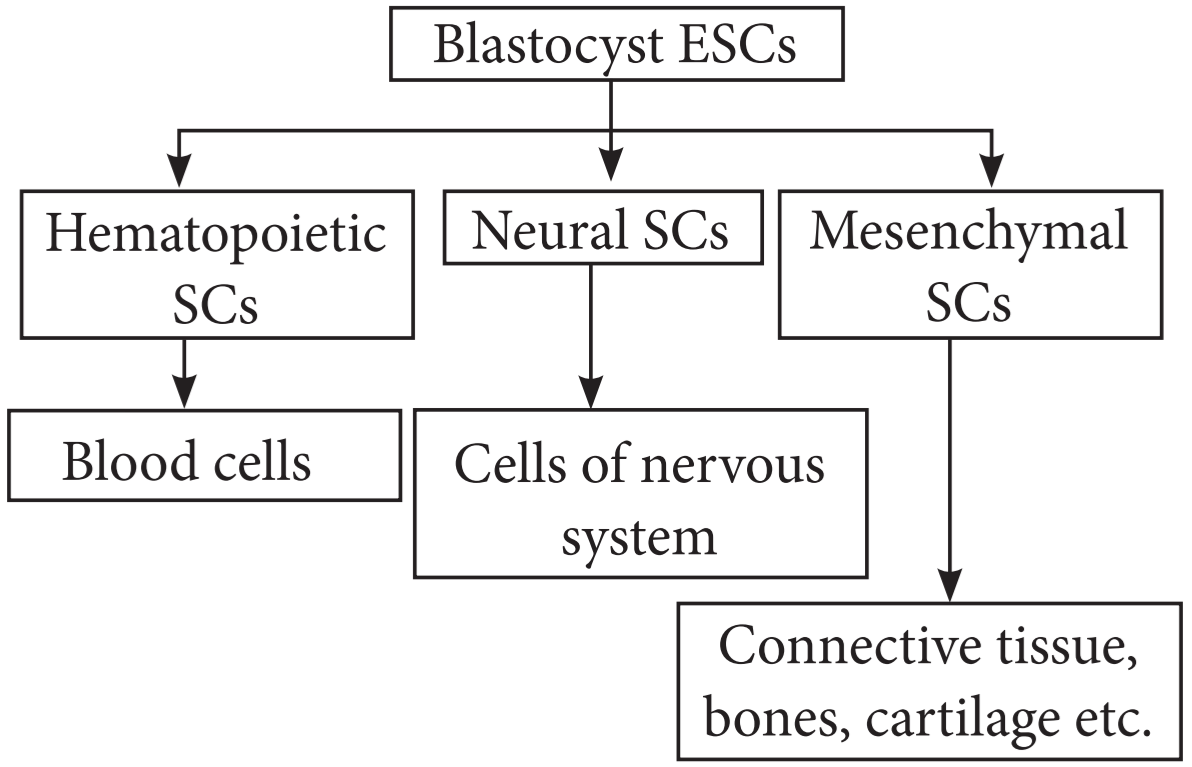
  1. Which feature of embryonic stem cells (ESCs) is illustrated below?
  1. ESCs are capable of dividing.
  2. ESCs are multipotent.
  3. ESCs are pluripotent.
  4. ES Cs show plasticity.
Answer
  1. (c) Tiley can divide and be made to differentiate into various types of cell.
Explanation:

Stem cells are capable of dividing indefinitely and producing copies of themselves. In addition, stem cells can undergo differentiation giving rise to specialized cell types.
  1. (a) Adult stem cells.
Explanation:

Adult stem cells are tissue specific and can enter normal differentiation pathways to form only the specialized cell types of the tissue which they reside in.
  1. (b) They can differentiate into any cellular component of blood.
Explanation:

Umbilical cord blood stem cells are multipotent in that they have the ability to differentiate into limited cell types to give rise to a range of specialized cells that have a specific function. Umbilical cord stem cells found in blood only can differentiate into any cellular component of blood, e.g., white blood cells (such as B lymphocytes, T lymphocytes, natural killer cells, macrophages and platelets etc.) vital for fighting infections and safeguarding the body, red blood cells - important for transporting oxygen to cells.
  1. (d) A proper stem-cell niche.
Explanation:

Stem cell niche is used to describe the microenvironment in which stem cells are found. Since fertility was restored after the injection of spermatogonia, it suggests that spermatogonium displays the general properties of stem cells such as being capable of dividing indefinitely and producing copies of themselves (self-renewal), can undergo differentiation giving rise to specialised cell types (haploid sperm). As fertility was not restored upon injection of secondary spermatocytes, it suggest that the secondary spermatocytes do not have a stem cell niche and do not display the properties of stem cell.
  1. (c) ESCs are pluripotent.
Explanation:

Embryonic stem cells are pluripotent cells. That is, they have the ability to develop into almost any kind of cell in the body (as seen from diagram, hematopoietic SCs, neural SCs and mesenchymal SCs) except extra-embryonic membrane (but not the trophoblast).
View full question & answer
Question 215 Marks
  1. What are biopesticides? Give any two examples of their application.
  2. What is mycorrhiza? How does it act as a biofertilizer?
Answer
  1. Biopesticides: Biological agents/micro organisms that are used for control of weeds, insects and pathogens
Examples:

The bacterium Bacillus thuringiensis, was the first biopesticide to be used on a commercial scale in the world. Spores of this bacterium produce the insecticidal Cry protein. So spores of this bacterium kill larvae of certain insects.

The microorganisms used as biopesticides include viruses, bacteria, fungi, protozoa and mites.
  1. Mycorrhiza: Symbiotic association between the fungus and the roots of higher plants.
These fungi solubilise phosphorus/produce plant growth promoting substances/protect host plants from soil pathogens.
View full question & answer
Question 225 Marks
  1. Name the Source of Taq polymerase. Explain the advantage of its use in biotechnology.
  2. Expand the name of the enzyme ADA. Why is this enzyme essential in the human body? Suggest a gene therapy for deficiency.
Answer
  1. Thermus aquaticus: It is a themostable DNA polymerase, does not denatured and remain active during PCR.
  2. Adenosine deaminase, this enzyme is essential for immune system to function, its deficiency can be cured by gene therapy, lymphocytes from the patients are extracted and cultured, functional ADA cDNA are introduced into lymphocyte using a vector, lymphocytes are returned to the patient.
View full question & answer
Question 235 Marks
Discuss transgenic animals. Explain any four ways in which such animals can be beneficial for humans.
Answer
Animals that have had their DNA manipulated to possess and express an extra (foreign) gene are known as transgenic animals, e.g. transgenic rats, rabbits, pigs, sheep, cows and fishes. Over 95% of all the existing transgenic animals are mice.
There are several benefits of transgenic animals:
  1. Normal physiology and development: Transgenic animals can be specifically designed to allow the study of how genes are regulated and how they affect the normal functioning of the body and its development. For example, the study of complex factors involved in growth such as insulin like growth factors.
  2. Study of disease: Many transgenic animals are designed to increase the understanding of how genes contribute to the development of diseases such as cancer, cystic fibrosis, rheumatoid arthritis and Alzheimer's. These are specially made to serve as models for human diseases, so that investigation of new treatments for diseases is made possible.
  3. Biological products: Human diseases can be treated by medicines that contain biological products:
  1. Transgenic animals that produce useful biological products can be created by the introduction of the portion of the DNA or genes that code for a particular product such as human protein (a-1 antitrypsin) which is used to treat emphysema.
  2. Similar attempts are being made for the treatment of Phenylketonuria (PKU) and cystic fibrosis. For example, the first transgenic cow Rosie produced human protein enriched milk (2.4 g/L) in 1997. The milk contained the human alpha lactalbumin and was nutritionally a more balanced product for human babies than natural cow's milk.
  1. Vaccine safety: Transgenic mice are being used for testing the safety of vaccines before they are used on humans, e.g. polio vaccine. If found reliable and successful they could replace the use of monkeys in order to test the safety of batches of the vaccine.
View full question & answer
Question 245 Marks
Define transgenic animals. Explain in detail any four areas where they can be utilised.
Answer
Transgenic animals are the products of genetic engineering and express specific gene(s) from totally unrelated source. Following are the four main areas where they can be utilised:
  1. To study normal physiology and development these animals can be used to study as to which factor/ gene products are needed at what time of development. By expression of certain genes, they help scientists to understand the normal gene expression at various stages of growth and development.
  2. Study of Diseases: Transgenic animals can be created to serve as models for various human diseases. They also help us understand the involvement of various genes in diseases like cancer, Parkinson’s disease etc.
  3. Vaccine safety: Transgenic animals can be used to test vaccines like polio vaccine. Transgenic mice have shown promising results in this area and would replace the vaccine testing on monkeys in the years to come.
  4. Chemical safety testing: Transgenic animals are created which are more sensitive to certain chemicals/ drugs. These are used to study the toxicity or side effects of that chemical/ drug. The advantage is that we get results faster.
View full question & answer
Question 255 Marks
Read the following and answer any four questions from (i) to (v) given below:
Plants having foreign genes in their genome through genetic engineering are called transgenic plants. Genes can be incorporated either through a vector or through direct introduction of DNA. Bt cotton is a genetically modified organism which is pest resistant. It contain gene cry I Ac and cry II Ab of Bacillus thuringiensis. It is used to control lepidopterans, coleopterans and dipterans. Bt cotton can resist cotton bollworm and produce higher yields. Cry gene produces cry protein or Bt toxin. It is an endotoxin which remains as protoxin in plants and converted to active toxin after getting ingested by the insects. Alkaline pH of the insect gut solubilises the protein crystals, the activated toxin creates pores to the mid guts wall of the insects which cause them to death.
  1. Bt cotton crops are:
  1. Fungal resistant.
  2. Insect resistant.
  3. Drought resistant.
  4. All of these.
  1. Cotton bollwonns are killed by the protein encoded by the gene:
  1. cry I Ac
  2. cry I Ab
  3. cry I Ab
  4. Both (a) and (c).
  1. Which of the following is not an advantage of GM crops?
  1. GM plants enhance nutritional value of food.
  2. GM plants are more tolerant to abiotic stresses.
  3. GM plants have helped to reduce post harvest losses.
  4. GM plants can cause gene transfer to non-target plant species.
  1. Bacillus thuringiensis is a:
  1. Air borne bacteria.
  2. Soil borne bacteria.
  3. Soil borne fungus.
  4. Food borne bacteria.
  1. Assertion: Cotton bollworms are killed by ingesting the leaves of the transgenic plant.
Reason: Bt toxin binds with the midgut wall of the insect and make pores in them.
  1. Both assertion and reason are true and reason is the correct explanation of assertion.
  2. Both assertion and reason are true but reason is not the correct explanation of assertion.
  3. Assertion is true but reason is false.
  4. Both assertion and reason are false.
Answer
  1. (b) Insect resistant.
Explanation:

The genetically modified crop called Bt cotton contains Bt toxin genes. The gene cry I Ac and cry II Ab control cotton bollworms. Similarly, cry I Ab has been introduced in Bt corn to protect the same from corn borer.
  1. (d) Both (a) and (c).
Explanation:

cry I Ab has been introduced to Bt corn to protect them from corn borer. cry I Ac and cry II Ab control cotton bollworms.
  1. (d) GM plants can cause gene transfer to non-target plant species.
Explanation:

Gene transfer to non-target plant species is a major disadvantageous concern of GM plants. lt can even cause to produce 'superweeds'
  1. (b)Soil borne bacteria.
  1. Both assertion and reason are true and reason is the correct explanation of assertion.
Explanation:

The Bt toxin proteins exist as inactive protoxins but once an insect ingests the inactive toxin it is converted into an active form of toxin due to the alkaline pH of the alimentary canal that solublises the crystals. The activated toxin binds to the surface of midgut epithelial cells and create pores which cause cell swelling and lysis and foully cause death of the insect.
View full question & answer