Questions

3 Marks Question

Take a timed test

69 questions · self-marked practice — reveal the answer and mark yourself.

Question 13 Marks
How do biofertilisers enrich the fertility of the soil?
Answer
Bio-fertilizers are living organisms which help in increasing the fertility of soil. It involves the selection of beneficial microorganisms that help in improving plant growth through the supply of plant nutrients. These are introduced to seeds, roots, or soil to mobilize the availability of nutrients by their biological activity. Thus, they are extremely beneficial in enriching the soil with organic nutrients. Many species of bacteria and cyanobacteria have the ability to fix free atmospheric nitrogen. Rhizobium is a symbiotic bacteria found in the root nodules of leguminous plants. Azospirillium and Azotobocter are free living nitrogenfixing bacteria, whereas Anabena, Nostoc, and Oscillitoria are examples of nitrogen-fixing cyanobacteria. Bio-fertilizers are cost effective and eco-friendly.
View full question & answer
Question 23 Marks
In which food would you find lactic acid bacteria? Mention some of their useful applications.
Answer
Lactic acid bacteria can be found in curd.
Some of their useful applications are as follows:
  1. It is this bacterium that promotes the formation of milk into curd.
  2. The bacterium multiplies and increases its number, which converts the milk into curd.
  3. They also increase the content of vitamin $B_{12}$ in curd.
  4. Lactic acid bacteria are also found in our stomach where it keeps a check on the disease-causing micro-organisms.
View full question & answer
Question 33 Marks
Three water samples namely river water, untreated sewage water and secondary effluent discharged from a sewage treatment plant were subjected to BOD test. The samples were labelled A, B and C; but the laboratory attendant did not note which was which. The BOD values of the three samples A, B and C were recorded as 20mg/L, 8mg/L and 400mg/L, respectively. Which sample of the water is most polluted? Can you assign the correct label to each assuming the river water is relatively clean?
Answer
BOD (Biochemical Oxygen Demand) is the determination the amount of the oxygen that would be consumed if all the organic matter in one liter of water were oxidised by bacteria.The higher the BOD, higher is the pollution potential of water.
The highest BOD is of sample C and hence, it will be untreated sewage water which is the most polluted. The river water should have least BOD hence, it will be the sample B. The seconday effluent would have higher BOD than river water by less than that of untreated sewage and hence, it is the sample A.
  • Sample A- secondary effluent
  • Sample B- river water
  • Sample C- untreated sewage
View full question & answer
Question 43 Marks
Name some traditional Indian foods made of wheat, rice and Bengal gram (or their products) which involve use of microbes.
Answer
  • Wheat product: Bread, cake.
  • Rice product: Idli, dosa.
  • Bengal gram product: Dhokla, Khandvi.
View full question & answer
Question 53 Marks
Secondary treatment of the sewage is also called Biological treatment. Justify this statement and explain the process.
Answer
Involves biological organism such as aerobic and anerobic microbes/bacteria and fungi to digest/consume organic waste.
Primary effluent is passed into aeration tank where vigorous growth of aerobic microbes (flocs) take place, BOD reduced (microbes consume major part of organic matter), effluent is passed to settling tank where flocs sediment to produce activated sludge, sludge is pumped to anerobic sludge digester to digest bacteria and fungi.
View full question & answer
Question 63 Marks
Describe how biogas is generated from activated sludge. List the components of biogas.
Answer
A small part of the activated sludge is pumped back into aeriated tank to server as the inoculum. The remaining major part of the sludge is pumped into large tanks called anaerobic sludge digesters. Other kind of bacteria which grow anaerobically, digest the bacterial and the fungi in the sludge. During this digestion, bacteria produce a mixture of gases such as methane, hydrogen sulphide and corbondioxide. These gases from biogas and can be used as source of energy as it is inflammable.
View full question & answer
Question 73 Marks
Name the genus to which baculoviruses belong. Describe their role in the integrated pest management programmes.
Answer
Nucleopolyhedrovirus,
They control only species specific pest, do not affect non target organisms/beneficial insects are conserved/they aid in IPM problems/no negative impact on plants or other animals.
View full question & answer
Question 83 Marks
Mention the product and its use produced by each of the microbes listed below:
  1. Streptococcus.
  2. Lactobacillus.
  3. Saccharomyces cerevisiae.
Answer
  1. Streptokinase, clotbuster/dissolves clot from blood vessels.
  2. Lactic acid, coagulates milk/partial digestion of milk proteins.
  3. Ethyl alcohol $+\ CO_2$, ferments dough to make bread/idli.
View full question & answer
Question 93 Marks
Explain the role of baculoviruses as biological control agents. Mention their importance in organic farming.
Answer
Baculoviruses produce narrow spectrum insecticides to kill insects and other arthropods which are species specific, does not affect non-target organisms/no negative impact on other insects, mammals, birds, or fish.Eliminates the use of chemical pesticides/conserve beneficial insects/integrated pest management.
View full question & answer
Question 103 Marks
What are Methanogens? Name the animals they are present in and the role they play there.
Answer
  • Bacteria which grow anaerobically on cellulosic material.
  • Present in cattle. (rumen)
  • Breakdown of cellulose, helps in nutrition of animal/digestion of cellulose.
View full question & answer
Question 113 Marks
Describe how do 'flocs' and 'activated sludge' help in Sewage Treatment.
Answer
Flocs- Aerobic microbes consume the major part of the organic matter in the effluent, significantly reduces BOD.
Activated sludge- Small part of activated sludge is used as inoculum and pumped back to aeration tank/pumped into anaerobic sludge digesters where microbes or bacteria grow anaerobically to produce $\mathrm{CH}_4$ or $\mathrm{H}_2 \mathrm{S}$ or $\mathrm{CO}_2$ or biogas.
View full question & answer
Question 123 Marks
Given below is a list of six micro-organisms. State their usefulness to humans.
  1. Nucleopolyhedrovirus.
  2. Saccharomyces cerevisiae.
  3. Monascus purpureus.
  4. Trichoderma polysporum.
  5. Penicillium notatum.
  6. Propionibacterium sharmanii.
Answer
  1. As biocontrol agents/species specific/narrow spectrum insecticidal application/no negative impacts on plants/mammals/birds/fish/non-target insects/Integrated Pest Management.
  2. Used in bread making/brewing industry/ethanol/$CO_2$ production.
  3. Cholesterol-lowering agent/competitively inhibiting the enzyme responsible for synthesis of cholesterol.
  4. Produces Cyclosporin - A/immuno suppressive agent.
  5. Produces antibiotic penicillin.
  6. Produces large holes in Swiss cheese/produces large amount of $CO_2$ in Swiss cheese.
View full question & answer
Question 133 Marks
Choose any three microbes, from the following which are suited for organic farming which is in great demand these days for various reasons. Mention one application of each one chosen.
Mycorrhiza; Monascus; Anabaena; Rhizobium; Methanobacterium; Trichoderma.
Answer
Mycorrhiza: (Fungal Symbiont of the association) Absorb phosphorus from soil.
Anabaena: Fix atmospheric nitrogen/Adds organic matter to the soil.
Rhizobium: Fix atmospheric nitrogen (in leguminous plants).
Methanobacterium: They digest cellulosic material, and the product/spent slurry can be used as fertiliser.
Trichoderma: Biocontrol agent for several plant pathogens.
View full question & answer
Question 143 Marks
  1. Why are the fruit juices bought from market clearer as compared to those made at home?
  2. Name the bioactive molecules produced by Trichoderma polysporum and Monascus Purpureus.
Answer
  1. The fruit juices available in the market are made clarified by treating them with the enzymes – pectinases and proteases. So, they are clearer as compare to those made at home.
  2. Trichoderma polysporum is used to produce immune suppressive agent cyclosporine A. Monascus purpureus is used to produce blood-cholesterol-lowering agents statins.
View full question & answer
Question 153 Marks
Name the two different categories of microbes naturally occurring in sewage water. Explain their role in cleaning sewage water into usable water.
Answer
Aerobic and anaerobic // fungi, bacteria.
(After primary treatment) growth of aerobic microbes into aeration tanks reduces BOD // consumes organic matter, Anaerobic bacteria decomposes the sludge (in the anaerobic sludge digesters) forming biogas etc.
View full question & answer
Question 163 Marks
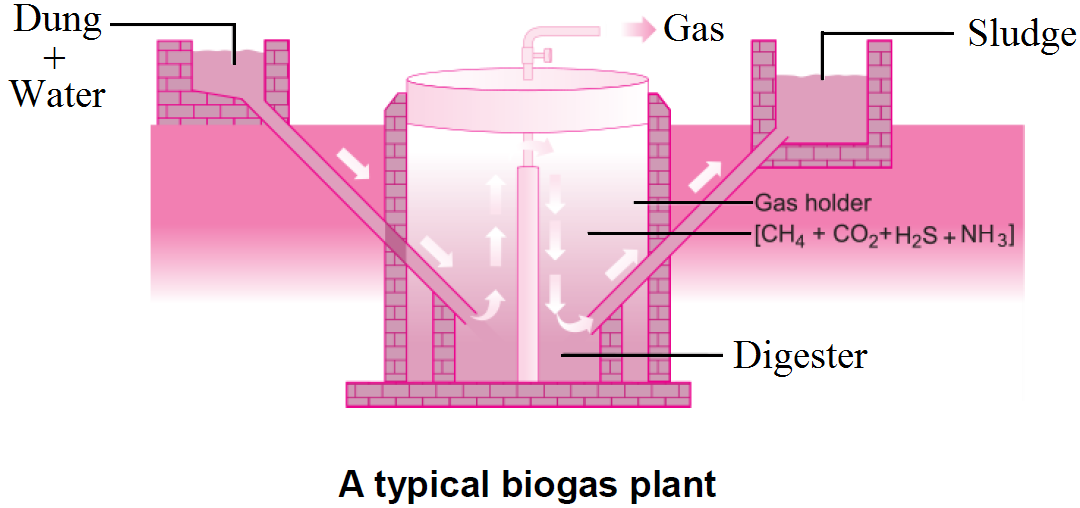
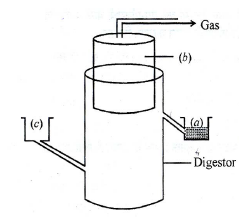
The diagram above is that of a typical biogas plant.Explain the sequence of events occurring in a biogas plant. Identify a, b and c.
Answer
Bio wastes are collected and a slurry of dung is fed, a floating cover having gas outlet is placed over slurry which keeps on rising as the gas is produced in the tank, the spent slurry is removed through another outlet and may be used as fertiliser.
  1. Sludge loader.
  2. Gas holder/CH4 and CO2.
  3. Dung and water.
View full question & answer
Question 173 Marks
Identify a, b, c, d, e and f in the table given below:
  Organism Bioactive molecule Use
1.

2.

3.
Monascus perpureus (yeast)

c

e
a

d

Cyclosporin A
b

antibiotic

f
Answer
a - Statins,
b - Blood cholesterol lowering agent,
c - Penicillium notatum,
d - Penicillin,
e - Trichoderma polysporum,
f - Immuno-suppressive agent in organ transplant patients.
View full question & answer
Question 183 Marks
  1. Organic farmers prefer biological control of diseases and pests to the use of chemicals for the same purpose. Justify.
  2. Give an example of a bacterium, a fungus and an insect that are used as biocontrol agents.
Answer
  1. Chemical methods often kills both useful and harmful life forms indiscriminately. Eradication of the creatures that are often described as pests in not only possible, but also undersirable, for without them the beneficial predatory and parasitic insects which depend upon them as food or hosts would not be able to survive.
  2. Insects - Ladybird and Dragonflies.
Bacteria - Bacillus thuringiensis.

Fungus - Trichoderma.
View full question & answer
Question 193 Marks
Explain the changes that milk undergoes when suitable starter/ inoculum is added to it. How does the end product formed prove to be beneficial for human health?
Answer
Curd formation takes place.Explanation:
  1. When a small amount of curd is added to the fresh milk then the curd has millions and billions of lactobacillus and lactic aid bacteria in it.
  2. It grown in the million upon getting suitable temperature then these bacteria convert the lactose sugar in the milk to lactic acid.
  3. This forms a coagulation in the the milk and also digests the caesin protein in milk. This process is known as curdling of milk.
  4. These microbes also increases the nutrient quality of milk as it is a great source of vitamin $B_{12}$.
View full question & answer
Question 203 Marks
  1. Match the microbes listed under Column-A with the products mentioned under Column-B.
 
Column-A
 
Column-B
(a)
Penicillium notatum
(i)
Statin
(b)
Trichoderma polysporum
(ii)
Ethanol
(c)
Monascus purpurea
(iii)
Antibiotic
(d)
Saccharomyces cerevisiae
(iv)
Cyclosporin-A
  1. Why does ‘Swiss Cheese’ develop large holes?
Answer
  1.  
 
Column-A
 
Column-B
(a)
Penicillium notatum
(iii)
Antibiotic
(b)
Trichoderma polysporum
(iv)
Cyclosporin-A
(c)
Monascus purpurea
(i)
Statin
(d)
Saccharomyces cerevisiae
(ii)
Ethanol
  1. Swiss cheese develops large holes because of the large amount of carbon dioxide produced by the bacterium Propionibacterium shermanii.
View full question & answer
Question 213 Marks
Name the group of bacteria involved in setting milk into curd. Explain the process they carry in doing so. Write another beneficial role of such bacteria.
Answer
Lactobacillus and other Lactic Acid Bacteria (LAB) are responsible for the curdling of milk. These bacteria utilise and act upon the milk sugar lactose leading to its oxidation to lactic acid. This lactic acid produced in turn leads to partial digestion and coagulation of milk proteins to form curd. Action by LAB also lead to an increase in vitamin $B_{12}$ content of the curd.
On consumption of curd, these bacteria add to the healthy and beneficial gut flora outcompeting the growth of harmful gut flora.
View full question & answer
Question 223 Marks
What is the difference between Bt and Bt-cotton? Explain the use of Bt as a biological control agent.
Answer
Bt stands for bacteria name Bacillus thuringiensis whose gene has been incorporated in cotton plant to make Bt-cotton. These are available in sachets and are mixed with water and sprayed onto vulnerable plants such as brassicas and fruit trees, where these are eaten by the insect larvae. In the gut of the larvae, the toxin is released and the larvae get killed.
View full question & answer
Question 233 Marks
What is the use of lipase and streptokinase enzymes?
Answer
Lipases are added in detergents for removing oily stains, while streptokinase acts as 'clot buster' helps in clearing blood clots inside the blood vessels.
View full question & answer
Question 243 Marks
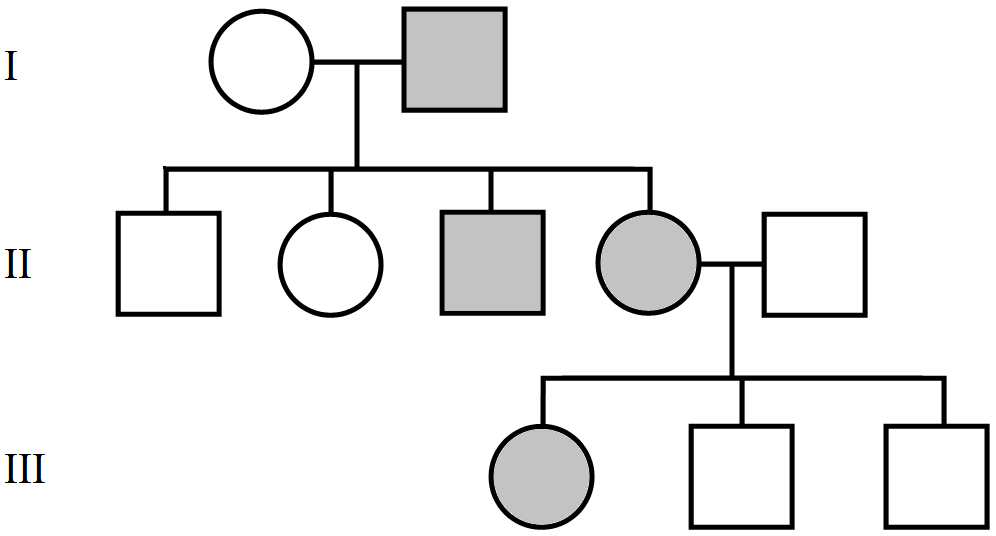
Study the given pedigree chart and answer the questions that follow.
  1. Is the trait recessive or dominant?
  2. Is the trait sex linked or autosomal?
  3. Give the genotypes of the parents in generation I and of their third and fourth child in generation II.
Answer
If we take A and a as the traits:
  1. Recessive.
  2. Autosomal.
  3. Parents-Aa and Aa.
Third child-aa.

Fourth child-Aa.
View full question & answer
Question 253 Marks
What are the advantages of using biofertilisers in agriculture?
Answer
Following are the advantages of using biofertilisers in agriculture:
  1. Biofertilisers do not cause any pollution.
  2. These are cheap and economical.
  3. Some of them act as biopesticides also.
  4. In ill-irrigated conditions few biofertilisers can enhance the crop yield.
  5. They improve soil structure and function.
  6. They make available vitamins and other growth promoting biochemicals.
View full question & answer
Question 263 Marks
Make a list of three household products along with the names of the microorganisms producing them.
Answer
  1. Curd is formed from milk by Lactobacillus.
  2. Swiss cheese: Propionibacterium sharmanii.
  3. Bread: Saccharomyces cereviseae.
View full question & answer
Question 273 Marks
What is LAB? What is its role in human stomach?
Answer
  1. Lactic acid bacteria.
  2. It play a very beneficial role in checking disease-causing microbes.
View full question & answer
Question 283 Marks
Name the blank spaces a, b, c and d given in the following table:
Type of microbe Name Commercial product
Bacterium a Lactic acid
Fungus b Cyclosporin A
c Monascus purpureus Statins
Fungus Penicillium notatum d
Answer
  1. Lactobacillus.
  2. Trichoderma polysporum.
  3. Fungus.
  4. Penicillin
View full question & answer
Question 293 Marks
Answer the following questions:
What are mycorrhiza? How does it act as a biofertiliser?
Answer
The symbiotic association of fungi and roots of higher plants is called mycorrhiza. The fungal hyphae absorbs phosphorus from soil and passes it to the soil and thus enriches the soil. It also protects plants by providing resistance from root-borne pathogens, tolerance to salinity and drought.
View full question & answer
Question 303 Marks
Give reasons, why?
  1. Cow dung is preferred for biogas production.
  2. Saccharomyces cerevisiae is commonly known as baker's yeast.
Answer
  1. The excreta of cattle commonly called gobar is rich in methanogenic bacteria. Thus, cattle dung can be used for generation of biogas, commonly called gobar gas.
  2. Saccharomyces cerevisiae used for bread making and commonly called brewer's yeast.
View full question & answer
Question 313 Marks
Why are biogas plants more suitable and advantageous in rural area?
Answer
Biogas plants are most suitable and advantageous in rural areas because of the following reasons:
  1. Raw material for biogas plant is mainly cow dung which is available in plenty in rural areas where cattle are used.
  2. The biogas is used for lighting and cooking in these areas as distribution is only in short distances.
  3. The spent slurry from the biogas plant is used as a fertiliser for agriculture hence are more suitable in rural areas.
View full question & answer
Question 323 Marks
Answer the following questions:
What are biopesticides? Give any two examples of their application.
Answer
Biopesticides are biological agents and their products are used to control pests like weeds, insects and pathogens. Bioherbicides like cochineal insects Lactoblastic cactorum controlled the spread of Opuntia, and Baculoviruses are viral pathogens that kill insects and other arthropods.
View full question & answer
Question 333 Marks
Enzymes play an important role in detergents that we use for washing clothes. These enzymes are obtained from some unique microorganisms, enlist atleast two of them. Also name the enzyme.
Answer
Enzymes and their functions:
Enzyme
Uses
Lipases
Used in detergent formulations. They are helpful in removing oily stains from the laudry.
Pectinases and proteases
Used in bottled juices for clearing of juices.
Streptolinase
Obtained from genetically modified form of bacterium streptococcus.
It is used as a 'clot buster' for removing clots from the blood vessels of heart patients, who have undergone myocardial infarction leading to heart attack.
View full question & answer
Question 343 Marks
Suggest three features of plants that will prevent insect and pest infestation.
Answer
  1. Increasing hair growth on aerial parts of plants.
  2. Rendering the flowers nectar less.
  3. Enabling plants to secrete insect killing chemicals (toxins).
View full question & answer
Question 353 Marks
  1. What is activated sludge? How is it produced?
  2. State some uses of biogas.
Answer
  1. When the BOD ofefiluent is reduced significantly, it is then passed into a settling tank, where the bacterial 'flocs'' are allowed to sediment' This sediment is called activated sludge.
  2. The biogas thus produced is used for cooking and lighting.
View full question & answer
Question 363 Marks
How do mycorrhizal fungi help the plants harbouring them?
Answer
They also form symbiotic association with plants, i.e. mycorrhiza, which absorb phosphorus from soil and passes it to the plants. Many members of genus Glomus form mycorrhiza. Plants with mycorrhizal association show other benefits also such as.
  1. Resistance to root-borne pathogens.
  2. Tolerance to salinity and drought.
  3. Increase in plant growth and development.
View full question & answer
Question 373 Marks
An organic farmer relies on natural predation for controlling plant pests and diseases. Justify giving reasons why this is considered to be a holistic approach.
Answer
  • Organic farming is a holistic approach that seeks to develop an understanding of the webs of interaction among the myriads of organisms that form the flora and fauna of the field.
  • The organic farmer works to create a system where the insects (called pests) are not eradicated, but kept at manageable levels by a complex system of checks and balance within a living and vibrant ecosystem.
  • According to the organic farmer, the eradication of the creatures, called pests, is not only possible but also undesirable, because many beneficial predatory and parasitic insects cannot survive without them.
  • Biocontrol agents have no impact on other useful organisms, as they are species-specific.
  • Such a use of biocontrol measures reduces the use of chemical pesticides and thereby the pollution.
View full question & answer
Question 383 Marks
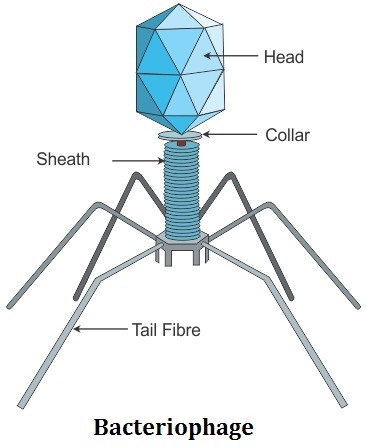
What are viruses parasitising bacteria called? Draw a well labelled diagram of the same.
Answer
Virus which attacks bacteria is called bacteriophage. The virus enters a bacterial cell and controls the genetic material of bacteria in order to produce more viruses.
View full question & answer
Question 393 Marks
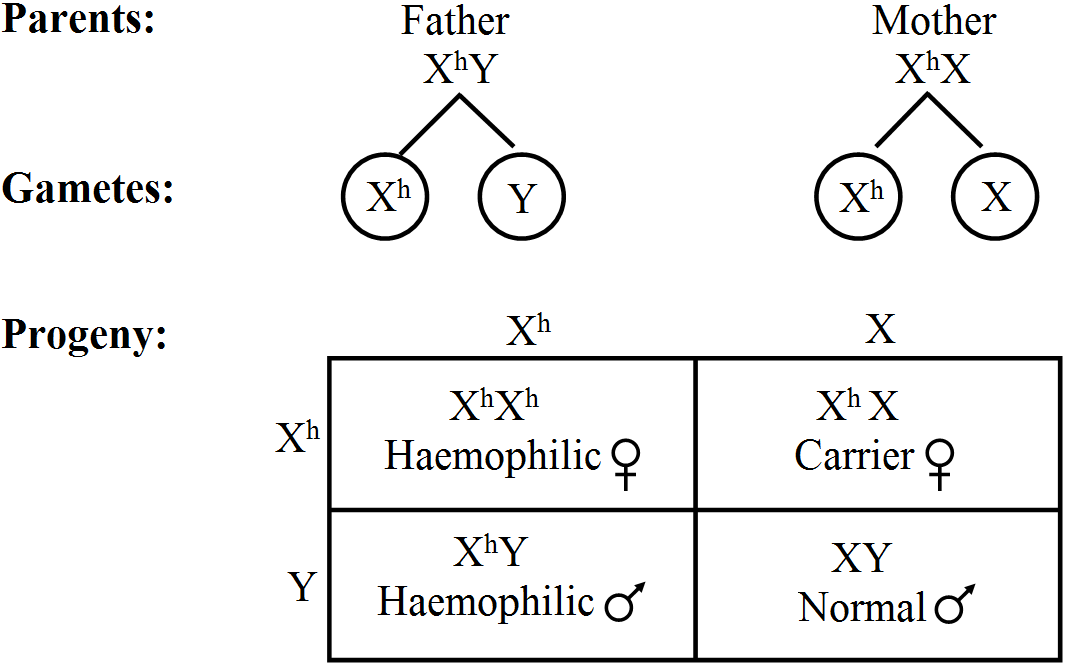
Recently a girl baby has been reported to suffer from haemophilia. How is it possible? Explain with the help of a cross.
Answer
Haemophilia is a sex-linked disease that occurs due to the presence of a recessive sex linked gene h carried by X- chromosome. For a daughter to be haemophilic mother should be a carrier $\left(\mathrm{X}^h \mathrm{X}\right)$ and father should be haemophilic $\left(\mathrm{X}^h \mathrm{Y}\right)$. A female becomes haemophilic only when both its X -chromosomes carry the gene $\left(\mathrm{X}^h \mathrm{X}^h\right)$. The cross is as follows:
View full question & answer
Question 403 Marks
Baculoviruses are good examples of biocontrol agents. Justify giving three reasons.
Answer
Baculoviruses belong to the genus Nucleopolyhedrovirus:
  1. They are species-specific, narrow spectrum insecticides that are the pathogens which attack insects and other arthropods.
  2. They have no negative impacts on plants, birds, mammals, fish, and even non-target insects.
  3. This is desirable because beneficial insects are conserved to aid in integrated pest management (IPM) programmes.
View full question & answer
Question 413 Marks
Microbes have various contributions to the human welfare. For example, lactic acid bacteria help in checking disease causing microbes in our stomach. With reference to this fact, state the contribution of different microbes in the process of digestion in ruminants.
Answer
The evolutionary success of ruminants is based on the efficiency of their digestive system in extracting nutrition from low quality food or say cellulose, which is undigestible matter in other mammals. The key to the ruminant digestive system is the presence of symbiotic microorganisms in their stomach.
These microorganisms produce cellulase enzyme, which breaks cell walls of plant material to release fatty acid, which constitute a significant portion of overall energy budget input of a ruminant.
View full question & answer
Question 423 Marks
Describe a biogas plant.
Answer
Mechanism of Biogas or Gobar Gas Production:
  • The raw material for biogas production is excreta (dung) of cattle.
  • The biogas plant has a concrete tank (10–15 feet deep) in which bio-wastes and slurry of dung is collected.
  • The tank has a floating cover which rises on production of gas in the tank.
  • Methanobacterium in the dung act on the bio-wastes to produce biogas.
  • The gas produced is supplied to nearby houses by an outlet.
  • Through another outlet, the spent slurry is removed to be used as fertiliser.
  • Biogas is used as fuel for cooking and lighting.
View full question & answer
Question 433 Marks
This sludge can be used as an inoculum or as a source of biogas. Explain.
Answer
  • A small amount of activated sludge is pumped back into the aeration tank as inoculum; the microbes grow into flocs and consume the organic matter to reduce the BOD.
  • A large part of the activated sludge is pumped into anaerobic sludge digesters where the anaerobic bacteria digest the bacteria and fungi of the flocs; during this process gases like methane, hydrogen sulphide and carbon dioxide are formed, which constitute the biogas.
View full question & answer
Question 443 Marks
Name two acid producing bacteria.
Answer
  1. Acetobacter aceti produces acetic acid BE.
  2. Clostridium butylicum produces butyric acid.
View full question & answer
Question 453 Marks
Write a note on fermentation by microbes and its applications.
Answer
Fermentation is the process ofconversion of carbohydrates to alcohol and $CO_2$, by some microorganisms in the absence of $O_2$. Microbes via fermentation are utilised for the syntlesis of a number ofproducts valuable for human beings.
Some ofthe applications of microbes are-
  1. Production ofbread using baker's yeast.
  2. Microbes are used to ferment fish, soybean, bamboo shoots, etc.
  3. Different varieties ofcheese are produced by fermentation via microbes.
  4. Wine, beer and other alcoholic drinks are also produced by fermentation.
  5. Vinegar is also produced by fermentation.
View full question & answer
Question 463 Marks
What is the use of aeration tank in the treatment of sewage?
Answer
Aeration tank is meant for agitating the liquid effluent from the primary settling tank, where the air is allowed to pass through agitating mixture to make it aerobic.
View full question & answer
Question 473 Marks
Discuss about the major programs that the Ministry of Environment and Forests, Government of India, has initiated for saving major Indian rivers from pollution.
Answer
The untreated sewage is often discharged directly into rivers leading to their pollution and increase in water-borne diseases. The Ministry of Environment and Forests has initiated Ganga Action Plan and Yamuna Action Plan to save these major rivers of our country from pollution. Under these plans, it is proposed to build a large number of sewage treatment plants so that only treated sewage may be discharged in the rivers.
View full question & answer
Question 483 Marks
Name the source of streptokinase. How does this bioactive molecule function in our body?
Answer
Source: Streptococcus. Streptokinase is a clot buster, i.e., it removes clot from the blood vessels of patients who had a heart attack.
View full question & answer
Question 493 Marks
Identify a, b, c, d, e and f in the table given below:
S. No.
Organism
Bioactive molecule
Use
A.
Monascus purpureus (yeast)
a
b
B.
c
d
antibiotic
C.
e
Cyclosporin A
f
Answer
  1. Statin.
  2. It is a blood-cholesterol lowering agent.
  3. Penicillium notatum.
  4. Penicillin.
  5. Trichoderma polysporum.
  6. It is used as an immune suppressive agent in organ-transplant patients.
View full question & answer
Question 503 Marks
Identify A, B, C and D in the table given below:
Micro-organism
Product
Biological activity
Medical ailment/ Procedure
A
Streptokinase
Clot buster
D
Trichoderma
B
C
Transplant
Polysporum
 
 
Surgery
Answer
  • A: Streptococcus.
  • B: Cyclosporin A.
  • C: Immunosuppressive agent.
  • D: Removal of clots from blood vessels of patients who had myocardial infarction.
View full question & answer
Question 513 Marks
What are the properties of an antibiotic?
Answer
  1. It should not kill useful microorganisms found in alimentary canal of man.
  2. It should not cause side-effects in the host.
  3. It should have quick action and should be broad spectrum, i.e., must have the ability to act on various pathogenic microorganisms which differ from each other.
  4. The action of antibiotics must be specific on the pathogens only.
View full question & answer
Question 523 Marks
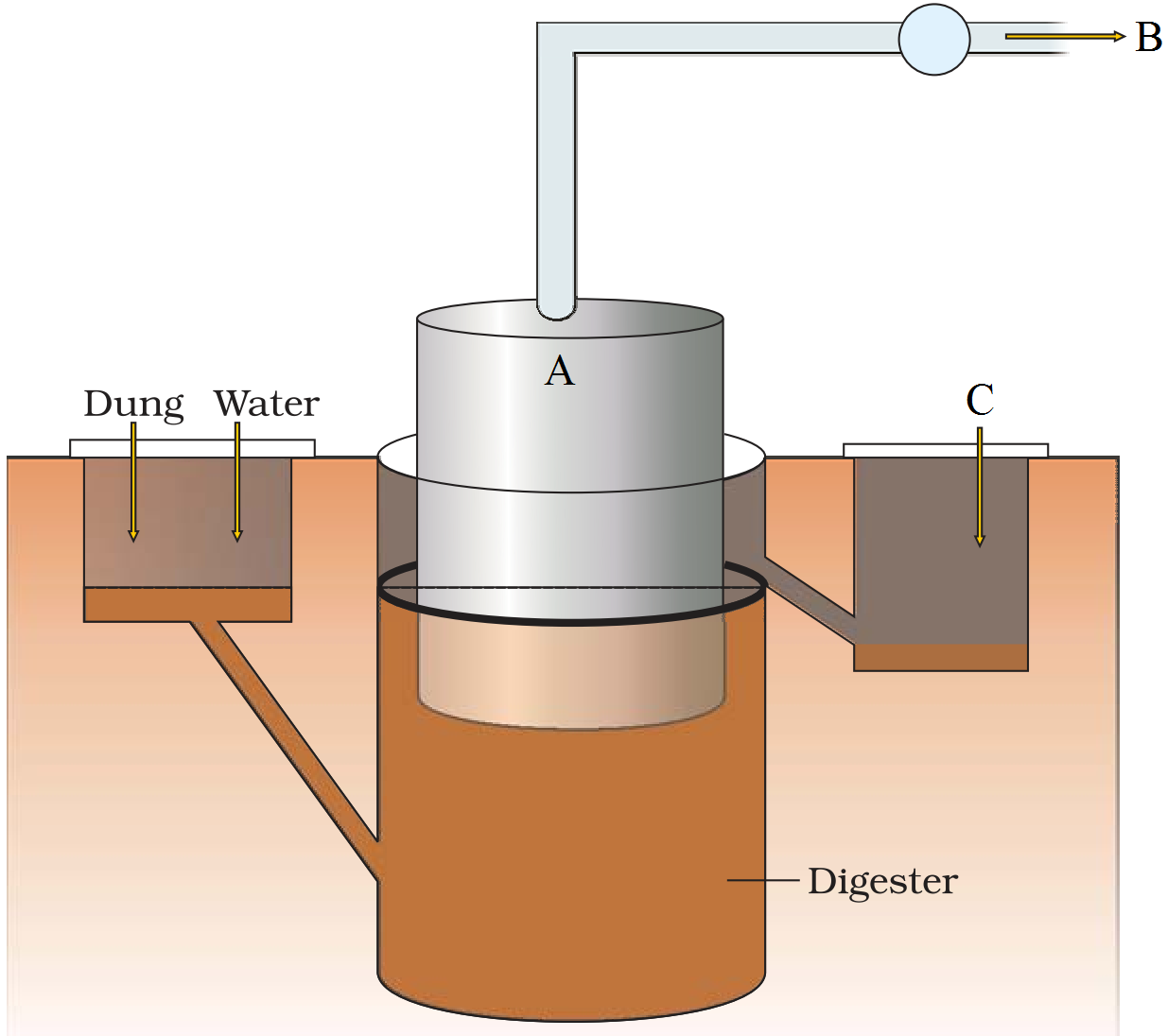
Given below is a figure of a biogas plant.
  1. Identify A and justify its floating nature.
  2. Identify the products B and C and discuss their significance.
Answer
  1. A is the floating cover which is placed over the slurry, which keeps on rising as the gas is produced in the tank due to the microbial activity.
  2. B is the biogas which is a mixture of gases consisting of methane, hydrogen sulphide and carbon dioxide. It can be used as a source of energy to nearby houses as it is inflammable. C is the spent slurry or sludge which is removed through another outlet and may be used as fertiliser.
View full question & answer
Question 533 Marks
How are baculoviruses and Bacillus thuringiensis used as biocontrol agents? Why are they preferred over readily available chemical pesticides?
Answer
Bacillus thuringiensis:
  • The spores of this bacterium are insecticidal and used to control the larvae of many insect pests.
  • They are available in sachets as dried spores, which have to be mixed with water and sprayed on to the vulnerable plants.
  • When they are eaten by the larvae, the toxin becomes active in the gut of the larvae and kills the larvae.
  • Through genetic engineering, the gene coding for the toxic protein is introduced into crop plants which makes them resistant to the insect pest. Biological control of pests and pathogens is preferred to chemical pesticides because.
  1. The chemicals are toxic and extremely harmful to human beings and other animals.
  2. The chemicals also cause pollution of soil, groundwater and our agricultural products.
  3. The chemicals kill the useful organisms also.
View full question & answer
Question 543 Marks
Name any three enzymes used in industry and explain their importance.
Answer
S.No. Enzyme Uses
1. Lipase (a)Used in detergent formulations.(b) Helps in removing oily stains from laundry
2. Pectinase and protease Used for clarifying bottled juices.
3. Streptokinase (produced by Streptococcus and modified by genetic engineering) Used as ‘clot-buster’ for removing clots from blood vessels of patients who have undergone myocardial infarction.
View full question & answer
Question 553 Marks
What is the pathogenic property of baculoviruses used as a biocontrol agent? Name the genus of these organisms.
Answer
  • They are species-specific, narrow-spectrum insecticides, which have no negative impacts on non-target insects and other groups of animals and plants.
  • This property helps in an overall integrated pest management (IPM), as beneficial insects are conserved.
  • These organisms belong to the genus Nucleo polyhedrovirus.
View full question & answer
Question 563 Marks
Name the enzyme produced by Streptococcus bacterium. Explain its importance in medical sciences.
Answer
Streptokinase is the enzyme produced by Streptococcus:
  • It is used as a clot-buster to remove clots from the blood vessels of patients who have suffered myocardial infarction.
View full question & answer
Question 573 Marks
Some microbes act as very good biofertilisers. Explain with the help of three suitable examples.
Answer
  1. Mycorrhizae:
  • The fungus absorbs phosphorus from the soil and passes it to the plant.
  • Plants with mycorrhiza show resistance to root-borne pathogens.
  • They show increased tolerance to salinity and drought.
  • There is an overall increase in plant growth and development.
  1. Anabaena:
  • It is a cyanobacterium that fixes atmospheric nitrogen in the soil; it also adds organic matter to the soil through its photosynthetic activity.
  1. Rhizobium:
  • It forms nodules in the roots of legumes and fixes atmospheric nitrogen in the form of ammonia which the plants use.
  1. Trichoderma:
  • This fungus lives freely in the root ecosystem of many plants. It is used as biocontrol agent against many plant pathogens.
View full question & answer
Question 583 Marks
Three microbes are listed below. Name the product produced by each one of them and mention their use:
  1. Aspergillus niger.
  2. Trichoderma polysporum.
  3. Monascus purpureus.
Answer
  1. Aspergillus niger:
  • It produces citric acid, which is used as food preservative.
  1. Trichoderma polysporumente:
  • It produces cyclosporin A, which is used as an immunosuppressive agent for organ transplant patients.
  1. Monascus purpureus:
  • It produces statins, which are used as blood cholesterol-lowering agent.
View full question & answer
Question 593 Marks
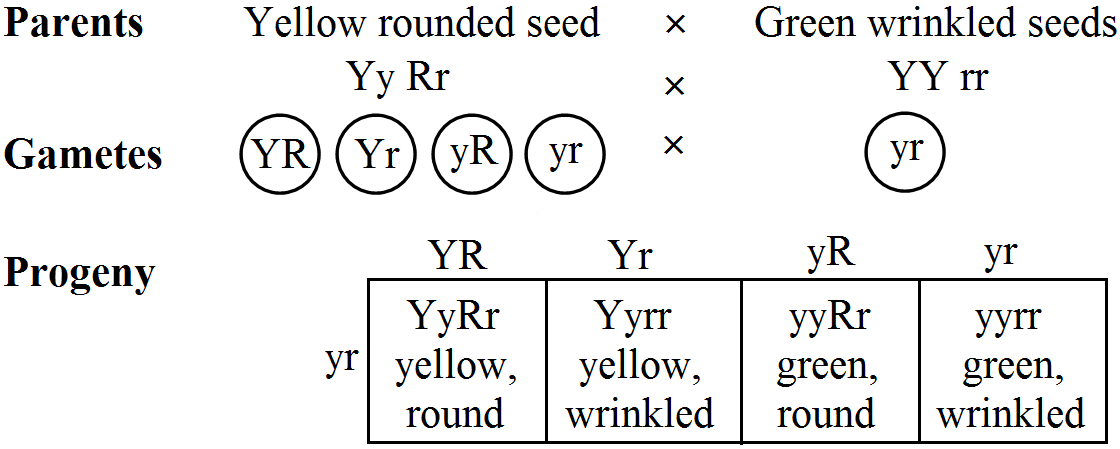
A dihybrid heterozygous round, yellow seeded garden pea was crossed with a double recessive plant.
  1. What type of cross is this?
  2. Work out the genotype and phenotype of the progeny.
  3. What principle of Mendel is illustrated through the result of this cross?
Answer
  1. It is a test cross.
  2.  


The test cross ratio is 1 : 1 : 1 : 1
  1. Principle of segregation.
View full question & answer
Question 603 Marks
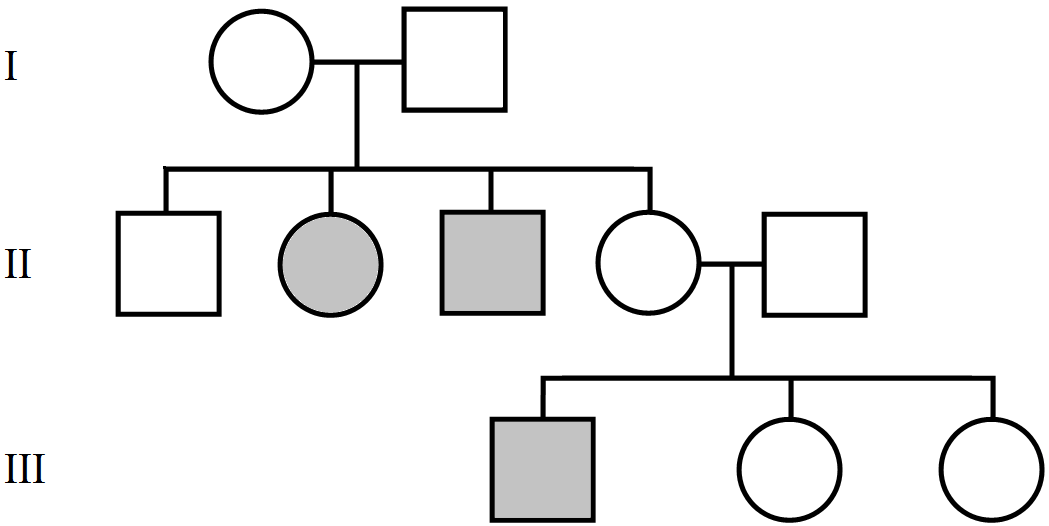
Study the given pedigree chart and answer the questions that follow.
  1. Is the trait recessive or dominant?
  2. Is the trait sex linked or autosomal?
  3. Give the genotypes of the parents shown in generation I and their III child shown in generation II and the first grandchild shown in generation III.
Answer
  1. Dominant.
  2. Autosomal.
  3. Parents-Mother- aa.
Father-Aa.

Third child-Aa.

First grand-child-Aa.
View full question & answer
Question 613 Marks
What are antibiotics? Name the classes of organisms that produce antibiotics
Answer
Antibiotics are chemical substances primarily produced by some microorganisms which in low concentration can kill or retard the growth of other disease causing microorganisms. Antibiotics are mainly produced from three groups of microorganisms:
  1. Eubacteria (true bacteria)
  2. Actinomycetes (ramified bacteria)
  3. Fungi.
View full question & answer
Question 623 Marks
Name the categories of organisms used as biofertilisers with an example for each. How do they function in organic farming?
Answer
  1. Bacteria: Azotobacter, Azospirillum, Rhizobium.
  2. Cyanobacteria: Nostoc, Anabaena, Oscillatoria.
Mycorrhizae:
  • Glomus sp.
  • They increase soil fertility by fixing atmospheric nitrogen (bacteria and cyanobacteria) and also by adding organic matter through photosynthesis (Cyanobacteria).
  • Fungi in mycorrhizae help the plant to absorb phosphorus from the soil; they also provide resistance to root borne pathogens and tolerance to soil salinity and drought.
View full question & answer
Question 633 Marks
Mention the functions of LAB that are useful to man
Answer
  1. LAB convert milk into curd and are employed in dairy industries.
  2. LAB in human intestine synthesize vitamin $B_{12}$.
  3. LAB in human stomach, checks the growth of harmful disease causing microbes.
View full question & answer
Question 643 Marks
Why do farmers prefer biofertilisers to chemical fertilisers these days? Explain.
Answer
Farmers prefer biofertilisers to chemical fertilisers for the following differences between them:
Biofertilisers
Chemical Fertilisers
Biofertilisers are organisms that enrich the nutrient quality of the soil.
Fertilisers are synthetic chemicals added to soil to supply specific nutrient(s) that is/ are lacking.
They provide almost all the nutrients, but slowly.
They supply only the specific nutrient(s), but quickly.
They do not degrade the soil quality.
They degrade the soil quality.
Their culturing does not cause environmental pollution.
Their manufacture causes environmental pollution.
View full question & answer
Question 653 Marks
Expand LAB. Mention two benefits LAB provides.
Answer
Lactic Acid Bacteria.Benefits:
  1. It improves the nutritive value of curd by increasing Vitamin $B_{12}$.
  2. It checks the disease-causing microbes in our stomach.
View full question & answer
Question 663 Marks
What are biofertilizers? Name the two elements which are made available by them.
Answer
Biofertilizers (microorganisms) are added to soil to increase its fertility.
Nitrogen and phosphorus elements are added by biofertilizers.
View full question & answer
Question 673 Marks
How has the bacterium Bacillus thuringiensis helped us in controlling caterpillars of insect-pests?
Answer
To control butterfly caterpillars, bacteria such as Bacillus thuringiensis are used in the form of sprays or sachets as dry spores. These are mixed with water and sprayed onto vulnerable plants like brassicas and fruit trees, where these are eaten by the insects larvae. This kills the larvae due to release of toxin in their gut, thereby eradicating the caterpillars, but leaving other insects unharmed.
View full question & answer
Question 683 Marks
How has fungus Trichoderma polysporum proved to be very essential to organ transplant patients?
Answer
This fungus produces a bioactive molecule, called cyclosporin-A, which is used as an immunosuppressive agent in organ transplant patients.
View full question & answer
Question 693 Marks
How BOD is related to water pollution?
Answer
BOD stands for Biochemical oxygen demand. It indicates the rate of uptake of oxygen by microorganisms in a sample of water so it shows the presence of organic matter in water. More valve of BOD means more polluting potential.
View full question & answer