Sample QuestionsProbability questions
One sample from each question group in this chapter. Select any group above to see the full set with answer keys.
If $A$ and $B$ are two independent events with $\text{P(A)}=\frac{1}{3}$ and $\text{P(B)}=\frac{1}{4},$ then $P(B'|A)$ is equal to :
- A
$\frac{1}{4}$
- B
$\frac{1}{3}$
- ✓
$\frac{3}{4}$
- D
$1$
Answer: C.
View full solution →Choose the correct answer from the given four options. In a college, $30\%$ students fail in physics, $25\%$ fail in mathematics and $10\% $ fail in both. One student is chosen at random. The probability that she fails in physics if she has failed in mathematics is :
- A
$\frac{1}{10}$
- ✓
$\frac{2}{5}$
- C
$\frac{9}{20}$
- D
$\frac{1}{3}$
Answer: B.
View full solution →If $X$ is a binomial variate with parameters $n$ and $p,$ where $0 < p < 1$ such that $\frac{\text{P(X = r)}}{\text{P(X = n - r})}$ is independent of $n$ and $r,$ then $p$ equals :
- ✓
$\frac{1}{2}$
- B
$\frac{1}{3}$
- C
$\frac{1}{4}$
- D
Answer: A.
View full solution →Choose the correct answer in each of the following:
Suppose that two cards are drawn at random from a deck of cards. Let X be the number of aces obtained. Then the value of E(X) is
- A
$\frac{37}{221}$
- B
$\frac{5}{13}$
- C
$\frac{1}{13}$
- ✓
$\frac{2}{13}$
Answer: D.
View full solution →If $P(A) + P(B) = 1$ ; then which of the following option explains the event $A$ and $B$ correctly?
- ✓
Event $A$ and $B$ are mutually exclusive, exhaustive and complementary events.
- B
Event $A$ and $B$ are mutually exclusive and exhaustive events.
- C
Event $A$ and $B$ are mutually exclusive and complementary events.
- D
Event $A $ and $B$ are exhaustive and complementary events.
Answer: A.
View full solution →An electronic assembly consists of two subsystems, say, $A$ and $B.$ From previous testing procedures, the following probabilities are assumed to be known:
$P(A$ fails$) = 0.2$
$P(B$ fails alone$) = 0.15$
$P(A$ and $B$ fail$) = 0.15$
Evaluate the following probabilities $P(A$ fails alone$).$
View full solution →An electronic assembly consists of two subsystems, say, $A$ and $B$. From previous testing procedures, the following probabilities are assumed to be known:
$P(A$ fails$) = 0.2$
$P(B$ fails alone$) = 0.15$
$P(A$ and $B$ fail$) = 0.15$
Evaluate the following probabilities $P(A $ fails|$B$ has failed$).$
View full solution →If each element of a second order determinant is either zero or one, what is the probability that the value of the determinant is positive? (Assume that the individual entries of the determinant are chosen independently, each value being assumed with probability $\frac{1}{2}$).
View full solution →If a leap year is selected at random, what is the chance that it will contain 53 tuesdays?
If A and B are any two events such that P(A) + P(B) - P(A and B) = P(A), then
Suppose that 90% of people are right-handed. What is the probability that at most of 6 of a random sample of 10 people are right-handed?
A couple has two children, find the probability that both children are females, if it is known that the elder child is a female.
A couple has two children, find the probability that both children are males, if it is known that at least one of the children is male.
A and B are two events such that P (A) $\ne$ 0. Find P(B|A), if A is a subset of B.
View full solution →Two groups are competing for the position on the Board of directors of a corporation. The probabilities that the first and the second groups will win are $0.6$ and $0.4$ respectively. Further, if the first group wins, the probability of introducing a new product is $0.7$ and the corresponding probability if $0.3$, if the second group wins. Find the probability that the new product introduced was by the second group.
View full solution →Assume that the chances of a patient having a heart attack is $40\%.$ It is also assumed that a meditation and yoga course reduce the risk of heart attack by $30\%$ and prescription of certain drug reduces its chances by $25\%$. At a time a patient can choose any one of the two options with equal probabilities. It is given that after going through one of the two options the patient selected at random suffers a heart attack. Find the probability that the patient followed a course of meditation and yoga$?$
View full solution →Suppose that $5\%$ of men and $0.25\%$ of women have grey hair. A grey haired person is selected at random. What is the probability of this person being male? Assume that there are equal number of males and females.
View full solution →Bag I contains $3$ red and $4$ black balls and Bag II contains $4$ red and $5$ black balls. One ball is transferred from Bag I to Bag II and then a ball is drawn from Bag II. The ball so drawn is found to be red in colour. Find the probability that the transferred ball is black.
View full solution →Of the students in a college, it is known that $60\%$ reside in hostel and $40\%$ are day scholars (not residing in hostel). Previous year results report that $30\%$ of all students who reside in hostel attain. A grade and $20\%$ of day scholars attain A grade in their annual examination. At the end of year, one student is chosen at random from the college and he has an A grade, what is the probability that the student is a hostlier?
View full solution →Probability that A speaks truth is $\frac{4}{5}$. A coin is tossed. A reports that a head appears. The probability that actually there was head is
View full solution →Suppose we have four boxes A, B, C and D containing coloured marbles as given below:
| Box | Marble colour |
| | Red | White | Black |
| A B C D | 1 6 8 0 | 6 2 1 6 | 3 2 1 4 |
One of the boxes has been selected at random and a single marble is drawn from it. If the marble is red, what is the probability that it was drawn from box A?, box B? box C?
A laboratory blood test is 99% effective in detecting a certain disease when it is in fact, present. However, the test also yields a false positive result for 0.5% of the healthy person tested (i. e if a healthy person is tested, then, with probability 0.005, the test will imply he has the disease). If 0.1 percent of the population actually has the disease, what is the probability that a person has the disease given that his test result is positive?
A bag contains $4$ red and $4$ black balls, another bag contains $2$ red and $6$ black balls. One of the two bags is selected at random and a ball is drawn from the bag which is found to be red. Find the probability that the ball is drawn from the first bag.
View full solution →A card from a pack of $52$ cards is lost. From the remaining cards of the pack, two cards are drawn and are found to be both diamonds. Find the probability of the lost card being a diamond.
View full solution →A manufacturer has three machine operators $A, B$ and $C$. The first operator A produces $1\%$ defective items, where as the other two operators $B$ and $C$ produce $5\%$ and $7\%$ defective items respectively. A is on the job for $50\%$ of the time, $B$ is on the job for $30\%$ of the time and $C$ on the job for $20\%$ of the time. $A$ defective item is produced, what is the probability that it was produced by $A?$
View full solution →To hire a marketing manager, it's important to find a way to properly assess candidates who can bring radical changes and has leadership experience. Ajay, Ramesh and Ravi attend the interview for the post of a marketing manager.
Ajay, Ramesh and Ravi chances of being selected as the manager of a firm are in the ratio $4: 1: 2$ respectively. The respective probabilities for them to introduce a radical change in marketing strategy are $0.3,0.8$, and 0.5 . If the change does take place.
(i) Find the probability that it is due to the appointment of Ajay (A).
(ii) Find the probability that it is due to the appointment of Ramesh (B).
View full solution →Akash and Prakash appeared for first round of an interview for two vacancies. The probability of Nisha's selection is $\frac{1}{3}$ and that of Ayushi's selection is $\frac{1}{2}$.
(i) Find the probability that both of them are selected.
(ii) The probability that none of them is selected.
View full solution →In an office three employees Govind, Priyanka and Tahseen process incoming copies of a certain form. Govind process $50 \%$ of the forms, Priyanka processes $20 \%$ and Tahseen the remaining $30 \%$ of the forms. Govind has an error rate of 0.06 , Priyanka has an error rate of 0.04 and Tahseen has an error rate of 0.03 . 
(i) The manager of the company wants to do a quality check. During inspection he selects a form at random from the days output of processed forms. If the form selected at random has an error, find the probability that the form is NOT processed by Govind.
(ii) Find the probability that Priyanka processed the form and committed an error.
View full solution →Two farmers Ankit and Girish cultivate only three varieties of pulses namely Urad, Massor and Mung. The sale (in ₹) of these varieties of pulses by both the farmers in the month of September and October are given by the following matrices A and B.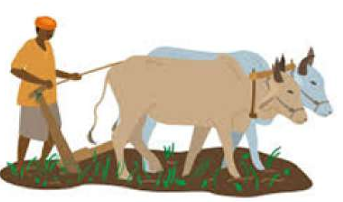
September sales (in ₹):
$\mathrm{A}=\left(\begin{array}{ccc}\text { Urad } & \text { Masoor } & \text { Mung } \\10000 & 20000 & 30000 \\50000 & 30000 & 10000\end{array}\right) \text { Ankit }$
October sales (in ₹):
$\mathrm{A}=\left(\begin{array}{ccc}\text { Urad } & \text { Masoor } & \text { Mung } \\5000 & 10000 & 6000 \\20000 & 30000 & 10000\end{array}\right) \text { Ankit }$
(i) Find the combined sales of Masoor in September and October, for farmer Girish.
(ii) Find the combined sales of Urad in September and October, for farmer Ankit.
(iii) Find a decrease in sales from September to October.
OR
If both the farmers receive $2 \%$ profit on gross sales, then compute the profit for each farmer and for each variety sold in October.
View full solution →Shama is studying in class XII. She wants do graduate in chemical engineering. Her main subjects are mathematics, physics, and chemistry. In the examination, her probabilities of getting grade A in these subjects are $0.2,0.3$, and 0.5 respectively.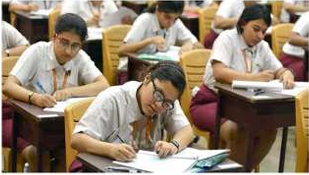
(i) Find the probability that she gets grade A in all subjects.
(ii) Find the probability that she gets grade A in no subjects.
View full solution →Fill in the blanks.
If A and B are such that $\text{P}(\text{A}'\cup\text{B}')=\frac{2}{3}$ and $\text{P}(\text{A}\cup\text{B})=\frac{5}{9},$ then $\text{P}(\text{A}')+\text{P}(\text{B}')=$ ________.
View full solution →Fill in the blanks.
If A and B are two events such that $\text{P}\Big(\frac{\text{A}}{\text{B}}\Big)=\text{p},\text{P}(\text{A})=\text{p},\text{P}(\text{B})=\frac{1}{3}$ and $\text{P}(\text{A}\cap\text{B})=\frac{5}{9},$ then p = __________.
View full solution →Fill in the blanks.
If X follows binomial distribution with parameters n = 5, p and P (X = 2) = 9, P (X = 3), then p = _________.
Fill in the blanks.
Let X be a random variable taking values $x_1, x_2, ......, x_n$ with probabilities $p_1, p_2, ..., p_n,$ respectively. Then var (X) = ________.
View full solution →Fill in the blanks.
Let A and B be two events. If $\text{P}\Big(\frac{\text{A}}{\text{B}}\Big)=\text{P}(\text{A}),$ then A is _________ of B.
View full solution →State True or False for the statements:
If A, B and C are three independent events such that P(A) = P(B) = P(C) = p, then P (At least two of A, B, C occur) $=3 p^2-2 p^3$.
View full solution →State True or False for the statements:
Let P(A) > 0 and P(B) > 0. Then A and B can be both mutually exclusive and independent.
State True or False for the statements:
If A and B are independent, then.
P (exactly one of A, B occurs) = P(A)P(B') + P(B)P(A')
State True or False for the statements:
Two independent events are always mutually exclusive.
State True or False for the statements:
If A and B′ are independent events, then $\text{P}(\text{A}'\cup\text{B})=1-\text{P}(\text{A})\text{P}(\text{B'}).$
View full solution →