Questions

Case study (4 Marks)

Take a timed test

21 questions · self-marked practice — reveal the answer and mark yourself.

Question 14 Marks
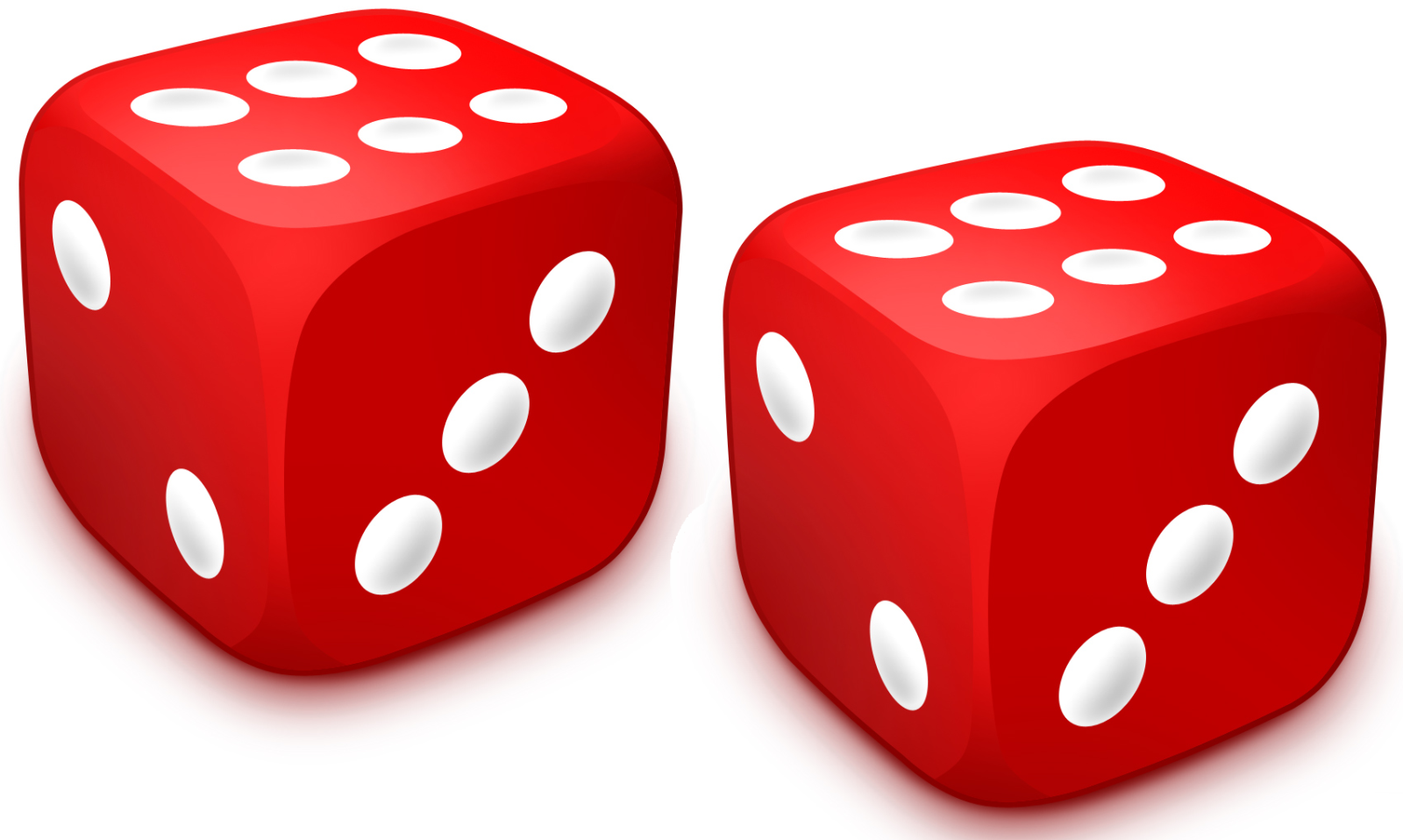
Varun and Jsha decided to play with dice to keep themselves busy at home as their schools are closed due to coronavirus pandemic. Varun throw a dice repeatedly until a six is obtained. He denote the number of throws required by X.
Based on the above information, answer the following questions.
  1. The probability that X = 2 equals.
  1. $\frac{1}{6}$
  2. $\frac{5}{6^2}$
  3. $\frac{5}{3^6}$
  4. $\frac{1}{6^3}$
  1. The probability that X = 4 equals.
  1. $\frac{1}{6^4}$
  2. $\frac{1}{6^6}$
  3. $\frac{5^3}{6^4}$
  4. $\frac{5}{6^4}$
  1. The probability that $\text{X}\geq2$ equals.
  1. $\frac{25}{216}$
  2. $\frac{1}{36}$
  3. $\frac{5}{6}$
  4. $\frac{25}{36}$
  1. The value of $\text{P}(\text{X}\geq6)$ is:
  1. $\frac{5^5}{6^5}$
  2. $1-\frac{5^3}{6^5}$
  3. $\frac{5^3\times61}{6^5}$
  4. $\frac{5^3}{6^4}$
  1. The probability that X > 3 equals.
  1. $\frac{36}{25}$
  2. $\frac{5^2}{6^2}$
  3. $\frac{5}{6}$
  4. $\frac{5^3}{6^3}$
Answer
  1. (b) $\frac{5}{6^2}$
Solution:

P(X = 2) = (Probability of not getting six at first throw) × (Probability of getting six at second throw)

$=\frac{5}{6}\times\frac{1}{6}=\frac{5}{6^2}$
  1. (c) $\frac{5^3}{6^4}$
Solution:

$\text{P}\text{(X}=4)=\frac{5}{6}\times\frac{5}{6}\times\frac{5}{6}\times\frac{1}{6}=\frac{5^3}{6^4}$
  1. (c) $\frac{5}{6}$
Solution:

$\text{P}(\text{X}\ge2)=1-\text{P}(\text{X}<2)$

$=1-\text{P}(\text{X}=1)=1-\frac{1}{6}=\frac{5}{6}$
  1. (a) $\frac{5^5}{6^5}$
Solution:

$\text{P}(\text{X}\ge6)=(\frac{5}{6})^5\times\frac{1}{6}+(\frac{5}{6})^6\times\frac{1}{6}+...\infty$

$=\frac{5^5}{6^6}[1+\frac{5}{6}+(\frac{5}{6})^2+...\infty]=\frac{5^5}{6^6}[\frac{1}{1\frac{5}{6}}]=(\frac{5}{6})^5$
  1. (d) $\frac{5^3}{6^3}$
Solution:

$\text{P}\text{(X}\ge4)=(\frac{5}{6})^3.\frac{1}{6}+(\frac{5}{6})^4.\frac{1}{6}+.....$

$=\frac{5^3}{6^4}[1+(\frac{5}{6})+(\frac{5}{6})^2+....]$

$=\frac{5^3}{6^4}[\frac{1}{1-(\frac{5}{6})}]=(\frac{5^3}{6^4}).6=\frac{5^3}{6^3}$
View full question & answer
Question 24 Marks
In pre-board examination of class XII, commerce stream with Economics and Mathematics of a particular school, 50% of the students failed in Economics, 35% failed in Mathematics and 25% failed in both Economics and Mathematics. A student is selected at random from the class. Based on the above information, answer the following questions.
  1. The probability that the selected student has failed in Economics, if it is known that he has failed in Mathematics, is:
  1. $\frac{3}{10}$
  2. $\frac{12}{25}$
  3. $\frac{1}{4}$
  4. $\frac{5}{7}$
  1. The probability that the selected student has failed in Mathematics, if it is known that he has failed in Economics, is:
  1. $\frac{22}{25}$
  2. $\frac{12}{25}$
  3. $\frac{1}{2}$
  4. $\frac{3}{25}$
  1. The probability that the selected student has passed in at least one of the two subjects, is:
  1. $\frac{1}{4}$
  2. $\frac{1}{2}$
  3. $\frac{3}{4}$
  4. None of these.
  1. The probability that the selected student has failed in at least one of the two subjects, is:
  1. $\frac{3}{5}$
  2. $\frac{22}{25}$
  3. $\frac{2}{5}$
  4. $\frac{43}{100}$
  1. The probability that the selected student has passed in Mathematics, if it is known that he has failed in Economics, is:
  1. $\frac{2}{5}$
  2. $\frac{3}{4}$
  3. $\frac{1}{3}$
  4. $\frac{1}{2}$
Answer
Let E denote the event that student has failed in Economics and M denote the event that student has failed in Mathematics.$\therefore\text{P}(\text{E})=\frac{50}{100}=\frac{1}{2},\text{P}(\text{M})=\frac{35}{100}=\frac{7}{20}$
and $\text{P}(\text{E}\cap\text{M})=\frac{25}{100}=\frac{1}{4}$
  1. (d) $\frac{5}{7}$
Solution:
Required probability= P(E | M)
$=\frac{\text{P}(\text{E}\cap\text{M})}{\text{P}(\text{M})}=\frac{\frac{1}{4}}{\frac{7}{20}}=\frac{1}{4}\times\frac{20}{7}=\frac{5}{7}$
  1. (c) $\frac{1}{2}$
Solution:
Required probability = P(M | E)
$=\frac{\text{P}(\text{E}\cap\text{M})}{\text{P}(\text{M})}=\frac{\frac{1}{4}}{\frac{1}{2}}=\frac{1}{2}$
  1. (c) $\frac{3}{4}$
Solution:
Required probability $=\text{P}(\text{E}'\cap\text{M}')=\text{P}(\text{E}\cap\text{M})$
$=1-\text{P}(\text{E}\cap\text{M})=1-\frac{1}{4}=\frac{3}{4}$
  1. (a) $\frac{3}{5}$
Solution:
Required probability $=\text{P}(\text{E}\cup\text{M})$
$=\text{P}(\text{E})+\text{P}(\text{M})-\text{P}(\text{E}\cap\text{M})$
$=\frac{5}{10}+\frac{7}{20}-\frac{1}{4}=\frac{12}{20}=\frac{3}{5}$
  1. (d) $\frac{1}{2}$
Solution:
Required probability = P(M' | E')
$=\frac{\text{P}(\text{M}\cap\text{E})}{\text{P}(\text{E)}}=\frac{\text{P(E)}-\text{P(E}\cap\text{M)}}{\text{P(E)}}=\frac{\frac{1}{2}-\frac{1}{4}}{\frac{1}{2}}=\frac{1}{2}$
View full question & answer
Question 34 Marks
One day, a sangeet mahotsav is to be organised in an open area of Rajasthan. ln recent years, it has rained only 6 days each year. Also, it is given that when it actually rains, the weatherman correctly forecasts rain $80\%$ of the time. When it doesn't rain, he incorrectly forecasts rain $20\%$ of the time.

If leap year is considered, then answer the following questions.
  1. The probability that it rains on chosen day is:
  1. $\frac{1}{366}$
  2. $\frac{1}{73}$
  3. $\frac{1}{60}$
  4. $\frac{1}{61}$
  1. The probability that it does not rain on chosen day is:
  1. $\frac{1}{366}$
  2. $\frac{5}{366}$
  3. $\frac{360}{366}$
  4. None of these.
  1. The probability that the weatherman predicts correctly is:
  1. $\frac{5}{6}$
  2. $\frac{7}{8}$
  3. $\frac{4}{5}$
  4. $\frac{1}{5}$
  1. The probability that it will rain on the chosen day, if weatherman predict rain for that day, is:
  1. $0.0625$
  2. $0.0725$
  3. $0.0825$
  4. $0.0925$
  1. The probability that it will not rain on the chosen day, if weatherman predict rain for that day, is:
  1. $0.94$
  2. $0.84$
  3. $0.74$
  4. $0.64$
Answer
  1. (d) $\frac{1}{61}$
Solution:
Since, it rained only 6 days each year, therefore, probability that it rains on chosen day is,
$\frac{6}{366}=\frac{1}{61}$
  1. (c) $\frac{360}{366}$
Solution:
The probability that it does not rain on chosen day $=1-\frac{1}{61}=\frac{60}{61}=\frac{360}{366}$
  1. (c) $\frac{4}{5}$
Solution:
It is given that, when it actually rains, the weather man correctly forecasts rain 80% of the time.
$\therefore\text{}$ Required probability $=\frac{80}{100}=\frac{8}{10}=\frac{4}{5}$
  1. (a) $0.0625$
Solution:
Let $A_1$ be the event that it rains on chosen day, $A_2$ be the event that it does not rain on chosen day and E be the event the weatherman predict rain.
Then we have, $\text{P(A}_2)=\frac{6}{366},\text{P(A}_2)=\frac{360}{366},$
$\text{P(E}|\text{A}_1)=\frac{8}{10}$ and $\text{P(E}|\text{A}_2)=\frac{2}{10}$
Required probability $= P(A_1 | E)$
$=\frac{\text{P(A}_1).\text{P(E}|\text{A}_1)}{\text{P(A}_1).\text{P(E}|\text{A}_1)+\text{P(A}_2).\text{P(E}|\text{A}_2)}$
$=\frac{\frac{6}{366}\times\frac{8}{10}}{\frac{6}{366}\times\frac{8}{10}+\frac{360}{366}\times\frac{2}{10}}=\frac{48}{768}=0.0625$
  1. (a) $0.94$
Solution:
Required probability $=1 - P(A_1 | E)$
$= 1 - 0.0625 = 0.9375\approx0.94$
View full question & answer
Question 44 Marks
A doctor is to visit a patient. From the past experience, it is known that the probabilities that he will come by cab, metro, bike or by other means of transport are respectively $0.3, 0.2, 0.1$ and $0.4$. 'Tile probabilities that he will be late are $0.25, 0.3, 0.35$ and $0.1$ if he comes by cab, metro, bike and other means of transport respectively.

 Based on the above information, answer the following questions.

  1. When the doctor arrives late, what is the probability that he comes by metro?
  1. $\frac{5}{14}$
  2. $\frac{2}{7}$
  3. $\frac{5}{21}$
  4. $\frac{1}{6}$
  1. When the doctor arrives late, what is the probability that he comes by cab?
  1. $\frac{4}{21}$
  2. $\frac{1}{7}$
  3. $\frac{5}{14}$
  4. $\frac{2}{21}$
  1. When the doctor arrives late, what is the probability that he comes by bike?
  1. $\frac{5}{21}$
  2. $\frac{4}{7}$
  3. $\frac{5}{6}$
  4. $\frac{1}{6}$
  1. When the doctor arrives late, what is the probability that he comes by other means of transport?
  1. $\frac{6}{7}$
  2. $\frac{5}{14}$
  3. $\frac{4}{21}$
  4. $\frac{2}{7}$
  1. What is the probability that the doctor is late by any means?
  1. $1$
  2. $0$
  3. $\frac{1}{2}$
  4. $\frac{1}{4}$
Answer
Let $E$ be the event that the doctor visit the patient late and let $A_1, A_2, A_3, A_4$ be the events that the doctor comes by cab.metro, bike and other means of transport respectively.
$P(A_1) = 0.3, P(A_2) = 0.2, P(A_3) = 0.1, P(A_4) = 0.4$
$P(E | A_1) =$ Probability that the doctor arriving late when he comes by cab $= 0.25$
Similarly, $P(E | A_2) = 0.3, P(E | A_3) = 0.35$ and $P(E | A_4) = 0.1$
  1. (b) $\frac{2}{7}$
Solution:
$P(A_2 | E) =$ Probability that the doctor arriving late and he comes by metro,
$=\frac{\text{P(A}_2)\text{P(E}|\text{A}_2)}{\sum\text{P}(\text{A}_i)\text{P}(\text{E}|\text{A}_\text{i})}$
$=\frac{(0.2)(0.3)}{(0.3)(0.25)+(0.2)(0.3)+(0.1)(0.35)+(0.4)(0.1)}$
$=\frac{0.06}{0.21}=\frac{2}{7}$
  1. (c) $\frac{5}{14}$
Solution:
P(A_1 | E) = Probability that the doctor arriving late and he comes by cab,
$=\frac{\text{P(A}_1)\text{P(E}|\text{A}_1)}{\sum\text{P}(\text{A}_i)\text{P}(\text{E}|\text{A}_\text{i})}$
$=\frac{(0.3)(0.25)}{(0.3)(0.25)+(0.2)(0.3)+(0.1)(0.35)+(0.4)(0.1)}$
$=\frac{0.075}{0.21}=\frac{5}{14}$
  1. (d) $\frac{1}{6}$
Solution:
$P(A_3 | E) =$ Probability that the doctor arriving late and he comes by bike,
$=\frac{\text{P(A}_3)\text{P(E}|\text{A}_3)}{\sum\text{P}(\text{A}_i)\text{P}(\text{E}|\text{A}_\text{i})}$
$=\frac{(0.1)(0.35)}{(0.3)(0.25)+(0.2)(0.3)+(0.1)(0.35)+(0.4)(0.1)}$
$=\frac{0.035}{0.21}=\frac{1}{6}$
  1. (c) $\frac{4}{21}$
Solution:
$P(A_4 | E) =$ Probability that the doctor arriving late and he comes by other means of transport,
$=\frac{\text{P(A}_4)\text{P(E}|\text{A}_4)}{\sum\text{P}(\text{A}_i)\text{P}(\text{E}|\text{A}_\text{i})}$
$=\frac{(0.4)(0.1)}{(0.3)(0.25)+(0.2)(0.3)+(0.1)(0.35)+(0.4)(0.1)}$
$=\frac{0.04}{0.21}=\frac{4}{21}$
  1. (a) $1$
Solution:
Probability that the doctor is late by any means,
$=\frac{2}{7}+\frac{5}{14}+\frac{1}{6}+\frac{3}{21}=1$
 
View full question & answer
Question 54 Marks
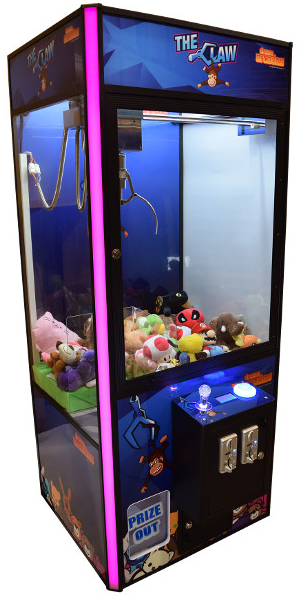
In a play zone, Aastha is playing crane game. It has 12 blue balls, 8 red balls, 10 yellow balls and 5 green balls. If Aastha draws two balls one after the other without replacement, then answer the following questions.
  1. What is the probability that the first ball is blue and the second ball is green?
  1. $\frac{5}{119}$
  2. $\frac{12}{119}$
  3. $\frac{6}{119}$
  4. $\frac{15}{119}$
  1. What is the probability that the first ball is yellow and the second ball is red?
  1. $\frac{16}{119}$
  2. $\frac{8}{119}$
  3. $\frac{24}{119}$
  4. None of these.
  1. What is the probability that both the balls are red?
  1. $\frac{4}{85}$
  2. $\frac{24}{595}$
  3. $\frac{12}{119}$
  4. $\frac{64}{119}$
  1. What is the probability that the first ball is green and the second ball is not yellow?
  1. $\frac{10}{119}$
  2. $\frac{6}{85}$
  3. $\frac{12}{119}$
  4. None of these.
  1. What is the probability that both the balls are not blue?
  1. $\frac{6}{595}$
  2. $\frac{12}{85}$
  3. $\frac{15}{17}$
  4. $\frac{253}{595}$
Answer
Let B, R, Y and G denote the events that ball drawn is blue, red, yellow and green respectively.$\therefore\text{P}(\text{B})=\frac{12}{35},\text{P}(\text{R})=\frac{8}{35},\text{P}(\text{Y})=\frac{10}{35}$ and $\text{P}(\text{G})=\frac{5}{35}$
  1. (c) $\frac{6}{119}$
Solution:
$\text{P}(\text{G}\cap\text{B})=\text{P}(\text{B}).\text{P}(\text{G}|\text{B})=\frac{12}{35}.\frac{5}{34}=\frac{6}{119}$
  1. (b) $\frac{8}{119}$
Solution:
$\text{P}(\text{R}\cap\text{Y})=\text{P}(\text{Y}).\text{P}(\text{R}|\text{Y})=\frac{10}{35}.\frac{8}{34}=\frac{8}{119}$
  1. (a) $\frac{4}{85}$
Solution:
Let E = event of drawing a first red ball and F = event of drawing a second red ball
Here, $\text{P}(\text{E})=\frac{8}{35}$ and $\text{P}(\text{E})=\frac{7}{34}$
$\therefore\text{P}(\text{F}\cap\text{E})=\text{P(E)}.\text{P(F|E)}=\frac{8}{35}.\frac{7}{34}=\frac{4}{85}$
  1. (c) $\frac{12}{119}$
Solution:
$\text{P}(\text{Y}'\cap\text{G})=\text{P}\text{(G)}.\text{(Y}'|\text{G)}=\frac{5}{35}.\frac{24}{34}=\frac{12}{119}$
  1. (d) $\frac{253}{595}$
Solution:
Let E = event of drawing a first non-blue ball and F = event of drawing a second non-blue ball,
Here, $\text{P}(\text{F}\cap\text{E})=\text{P}(\text{E}).\text{P}(\text{F}|\text{E})=\frac{23}{35}.\frac{22}{34}=\frac{253}{595}$
$\text{P}(\text{A}\cup\text{B}|\text{C})=\frac{\text{P(A}\cup\text{B)}\cap\text{C}}{\text{P(C)}}=\frac{\frac{3}{6}}{\frac{3}{6}}=1$
View full question & answer
Question 64 Marks
In a wedding ceremony, consists of father, mother, daughter and son line up at random for a family photograph, as shown in figure.
Based on the above information, answer the following questions.
  1. Find the probability that daughter is at one end, given that father and mother are in the middle.
  1. $1$
  2. $\frac{1}{2}$
  3. $\frac{1}{3}$
  4. $\frac{2}{3}$
  1. Find the probability that mother is at right end, given that son and daughter are together.
  1. $\frac{1}{2}$
  2. $\frac{1}{3}$
  3. $\frac{1}{4}$
  4. $0$
  1. Find the probability that father and mother are in the middle, given that son is at right end.
  1. $\frac{1}{4}$
  2. $\frac{1}{2}$
  3. $\frac{1}{3}$
  4. $\frac{2}{3}$
  1. Find the probability that father and son are standing together, given that mother and daughter are standing together.
  1. $0$
  2. $1$
  3. $\frac{1}{2}$
  4. $\frac{2}{3}$
  1. Find the probability that father and mother are on either of the ends, given that son is at second position from the right end.
  1. $\frac{1}{3}$
  2. $\frac{2}{3}$
  3. $\frac{1}{4}$
  4. $\frac{2}{5}$
Answer
Sample space is given by {MFSD, MFDS, MSFD, MSDF, MDFS, MDSF, FMSD, FMDS, FSMD, FSDM, FDMS, FDSM, SFMD, SFDM, SMFD, SMDF, SDMF, SDFM, DFMS, DFSM, DMSF, DMFS, DSMF, DSFM}, Where F, M, D andS represent father, mother, daughter and son respectively.$\therefore\text{n(S)}=24$
and $\text{P}(\text{E}\cap\text{M})=\frac{25}{100}=\frac{1}{4}$
  1. (a) $1$
Solution:
Let A denotes the event that daughter is at one end.
$\therefore\text{n(A)}=12$
and B denotes the event that father and mother are in the middle.
$\therefore\text{n(B)}=4$
Also, $\text{n(A}\cap\text{B})=4$
$\therefore\text{P(A}|\text{B})=\frac{\text{P(A}\cap\text{B})}{\text{P(B)}}=\frac{\frac{4}{24}}{\frac{4}{24}}=1$
  1. (b) $\frac{1}{3}$
Solution:
Let A denotes the event that mother is at right end.
$\therefore\text{n(A)}=6$
and B denotes the event that son and daughter are together.
$\therefore\text{P(A}|\text{B})=\frac{\text{P(A}\cap\text{B)}}{\text{P(B)}}=\frac{\frac{4}{24}}{\frac{12}{24}}=\frac{1}{3}$
  1. (c) $\frac{1}{3}$
Solution:
Let A denotes the event that father and mother are in the middle.
$\therefore\text{n(A)}=4$
and B denotes the event that son is at right end.
$\therefore\text{n(B)}=6$
Also, $\text{n(A}\cap\text{B)}=2$
$\therefore\text{P(A}|\text{B})=\frac{\text{P(A}\cap\text{B)}}{\text{P(B)}}=\frac{\frac{2}{24}}{\frac{6}{24}}=\frac{1}{3}$
  1. (d) $\frac{2}{3}$
Solution:
Let A denotes the event that father and son are standing together.
$\therefore\text{n(A)}=12$
and B denotes the event that mother and daughter are standing together.
$\therefore\text{n(B)}=12$
Also, $\text{n(A}\cap\text{B)}=8$
$\therefore\text{P(A}|\text{B})=\frac{\text{P(A}\cap\text{B)}}{\text{P(B)}}=\frac{\frac{8}{24}}{\frac{12}{24}}=\frac{2}{3}$
  1. (a) $\frac{1}{3}$
Solution:
Let A denotes the event that father and mother are on either of the ends.
$\therefore\text{n(A)}=4$
and B denotes the event that son is at second position from the right end.
$\therefore\text{n(B)}=6$
Also, $\text{n(A}\cap\text{B)}=2$
$\therefore\text{P(A}|\text{B})=\frac{\text{P(A}\cap\text{B)}}{\text{P(B)}}=\frac{\frac{2}{24}}{\frac{6}{24}}=\frac{1}{3}$
View full question & answer
Question 74 Marks
In a family there are four children. All of them have to work in their family business to earn their livelihood at the age of 18. Based on the above information, answer the following questions.

  1. Probability that all children are girls, if it is given that elder child is a boy, is:
  1. $\frac{3}{8}$
  2. $\frac{1}{8}$
  3. $\frac{5}{8}$
  4. None of these.
  1. Probability that all children are boys, if two elder children are boys, is:
  1. $\frac{1}{4}$
  2. $\frac{3}{4}$
  3. $\frac{1}{2}$
  4. None of these.
  1. Find the probability that two middle children are boys, if it is given that eldest child is a girl.
  1. $0$
  2. $\frac{3}{4}$
  3. $\frac{1}{4}$
  4. None of these.
  1. Find the probability that all children are boys, if it is given that at most one of the children is a girl.
  1. $0$
  2. $\frac{1}{5}$
  3. $\frac{2}{5}$
  4. $\frac{4}{5}$
  1. Find the probability that all children are boys, if it is given that at least three of the children are boys.
  1. $\frac{1}{5}$
  2. $\frac{2}{5}$
  3. $\frac{3}{5}$
  4. $\frac{4}{5}$
Answer
Let B and G denote the boy and girl respectively. If a family has 4 children then each of four children can either boy or girl.Sample space is given by,
S = {BBBB, BBBG, BBGB, BGBB, BBGG, BGBG, BGGB, BGGG,GBBB,GBBG,GBGB,GBGG,GGBB,GGBG, GGGB,GGGG}
  1. (d) None of these.
Solution:
Let E = All children are girls.
$\therefore$ E = ( GGGG} i.e., n(E) = 1
F = Elder child is a boy
$\therefore$ F = {BBBB, BBBG, BBGB, BGBB, BBGG, BGBG, BGGB, BGGG) i.e., n(F) = 8
Now, $\text{n(E}\cap\text{F)}=0$
$\therefore\text{P(E}|\text{F)}=\frac{\text{E}\cap\text{F}}{\text{n(F})}=0$
  1. (a) $\frac{1}{4}$
Solution:
Let E = All are boys.
$\therefore$ E = (BBBB) i.e., n(E) = 1
F = Two elder children are boys
$\therefore$ F = {BBBB, BBBG, BBGB, BBGG} i.e., n(F) = 4
Now, $\text{n}(\text{E}\cap\text{F})=1$
$\therefore\text{P}(\text{E}|\text{F})=\frac{\text{n(E}\cap\text{F)}}{\text{n(F)}}=\frac{1}{4}$
  1. (c) $\frac{1}{4}$
Solution:
Let E = Two middle children are boys.
$\therefore$ E = (BBBB, BBBG, GBBB, GBBG) i.e., n(E) = 4
F = Eldest child is a girl
$\therefore$ F = ( GBBB, GBBG, GBGB, GBGG, GGBB, GGBG, GGGB, GGGG) i.e., n(F) = 8
Now, $\text{n}(\text{E}\cap\text{F})=2$
$\therefore\text{n(E}|\text{F})=\frac{2}{8}=\frac{1}{4}$
  1. (b) $\frac{1}{5}$
Solution:
Let E = All are boys.
E = {BBBB} i.e., n{E} = 1
F = At most one child is girl.
$\therefore$ F = (BBBB, BBBG, BBGB, BGBB, GBBB)
i.e., n(F) = 5
New, $\text{n(F}\cap\text{F})=1$
$\therefore\text{n(E}|\text{F})=\frac{1}{5}$
  1. (a) $\frac{1}{5}$
Solution:
Let E = All are boys.
E = (BBBB) i.e., n(E) = 1
F = At least three of the children are boys.
F = {BBBB, BBBG, BBGB, BGBB, G BBB) i.e., n (F) = 5
Now, $\text{n(E}\cap\text{F})=1$
$\therefore\text{P(E}|\text{F})=\frac{1}{5}$
View full question & answer
Question 84 Marks
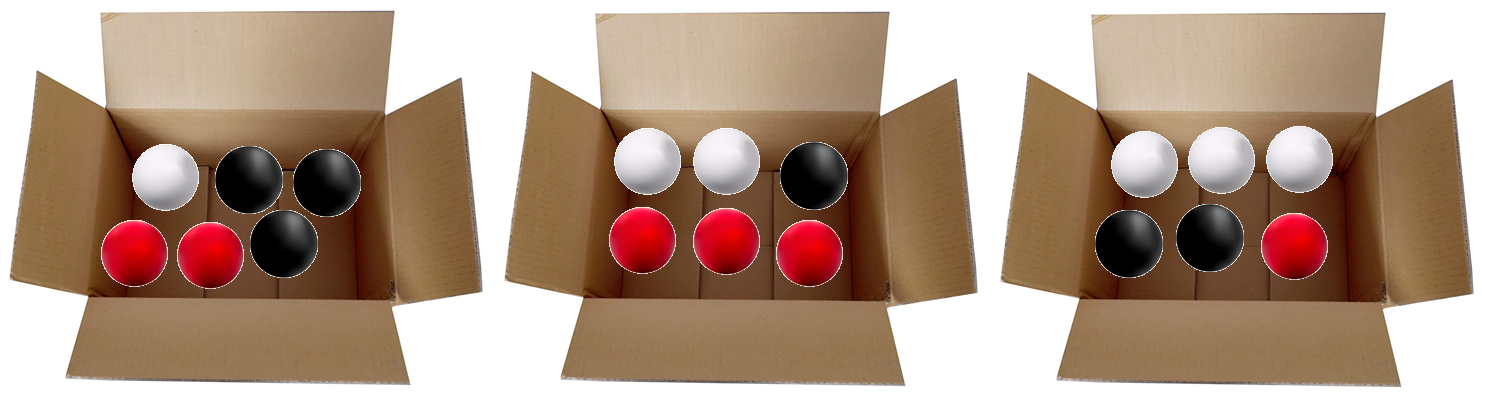
Box I contains $1$ white, $3$ black and $2$ red balls. Box II contains $2$ white, $1$ black and $3$ red balls. Box III contains $3$ white, $2$ black and $1$ red balls. One box is chosen at random and two balls are drawn with replacement.


If $E_1, E_2, E_3$ be the events that the balls drawn from box $I,$ box $II$ and box $III$ respectively and $E$ be the event that balls drawn are one white and one red, then answer the following questions.
  1. Probability of occurrence of event $E$ given that the balls drawn are from box I, is:
  1. $\frac{1}{9}$
  2. $\frac{2}{6}$
  3. $\frac{3}{5}$
  4. $\frac{1}{7}$
  1. Probability of occurrence of event $E$, given that the balls drawn are from box II, is:
  1. $\frac{1}{3}$
  2. $\frac{1}{4}$
  3. $\frac{3}{4}$
  4. $\frac{3}{5}$
  1. Probability of occurrence of event $E,$ given that balls drawn are from box III, is:
  1. $\frac{1}{12}$
  2. $\frac{3}{11}$
  3. $\frac{1}{6}$
  4. $\frac{4}{11}$
  1. The value of $\displaystyle{\sum^3_{\text{i}=1}}\text{P(E}|\text{E}_\text{i})$ is equal to.
  1. $\frac{5}{18}$
  2. $\frac{1}{2}$
  3. $\frac{1}{18}$
  4. $\frac{11}{18}$
  1. The probability that the balls drawn are from box II, given that event $E$ has already occurred, is:
  1. $\frac{1}{11}$
  2. $\frac{6}{11}$
  3. $\frac{5}{11}$
  4. None of these
Answer
We have, $P(E_1) = P(E_2) = P(E_3) =\frac{1}{3}$
  1. (a) $\frac{1}{9}$
Solution:
$(E | E_1) =$ Probability of drawing red and white ball, if box I is selected.
$= P($red$) \times P($white$) + P($white$) \times P($red$)$
$=\frac{2}{6}\times\frac{1}{6}+\frac{1}{6}\times\frac{2}{6}=\frac{4}{36}=\frac{1}{9}$
  1. (a) $\frac{1}{3}$
Solution:
$P(E | E_2) =$ Probability of drawing red and white balls, if box II is selected.
$= P($red$) \times P($white$) + P($white$) \times P($red$)$
$=\frac{3}{6}\times\frac{2}{6}+\frac{2}{6}\times\frac{3}{6}=\frac{12}{36}=\frac{1}{3}$
  1. (c) $\frac{1}{6}$
Solution:
$P(E | E_3) =$ Probability of drawing red and white balls, if box III is selected.
$= P($red$) \times P($white$) + P($white$) \times P($red$)$
$=\frac{1}{6}\times\frac{3}{6}+\frac{3}{6}\times\frac{1}{6}=\frac{6}{36}=\frac{1}{6}$
  1. (d) $\frac{11}{18}$
Solution:
$\displaystyle{\sum^3_{\text{i}=1}}\text{P}(\text{E}|\text{E}_\text{i})=\text{P}(\text{E}|\text{E}_1)+\text{P}(\text{E}|\text{E}_2)+\text{P}(\text{E}|\text{E}_3)$
$=\frac{4}{36}+\frac{12}{36}+\frac{6}{36}=\frac{4+12+6}{36}=\frac{22}{36}=\frac{11}{18}$
  1. (b) $\frac{6}{11}$
Solution:
Using Bayes' theorem,
$=\frac{\text{P}(\text{E}|\text{E}_2)\times\text{P}(\text{E}_2)}{\text{P}(\text{E}|\text{E}_1).\text{P}(\text{E}_1)+\text{P}(\text{E}|\text{E}_2).\text{P}(\text{E}_2)+\text{P}(\text{E}|\text{E}_3).\text{P}(\text{E}_3)}$
$=\frac{\frac{1}{3}\times\frac{1}{3}}{(\frac{1}{9}\times\frac{1}{3})+(\frac{1}{3}\times\frac{1}{3})+(\frac{1}{6}\times\frac{1}{3})}$
$=\frac{\frac{1}{3}}{\frac{1}{9}+\frac{1}{3}+\frac{1}{6}}=\frac{\frac{1}{3}}{\frac{11}{18}}=\frac{18}{11}=\frac{6}{11}$
 
View full question & answer
Question 94 Marks
A student is preparing for the competitive examinations LIC AAO, SSC CGL and Bank P.O. The probabilities that the student is selected independently in competitive examination of LIC AAO, SSC CGL and Bank P.O. are a, band c respectively. Of these examinations, students has 50% chance of selection in at least one, 40% chance of selection in at least two and 30% chance of selection in exactly two examinations.

Based on the above information, answer the following questions.

  1. The value of a+ b + e - ab - be - ca + abe is:
  1. 0.3
  2. 0.5
  3. 0.7
  4. 0.6
  1. The value of ab + be + ae - 2abe is:
  1. 0.5
  2. 0.3
  3. 0.4
  4. 0.6
  1. The value of abe is:
  1. 0.1
  2. 0.5
  3. 0.7
  4. 0.3
  1. The value of ab + be + ae is:
  1. 0.1
  2. 0.6
  3. 0.5
  4. 0.3
  1. The value of a + b + e is:
  1. 1
  2. 1.5
  3. 1.6
  4. 1.4
Answer
Let A be the event that the student is selected for LIC AAO, B be the event that the student is selected for SSC CGL and C be the event that the student is selected for Bank P.O.
Then, P(A) = a; P(B) = b and P( C) = c
  1. (b) 0.5
Solution:

We have, $\text{P(A}\cup\text{B}\cup\text{C})=0.5$

$\Rightarrow1-\text{P}(\text{A}\cup\text{B}\cup\text{C})=0.5$

$\Rightarrow1-\text{P}(\bar{\text{A}}\cap\bar{\text{B}}\cap\bar{\text{C}})=0.5$

$\Rightarrow1-\text{P}(\bar{\text{A}}).\text{P}(\bar{\text{B}}).\text{P}(\bar{\text{C}})=0.5$

$\Rightarrow1-(1-\text{a})(1-\text{b})(1-\text{c})=0.5$

$\Rightarrow1-[(1-\text{a}-\text{b}+\text{ab})(1-\text{c})]=0.5$

$\Rightarrow1-[1-\text{c}-\text{a}+\text{ac}-\text{b}+\text{bc}+\text{ab}-\text{abc}]=0.5$

$\Rightarrow\text{a}+\text{b}+\text{c}-\text{ab}-\text{bc}-\text{ca}+\text{abc}=0.5\ ...(\text{i})$
  1. (c) 0.4
Solution:

We have, P(selection in at least two competitive exams) = 0.4

$\Rightarrow\text{P}(\text{A}\cap\text{B}\cap\bar{\text{C}})+\text{P}(\bar{\text{A}}\cap\text{B}\cap\text{C})+\text{P}(\text{A}\cap\bar{\text{B}}\cap\text{C})+\\\ \ \ \ \ \ \ \ \ \ \ \ \ \ \ \ \ \ \ \ \ \ \ \ \ \ \ \ \ \ \ \ \ \ \ \ \ \ \ \ \ \ \ \ \ \ \ \ \ \ \ \ \ \ \ \ \ \ \ \text{P}(\text{A}\cap\text{B}\cap\text{C})=0.4$

$\Rightarrow\text{ab}(1-\text{c})+(1-\text{a})\text{bc}+\text{a}(1-\text{b})\text{c}+\text{abc}=0.4$

$\Rightarrow\text{ab}-\text{abc}+\text{bc}-\text{abc}+\text{ac}-\text{abc}+\text{abc}=0.4$

$\Rightarrow\text{ab}+\text{bc}+\text{ac}-2\text{abc}=0.4\ ...(\text{ii})$
  1. (a) 0.1
Solution:

We have, P(selection in exactly two examinations) = 0.3

$\Rightarrow\text{P}(\text{A}\cap\text{B}\cap\bar{\text{C}})+\text{P}(\bar{\text{A}}\cap\text{B}\cap\text{C})+\text{P}(\text{A}\cap\bar{\text{B}}\cap\text{C})=0.3$

$\Rightarrow\text{ab}(1-\text{c})+(1-\text{a})\text{bc}+\text{a}(1-\text{b})\text{c}=0.3$

$\Rightarrow\text{ab}+\text{bc}+\text{ac}-3\text{abc}=0.3\ ...(\text{iii})$

On subtracting (iii) from (ii), we get

abc = 0.1
  1. (b) 0.6
Solution:

On substituting the value of abe in (ii), we get ab + be + ac = 0.6
  1. (a) 1
Solution:

On substituting the value of ab+ bc + ac and abe in (i), we get

a + b + e - 0.6 + 0.1 = 0.5

⇒ a + b + c = 1
View full question & answer
Question 104 Marks
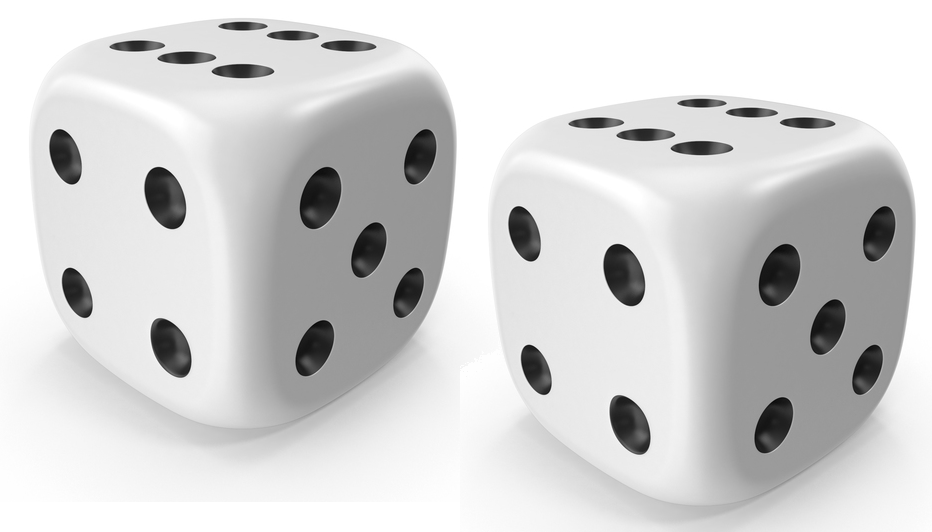
Three friends A, Band Care playing a dice game. The numbers rolled up by them in their first three chances were noted and given by A= {1, 5}, B = {2, 4, 5} and C = {1, 2, 5} as A reaches the cell 'SKIP YOUR NEXT TURN' in second throw. Based on the above information, answer the following questions.
  1. P(A | B) =
  1. $\frac{1}{6}$
  2. $\frac{1}{3}$
  3. $\frac{1}{2}$
  4. $\frac{2}{3}$
  1. P(B | C) =
  1. $\frac{2}{3}$
  2. $\frac{1}{12}$
  3. $\frac{1}{9}$
  4. $0$
  1. $\text{P}(\text{A}\cap\text{B}|\text{C})=$
  1. $\frac{1}{6}$
  2. $\frac{1}{2}$
  3. $\frac{1}{12}$
  4. $\frac{1}{3}$
  1. P(A | C)
  1. $\frac{1}{4}$
  2. $1$
  3. $\frac{2}{3}$
  4. None of these.
  1. $\text{P}(\text{A}\cup\text{B}|\text{C})=$
  1. 0
  2. $\frac{1}{2}$
  3. $\frac{2}{3}$
  4. 1
Answer
Here, sample space $=\{1,2,3,4,5,6\},\text{A}\cap\text{B}=\{5\},$$\text{B}\cap\text{C}=\{2.5\},\text{A}\cap\text{C}=\{1,5\},\text{A}\cap\text{B}\cap\text{C}=\{5\}$
and $\{\text{A}\cup\text{B}\}\cap\text{C}=\{1,2,5\}$ Also, $\text{P(A)}=\frac{2}{6},\text{P(B)}=\frac{3}{6},\text{P(C)}=\frac{3}{6}$$\text{P(A}\cap\text{B})=\frac{1}{6},\text{P(B}\cap\text{C)}=\frac{2}{6},\text{P(A}\cap\text{C}=\frac{2}{6},$
$\text{P}(\text{A}\cap\text{B}\cap\text{C})=\frac{1}{6}$ and $\text{P((A}\cup\text{B})\cap\text{C}=\frac{3}{6}$
  1. (b) $\frac{1}{3}$
Solution:
$\text{P}(\text{A}|\text{B})=\frac{\text{P(A}\cap\text{B)}}{\text{P(B)}}=\frac{\frac{1}{6}}{\frac{3}{6}}=\frac{1}{3}$
  1. (a) $\frac{2}{3}$
Solution:
$\text{P}(\text{B}|\text{C})=\frac{\text{P(B}\cap\text{C)}}{\text{P(C)}}=\frac{\frac{2}{6}}{\frac{3}{6}}=\frac{2}{3}$
  1. (d) $\frac{1}{3}$
Solution:
$\text{P}(\text{A}\cap\text{B}\cap\text{C})=\frac{\text{P(A}\cap\text{B}\cap\text{C)}}{\text{P(C)}}=\frac{\frac{1}{6}}{\frac{3}{6}}=\frac{1}{3}$
  1. (c) $\frac{2}{3}$
Solution:
$\text{P}(\text{A}|\text{C})=\frac{\text{P(A}\cap\text{C)}}{\text{P(C)}}=\frac{\frac{2}{6}}{\frac{3}{6}}=\frac{2}{3}$
  1. (d) $1$
Solution:
$\text{P}(\text{A}\cup\text{B}|\text{C})=\frac{\text{P(A}\cup\text{B)}\cap\text{C}}{\text{P(C)}}=\frac{\frac{3}{6}}{\frac{3}{6}}=1$
View full question & answer
Question 114 Marks
To teach the application of probability a maths teacher arranged a surprise game for 5 of his students namely Archit, Aadya, Mivaan, Deepak and Vrinda. He took a bowl containing tickets numbered 1 to 50 and told the students go one by one and draw two tickets simultaneously from the bowl and replace it after noting the numbers. Based on the above information, answer the following questions.

  1. Teacher ask Vrinda, what is the probability that both tickets drawn by Arch it shows even number?
  1. $\frac{1}{50}$
  2. $\frac{12}{49}$
  3. $\frac{13}{49}$
  4. $\frac{15}{49}$
  1. Teacher ask Mivaan, what is the probability that both tickets drawn by Aadya shows odd number?
  1. $\frac{1}{50}$
  2. $\frac{2}{49}$
  3. $\frac{12}{49}$
  4. $\frac{5}{49}$
  1. Teacher ask Deepak, what is the probability that tickets drawn by Mivaan, shows a multiple of 4 on one ticket and a multiple 5 on other ticket?
  1. $\frac{14}{245}$
  2. $\frac{16}{245}$
  3. $\frac{24}{245}$
  4. None of these.
  1. Teacher ask Arch it, what is the probability that tickets are drawn by Deepak, shows a prime number on one ticket and a multiple of 4 on other ticket?
  1. $\frac{3}{245}$
  2. $\frac{17}{245}$
  3. $\frac{18}{245}$
  4. $\frac{36}{245}$
  1. Teacher ask Aadya, what is the probability that tickets drawn by Vrinda, shows an even number on first ticket and an odd number on second ticket?
  1. $\frac{15}{98}$
  2. $\frac{25}{98}$
  3. $\frac{35}{98}$
  4. None of these.
Answer
  1. (b) $\frac{12}{49}$
Solution:

Total number of tickets = 50

Let event A = First ticket shows even number and B = Second ticket shows even number,

Now, P(Both tickets show even number) $=\text{P(A)}.\text{P(B}|\text{A)}=\frac{25}{50}.\frac{24}{49}=\frac{12}{49}$
  1. (c) $\frac{12}{49}$
Solution:

Let the event A = First ticket shows odd number and B = Second ticket shows odd number,

P(Both tickets show odd number) $=\frac{25}{50}\times\frac{24}{49}=\frac{12}{49}$
  1. (c) $\frac{24}{245}$
Solution:

Required probability = P(one number is a multiple of 4 and other is a multiple of 5).

= P(multiple of 5 on first ticket and multiple of 4 on second ticket) + P(multiple of 4 on first ticket and multiple of 5 on second ticket).

$=\frac{10}{50}.\frac{12}{49}+\frac{12}{50}\times\frac{10}{49}=\frac{12}{245}=\frac{24}{245}$
  1. (d) $\frac{36}{245}$
Solution:

Required probability = P(one ticket with prime number and other ticket with a multiple of 4),

$=2(\frac{15}{50}\times\frac{12}{49})=\frac{36}{245}$
  1. (b) $\frac{25}{98}$
Solution:

Let the event A = First ticket shows even number and B = Second ticket shows odd number.

Now, P(First ticket shows an even number and second ticket shows an odd number) $=\text{P(A)}.\text{P}(\text{B}|\text{A})=\frac{25}{50}\times\frac{25}{49}=\frac{25}{98}$
View full question & answer
Question 124 Marks
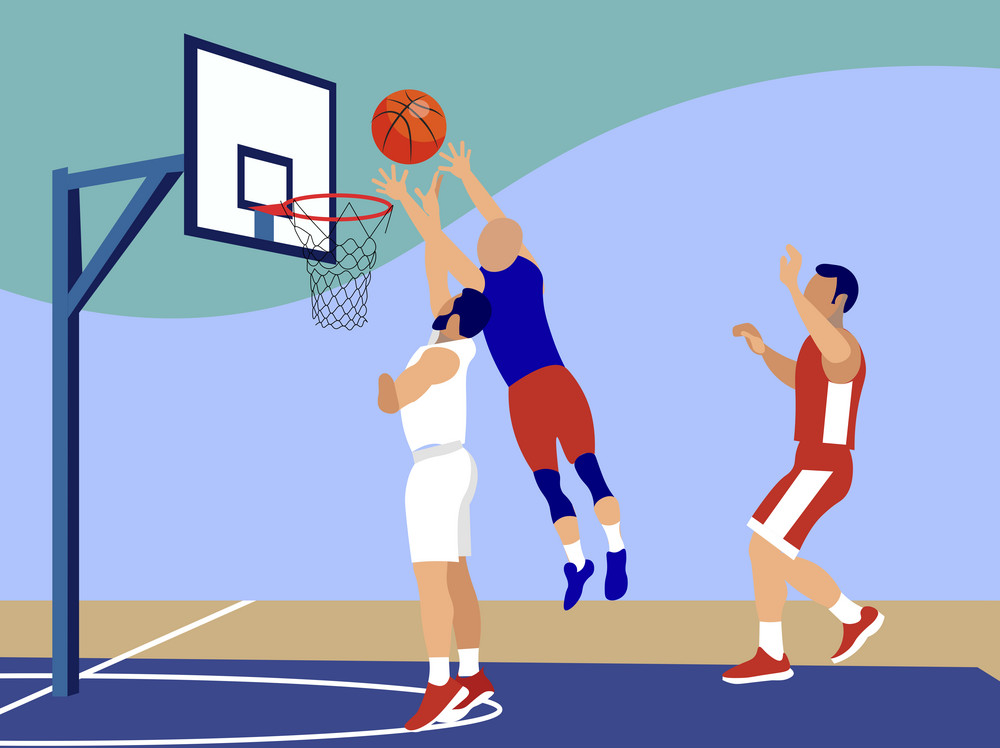
Between students of class $XII$ of two schools $A$ and $B$ basketball match is organised. For which, a team from each school is chosen, say $T_1$ be the team of school $A$ and $T_2$ be the team of school $B$. These teams have to play two games against each other. It is assumed that the outcomes of the two games are independent. The probability of $T_1$ winning, rawmg an osrng a game against $T_2$ are $\frac{1}{2},\ \frac{3}{10}$ and $\frac{1}{5}$ respecnvely. Each team gets $2$ points for a win, $1$ point for a draw and $0$ point for a loss in a game. Let $X$ and $Y$ denote the total points scored by team A and B respectively, after two games.

Based on the above information, answer the following questions.
  1. $P(T_2$ winning a match against $T_1)$ is equal to:
  1. $\frac{1}{5}$
  2. $\frac{1}{6}$
  3. $\frac{1}{3}$
  4. None of these
  1. $P(T_2$ drawing a match against $T_1)$ is equal to:
  1. $\frac{1}{2}$
  2. $\frac{1}{3}$
  3. $\frac{1}{6}$
  4. $\frac{3}{10}$
  1. $P(X > Y)$ is equal to:
  1. $\frac{1}{4}$
  2. $\frac{5}{12}$
  3. $\frac{1}{20}$
  4. $\frac{11}{20}$
  1. $P(X = Y)$ is equal to:
  1. $\frac{11}{100}$
  2. $\frac{1}{3}$
  3. $\frac{29}{100}$
  4. $\frac{1}{2}$
  1. $P(X + Y = 8)$ is equal to:
  1. $0$
  2. $\frac{5}{12}$
  3. $\frac{13}{36}$
  4. $\frac{7}{12}$
Answer
  1. (a) $\frac{1}{5}$
Solution:
Clearly, $P(T_2$ winning a match against $T_1)$
$= P(T_1$​​​​​​​ losing$) =\frac{1}{5}$
  1. (d) $\frac{3}{10}$
Solution:
Clearly, $P(T_2$ drawing a match against $T_1)$
$= P(T_1$ drawing$) =\frac{3}{10}$​​​​​​​
  1. (d) $\frac{11}{20}$
Solution:
According to given information, we have the following possibilities for the values of $X$ and $Y.$​​​​​​​
$X$
$4$
$3$
$2$
$1$
$0$
$Y$
$0$
$1$
$2$
$3$
$4$
Now, $P(X > Y) = P(X = 4, Y = 0) + P(X = 3, Y = 1)$
$= P(T_1$ win$) P(T_1$ win$) + P(T_1$ win$) P($match draw$) + P($match draw$) P(T_1$ win$)$
$=\frac{1}{2}\times\frac{1}{2}+\frac{1}{2}\times\frac{3}{10}+\frac{3}{10}\times\frac{1}{2}$
$=\frac{5+3+3}{20}=\frac{11}{20}$
  1. (c) $\frac{29}{100}$
Solution:
$P(X = Y) = P(X = 2, Y = 2)$
$= P(T_1 $ win$) P(T_2$ win$) + P(T_2$ win$) P(T_1$ win$) + P($match draw$) P($match draw$)$
$=\frac{1}{2}\times\frac{1}{5}+\frac{1}{5}\times\frac{1}{5}+\frac{3}{10}\times\frac{3}{10}$
$=\frac{1}{10}+\frac{1}{10}+\frac{9}{100}=\frac{29}{100}$
  1. (a) $0$
Solution:
From the given information, it is clear that maximum sum of $X$ and $Y$ can be $4,$ therefore $P(X + Y = 8) = 0.$
View full question & answer
Question 134 Marks
Nisha and Ayushi appeared for first round of an interview for two vacancies. The probability of Nisha's selection is $\frac{1}{3}$ and that of Ayushi's selection is $\frac{1}{2}.$

Based on the above information, answer the following questions.

  1. The probability that both of them are selected, is:
  1. $\frac{1}{12}$
  2. $\frac{1}{24}$
  3. $\frac{1}{6}$
  4. $\frac{1}{2}$
  1. The probability that none of them is selected, is:
  1. $\frac{2}{7}$
  2. $\frac{3}{8}$
  3. $\frac{5}{8}$
  4. $\frac{1}{3}$
  1. The probability that only one of them is selected, is:
  1. $\frac{5}{8}$
  2. $\frac{2}{3}$
  3. $\frac{2}{5}$
  4. $\frac{1}{2}$
  1. The probability that atleast one of them is selected, is:
  1. $\frac{2}{3}$
  2. $\frac{1}{8}$
  3. $\frac{3}{5}$
  4. $\frac{2}{5}$
  1. Suppose Nisha is selected by the manager and told her about two posts I and II for which selection is independent. If the probability of selection for post I $\frac{1}{6}$ is and for post II is $\frac{1}{5},$ then the probability that Nisha is selected for at least one post, is
  1. $\frac{1}{3}$
  2. $\frac{2}{3}$
  3. $\frac{3}{8}$
  4. $\frac{1}{2}$
Answer
Let A be the event that Nisha is selected and B be the event that Ayushi is selected. Then, we have $\text{P}(\text{A)}=\frac{1}{3}$$\Rightarrow(\bar{\text{A}})=1-\frac{1}{3}=\frac{2}{3}=\text{P}$ (Nisha is not selected)
$\text{P}(\text{B})=\frac{1}{2}$
$\Rightarrow\text{P}(\bar{\text{B}})=1-\frac{1}{2}=\frac{1}{2}=\text{P}$ (Ayushi is not selected)
  1. (c) $\frac{1}{6}$
Solution:
P (both are selected) $=\text{P}(\text{A}\cap\text{B})=\text{P}(\bar{\text{A}}).\text{P}(\bar{\text{B}})$
$=\frac{2}{3}\times\frac{1}{2}=\frac{1}{6}$
  1. (d) $\frac{1}{3}$
Solution:
P (both are rejected) $=\text{P}(\bar{\text{A}}\cap\bar{\text{B}})=\text{P}(\bar{\text{A}}).\text{P}(\bar{\text{B}})$
$=\frac{2}{3}\times\frac{1}{2}=\frac{1}{3}$
  1. (d) $\frac{1}{2}$
Solution:
P (only one of them is selected)
$=\text{P}(\text{A}\cap\bar{\text{B}})+\text{P}(\bar{\text{A}}\cap\text{B})=\text{P}(\text{A}).\text{P}(\bar{\text{B}})+\text{P}(\bar{\text{A}}).\text{P}(\text{B})$
$=\frac{1}{3}\times\frac{1}{2}+\frac{2}{3}\times\frac{1}{2}=\frac{1}{6}+\frac{2}{6}=\frac{3}{6}=\frac{1}{6}$
  1. (a) $\frac{2}{3}$
Solution:
P (at least one of them is selected)
= 1 - P(Both are rejected) $=1-\frac{1}{3}=\frac{2}{3}$
  1. (a) $\frac{1}{3}$
Solution:
Let $E_1$ be the event th at Nisha is selected for post I and $E_2$ be the event that Nisha is selected for post II.
$\therefore$ P (Nisha is selected for atleast one post)
$=\text{P}(\text{E}_1\cup\text{E}_2)=\text{P}(\text{E}_1)+\text{P}(\text{E}_2)-\text{P}(\text{E}_1\cap\text{E}_2)$
$=\frac{1}{6}+\frac{1}{5}-\frac{1}{6}\times\frac{1}{5}=\frac{10}{30}=\frac{1}{3}$
View full question & answer
Question 144 Marks
Ajay enrolled himself in an online practice test portal provided by his school for better practice. Out of 5 questions in a set-I, he was able to solve 4 of them and got stuck in the one which is as shown below.
If A and Bare independent events, P(A) = 0.6 and P(B) = 0.8, then answer the following questions.
  1. $\text{P}(\text{A}\cap\text{B})=$
  1. 0.2
  2. 0.9
  3. 0.48
  4. 0.6
  1. $\text{P}(\text{A}\cup\text{B})=$
  1. 0.92
  2. 0.08
  3. 0.48
  4. 0.64
  1. $\text{P}(\text{B}|\text{A})=$
  1. 0.14
  2. 0.2
  3. 0.6
  4. 0.8
  1. $\text{P}(\text{A}|\text{B})=$
  1. 0.6
  2. 0.9
  3. 0.19
  4. 0.11
  1. P (not A and not B)
  1. 0.01
  2. 0.48
  3. 0.08
  4. 0.91
Answer
Here, P(A) = 0.6 and P(B) = 0.8
  1. (c) 0.48
Solution:

$\text{P}(\text{A}\cap\text{B})=\text{P}(\text{A}).\text{P}(\text{B})=(0.6)(0.8)=0.48$
  1. (a) 0.92
Solution:

$\text{P}(\text{A}\cup\text{B})=\text{P}(\text{A}).\text{P}(\text{B})-\text{P(A}\cap\text{B})\\\ \ \ \ \ \ \ \ \ \ \ \ \ \ \ \ =0.6+0.8-0.48=0.92$
  1. (d) 0.8
Solution:

P(B | A) = P(B) ($\because$ A and B are independent) = 0.8
  1. (a) 0.6
Solution:

P(A | B) = P(A) ($\because$ A and B are independent) = 0.6
  1. (c) 0.08
Solution:

P(not A and B) $=\text{P(A}'\cap\text{B}')=\text{P}(\text{A}\cup\text{B})'$

$=1-\text{P(A}\cup\text{B})=1-0.92=0.08$
View full question & answer
Question 154 Marks
A card is lost from a pack of $52$ cards. From the remaining cards two cards are drawn at random.
Based on the above information, answer the following questions.
  1. The probability of drawing two diamonds, given that a card of diamond is missing, is:
  1. $\frac{21}{425}$
  2. $\frac{22}{425}$
  3. $\frac{23}{425}$
  4. $\frac{1}{425}$
  1. The probability of drawing two diamonds, given that a card of heart is missing, is:
  1. $\frac{26}{425}$
  2. $\frac{22}{425}$
  3. $\frac{19}{425}$
  4. $\frac{23}{425}$
  1. Let A be the event of drawing two diamonds from remaining $51$ cards and $E_1, E_2, E_3$ and $E_4$ be the events that lost card is of diamond, club, spade and heart respectively, then the approximate value of $\displaystyle\sum_{\text{i}=1}^{4}\text{P(A|E}_\text{i})$ is:
  1. $0.17$
  2. $0.24$
  3. $0.25$
  4. $0.18$
  1. AU of a sudden, missing card is found and, then two cards are drawn simultaneously without replacement. Probability that both drawn cards are king is:
  1. $\frac{1}{52}$
  2. $\frac{1}{221}$
  3. $\frac{1}{121}$
  4. $\frac{2}{221}$
  1. If two cards are drawn from a well shuffled pack of $52$ cards, one by one with replacement, then probability of getting not a king in $1^{st}$ and $2^{nd}$ draw is:
  1. $\frac{144}{169}$
  2. $\frac{12}{169}$
  3. $\frac{64}{169}$
  4. None of these
Answer
  1. (b) $\frac{22}{425}$
Solution:
Required probability $=\frac{^{12}\text{C}_2}{^{51}\text{C}_2}$
$=\frac{12\times11}{51\times50}=\frac{22}{425}$
  1. (a) $\frac{26}{425}$
Solution:
Required probability $=\frac{^{13}\text{C}_2}{^{51}\text{C}_2}$
$=\frac{12\times13}{51\times50}=\frac{26}{425}$
  1. (b) 0.24
Solution:
Clearly, $=\frac{^{12}\text{C}_2}{^{51}\text{C}_2}=\frac{22}{425}$
$\text{P}(\text{A}|\text{E}_2)=\frac{^{13}\text{C}_2}{^{51}\text{C}_2}=\frac{26}{425}$
$\text{P}(\text{A}|\text{E}_3)=\text{P}(\text{A}|\text{E}_4)=\frac{26}{425}$
$\therefore\displaystyle\sum_{\text{i}=1}^{4}\text{P(A|E}_\text{i})=\frac{22}{425}+\frac{26}{425}+\frac{26}{425}+\frac{26}{425}=\frac{100}{425}=0.24$
  1. (b) $\frac{1}{221}$
Solution:
P(getting both king) $=\frac{^{4}\text{C}_2}{^{52}\text{C}_2}=\frac{4\times3}{52\times51}=\frac{1}{221}$
  1. (a) $\frac{144}{169}$
Solution:
P(drawing a king) $=\frac{4}{52}=\frac{1}{13}$
$\therefore$ P(not drawing a king) $=1-\frac{1}{13}=\frac{12}{13}$
$\therefore$ Required probability $=\frac{12}{13}\times\frac{12}{13}=\frac{144}{169}$
View full question & answer
Question 164 Marks
In a bilateral cricket series between India and South Africa, the probability that India wins the first match is $0.6$. If India wins any match, then the probability that it wins the next match is $0.4,$ otherwise the probability is $0.3$. Also, it is given that there is no tie in any match.

Based on the above information answer the following questions.
  1. The probability that India won the second match, if lndia has already loose the first match is:
  1. $0.5$
  2. $0.4$
  3. $0.3$
  4. $0.6$
  1. The probability that India losing the third match, if India has already loose the first two matches is:
  1. $0.2$
  2. $0.3$
  3. $0.4$
  4. $0.7$
  1. The probability that India losing the first two matches is:
  1. $0.12$
  2. $0.28$
  3. $0.42$
  4. $0.01$
  1. The probability that India winning the first three matches is:
  1. $0.92$
  2. $0.96$
  3. $0.94$
  4. $0.096$
  1. The probability that India winning exactly one of the first three matches is:
  1. $0.205$
  2. $0.21$
  3. $0.408$
  4. $0.312$
Answer
  1. (c) $0.3$
Solution:
It is given that if India loose any match, then the probability that it wins the next match is $0.3.$
$\therefore$ Required probability $= 0.3$
  1. (d) $0.7$
Solution:
It is given that, if India loose any match, then the probability that it wins the next match is 0.3.
$\therefore$ Required probability $= 1 - 0.3 = 0.7$​​​​​​​
  1. (b) $0.28$
Solution:
Required probability $= P($India losing first match$).$
$P($India losing second match when India has already lost first match$)$
$= 0.4 \times 0.7 = 0.28$​​​​​​​
  1. (d) $0.096$
Solution:
Required probability $= P($India winning first match$) · P($India winning second match if India has already won first match$).$
$P($India winning third match if india has already won first two matches$)$
$= 0.6 \times 0.4 \times 0.4 = 0.096$​​​​​​​
  1. (c) $0.408$
Solution:
Required probability $= P($Win $1^{st}$ match$) P($Lose $2^{nd}$ match$) P($Lose $3^{rd}$ match$) + P ($Lose $1^{st}$ match$) P($Win $2^{nd}$ match$) P($Lose $3^{rd}$ match$) + P($Lose $1^{st}$ match$) P($Lose $2^{nd}$ match$) P($Win $3^{rd}$ match$),$
$= 0.6 \times ( 1 - 0.4).(1 - 0.3) + (1 - 0.6)(0.3) (1 - 0.4) + (1 - 0.6) (1 - 0.3) (0.3)$
$= 0.6 \times 0.6 \times 0. 7 + 0.4 \times 0.3 \times 0.6 + 0.4 \times 0.7 \times 0.3$
$= 0.252 + 0.072 + 0.084 = 0.408$
View full question & answer
Question 174 Marks
In an office three employees Vinay, Sonia and Iqbal process incoming copies of a certain form. Vinay process 50% of the forms, Sonia processes 20% and Iqbal the remaining 30% of the forms. Vinay has an error rate of 0.06, Sonia has an error rate of 0.04 and Iqbal has an error rate of 0.03.

Based on the above information, answer the following questions.

  1. The conditional probability that an error is committed in processing given that Sonia processed the form is:
  1. 0.0210
  2. 0.04
  3. 0.47
  4. 0.06
  1. The probability that Sonia processed the form and committed an error is:
  1. 0.005
  2. 0.006
  3. 0.008
  4. 0.68
  1. The total probability of committing an error in processing the form is:
  1. 0
  2. 0.047
  3. 0.234
  4. 1
  1. The manager of the company wants to do a quality check. During inspection he selects a form at random from the days output of processed forms. If the form selected at random has an error, the probability that the form is NOT processed by Vinay is:
  1. $1$
  2. $\frac{30}{47}$
  3. $\frac{20}{47}$
  4. $\frac{17}{47}$
  1. Let A be the event of committing an error in processing the form and let $E_1, E_2$ and $E_3$ be the events that Vinay, Sonia and Iqbal processed the form. The value of $\sum\limits^3_\text{i=1}\ \text{P}(\text{E}_\text{i}\ |\ \text{A})$ is:
  1. 0
  2. 0.03
  3. 0.06
  4. 1
Answer
Let A be the event of commiting an error and $E_1, E_2$ and $E_3$ be the events that Vinay, Sonia and Iqbal processed the form.
  1. (b) 0.04
Solution:
Required probability $= P(A|E_2)$
$=\frac{\text{P}(\text{A}\ \cap\ \text{E}_2)}{\text{P}(\text{E}_2)}$
$=\frac{\Big(0.04\times\frac{20}{100}\Big)}{\Big(\frac{20}{100}\Big)}=0.04$
  1. (c) 0.008
Solution:
Required probability $=\text{P}(\text{A}\ \cap\ \text{E}_2)$
$=0.04\times\frac{20}{100}=0.008$
  1. (b) 0.047
Solution:
Total probability is given by
$P(A) = P(E_1) \times P(A|E_1) + P(E_2) \times P(A|E_2) + P(E_3) \times P(A|E_3).$
$=\frac{50}{100}\times0.06+\frac{20}{100}\times0.04+\frac{30}{100}\times0.03$
$=\ 0.047$
  1. (d) $\frac{17}{47}$
Solution:
Using Bayes' theorem, we have
$\text{P}(\text{E}_1\ |\ \text{A})=\frac{\text{P}(\text{E}_1)\times\text{P}(\text{A}\ |\ \text{E}_1)}{\text{P}(\text{E}_1)\ \times\ \text{P}(\text{A}\ |\ \text{E}_1)\ +\ \text{P}(\text{E}_2)\ \times\ \text{P}(\text{A}\ |\ \text{E}_2)\ +\ \ \text{P}(\text{E}_3)\ \times\ \text{P}(\text{A}\ |\ \text{E}_3)}$
$=\frac{0.5\times0.06}{0.5\times0.06+0.2\times0.04+0.3\times0.03}=\frac{30}{47}$
$\therefore$ Required probability $=\ \text{P}(\bar{\text{E}\ |\ \text{A}})$
$=1-\text{P}(\text{E}_1\ |\ \text{A})=1-\frac{30}{47}=\frac{17}{47}$
  1. (d) 1
Solution:
$\sum\limits^3_\text{i=1}\ \text{P}(\text{E}_\text{i}\ |\ \text{A})=\text{P}(\text{E}_1\ |\ \text{A})\ +\ \text{P}(\text{E}_2\ |\ \text{A})\ +\ \text{P}(\text{E}_3\ |\ \text{A})\ =1$
[ $\therefore$ Sum of posterior probabilities is 1)
View full question & answer
Question 184 Marks
On a holiday, a father gave a puzzle from a newspaper to his son Ravi and his daughter Priya. The probability of solving this specific puzzle independently by Ravi and Priya are $\frac{1}{4}$ and $\frac{1}{5}$ respectively.

Based on the above information, answer the following questions.

  1. The chance that both Ravi and Priya solved the puzzle, is:
  1. $10\%$
  2. $5\%$
  3. $20\%$
  4. $25\%$
  1. Probability that puzzle is solved by Ravi but not by Priya, is:
  1. $\frac{1}{2}$
  2. $\frac{1}{5}$
  3. $\frac{3}{5}$
  4. $\frac{1}{3}$
  1. Find the probability that puzzle is solved.
  1. $\frac{1}{2}$
  2. $\frac{1}{5}$
  3. $\frac{2}{5}$
  4. $\frac{5}{6}$
  1. Probability that exactly one of them solved the puzzle, is:
  1. $\frac{1}{30}$
  2. $\frac{1}{20}$
  3. $\frac{7}{20}$
  4. $\frac{3}{20}$
  1. Probability that none of them solved the puzzle, is:
  1. $\frac{1}{5}$
  2. $\frac{3}{5}$
  3. $\frac{2}{5}$
  4. None of these
Answer
Let $E_1$ be the event that Ravi solved the puzzle and $E_2$ be the event that Priya solved the puzzle.
Then, $\text{P(E}_1)=\frac{1}{4}$ and $\text{p}(\text{E}_2)=\frac{1}{5}$
  1. $(b)\ 5\%$
Since, $E_1$ and $E_2$ are independent events.
$\therefore$ P(both solved the puzzle) $=\text{p}(\text{E}_1\cap\text{E}_2)$
$=\text{P}(\text{E}_1).\text{P}(\text{E}_2)=\frac{1}{4}\times\frac{1}{5}=\frac{1}{20}=\frac{1}{20}\times100\%=5\%$
  1. $(b) \frac{1}{5}$
$P\ ($puzzle is solved by Ravi but not by Priya$)$
$=\text{P}(\bar{\text{E}_2})\text{P}(\text{E}_1)=(1-\frac{1}{5}).\frac{1}{4}=\frac{4}{5}.\frac{1}{4}=\frac{1}{5}$
  1. $(c)\ \frac{2}{5}$
$P($puzzle is solved$)= P(E_1$ or $E_2)$
$=\text{P}(\text{E}_1\cup\text{E}_2)=\text{P}(\text{E}_1)+\text{P}(\text{E}_2)-\text{P}(\text{E}_1\cap\text{E}_2)$
$=\frac{1}{4}+\frac{1}{5}-\frac{1}{20}=\frac{8}{20}=\frac{2}{5}$
  1. $(c)\ \frac{7}{20}$
$P($Exactly one of them solved the puzzle$)$
$=\text{P}[(\text{E}_1)\text{ and }\bar{\text{E}_2}]$ or $=\text{P}[(\text{E}_2)\text{ and }\bar{\text{E}_1}]$
$=​P​(\text{E}_1\cap\bar{\text{E}_2})+\text{P}(\text{E}_2\cap\bar{\text{E}_1})$
$=\text{P}(\text{E}_1)\times\text{P}(\bar{\text{E}_2})+\text{P}(\text{E}_2)\times\text{P}(\bar{\text{E}}_1)$
$\begin{array}{c}=\frac{1}{4}\times\frac{4}{5}+\frac{1}{5}\times\frac{3}{4}&&&&[\because\text{P}(\bar{\text{E}_1})=1-\text{P}(\text{E}_1)]\end{array}$
$=\frac{4}{20}+\frac{3}{20}=\frac{7}{20}$
  1. $(b) \frac{3}{5}$
$P($none of them solved the puzzle$)$
$=\text{P}(\bar{\text{E}_1}\cap\bar{\text{E}_2})=\text{P}(\bar{\text{E}_1}).\text{P}(\bar{\text{E}_2})=\frac{3}{4}\times\frac{4}{5}=\frac{3}{5}$
View full question & answer
Question 194 Marks
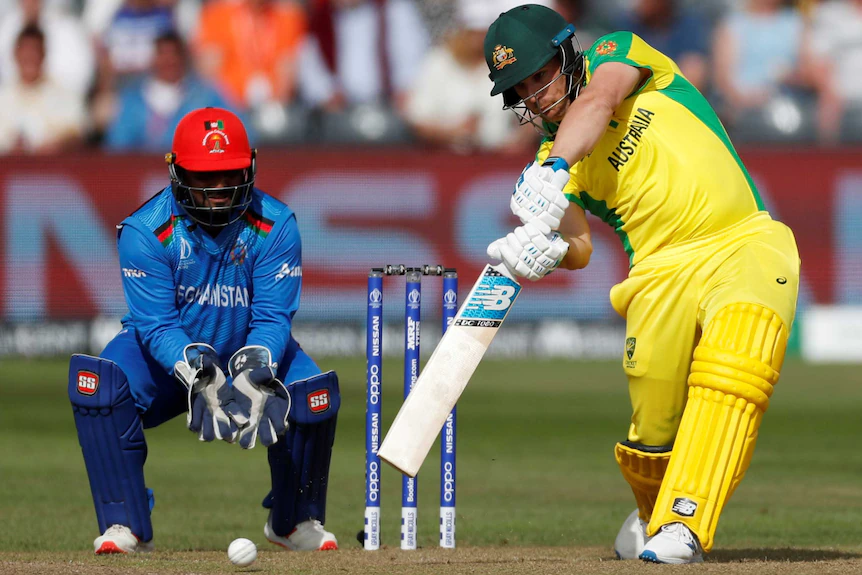
A factory has three machines A, B and C to manufacture bolts. Machine A manufacture 30%, machine B manufacture 20% and machine C manufacture 50% of the bolts respectively. Out of their respective outputs 5%, 2% and 4% are defective. A bolt is drawn at random from total production and it is found to be defective.

Based on the above information, answer the following questions.
  1. Probability that defective bolt drawn is manufactured by machine A, is:
  1. $\frac{4}{13}$
  2. $\frac{5}{13}$
  3. $\frac{6}{13}$
  4. $\frac{9}{13}$
  1. Probability that defective bolt drawn is manufactured by machine B, is:
  1. 0.3
  2. 0.1
  3. 0.2
  4. 0.4
  1. Probability that defective bolt drawn is manufactured by machine C, is:
  1. $\frac{16}{39}$
  2. $\frac{17}{39}$
  3. $\frac{20}{39}$
  4. $\frac{15}{39}$
  1. Probability that defective bolt is not manufactured by machine B, is:
  1. $\frac{35}{39}$
  2. $\frac{61}{39}$
  3. $\frac{41}{39}$
  4. None of these.
  1. Probability that defective bolt is not manufactured by machine C, is:
  1. 0.03
  2. 0.09
  3. 0.5
  4. 0.9
Answer
Let $E_1. E_2. E_3$ be the events of drawing a bolt produced by machine A, Band C, respectively.Then $\text{P}(\text{E}_1)=\frac{30}{100}=\frac{3}{10},\text{P}(\text{E}_2)=\frac{20}{100}=\frac{1}{5}$
and $\text{P}(\text{E}_3)=\frac{50}{100}=\frac{1}{2}$
Also, let E be the event of drawing a defective bolt.
Then $\text{P}(\text{E}|\text{E}_1)=\frac{5}{100}=\frac{1}{20},\text{P}(\text{E}|\text{E}_2)=\frac{2}{100}=\frac{1}{50},$
$\text{P}(\text{E}|\text{E}_1)=\frac{5}{100}=\frac{1}{20},\text{P}(\text{E}|\text{E}_2)=\frac{2}{100}=\frac{1}{50},$
$\text{P}(\text{E}|\text{E}_3)=\frac{4}{100}=\frac{1}{25}$
  1. (b) $\frac{5}{13}$
Solution:
Probability that the defective bolt is manufactured by machine $A = P(E_1 | E)$
$=\frac{\text{P}(\text{E}|\text{E}_1)\times\text{P}(\text{E}_1)}{\text{P}(\text{E}|\text{E}_1).\text{P}(\text{E}_1)+\text{P}(\text{E}|\text{E}_2).\text{P}(\text{E}_2)+\text{P}(\text{E}|\text{E}_3).\text{P}(\text{E}_3)}$
[Using Bayes' Theorem]
$=\frac{\frac{1}{20}\times\frac{3}{10}}{\frac{1}{20}\times\frac{3}{10}+\frac{1}{50}\times\frac{1}{5}+\frac{1}{25}\times\frac{1}{2}}=\frac{3}{200}\times\frac{1000}{39}=\frac{5}{13}$
  1. (b) 0.1
Solution:
Probability that the defective bolt is manufactured by machine $B = P(E_2 | E)$
$=\frac{\text{P}(\text{E}|\text{E}_2)\times\text{P}(\text{E}_2)}{\text{P}(\text{E}|\text{E}_1).\text{P}(\text{E}_1)+\text{P}(\text{E}|\text{E}_2).\text{P}(\text{E}_2)+\text{P}(\text{E}|\text{E}_3).\text{P}(\text{E}_3)}$
$=\frac{\frac{1}{50}\times\frac{1}{5}}{(\frac{1}{20}\times\frac{3}{10})+(\frac{1}{50}\times\frac{1}{5})+(\frac{1}{25}\times\frac{1}{2})}$
$=\frac{1}{250}\times\frac{1000}{39}=\frac{4}{39}\approx0.1$
  1. (c) $\frac{20}{39}$
Solution:
Probability that the defective bolt is manufactured by machine $ C = P(E_3 | E)$
$=\frac{\text{P}(\text{E}|\text{E}_3)\times\text{P}(\text{E}_3)}{\text{P}(\text{E}|\text{E}_1).\text{P}(\text{E}_1)+\text{P}(\text{E}|\text{E}_2).\text{P}(\text{E}_2)+\text{P}(\text{E}|\text{E}_3).\text{P}(\text{E}_3)}$
$=\frac{\frac{1}{25}\times\frac{1}{2}}{(\frac{1}{20}\times\frac{3}{10})+(\frac{1}{50}\times\frac{1}{5})+(\frac{1}{25}\times\frac{1}{2})}$
$=\frac{1}{50}\times\frac{1000}{39}=\frac{20}{39}$
  1. (a) $\frac{35}{39}$
Solution:
Probability that the defective bolt is not manufactured by machine B i.e., it is manufactured by machine A or C $=\frac{15}{39}+\frac{20}{39}=\frac{35}{39}$
  1. (c) 0.5
Solution:
Required probability $=\frac{15}{39}+\frac{4}{39}=\frac{19}{39}\approx0.5$
View full question & answer
Question 204 Marks
Suman was doing a project on a school survey, on the average number of hours spent on study by students selected at random. At the end of survey, Suman prepared the following report related to the data. Let X denotes the average number of hours spent on study by students. The probability that X can take the values x, has the following form, where k is some unknown constant.$\text{P(X}=\text{x})\begin{cases}0.2,\text{if x}= 0\\\text{kx},\text{if}\text{ x}=1\text{ or }2\\\text{k}(6-\text{x}),\text{if}\text{ x}=3\text{ or }4\\0,\text{odherwise}\end{cases}$
Based on the above information, answer the following questions.
  1. Find the value of k.
  1. 0.1
  2. 0.2
  3. 0.3
  4. 0.05
  1. What is the probability that the average study time of students is not more than 1 hour?
  1. 0.4
  2. 0.3
  3. 0.5
  4. 0.1
  1. What is the probability that the average study time of students is at least 3 hours?
  1. 0.5
  2. 0.9
  3. 0.8
  4. 0.1
  1. What is the probability that the average study time of students is exactly 2 hours?
  1. 0.4
  2. 0.5
  3. 0.7
  4. 0.2
  1. What is the probability that the average study time of students is at least 1 hour?
  1. 0.2
  2. 0.4
  3. 0.8
  4. 0.6
Answer
  1. (a) 0.1
Solution:

We know that $\sum\text{p}_\text{i}=1$

Then 0.2 + k + 2k + 3k + 2k + 0 = 1

⇒ 8k = 1 - 0.2 = 0.8 ⇒ k = 0.1
  1. (b) 0.3
Solution:

P(Average study time is not more than 1 hour)

$=\text{P}\text{(X}\leq1)$

= P(X = 0) + P(X = 1) = 0.2 + 0.1 = 0.3
  1. (a) 0.5
Solution:

P(Average study time is at least 3 hours)

$=\text{P}\text{(X}\leq1)$

= P(X = 3) + P(X = 4) = 0.3 + 0.2 = 0.5
  1. (d) 0.2
Solution:

P(Average study time is exactly 2 hours)

= P(X = 2) = 0.2
  1. (c) 0.8
Solution:

P(Average study time is at least 1 hour)

= 1 - P(X = 0) = 1 - 0.2 = 0.8
View full question & answer
Question 214 Marks
A phannaceutical company wants to advertise a new product on T.V., where the product is specially designed for women. For that an advertising executive is hired to study television-viewing habits of married couples during prime time hours. Based on past viewing records he has determined that during prime time husbands are watching television 70% of the time. It has also been determined that when the husband is watching television, 30% of the time the wife is also watching. When the husband is not watching television, 40% of the time the wife is watching television. Based on the above information, answer the following questions.

  1. The probability that the husband is not watching television during prime time, is:
  1. 0.6
  2. 0.3
  3. 0.4
  4. 0.5
  1. If the wife is watching television, the probability that husband is also watching television, is:
  1. $\frac{2}{11}$
  2. $\frac{7}{11}$
  3. $\frac{5}{11}$
  4. $\frac{8}{11}$
  1. The probability that both husband and wife are watching television during prime time, is:
  1. 0.21
  2. 0.5
  3. 0.3
  4. 0.4
  1. The probability that the wife is watching television during prime time, is:
  1. 024
  2. 0.33
  3. 0.3
  4. 0.4
  1. If the wife is watching television, then the probability that husband is not watching television, is:
  1. $\frac{2}{11}$
  2. $\frac{4}{11}$
  3. $\frac{1}{11}$
  4. $\frac{5}{11}$
Answer
  1. (b) 0.3
Solution:

Since, it is given that during prime time husband is watching T.V. 70% of the time,

Required probability,

= 1 - P(husband is watching television during prime time)

= I - 0.7 = 0.3
  1. (b) $\frac{7}{11}$
Solution:

Let H be the event that husband is watching T.V., W be the event that wife is watching T. V.

$\text{P}(\text{V})=0.7,\text{P}(\overline{\text{H}})=0.3$

$\therefore$ Required probability $=\text{P}(\text{H}|\text{W})$

$=\frac{\text{P}\text{(H)}.\text{P}(\text{W}|\text{H})}{\text{P}\text{(H}).\text{P}\text{(W}|\text{H)}+\text{P}(\text{H}})\text{P}(\text{W}|\overline{\text{H}})$

$=\frac{0.7\times0.3}{0.7\times0.3+0.4\times0.3}=\frac{0.21}{0.33}=\frac{7}{11}$
  1. (a) 0.21
Solution:

Required probability $\text{P}(\text{H}\cap\text{W})$

= P(H) P(W | H) = 0.7 × 0.3 = 0.21
  1. (b) 0.33
Solution:

Required probability $=\text{P(W)}=\frac{\text{P(H}\cap\text{W)}}{\text{P(H|}\text{W)}}$

$=\frac{0.21}{\frac{7}{11}}=\frac{21}{100}\times\frac{11}{7}=\frac{33}{100}=0.33$
  1. (b) $\frac{4}{11}$
Solution:

Required probability $=\text{P}(\overline{\text{H}}|\text{W)}$

$=1-\text{P}(\text{H)}|\text{W})=1-\frac{7}{11}=\frac{4}{11}$
View full question & answer