Question types

Probability question types

810 questions across 8 question groups — pick any mix to generate a Maths paper with step-by-step answer keys.

810
Questions
8
Question groups
5
Question types
Sample Questions

Probability questions

One sample from each question group in this chapter. Select any group above to see the full set with answer keys.

If A and B are two independent events with $\text{P(A)}=\frac{1}{3}$ and $\text{P(B)}=\frac{1}{4},$ then P(B'|A) is equal to:
  • A
    $\frac{1}{4}$
  • B
    $\frac{1}{3}$
  • $\frac{3}{4}$
  • D
    $1$

Answer: C.

View full solution
Choose the correct answer from the given four options.
In a college, 30% students fail in physics, 25% fail in mathematics and 10% fail in both. One student is chosen at random. The probability that she fails in physics if she has failed in mathematics is:
  • A
    $\frac{1}{10}$
  • $\frac{2}{5}$
  • C
    $\frac{9}{20}$
  • D
    $\frac{1}{3}$

Answer: B.

View full solution
If X is a binomial variate with parameters n and p, where 0 < p < 1 such that $\frac{\text{P(X = r)}}{\text{P(X = n - r})}$ is independent of n and r, then p equals:
  • $\frac{1}{2}$
  • B
    $\frac{1}{3}$
  • C
    $\frac{1}{4}$
  • D
    $\text{None of these}$

Answer: A.

View full solution
Choose the correct answer in each of the following:
Suppose that two cards are drawn at random from a deck of cards. Let X be the number of aces obtained. Then the value of E(X) is
  • A
    $\frac{37}{221}$
  • B
    $\frac{5}{13}$
  • $\frac{1}{13}$
  • D
    $\frac{2}{13}$

Answer: C.

View full solution
If P(A) + P(B) = 1; then which of the following option explains the event A and B correctly?
  • Event A and B are mutually exclusive, exhaustive and complementary events.
  • B
    Event A and B are mutually exclusive and exhaustive events.
  • C
    Event A and B are mutually exclusive and complementary events.
  • D
    Event A and B are exhaustive and complementary events.

Answer: A.

View full solution
Two cards are drawn at random and one-by-one without replacement from a well-shuffled pack of 52 playing cards. Find the probability that one card is red and the other is black.
View full solution
If A and B are two events such that $\text{P}(\text{A})=\frac{1}{4},\ \text{P}(\text{B})=\frac{1}{2}\ \text{and}\ \text{P}(\text{A}\cap\text{B})=\frac{1}{8},$ find P(not A and not B).
View full solution
There are 5 cards numbered 1 to 5, one number on one card. Two cards are drawn at random without replacement. Let X denote the sum of the numbers on two cards drawn. Find the mean and variance of X.
View full solution
State which of the following are not the probability distributions of a random variable. Give reasons for your answer.
X 0 1 2
P(X) 0.4 0.4 0.2
View full solution
State which of the following are not the probability distributions of a random variable. Give reasons for your answer.
Z 3 2 1 0 -1
P(Z) 0.3 0.2 0.4 0.1 0.05
View full solution
A die, whose faces are marked 1, 2, 3 in red and 4, 5, 6 in green, is tossed. Let A be the event ‘‘number obtained is even’’ and B be the event ‘‘number obtained is red’’. Find if A and B are independent events.
View full solution
A black and a red die are rolled together. Find the conditional probability of obtaining the sum 8, given that the red die resulted in a number less than 4.
View full solution
A die marked 1, 2, 3 in red and 4, 5, 6 in green is tossed. Let A be the event “number is even” and B be the event “number is marked red”. Find whether the events A and B are independent or not.
View full solution
Q 163 Marks Question3 Marks
Find the mean $\mu$  variance $\sigma ^2$ for the following probability distribution:
X 0 1 2 3
P(X) $\frac{1}{6}$ $\frac{1}{2}$ $\frac{3}{10}$ $\frac{1}{30}$
View full solution
Q 183 Marks Question3 Marks
There are two bags I and II. Bag I contains $3$ white and $4$ red balls and Bag II contains $5$ white and $6$ red balls. One ball is drawn at random from one of the bags and is found to be red. Find the probability that it was drawn from bag II.
View full solution
Q 203 Marks Question3 Marks
An urn contains 4 red and 7 blue balls. Two balls are drawn at random with replacement. Find the probability of getting:
  1. 2 red balls.
  2. 2 blue balls.
  3. One red and one blue ball.
View full solution
In a game, a man wins 5 for getting a number greater than 4 and loses 1 otherwise, when a fair die is thrown. The man decided to throw a die three but to quit as and when he gets a number greater than 4. Find the expected value of the amount he wins/loses.
View full solution
Of the students in a school, it is known that $30 \%$ have $100 \%$ attendanceand $70 \%$ students are irregular. Previous year results report that $70 \%$ of all students who have $100\%$ attendance attain A grade and $10\%$ irregular students attain A grade in their annual examination. At the end of the year, one student is chosen at random from the school and he was found to have an A grade. What is the probability that the student has $100 \%$ attendance? Is regularity required only in school? Justify your answer.
View full solution
There are 4 cards numbered 1, 3, 5 and 7, one number on one card. Two cards are drawn at random without replacement. Let X denote the sum of the numbers on the two drawn cards. Find the mean and variance of X.
View full solution
Two numbers are selected at random (without replacement) from the first six positive integers. Let X denote the larger of the two numbers obtained. Find the probability distribution of the random variable X, and hence find the mean of the distribution.
View full solution
Two schools A and B want to award their selected students on the values of sincerity, truthfulness and helpfulness. The school A wants to award ₹ x each, ₹ y each and ₹ z each for the three respective values to 3, 2 and 1 students respectively with a total award money of ₹ 1,600. School B wants to spend ₹ 2,300 to award its 4, 1 and 3 students on the respective values (by giving the same award money to the three values as before). If the total amount of award for one prize on each value is ₹ 900, using matrices, find the award money for each value. Apart from these three values, suggest one more value which should be considered for award.
View full solution
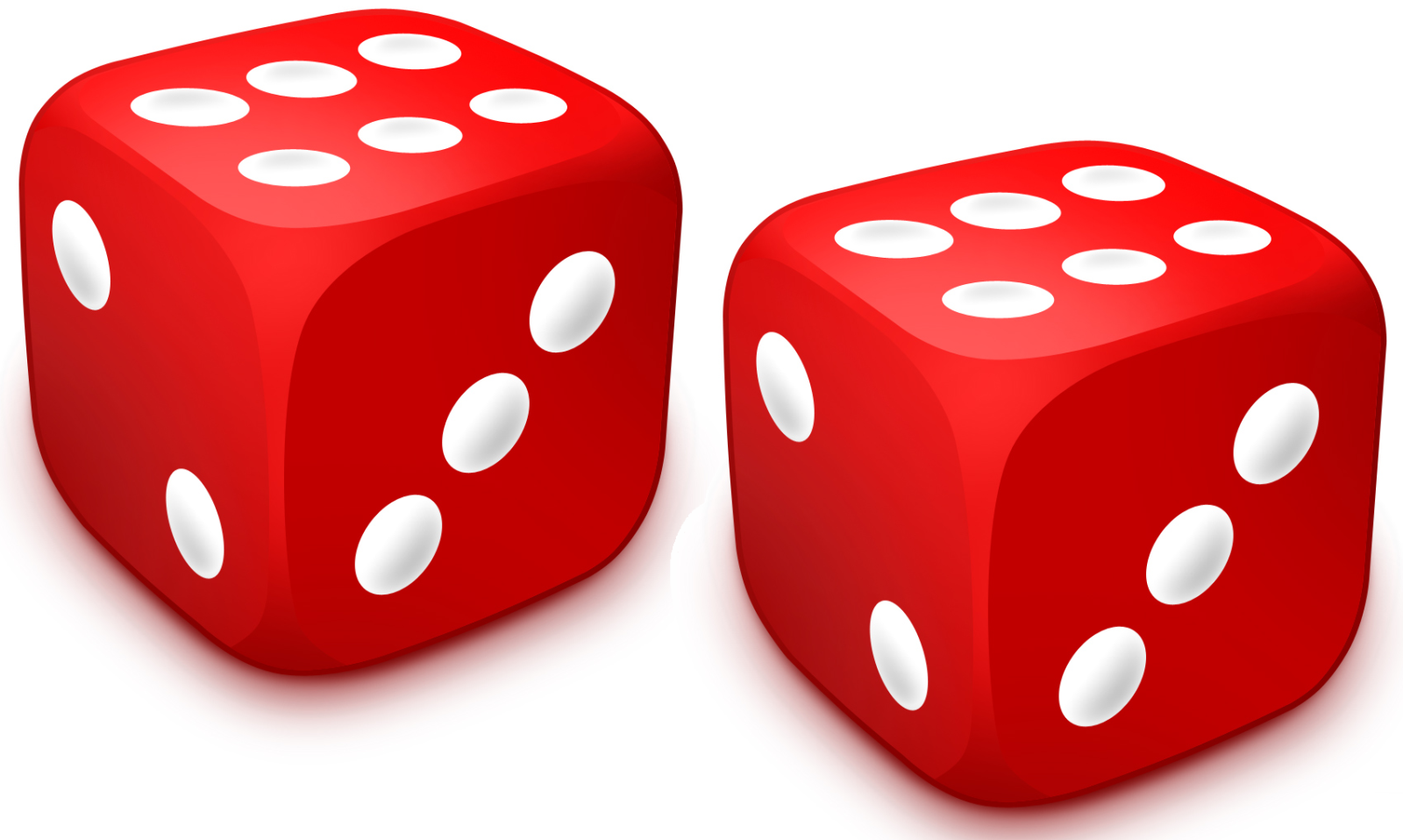
Varun and Jsha decided to play with dice to keep themselves busy at home as their schools are closed due to coronavirus pandemic. Varun throw a dice repeatedly until a six is obtained. He denote the number of throws required by X.
Based on the above information, answer the following questions.
  1. The probability that X = 2 equals.
  1. $\frac{1}{6}$
  2. $\frac{5}{6^2}$
  3. $\frac{5}{3^6}$
  4. $\frac{1}{6^3}$
  1. The probability that X = 4 equals.
  1. $\frac{1}{6^4}$
  2. $\frac{1}{6^6}$
  3. $\frac{5^3}{6^4}$
  4. $\frac{5}{6^4}$
  1. The probability that $\text{X}\geq2$ equals.
  1. $\frac{25}{216}$
  2. $\frac{1}{36}$
  3. $\frac{5}{6}$
  4. $\frac{25}{36}$
  1. The value of $\text{P}(\text{X}\geq6)$ is:
  1. $\frac{5^5}{6^5}$
  2. $1-\frac{5^3}{6^5}$
  3. $\frac{5^3\times61}{6^5}$
  4. $\frac{5^3}{6^4}$
  1. The probability that X > 3 equals.
  1. $\frac{36}{25}$
  2. $\frac{5^2}{6^2}$
  3. $\frac{5}{6}$
  4. $\frac{5^3}{6^3}$
View full solution
In pre-board examination of class XII, commerce stream with Economics and Mathematics of a particular school, 50% of the students failed in Economics, 35% failed in Mathematics and 25% failed in both Economics and Mathematics. A student is selected at random from the class. Based on the above information, answer the following questions.

  1. The probability that the selected student has failed in Economics, if it is known that he has failed in Mathematics, is:
  1. $\frac{3}{10}$
  2. $\frac{12}{25}$
  3. $\frac{1}{4}$
  4. $\frac{5}{7}$
  1. The probability that the selected student has failed in Mathematics, if it is known that he has failed in Economics, is:
  1. $\frac{22}{25}$
  2. $\frac{12}{25}$
  3. $\frac{1}{2}$
  4. $\frac{3}{25}$
  1. The probability that the selected student has passed in at least one of the two subjects, is:
  1. $\frac{1}{4}$
  2. $\frac{1}{2}$
  3. $\frac{3}{4}$
  4. None of these.
  1. The probability that the selected student has failed in at least one of the two subjects, is:
  1. $\frac{3}{5}$
  2. $\frac{22}{25}$
  3. $\frac{2}{5}$
  4. $\frac{43}{100}$
  1. The probability that the selected student has passed in Mathematics, if it is known that he has failed in Economics, is:
  1. $\frac{2}{5}$
  2. $\frac{3}{4}$
  3. $\frac{1}{3}$
  4. $\frac{1}{2}$
View full solution
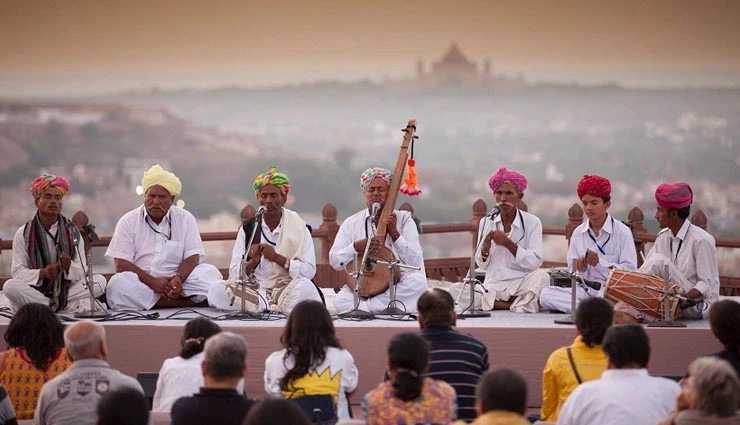
One day, a sangeet mahotsav is to be organised in an open area of Rajasthan. ln recent years, it has rained only 6 days each year. Also, it is given that when it actually rains, the weatherman correctly forecasts rain $80\%$ of the time. When it doesn't rain, he incorrectly forecasts rain $20\%$ of the time.

If leap year is considered, then answer the following questions.
  1. The probability that it rains on chosen day is:
  1. $\frac{1}{366}$
  2. $\frac{1}{73}$
  3. $\frac{1}{60}$
  4. $\frac{1}{61}$
  1. The probability that it does not rain on chosen day is:
  1. $\frac{1}{366}$
  2. $\frac{5}{366}$
  3. $\frac{360}{366}$
  4. None of these.
  1. The probability that the weatherman predicts correctly is:
  1. $\frac{5}{6}$
  2. $\frac{7}{8}$
  3. $\frac{4}{5}$
  4. $\frac{1}{5}$
  1. The probability that it will rain on the chosen day, if weatherman predict rain for that day, is:
  1. $0.0625$
  2. $0.0725$
  3. $0.0825$
  4. $0.0925$
  1. The probability that it will not rain on the chosen day, if weatherman predict rain for that day, is:
  1. $0.94$
  2. $0.84$
  3. $0.74$
  4. $0.64$
View full solution
A doctor is to visit a patient. From the past experience, it is known that the probabilities that he will come by cab, metro, bike or by other means of transport are respectively $0.3, 0.2, 0.1$ and $0.4$. 'Tile probabilities that he will be late are $0.25, 0.3, 0.35$ and $0.1$ if he comes by cab, metro, bike and other means of transport respectively.

 Based on the above information, answer the following questions.
  1. When the doctor arrives late, what is the probability that he comes by metro?
  1. $\frac{5}{14}$
  2. $\frac{2}{7}$
  3. $\frac{5}{21}$
  4. $\frac{1}{6}$
  1. When the doctor arrives late, what is the probability that he comes by cab?
  1. $\frac{4}{21}$
  2. $\frac{1}{7}$
  3. $\frac{5}{14}$
  4. $\frac{2}{21}$
  1. When the doctor arrives late, what is the probability that he comes by bike?
  1. $\frac{5}{21}$
  2. $\frac{4}{7}$
  3. $\frac{5}{6}$
  4. $\frac{1}{6}$
  1. When the doctor arrives late, what is the probability that he comes by other means of transport?
  1. $\frac{6}{7}$
  2. $\frac{5}{14}$
  3. $\frac{4}{21}$
  4. $\frac{2}{7}$
  1. What is the probability that the doctor is late by any means?
  1. $1$
  2. $0$
  3. $\frac{1}{2}$
  4. $\frac{1}{4}$
View full solution
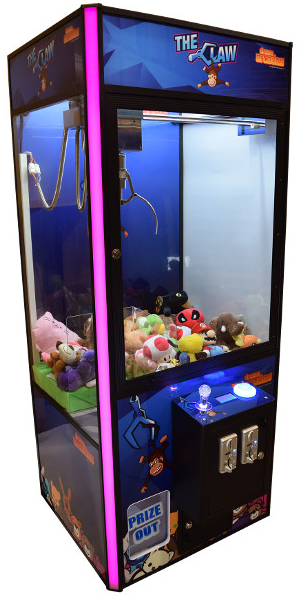
In a play zone, Aastha is playing crane game. It has 12 blue balls, 8 red balls, 10 yellow balls and 5 green balls. If Aastha draws two balls one after the other without replacement, then answer the following questions.
  1. What is the probability that the first ball is blue and the second ball is green?
  1. $\frac{5}{119}$
  2. $\frac{12}{119}$
  3. $\frac{6}{119}$
  4. $\frac{15}{119}$
  1. What is the probability that the first ball is yellow and the second ball is red?
  1. $\frac{16}{119}$
  2. $\frac{8}{119}$
  3. $\frac{24}{119}$
  4. None of these.
  1. What is the probability that both the balls are red?
  1. $\frac{4}{85}$
  2. $\frac{24}{595}$
  3. $\frac{12}{119}$
  4. $\frac{64}{119}$
  1. What is the probability that the first ball is green and the second ball is not yellow?
  1. $\frac{10}{119}$
  2. $\frac{6}{85}$
  3. $\frac{12}{119}$
  4. None of these.
  1. What is the probability that both the balls are not blue?
  1. $\frac{6}{595}$
  2. $\frac{12}{85}$
  3. $\frac{15}{17}$
  4. $\frac{253}{595}$
View full solution
Fill in the blanks.
If A and B are such that $\text{P}(\text{A}'\cup\text{B}')=\frac{2}{3}$ and $\text{P}(\text{A}\cup\text{B})=\frac{5}{9},$ then $\text{P}(\text{A}')+\text{P}(\text{B}')=$ ________.
View full solution
Fill in the blanks.
If A and B are two events such that $\text{P}\Big(\frac{\text{A}}{\text{B}}\Big)=\text{p},\text{P}(\text{A})=\text{p},\text{P}(\text{B})=\frac{1}{3}$ and $\text{P}(\text{A}\cap\text{B})=\frac{5}{9},$ then p = __________.
View full solution
State True or False for the statements:
If A, B and C are three independent events such that $P(A) = P(B) = P(C) = p$, then P (At least two of A, B, C occur) $=3 p^2-2 p^3$.
View full solution

Generate a Probability paper free

Pick question groups from the list above, set marks and difficulty, and export a branded PDF with step-by-step answer keys. First 3 chapters free — no signup.

Download App