MCQ
$1 + \cos 2x + \cos 4x + \cos 6x = $
  • A
    $2\cos x\cos 2x\cos 3x$
  • B
    $4\sin x\,\cos 2x\cos 3x$
  • $4\cos x\cos 2x\cos 3x$
  • D
    None of these

Answer

Correct option: C.
$4\cos x\cos 2x\cos 3x$
c
(c) $1 + \cos \,\,2x + \cos \,4x + \cos \,6x$

$ = (1 + \cos \,6x) + (\cos \,2x + \cos \,4x)$

$ = 2\,{\cos ^2}3x + 2\,\cos \,3x\,\cos x $

$= 2\,\cos \,3x\,(\cos \,3x + \cos \,x)$

$ = 4\,\cos x\,\cos \,2x\,\cos \,3x$.

Need a full question paper?

Generate a complete, print-ready paper with questions like this in minutes — across 16+ boards, with answer keys.

Start Generating Free

Similar questions

Let $\alpha, \beta ; \alpha>\beta$, be the roots of the equation $x^2-\sqrt{2} x-\sqrt{3}=0$. Let $P_n=\alpha^n-\beta^n, n \in N$. Then $(11 \sqrt{3}-10 \sqrt{2}) \mathrm{P}_{10}+(11 \sqrt{2}+10) \mathrm{P}_{11}-11 \mathrm{P}_{12}$ is equal to :
If the eccentricity of the two ellipse $\frac{{{x^2}}}{{169}} + \frac{{{y^2}}}{{25}} = 1$ and $\frac{{{x^2}}}{{{a^2}}} + \frac{{{y^2}}}{{{b^2}}} = 1$ are equal, then the value of $a/b$ is
For $k \in N$, if the sum of the series $1+\frac{4}{ k }+\frac{8}{ k ^2}+\frac{13}{ k ^3}+\frac{19}{ k ^4}+\ldots$ is 10 , then the value of $k$ is
In a class, 20 opted for Physics, 17 for Maths, 5 for both and 10 for other subjects. The class contains how many students?
If $n(U)$ = $600$ , $n(A)$ = $100$ , $n(B)$ = $200$ and $n(A \cap  B )$ = $50$, then $n(\bar A  \cap \bar B )$ is 

($U$ is universal set and $A$ and $B$ are subsets of $U$)
The equation of the tangent to the conic ${x^2} - {y^2} - 8x + 2y + 11 = 0$ at $(2, 1)$ is
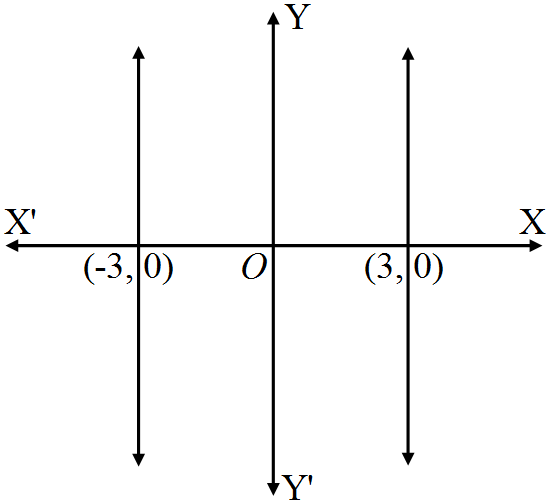
The inequality representing the following graph is:
Ten persons, amongst whom are $A, B$ and $C$ to speak at a function. The number of ways in which it can be done if $A$ wants to speak before $B$ and $B$ wants to speak before $C$ is
Let p and q be two prepositions given by p : I play cricket during the holidays, q : I just sleep throughout the day then, the compound statement p ∧ q is.
Choose the correct answers from the given four option: Let S = {x | x is a positive multiple of 3 less than 100} P = {x | x is a prime number less than 20}. Then n(S) + n(P) is.