Question
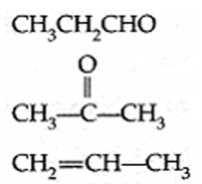
1. Write all structural isomers of molecular formula $C _3 H _6 O$
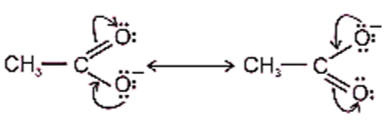
2. Write resonance structures of $CH _3 COO ^{-}$and show the movement of electrons by curved arrows.
Answer

1.
Image
2. First, write the structure and put unshared pairs of valence electrons on appropriate atoms. Then draw the arrows(half headed curved arrow) one at a time moving the electrons to get the other structures.
Image

Need a full question paper?

Generate a complete, print-ready paper with questions like this in minutes — across 16+ boards, with answer keys.

Start Generating Free

Similar questions

Why is Wurtz reaction not preferred for the preparation of alkanes containing odd number of carbon atoms? Illustrate your answer by taking one example.
You have a mixture of three liquids A, B and C. There is a large difference in the boiling points of A and rest of the two liquids i.e., B and C. Boiling point of liquids B and C are quite close. Liquid A boils at a higher temperature than B and C and boiling point of B is lower than C. How will you separate the components of the mixture. Draw a diagram showing set up of the apparatus for the process.
Draw the cis and trans structures of hex-2-ene. Which isomer will have higher b.p. and why?
Calculate the pH of the following solutions:
0.3g of Ca(OH)2 dissolved in water to give 500mL of solution.
6 An alkene 'A' contains three C-C, eight C–H $\sigma$ bonds and one C–C $\pi$ bond. ‘A’ on ozonolysis gives two moles of an aldehyde of molar mass 44 u. Write IUPAC name of 'A'.
What is mole concept? What is relation with molar mass of substance and number of molecule.
The pH of 0.1M solution of cyanic acid (HCNO) is 2.34. Calculate the ionization constant of the acid and its degree of ionization in the solution.
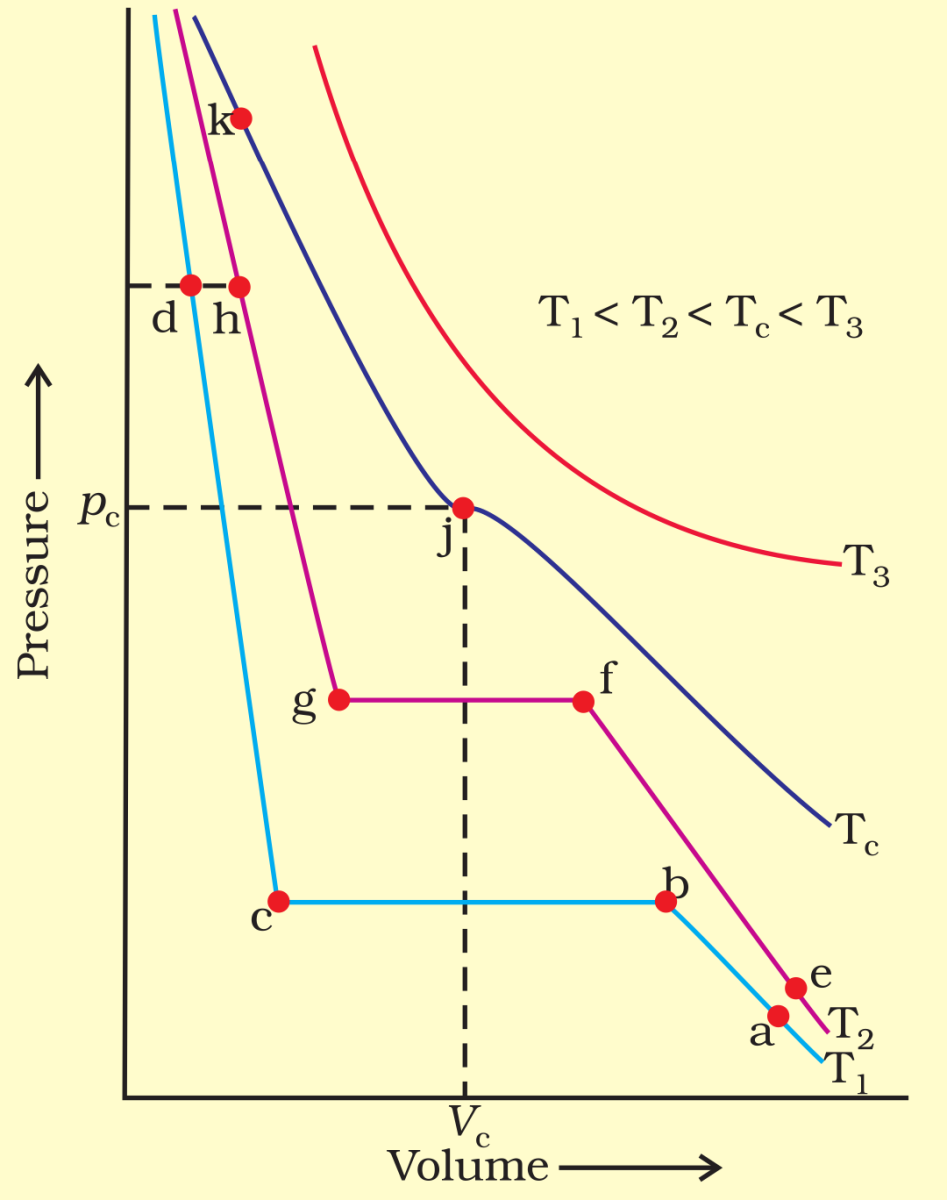
Isotherms of carbon dioxide gas are shown in Fig. Mark a path for changing gas into liquid such that only one phase (i.e., either a gas or a liquid) exists at any time during the change. Explain how the temperature, volume and pressure should be changed to carry out the change.
The ionization constant of nitrous acid is $4.5 \times 10^{–4}$. Calculate the pH of $0.04M$ sodium nitrite solution and also its degree of hydrolysis.
Among the second period elements the actual ionization enthalpies are in the order $Li < B < Be < C < O < N < F < Ne$. Explain why,
  1. Be has higher $\Delta_{\text{t}}\text{H}$ than B
  2. O has lower $\Delta_{\text{t}}\text{H}$ than N and F?