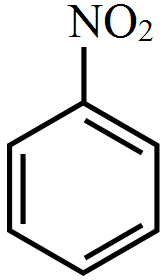
MCQ
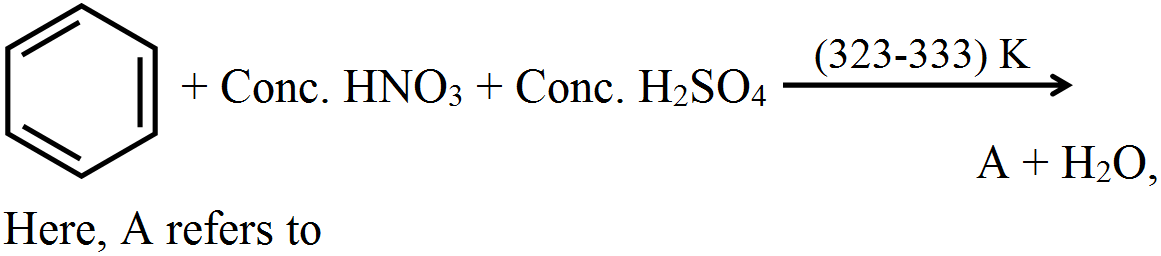
- A
- B
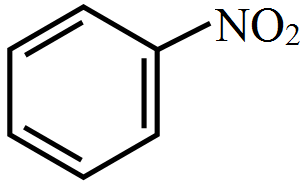
- C
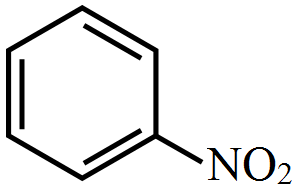
- DAll of these.
Explanation:
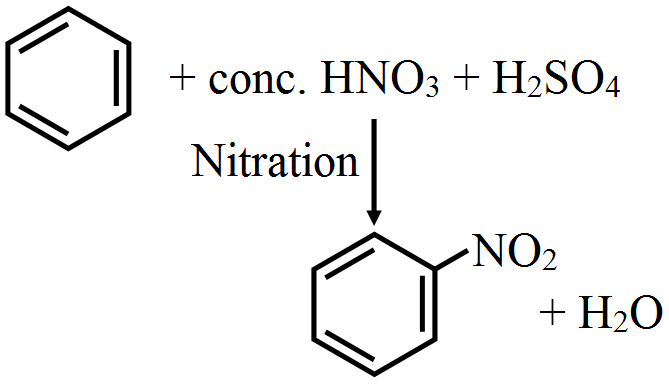
Options (a), (b) and (c) are same molecule, i.e. nitrobenzene.
Generate a complete, print-ready paper with questions like this in minutes — across 16+ boards, with answer keys.
$A + B\xrightarrow{{dil\,NaOH/\Delta }}C$
Statement $I$: Fluorine has most negative electron gain enthalpy in its group.
Statement $II$: Oxygen has least negative electron gain enthalpy in its group.
In the light of the above statements, choose the most appropriate from the options given below.
[Atomic Masses - $\mathrm{Na}: 23.0\, \mathrm{u}, \mathrm{O}: 16.0\, \mathrm{u}, \mathrm{P}: 31.0 \,\mathrm{u}]$
$(I)$ $\begin{array}{*{20}{c}}
{O\,\,\,\,\,\,\,\,\,\,\,\,\,\,\,\,\,\,\,\,} \\
{||\,\,\,\,\,\,\,\,\,\,\,\,\,\,\,\,\,\,\,\,\,} \\
{O - S - {C_6}{H_4} - C{H_3}} \\
{||\,\,\,\,\,\,\,\,\,\,\,\,\,\,\,\,\,\,\,\,\,\,} \\
{O\,\,\,\,\,\,\,\,\,\,\,\,\,\,\,\,\,\,\,\,\,\,}
\end{array}\,$ $(II)$ $\begin{array}{*{20}{c}} {O\,\,\,\,\,\,\,} \\ {||\,\,\,\,\,\,\,} \\ {O - S - {C_6}{H_5}} \\ {||\,\,\,\,\,\,\,} \\ {O\,\,\,\,\,\,\,} \end{array}\,$$(III)$ $N_3$ $(IV)$ $Br$