MCQ
$50$ tuning forks are arranged in increasing order of their frequencies such that each gives $4 \,beats/sec$ with its previous tuning fork. If the frequency of the last fork is octave of the first, then the frequency of the first tuning fork is  ... $Hz$
  • A
    $200 $
  • B
    $204$
  • $196 $ 
  • D
    None of these

Answer

Correct option: C.
$196 $ 
c
(c) Frequencies of tuning forks is given by

${n_{{\rm{last}}}} = {n_{{\rm{first}}}} + (N - 1)x$

$2n = n + (50 - 1) \times 4$ ==> $n = 196Hz.$

Need a full question paper?

Generate a complete, print-ready paper with questions like this in minutes — across 16+ boards, with answer keys.

Start Generating Free

Similar questions

The work done by a force $\vec F = \left( { - 6{x^3}\hat i} \right)\,N$, in displacing a particle from $x = 4\, m$ to $x = -2\, m$ is  ................ $\mathrm{J}$
A thin uniform rod oflength $l$ and mass $m$ is swinging freely about a horizontal axis passing through its end . Its maximum angular speed is $\omega$. Its centre of mass rises to a maximum height of:
A tuning fork of frequency $480 Hz$ produces $10$ beats per second when sounded with a vibrating sonometer string. What must have been the frequency of the string if a slight increase in tension produces lesser beats per second than before ..... $Hz$
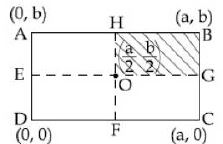
A uniform rectangular thin sheet $ABCD$ of mass $M$ has length $a$ and breadth $b$, as shown in the figure. If the shaded portion $HBGO$ is cut off, the coordinates of the centre of mass of the remaining portion will be
Given below are two statements. One is labelled as Assertion $A$ and the other is labelled as Reason $R$.

Assertion A :Two identical balls $A$ and $B$ thrown with same velocity '$u$ ' at two different angles with horizontal attained the same range $R$. If $A$ and $B$ reached the maximum height $h_{1}$ and $h_{2}$ respectively, then $R =4 \sqrt{ h _{1} h _{2}}$

Reason R: Product of said heights.

$h _{1} h _{2}=\left(\frac{u^{2} \sin ^{2} \theta}{2 g }\right) \cdot\left(\frac{u^{2} \cos ^{2} \theta}{2 g }\right)$

Choose the $CORRECT$ answer 

Two engines pass each other moving in opposite directions with uniform speed of $30\,m/s$ . One of them is blowing a whistle of frequency $540\,Hz.$ Calculate the frequency heard by driver of second engine before they pass each other  ... $Hz$. Speed of sound is $330\,m/sec$
Consider a cycle followed by an engine: $1$ to $2$ is isothermal. $2$ to $3$ is adiabatic. $3$ to $1$ is adiabatic. Such a process does not exist because:
Sound waves of wavelength $\pi$ travelling in a medium with a speed of $v\ m/ s$ enter into another medium where its speed is $2v\ m/ s$. Wavelength of sound waves in the second medium is:
A ring is suspended from a point $S$ on its rim as shown in the figure. When displaced from equilibrium, it oscillates with time period of $1\,second.$ The radius of the ring is ..... $m$ (take $g = \pi ^2$ )
In which of the following pairs of temperature scales, the size of a degree is identical?
  1. Mercury scale and ideal gas scale.
  2. Celsius scale and mercury scale.
  3. Celsius scale and ideal gas scale.
  4. Ideal gas scale and absolute scale.