MCQ
A $120\, m$ long train is moving in a direction with speed $20 \,m/s$. $A$ train $B$ moving with $30\, m/s$ in the opposite direction and $130\, m$ long crosses the first train in a time
  • A
    $6\,s$
  • B
    $36 \,s$
  • C
    $38 \,s$
  • None of these

Answer

Correct option: D.
None of these
d
(d) Total distance $ = 130 + 120 = 250\;m$

Relative velocity $ = 30 - ( - 20) = 50\;m/s$

Hence $t = 250/50 = 5s$

Need a full question paper?

Generate a complete, print-ready paper with questions like this in minutes — across 16+ boards, with answer keys.

Start Generating Free

Similar questions

Which is the correct diagram of a half-wave rectifier
The given figure shows, two parallel plates $A$ and $B$ of charge densities $+\sigma$ and $-\sigma$ respectively. Electric intensity will be zero in region
If Fresnel’s biprism experiment as held in water inspite of air, then what will be the effect on fringe width
Two wires $A$ and $B$ of the same material, having radii in the ratio $1: 2$ carry currents in the ratio $4: 1$. The ratio of drift speed of electrons in $A$ and $B$ is .......
An engine pump is used to pump a liquid of density $\rho $ continuously through a pipe of cross-sectional area $A$. If the speed of flow of the liquid in the pipe is v, then the rate at which kinetic energy is being imparted to the liquid is
Assertion : Radioactive nuclei emit ${\beta ^ - }$ particles.

Reason : Electrons exist inside the nucleus
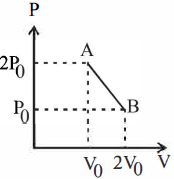
'$n$' moles of an ideal gas undergoes a process $A \rightarrow B$ as shown in the figure. The maximum temperature of the gas during the  process will be
A cylindrical tank has a hole of $1 cm^2$ in its bottom. If the water is allowed to flow into the tank from a tube above it at the rate of $70 cm^3/sec$. then the maximum height up to which water can rise in the tank is  .......... $cm$
In Quincke’s tube a detector detects minimum intensity. Now one of the tube is displaced by $5 \,\,cm$. During displacement detector detects maximum intensity $10$ times, then finally a minimum intensity (when displacement is complete). The wavelength of sound is .... $cm$
Which one of the following does not represent a travelling wave