Question
A given galvanometer is to be converted into (i) an ammeter (ii) a milliammeter (iii) a voltmeter. In which case will the required resistance be (i) least (ii) highest and why?

Answer

The required resistance has least value in the case of an ammeter and maximum value in the case of a voltmeter.
This is due to the reason that the shunt resistance required to convert a galvanometer into ammeter or milliammeter has the value.
$\text{S}=\frac{\text{I}_g}{\text{I}-\text{I}_\text{g}}\times\text{R}_\text{g}$
Thus, the shunt required in the case of milliammeter has higher value.
Similarly, since the voltmeter should have a high resistance, the value of required resistance should be highest in the case of a voltmeter. This is connected in series with the coil of the galvanometer.

Need a full question paper?

Generate a complete, print-ready paper with questions like this in minutes — across 16+ boards, with answer keys.
Start Generating Free

Similar questions

With the help of a simple diagram, explain the working of a silicon solar cell, giving all three basic processes involved. Draw its $I-V$ characteristic.
A monochromatic light of wavelength $\lambda$ is incident normally on a narrow slit of width ‘a’ to produce a diffraction pattern on the screen placed at a distance D from the slit. With the help of a relevant diagram, deduce the conditions for obtaining maxima and minima on the screen. Use these conditions to show that angular width of central maximum is twice the angular width of secondary maximum.
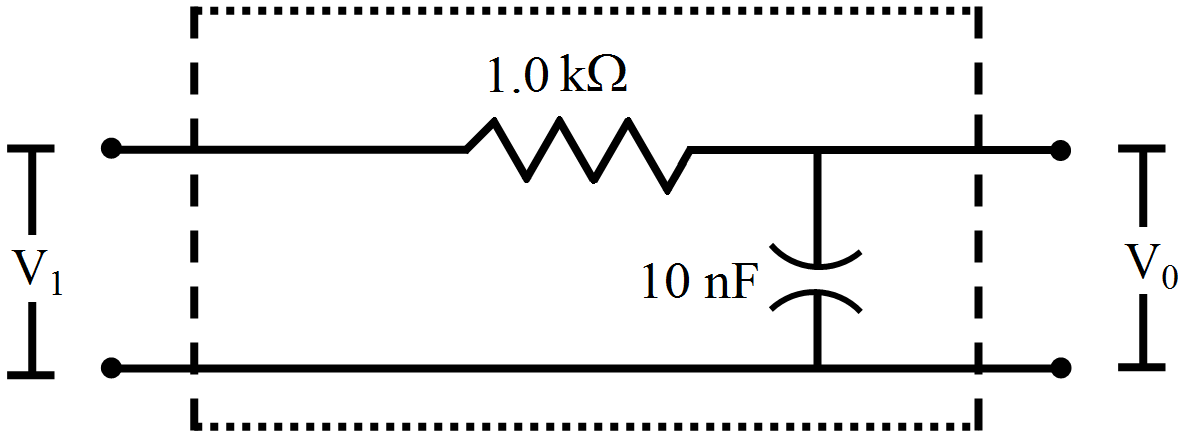
Figure shows a typical circuit for a low$-$pass filter. An $AC$ input $V_{i }= 10mV$ is applied at the left end and the output $V_0$ is received at the right end. Find the output voltage for$ ν = 10\ kHz, 1.0\ MHz$ and $10.0\ MHz.$ Note that as the frequency is increased the output decreases and, hence, the name low$-$pass filter.
  1. Two cells of emf $E_1$ and $E_2$ have their internal resistances $r_1$ and $r_2$, respectively. Deduce an expression for the equivalent emf and internal resistance of their parallel combination when connected across an external resistance $R.$ Assume that the two cells are supporting each other.
  2. In case the two cells are identical, each of emf $E = 5V$ and internal resistance $\text{r}=2\Omega,$ calculate the voltage across the external resistance $\text{R}=10\Omega.$
A circular coil of $20$ turns and radius $10 \ cm$ is placed in a uniform magnetic field of $0.10 T$ normal to the plane of the coil. If the current in the coil is $5.0 A,$ what is the
  1. Total torque on the coil,
  2. Total force on the coil,
  3. Average force on each electron in the coil due to the magnetic field.
$($The coil is made of copper wire of cross$-$sectional area $10^{–5} m^{_2} ,$ and the free electron density in copper is given to be about $10^{29} m^{–3}).$
A 12.9 eV beam of electrons is used to bombard gaseous hydrogen at room temperature. Upto which energy level the hydrogen atoms would be excited?
Calculate the wavelength of the first member of Paschen series and first member of Balmer series.
The index of refraction of fused quartz is 1.472 for light of wavelength 400nm and is 1.452 for light of wavelength 760nm. Find the speeds of light of these wavelengths in fused quartz.
  1. Define self inductance. Write its $S.I. $units.
  2. Derive an expression for self inductance of a long, solenoid of length $l, $cross sectional area $A$ having $N$ number of turns.
The magnetic field $B$ inside a long solenoid, carrying a current of $5.00A,$ is $3.14 \times 10^{-2}T.$ Find the number of turns per unit length of the solenoid.
  1. How are electromagnetic waves produced? Explain.
  2. A plane electromagnetic wave is travelling through a medium along the +ve z-direction. Depict the electromagnetic wave showing the directions of the oscillating electric and magnetic fields.