A magnetic needle lying parallel to a magnetic field requires $W$ units of work to turn it through $60°$ . The torque required to maintain the needle in this position will be
AIEEE 2003, Diffcult


Download our appand get started for free
Experience the future of education. Simply download our apps or reach out to us for more information. Let's shape the future of learning together!No signup needed.*
Similar Questions
- 1A milli voltmeter of $25\,millivolt$ range is to be converted in to an ammeter of $25\,A$ range. The value (in $ohm$) of necessary shunt will beView Solution
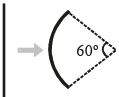
- 2A magnetised wire of moment $M$ is bent into an arc of a circle subtending an angle of $60^o$ at the centre; then the new magnetic moment isView Solution
- 3A charged particle with specific charge $S$ moves undeflected through a region of space containing mutually perpendicular uniform electric and magnetic fields $E$ and $B$ . When electric field is switched off, the particle will move in a circular path of radiusView Solution
- 4A wire length $2\,m$ carrying a current of $1\,A$ is bent to form a circle. The magnetic moment of the coil isView Solution
- 5A charge particle is moving in a uniform magnetic field $(2 \hat{i}+3 \hat{j}) T$. If it has an acceleration of $(\alpha \hat{i}-4 \hat{j}) m / s ^{2}$, then the value of $\alpha$ will be.View Solution
- 6View SolutionWhich of the following particle will experience maximum acceleration when projected with same speed in transverse magnetic field
- 7A coaxial cable consists of an inner wire of radius $'a'$ surrounded by an outer shell of inner and outer radii ' ${b}$ ' and '$c$' respectively. The inner wire carries an electric current is, which is distributed uniformly across cross-sectional area. The outer shell carries an equal current in opposite direction and distributed uniformly. What will be the ratio of the magnetic field at a distance ${x}$ from the axis when $(i)$ ${x}<{a}$ and $(ii)$ ${a}<{x}<{b}$ ?View Solution
- 8An electron having charge $1.6 \times {10^{ - 19}}\,C$ and mass $9 \times {10^{ - 31}}\,kg$ is moving with $4 \times {10^6}\,m{s^{ - 1}}$ speed in a magnetic field $2 \times {10^{ - 1}}\,tesla$ in a circular orbit. The force acting on electron and the radius of the circular orbit will beView Solution
- 9$A$ galvanometer may be converted into ammeter or voltmeter. In which of the following cases the resistance of the device will be the largest ? (Asssume maximum range of galvanometer $= 1\, mA$)View Solution
- 10The magnetic field at the centre of coil of $n$ $turns$, bent in the form of a square of side $2l$ , carrying current $i$, isView Solution