Question

A radioactive element emits 200 particles per second. After three hours 25 particles per second are emitted. The half life period of element will be

(a) 50 minutes

(b) 60 minutes

(c) 70 minutes

(d) 80 minutes

Answer

(b) 60 minutes

Need a full question paper?

Generate a complete, print-ready paper with questions like this in minutes — across 16+ boards, with answer keys.

Start Generating Free

Similar questions

Which of the following phenomena can be demonstrated by light. But not with sound waves in an air column? 
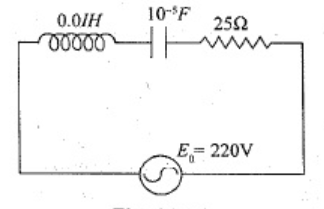
In the following circuit the values of L, C, R and E0​ are 0.01 H, 10-5F, $25\Omega$ and 220volt respectively. The value of current flowing in the circuit at f = 0 and $\text{f}=\infty$ will respectively be.
Image
Mark the correct options:
If L is the coherent length and c the velocity of light, the coherent time is:

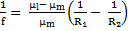
Assertion  :  A double convex lens (m = 1.5) has focal length 10 cm. When the lens is immersed in water (m = 4/3) its focal length becomes 40 cm.

Reason      :  

(a) If both assertion and reason are true and the reason is the correct explanation of the assertion.

(b) If both assertion and reason are true but reason is not the correct explanation of the assertion.

(c) If assertion is true but reason is false.

(d) If the assertion and reason both are false.

There are  photons of frequency    in a beam of light. In an equally energetic beam, there are  photons of frequency . Then the correct relation is

(a)   

(b)

(c)  

(d)  

The thermo e.m.f. of a thermocouple varies with the temperature θ of the hot junction as   in volts where the ratio a/b is 700.  If the cold junction is kept at 0, then the neutral temperature is

(a) 700

(b) 350

(c) 1400

(d) No neutral temperature is possible for this thermocouple

Usually the mirror installed in front of the motor driver's seat is:
According to Einsteins mass-energy equivalent relation, the energy equivalent of 1 mg of substance is ___________ (speed of light $c=3 \times 10^8 m / s$ )

The internal resistance of a cell is the resistance of

(a) Electrodes of the cell

(b) Vessel of the cell

(c) Electrolyte used in the cell

(d) Material used in the cell