Question
A SONAR (sound navigation and ranging) uses ultrasonic waves to detect and locate objects under water. In a submarine equipped with a SONAR, the time delay between generation of a probe wave and the reception of its echo after reflection from an enemy submarine is found to be $77.0s$. What is the distance of the enemy submarine? (Speed of sound in water = $1450m s^{–1}$).
Answer

Let the distance between the ship and the enemy submarine be ' S '. Speed of sound in water $=1450 \mathrm{~m} / \mathrm{s}$ Time lag between transmission and reception of Sonar waves $=77 \mathrm{~s}$ In this time lag, sound waves travel a distance which is twice the distance between the ship and the submarine (2S). Time taken for the sound to reach the submarine = $1 / 2$ $\times 77=38.5 \mathrm{~s}$
$\therefore$ Distance between the ship and the submarine $(S)=1450 \times 38.5=55825 \mathrm{~m}=55.8 \mathrm{~km}$

Need a full question paper?

Generate a complete, print-ready paper with questions like this in minutes — across 16+ boards, with answer keys.

Start Generating Free

Similar questions

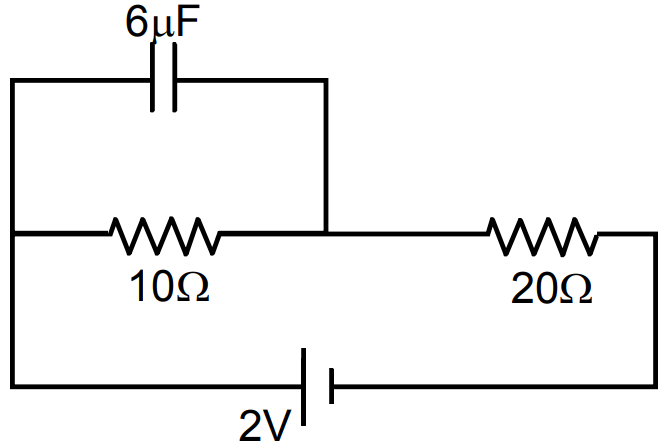
Find the charge on the capacitor shown in figure.
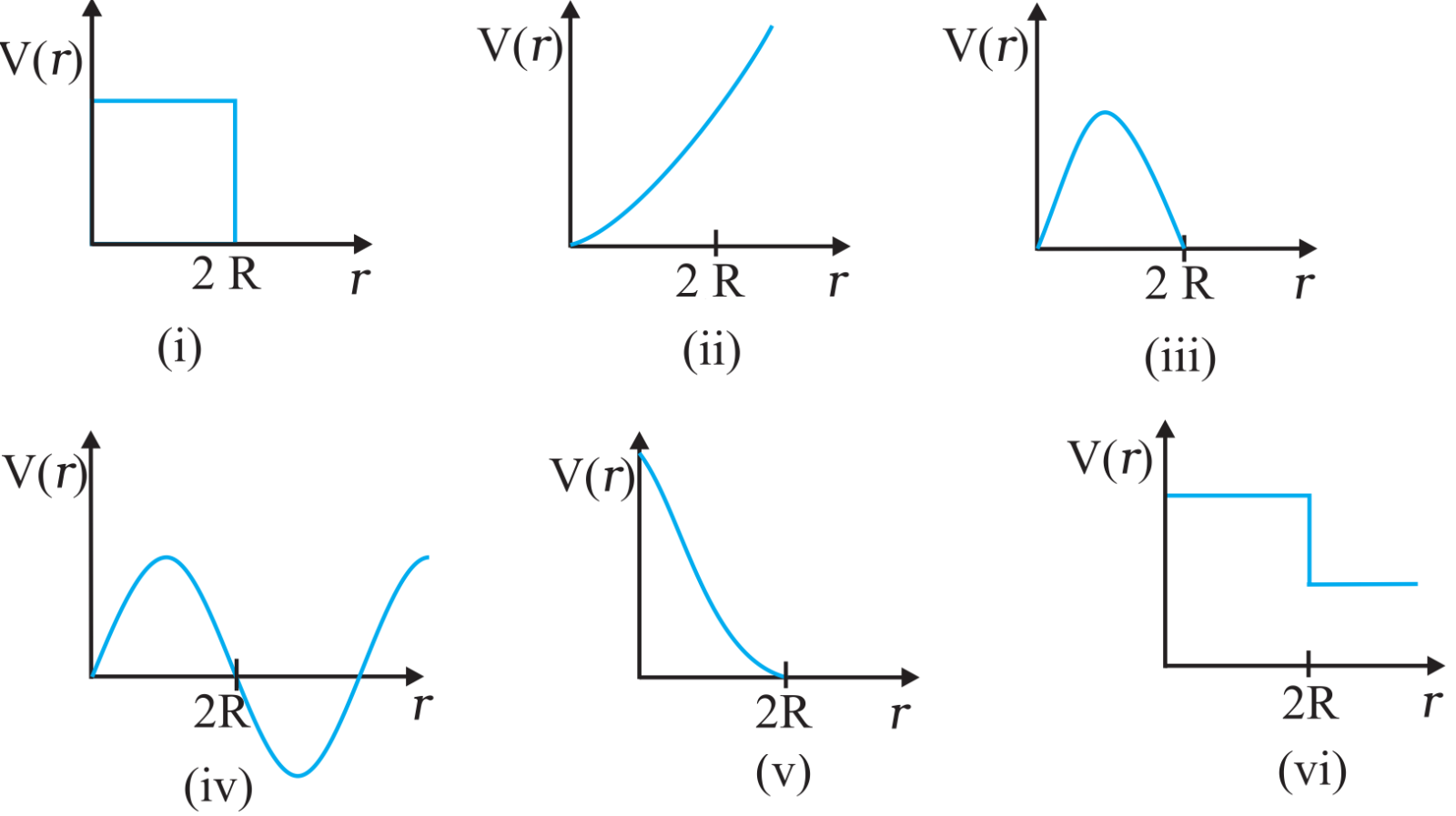
Which of the following potential energy curves in cannot possibly describe the elastic collision of two billiard balls? Here r is the distance between centres of the balls.
If there are 'n' particles of masses $m_1, m_2, ...mn$ distributed in space, write expressions for x, y and z coordinates of COM.
Explain the difference between beats and interfrence.
The magnifying power of a simple microscope is given by $1+\frac{\text{D}}{\text{f}},$ where D is the least distance for clear vision. For farsighted persons, D is greater than the usual. Does it mean that the magnifying power of a simple microscope is greater for a farsighted person as compared to a normal person? Does it mean that a farsighted person can see an insect more clearly under a microscope than a normal person?
Plot the corresponding reference circle for each of the following simple harmonic motions. Indicate the initial (t = 0) position of the particle, the radius of the circle, and the angular speed of the rotating particle. For simplicity, the sense of rotation may be fixed to be anticlockwise in every case: (x is in cm and t is in s).$\text{x}=\cos\Big(\frac{\pi}{6}-\text{t}\Big)$
Derive an expression for the excess of pressure inside a liquid drop.
Compute the mass of a planet that has a satellite whose time period is T and orbital radius is r.
The radius of a planet is three times the radius of the Earth but the density of both is same. If $v_p$ on $v_e$ are the escape velocities on the planet and the earth then prove that $v_P=3 v_e$.
A physical quantity P is related to four observables a, b, c and d as follows:$\text{P}=\text{a}^3\text{b}^3/\big(\sqrt{\text{c}}\text{ d}\big)$
The percentage errors of measurement in a, b, c and d are 1%, 3%, 4% and 2%, respectively. What is the percentage error in the quantity P ? If the value of P calculated using the above relation turns out to be 3.763, to what value should you round off the result ?