Question
A spherical shell made of plastic, contains a charge Q distributed uniformly over its surface. What is the electric field inside the shell? If the shell is hammered to deshape it without altering the charge, will the field inside be changed? What happens if the shell is made of a metal?
Answer

As the shell is made of plastic, it is non-conducting. But as the charge is distributed uniformly over the surface of the shell, the sum of all the electric field vectors at the centre due to this kind of distribution is zero. But when the plastic shell is deformed, the distribution of charge on it becomes non-uniform. In other words, the sum of all the electric field vectors is non-zero now or the electric field exists at the centre now.
In case of a deformed conductor, the field inside is always zero.

Need a full question paper?

Generate a complete, print-ready paper with questions like this in minutes — across 16+ boards, with answer keys.

Start Generating Free

Similar questions

A 1000 MW fission reactor consumes half of its fuel in 5.00 y. How much $^{235}_{92}\text{U}$ did it contain initially? Assume that the reactor operates 80% of the time, that all the energy generated arises from the fission of $^{235}_{92}\text{U}$ and that this nuclide is consumed only by the fission process.
Calculate the energy released by 1g of natural uranium assuming 200MeV is released in each fission event and that the fissionable isotope 235U has an abundance of 0.7% by weight in natural uranium.
Obtain the de Broglie wavelength associated with thermal neutrons at room temperature (27ºC). Hence explain why a fast neutron beam needs to be thermalised with the environment before it can be used for neutron diffraction experiments.
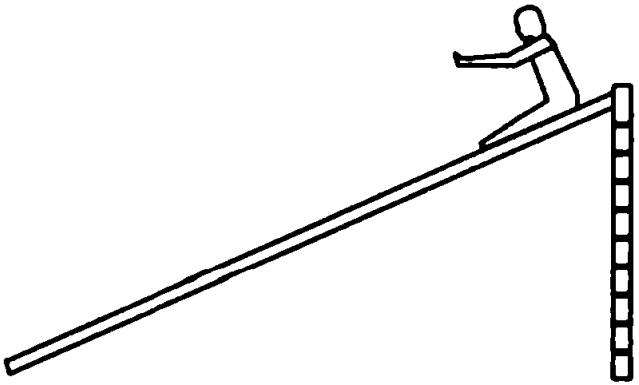
In a children's park, there is a slide which has a total length of 10m and a height of 8.0m (figure). Vertical ladder are provided to reach the top. A boy weighing 200N climbs up the ladder to the top of the slide and slides down to the ground. The average friction offered by the slide is three tenth of his weight. Find
  1. The work done by the ladder on the boy as he goes up.
  2. The work done by the slide on the boy as he comes down. Neglect any work done by forces inside the body of the boy.

A tunnel is dug along a chord of the earth at a perpendicular distance $\frac{\text{R}}{2}$ from the earth's centre. The wall of the tunnel may be assumed to be frictionless. Find the force exerted by the wall on a particle of mass m when it is at a distance x from the centre of the tunnel.
When a photon is emitted by a hydrogen atom, the photon carries a momentum with it. (a) Calculate the momentum carries by the photon when a hydrogen atom emits light of wavelength 656.3nm. (b) With what speed does the atom recoil during this transition? Take the mass of the hydrogen atom = 1.67 × 10⁻²⁷kg. (c) Find the kinetic energy of recoil of the atom.
The electrostatic force on a small sphere of charge 0.4 μC due to another small sphere of charge –0.8 μC in air is 0.2 N.
  1. What is the distance between the two spheres?
  2. What is the force on the second sphere due to the first?
  1. Define self-inductance. Write its SI units.
  2. A long solenoid with 15 turns per cm has a small loop of area 2.0 cm2 placed inside the solenoid normal to its axis. If the current carried by the solenoid changes steadily from 2.0 A to 4.0 A in 0.1 s, what is the induced emf in the loop while the current is changing?
Plot a graph showing the variation of photoelectric current with intensity of light. The work function for the following metals is given:
Na : 2.75 eV and Mo : 4.175 eV.
Which of these will not give photoelectron emission from a radiation of wavelength 3300 Å from a laser beam? What happens if the source of laser beam is brought closer?
Show that it is not possible for a photon to be completely absorbed by a free electron.