MCQ
A string fixed at both ends vibrates in three loops. The wave length is $10\, cm$ . The length of string is .... $cm$
  • A
    $5$
  • $15$
  • C
    $30$
  • D
    None

Answer

Correct option: B.
$15$
b
In general, the length of string is $L = \frac{{(n - 1)\lambda }}{2}$ $n \to $ Number of loops $= $ Number of harmonics in question $n = 4 \,;\, \lambda  = 10\, cm$ 

$L = (4 - 1) \times \frac{{10}}{2} = 15\,cm$

Need a full question paper?

Generate a complete, print-ready paper with questions like this in minutes — across 16+ boards, with answer keys.
Start Generating Free

Similar questions

The mean free path of molecules ofa gas, (radius $r$) is inversely proportional to
If the normal force is doubled, the coefficient of friction is
A particle of mass 1g moving with a velocity $\text{v}_1=3\hat{\text{i}}-2\hat{\text{j}}\text{ms}^{-1}$ experiences a perfectly elastic collision with another particle of mass 2g and velocity $\text{v}_2=4\hat{\text{j}}-6\hat{\text{k}}\text{ms}^{-1}$. The velocity of the particle is:
Dimensions of stress are 
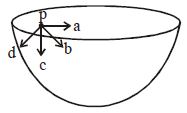
Figure shows a hemispherical shell. The direction of gravitational field intensity at point $p$ will be along
In a system of particles, internal forces can change (for the system)
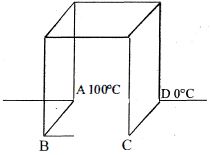
Find Temperature difference between $B$ and $C$ ? (All rods are identical)
Match list-$I$ with list-$II$:

List-$i$ List-$2$
$(A)$Kinetic energy of plant  $(1)$ $-\frac{\mathrm{GMm}}{\mathrm{a}}$
$(B)$ Gravaitatioin  potentiyal energy of sun -plant system  $(2)$ $\frac{\mathrm{GMm}}{2 \mathrm{a}}$ 
$(C)$Total mecaniacal energy of palnt  $(3)$ $\frac{\mathrm{Gm}}{\mathrm{r}}$
$(D)$Escap energyat the surface of plant for unit mass object $(4)$ $-\frac{\mathrm{GMm}}{2 \mathrm{a}}$

(Where $\mathrm{a}=$ radius of planet orbit, $\mathrm{r}=$ radius of planet, $M=$ mass of Sun, $m=$ mass of planet)

Choose the correct answer from the options given below:

Consider the following two statements:
  1. The linear momentum of a particle is independent of the frame of reference.
  2. The kinetic energy of a particle is independent of the frame of reference.
  1. Both A and B are true.
  2. A is true but B is false.
  3. A is false but B is true.
  4. Both A and B are false.
A neutron exerts a force on a proton which is:
  1. Gravitational.
  2. Electromagnetic.
  3. Nuclear.
  4. Weak.