MCQ
A student focussed the Sun rays using an optical device ‘X’ on a screen S as shown.
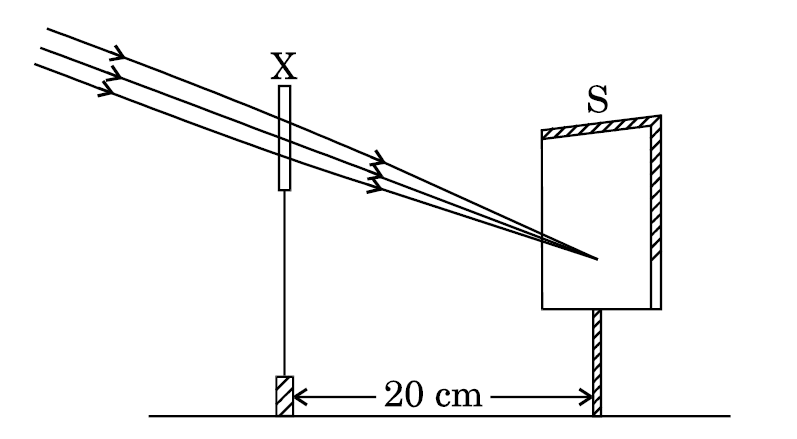
From this it may be concluded that the device ‘X’ is a (select the correct option)
  • A
    Convex lens of focal length 10cm.
  • B
    Convex lens of radius of curvature 20cm.
  • C
    Convex lens of focal length 20cm.
  • D
    Concave mirror of focal length 20cm.
Answer

  1. Convex lens of focal length 20cm.

​​​​​​​​​​​​​​​​​​​​​​​​​​​​Explanation:

Light rays from infinity are converged at the focal point of the convex lens. Therefore, the focal length of the convex lens is 20cm.

Hence, the correct option is C.

Need a full question paper?

Generate a complete, print-ready paper with questions like this in minutes — across 16+ boards, with answer keys.

Start Generating Free

Similar questions

If an object is placed 21cm from a converging lens, the image formed is slightly smaller than the object. If the object is placed 19cm from the lens, the image formed is slightly larger than object. The approximate focal length of the lens is:
The human eye possesses the power of accommodation. This is the power to:
  1. Alter the diameter of the pupil as the intensity of light changes.
  2. Distinguish between lights of different colours.
  3. Focus on objects at different distances.
  4. Decide which of the two objects is closer.
A student has obtained an image of a distant object on a screen to determine the focal length Fl of the given lens. His teacher after checking the image, gave him another lens of focal length F2 and asked to focus the same object on the same screen. The student found that to obtain a sharp image he has to move the lens away from the screen. From this finding we may conclude that both the lenses given to the student were:
The refractive index of water is:
  1. 1.33
  2. 1.50
  3. 2.42
  4. 1.36
Electric current is to be passed from one body to another.For this purpose the two bodies must be joined by:
Connecting wires in a electric circuit are made of .......?
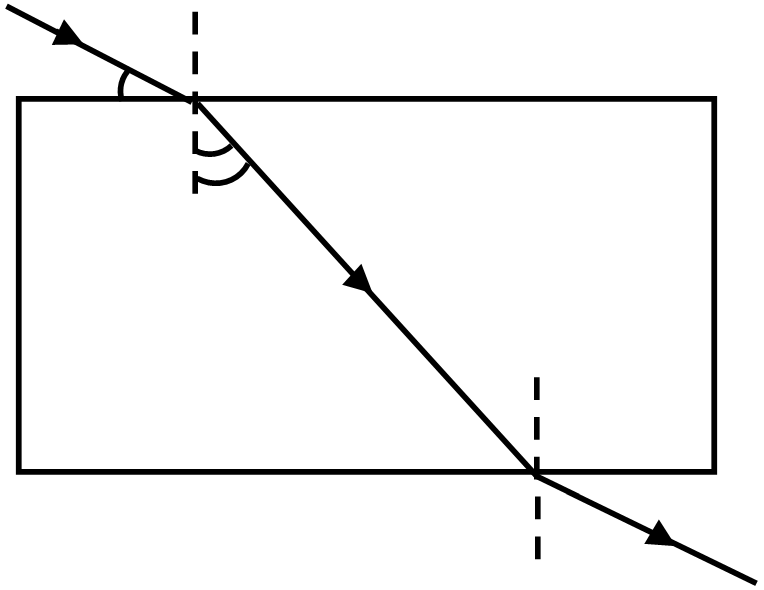
A student traces the path of a ray of white light through a rectangular glass slab and marks, the angles of incidence $(\angle \text{ i})$, refraction (r) and emergence (e) as shown.
When light rays enter the eye, most of the refraction occurs at the:
  1. Crystalline lens.
  2. Outer surface of the cornea.
  3. Iris.
  4. Pupil.
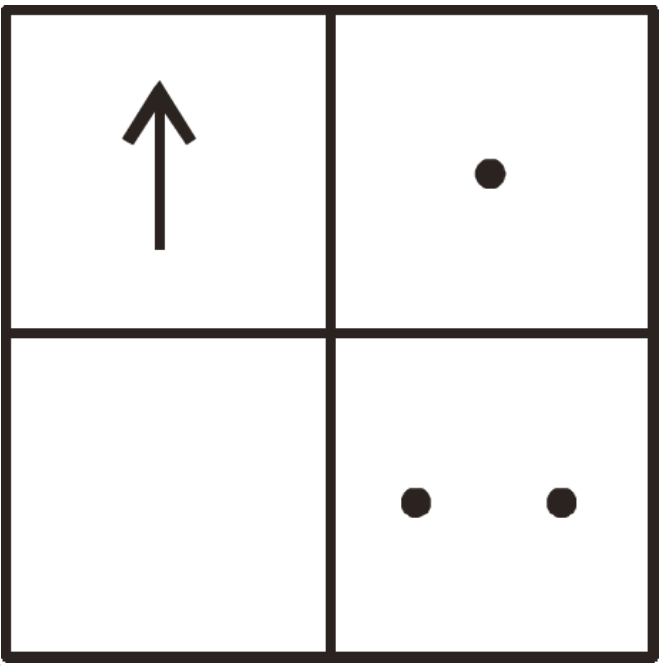
If you focus the image of a distant object, whose shape is given below, on a screen using a convex lens,

the shape of the image of this object on the screen would be: